

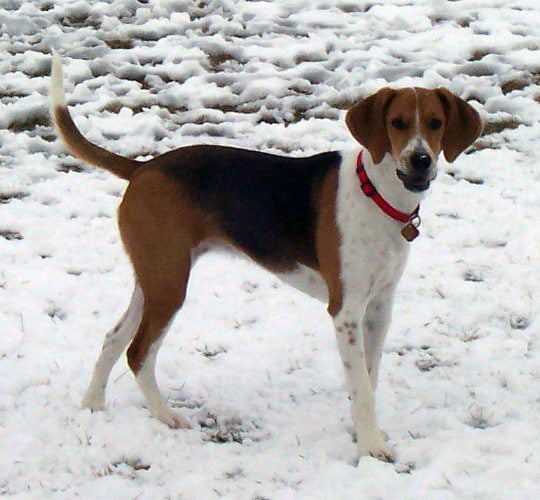
You might come across a Harrier because you have met one on a walk and thought, “Is that a Beagle?” Or because you are looking for a medium-sized dog that can keep up with an outdoorsy household. Harriers often fly under the radar, but when you spend a little time around them, their real shape becomes clear: a social, scent-driven hound built for steady movement rather than short bursts.
They are not a “hard” breed in a dramatic sense, but they can be a mismatch for quieter homes. A Harrier’s nose and stamina can lead them into trouble if their days are repetitive, or if exercise is treated as optional. On the other hand, when their needs are met, they tend to be friendly, lively companions with a practical, grounded sort of confidence.
It also helps to know that information about Harriers online is often inconsistent, especially around lifespan, size, and kennel club recognition. The clearest picture comes from breed standards and veterinary guidance, then from the day-to-day reality of living with a scent hound.
- Breed category: Hound
- Country of origin: United Kingdom
- Typical height: about 48 to 53 cm at the shoulder (bitches often smaller than dogs)2
- Typical weight: often around 20 to 27 kg (some adults may be heavier)3, 4
- Coat: short, dense, weatherproof
- Exercise needs: high, many do best with more than two hours a day plus sniffing and training games1
The Harrier’s background, and why it still matters
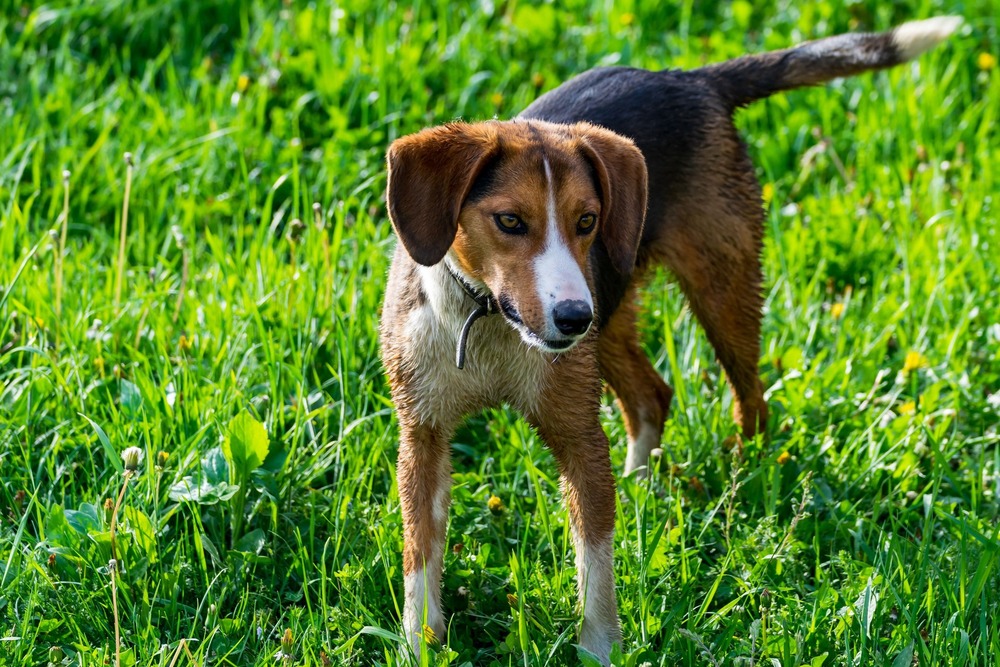
Harriers were developed in the UK as pack scenthounds, traditionally used to follow hare. Most histories place the breed’s roots at least as far back as the 1200s, and that timing matters because it explains the modern dog in front of you: a hound built to keep going, keep checking scent, and stay connected to a group.1, 5
In practice, this heritage shows up in ordinary family life. A Harrier is often happiest when they have room to move and explore, a predictable routine, and plenty of opportunities to use their nose. Without that, “busy” behaviour can creep in, not out of spite, but because scenthounds are designed to work through the day with their senses switched on.
It is also worth noting that kennel-club recognition varies by organisation and time period. For example, The Kennel Club (UK) began recognising the Harrier from 1 January 2020, and maintains an up-to-date breed standard (last updated 1 August 2025).2, 6
Temperament and day-to-day suitability
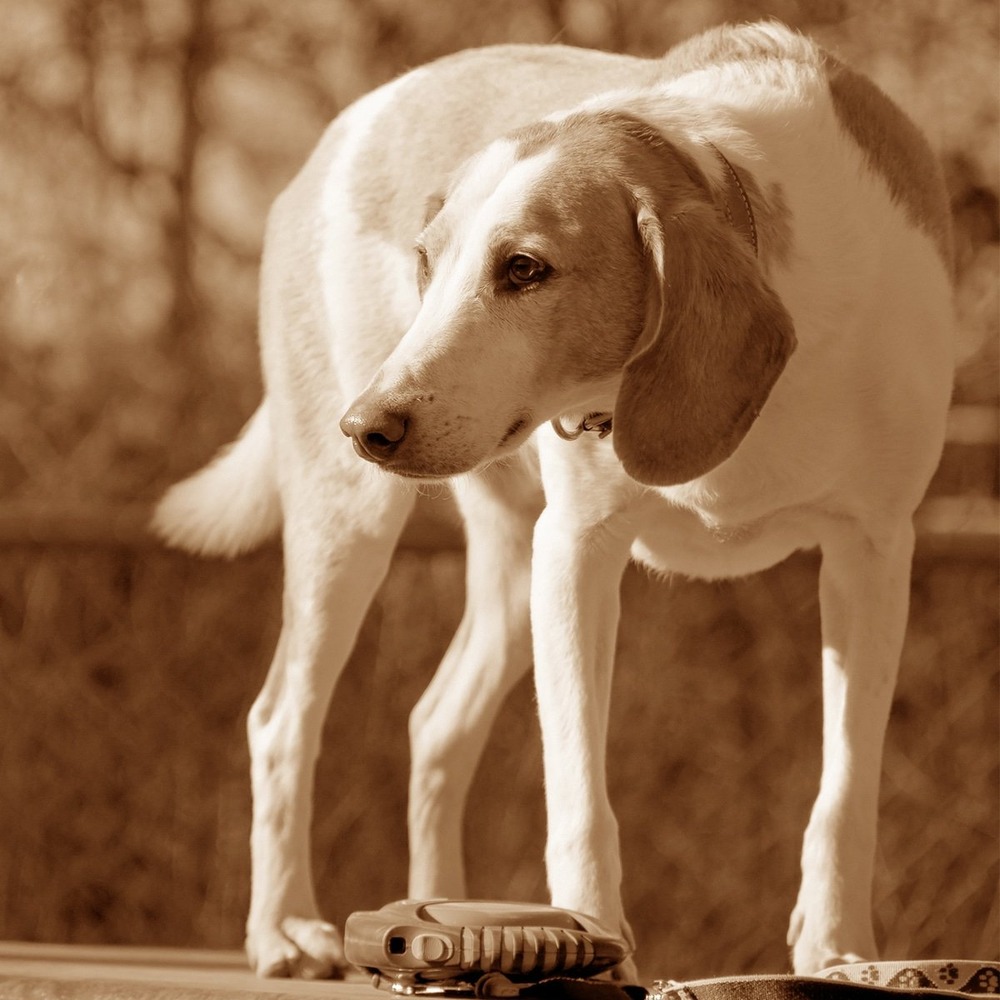
Most Harriers are described as friendly and lively, and many do well in social settings, especially when they have grown up with regular, gentle exposure to people, places, and other dogs.2
Where families sometimes get caught out is assuming that “friendly” means “easy”. Harriers can be very manageable, but they are still hounds. A strong interest in scent can make recall more challenging, and it can also mean they are more likely to follow a smell than to check back in with you unless you have trained that skill patiently.
If you are deciding whether the breed fits your home, it helps to think in situations rather than labels. A Harrier often suits:
- people who enjoy long walks, jogging, hiking, or structured dog sports
- homes where someone is around enough that the dog is not regularly left isolated for long stretches
- owners who like training as an ongoing conversation, not a one-off lesson
They can be less suitable for very small spaces with limited access to outdoor exercise, or for households hoping for a low-energy dog. The Kennel Club’s own summary points towards a large home, a large garden, and more than two hours of exercise per day as a good baseline.1
Training and exercise, making space for the nose
Training a Harrier is often less about “dominance” and more about building habits that compete with scent. Positive reinforcement, consistency, and a realistic approach to distractions tend to work best for hounds.
A useful mindset is to treat sniffing as a need, not a nuisance. Alongside daily walks, consider structured scent outlets such as:
- scatter feeding in grass (in a secure area)
- simple “find it” games indoors
- long-line walks in safe places where the dog can investigate without disappearing
Many Harriers do best with a mix of steady aerobic activity and brain work. If you only provide physical exercise, some dogs simply get fitter and still look for something to do. The goal is a dog that is pleasantly tired, not just physically exhausted.
Health, lifespan, and the problems worth watching for
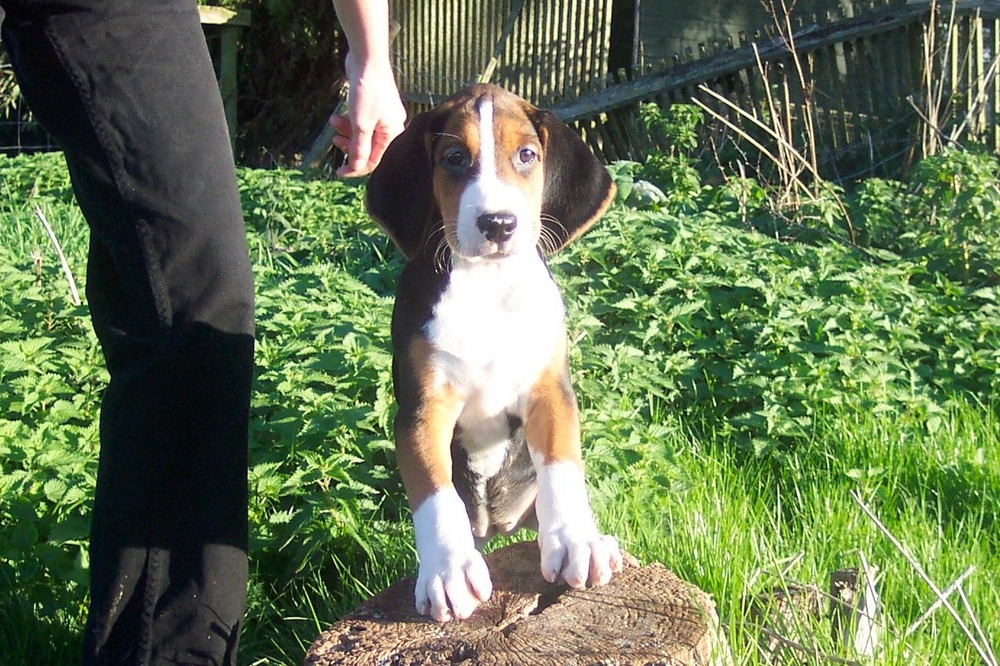
Harriers are generally considered a robust breed, with many sources placing typical life expectancy around 12 to 15 years.1, 3, 4
Like many medium-to-large, active dogs, Harriers can be affected by hip dysplasia. Hip dysplasia is a developmental condition associated with joint laxity that can lead to pain and arthritis over time. Genetics play a major role, and weight management is consistently emphasised as a practical, everyday way to reduce strain on joints.7
Those long, pendant ears are also worth a calm, practical routine. Ear infections have many possible causes, but the basic message from veterinary guidance is consistent: keep ears monitored, avoid pushing debris down the canal, and speak to your vet if there is redness, pain, odour, or heavy discharge rather than trying to fix it with aggressive cleaning at home.8, 9
Grooming and care that fits real life

The Harrier’s coat is short and dense, so grooming is usually straightforward. A weekly brush is often enough to lift loose hair and dust, and it gives you a chance to check paws, nails, skin, and ears without turning it into a major event.1, 2
What tends to matter more than coat work is the “maintenance around the edges”: nail trims, dental care, and ear checks. If you keep these small tasks regular and low-stress, most dogs accept them as part of normal handling.
Food and weight, keeping an athlete lean
Harriers are active, food-motivated dogs, which is a helpful training feature but also a reason to pay attention to body condition. Instead of focusing on a single “correct” amount of food, aim for a dog that stays lean with a visible waist and good muscle tone, and adjust portions as seasons, workload, and age change.
Veterinary nutrition guidance strongly supports doing routine nutritional assessment and tailoring diet to the individual dog, especially as obesity becomes more common in pet populations. If you are unsure, ask your vet to score your dog’s body condition and help you set a feeding target that matches your Harrier’s lifestyle.10
If you are managing joint concerns, or simply trying to support long-term mobility, keeping weight steady can be one of the most meaningful changes you can make at home.7
Living with a Harrier, a realistic closing thought
A Harrier can be a wonderful dog for the right household: social, capable, and generally even-tempered, with that distinctive hound attentiveness that comes and goes as scents drift through the world.
The key is meeting them where they are. If you can provide daily movement, sniffing, and companionship, you are likely to get a dog who settles well and feels easy to live with. If not, the same traits that make the Harrier special can become the source of frustration for everyone involved.
References
- The Kennel Club (UK): Harrier, breed information
- The Kennel Club (UK): Harrier breed standard (updated 1 August 2025)
- Chewy Education: Harrier breed overview (includes AKC summary)
- The Spruce Pets: Harrier dog breed profile
- Westminster Kennel Club: Meet the Harrier
- The Kennel Club (UK): Announcement recognising the Harrier (effective 1 January 2020)
- American College of Veterinary Surgeons: Canine hip dysplasia overview
- American Kennel Club: Tips for helping prevent dog ear infections
- PetMD: How to keep dog ears clean (when to clean and when to call the vet)
- WSAVA: Global Nutrition Guidelines