

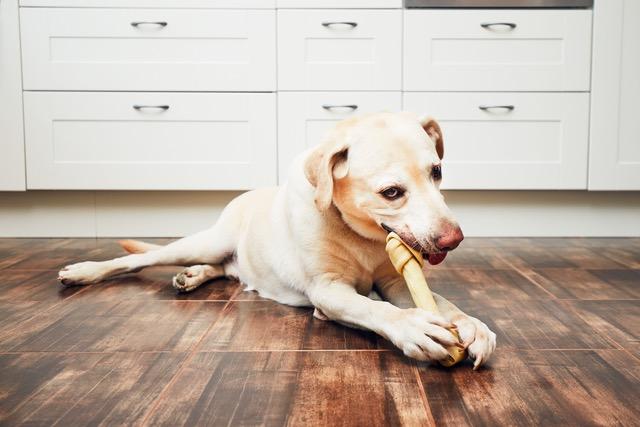
You usually notice this problem in an ordinary moment: your dog has found a bone or chew, you reach in to tidy up or move them along, and their whole body changes. Sometimes it is subtle, like a freeze or a side-eye. Sometimes it is louder, like a growl, a quick snatch, or them trotting off to “safe” territory.
It can be tempting to treat this as stubbornness, or to assume your dog is trying to “win”. In practice, it is more often about how dogs learn to keep valuable things. When a human approach has previously meant “that gets taken”, many dogs respond by holding tighter, guarding space, or escalating their warnings.
The good news is that teaching a reliable “give it” (or “drop”) is less about control and more about building a calm pattern: when you ask, your dog releases because something better happens next. That is what makes this skill useful in real life, especially when the item is unsafe or you need to manage visitors, kids, or multiple pets.1, 2
Understanding what is really happening
Resource guarding exists on a spectrum. At one end you might see a dog simply move away with an item. Further along, you might see stiffening, hovering, head lowering, showing teeth, growling, snapping, or biting. It is not “badness”, it is communication about discomfort and a desire to keep access to something valuable.1, 2
One of the most misunderstood parts is the growl. A growl is often an early warning that your dog is not comfortable with what is happening. If that warning gets punished, the underlying discomfort does not magically disappear, but the warning can, which leaves you with less information and potentially a faster bite next time.2, 3
Training “give up the bone” works best when you treat it as a trust-building cue, not a test of who is in charge. The aim is to create a predictable trade where your approach becomes good news, and your dog stays relaxed while letting go.
Before you train: set yourself up for success
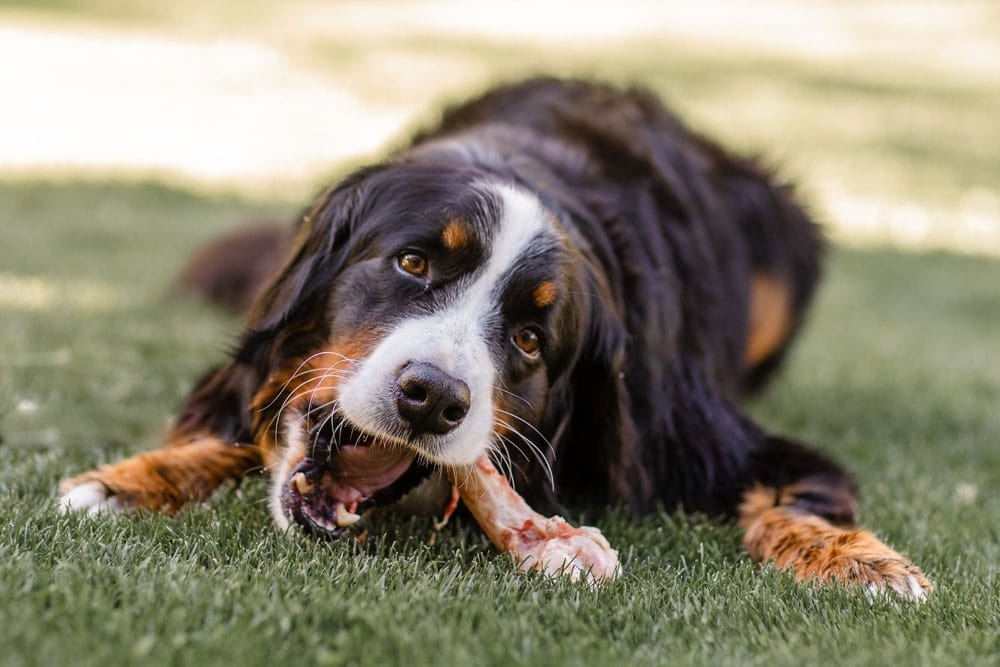
Start with management, not bravado. If your dog has a history of guarding chews, it is sensible to limit access to the highest-value bones while you build the skill. In the meantime, use safer options that are easier to trade, and give chews in a quiet space away from foot traffic.
Have a few rewards ready that are genuinely better than the item you are asking them to release. For many dogs that means roast chicken, cheese, fish treats, or something smelly and soft. You want your dog thinking, “worth it” the moment you appear.
- Pick the right starting item: begin with a toy or low-value chew, not the bone that triggers guarding.
- Keep sessions short: five minutes is plenty, then stop while things are going well.
- Choose a calm space: fewer distractions makes learning easier.
If your dog has snapped, bitten, or you feel unsafe, do not practise “drop it” with high-stakes items on your own. This is the point to bring in a qualified trainer who uses reward-based methods, or a veterinary behaviour specialist if needed.1, 4
Teaching “drop” as a trade, step by step
Most dogs learn this fastest when “drop” consistently predicts a swap. The swap matters because it changes the emotional meaning of your approach. You are not arriving to take, you are arriving to add value.
1) Teach the pattern first (no cue yet)
Offer a toy. Let your dog take it. Present the treat close to their nose, then wait. When they loosen their mouth or drop the toy to take the treat, quietly reward. Then either give the toy back or re-start the game so your dog learns that letting go does not end everything they enjoy.
Do a few easy repetitions. You are looking for the moment when your dog starts to drop quickly because they understand the trade.
2) Add your cue at the right moment
Once the trade is predictable, say your cue (for example, “drop”) just before you present the treat. Keep it consistent. One cue, one meaning.
Reward immediately when they release. In the early stages, speed matters, you want the reward landing while the behaviour is fresh.
3) Build duration and distance gradually
Over time, you can present the treat from slightly further away, or pause a beat before rewarding, but only if your dog stays relaxed. If they clamp down, hover, or stiffen, you have moved too fast. Go back to an easier step.
4) Introduce higher-value items carefully
Only once “drop” is solid with toys and simple chews, start practising with slightly more valuable chews. For many dogs, a meaty bone is the hardest version of the exercise. Do not jump straight there.
As you progress, keep one principle steady: trade up. If you ask for a high-value bone, pay with an even higher-value reward, at least while the behaviour is still being learned.4, 5
Common sticking points (and what usually helps)
When training stalls, it is often because the item is too valuable, the reward is too boring, or the human has accidentally taught a different lesson such as “run away quickly and the game starts”.
They run off with the bone
Chasing tends to make this more exciting. Instead, step away, get your high-value reward, and call them to you. If recall is shaky, practise trades with a lead on indoors first. The goal is to remove the “keep away” loop and replace it with a calm routine where approaching you is rewarding.
They ignore treats when they have a bone
This usually means the bone is currently beyond their skill level. Drop back to easier items and build value in your reward. For some dogs, food will not beat a bone, but play might. A second toy, squeaky game, or a short tug can be the “better deal”, depending on the dog.5, 6
They growl when you approach
Take it seriously as information. Stop moving closer, create space, and switch to management. You can work on changing the association by tossing high-value treats from a comfortable distance while your dog has the item, then leaving. The message becomes: people approaching makes good things happen, and nobody is grabbing at your prize.2, 7
Safety and household habits that protect the training
A reliable “drop” is valuable, but it is not the only safety tool. Many bites around food and chews happen because humans overreach, move too quickly, or try to prove a point. A calmer home setup often does as much as the training itself.
- Do not punish warnings such as growling, freezing, or showing teeth. Create space and reassess.2, 3
- Avoid snatching items, especially high-value chews. If you must remove something unsafe, trade with an exceptional reward, or call your dog away so you can pick it up once they have moved.1, 7
- Give chews strategically: quiet area, minimal foot traffic, no hovering, and separate pets if needed.1, 8
- Supervise kids closely and keep them well away from dogs with chews or food. Children can miss early signals and move unpredictably.1
If you are seeing escalation, guarding in multiple contexts, or any biting, getting professional help early is not an overreaction. It is often the quickest path to a safer, calmer household.1
What changes when your dog can truly “give”
When “drop” is trained as a fair exchange, many dogs start to relax about human hands being nearby. They do not need to rehearse defensive behaviours because your approach is no longer a predictor of loss.
In day-to-day life, that looks like small, practical wins: you can safely pick up a chew when guests arrive, your dog is easier to redirect on walks, and “I’ve found something gross” moments become less of a scramble.
Perhaps the biggest shift is quieter. You begin to see your dog choosing cooperation because it has a reliable history of paying off. That is the heart of the exercise, and it is why gentle, reward-based training is more than a technique. It is how trust gets built over many ordinary repetitions.9
References
- ASPCA: Food Guarding
- Preventive Vet: Resource Guarding in Dogs (what to do and not do)
- American Veterinary Society of Animal Behavior (AVSAB): Position Statements and Handouts
- RSPCA Victoria: Possessive of food and toys
- Best Friends Animal Society: Food aggression and resource guarding in dogs
- Pet Circle: Resource guarding in dogs
- San Diego Humane Society: Behavior Challenges, Resource Guarding
- PetMD: Resource guarding in dogs
- AVSAB: Humane Dog Training Position Statement (PDF)