

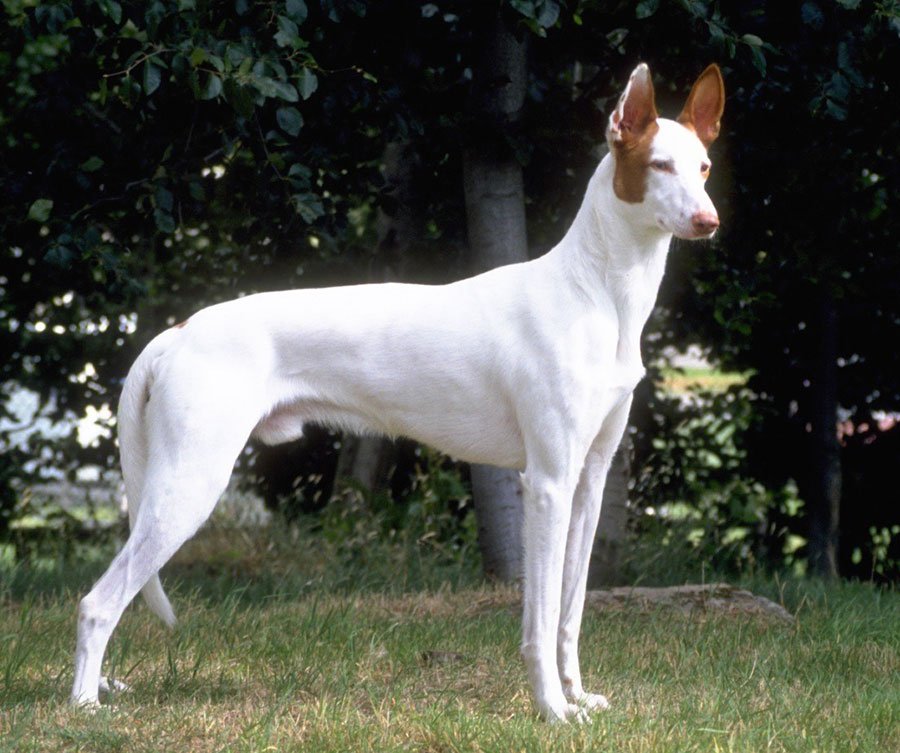
- Breed category: Hound (AKC), primitive hunting dog (FCI)
- Country of origin: Spain (Balearic Islands)
- Typical height: about 56 to 74 cm at the shoulder (varies by standard)
- Typical weight: roughly 18 to 25 kg (bitches), 20 to 29 kg (dogs)
- Average lifespan: often 11 to 14 years
- Coat type: smooth (short) or wire (harsh)
- Common colours: red and white, in solid or combinations
- Exercise needs: high, daily running and enrichment
- Grooming: generally low, with occasional brushing
- Known for: athletic jumping, keen hunting skills, large erect ears
You might notice one at a park and do a double take. A tall, lean dog with upright ears and a still, watchful way of moving can look almost unreal, like a deer that has wandered into the dog world. Then it springs, not in a long sprint like some sighthounds, but often straight up and over whatever seemed like a sensible barrier.
That mix of grace and mischief is part of what draws people to the Ibizan Hound. They are often described as quiet at home and explosive outdoors, which can surprise new owners who assumed “slender dog” automatically means “easy dog”. In practice, they are usually easiest to live with when their environment matches their design: space to move, safe fencing, and a household that enjoys training as an ongoing conversation, not a one-off lesson.
They are also a breed with a lot of mythology attached. Some of it hints at real history, some of it is guesswork that has become tradition. It helps to hold both ideas at once: the Ibizan Hound is a distinctive, old type of hunting dog from the Balearic Islands, and it is also a modern companion whose day-to-day needs are very current.
History and origin
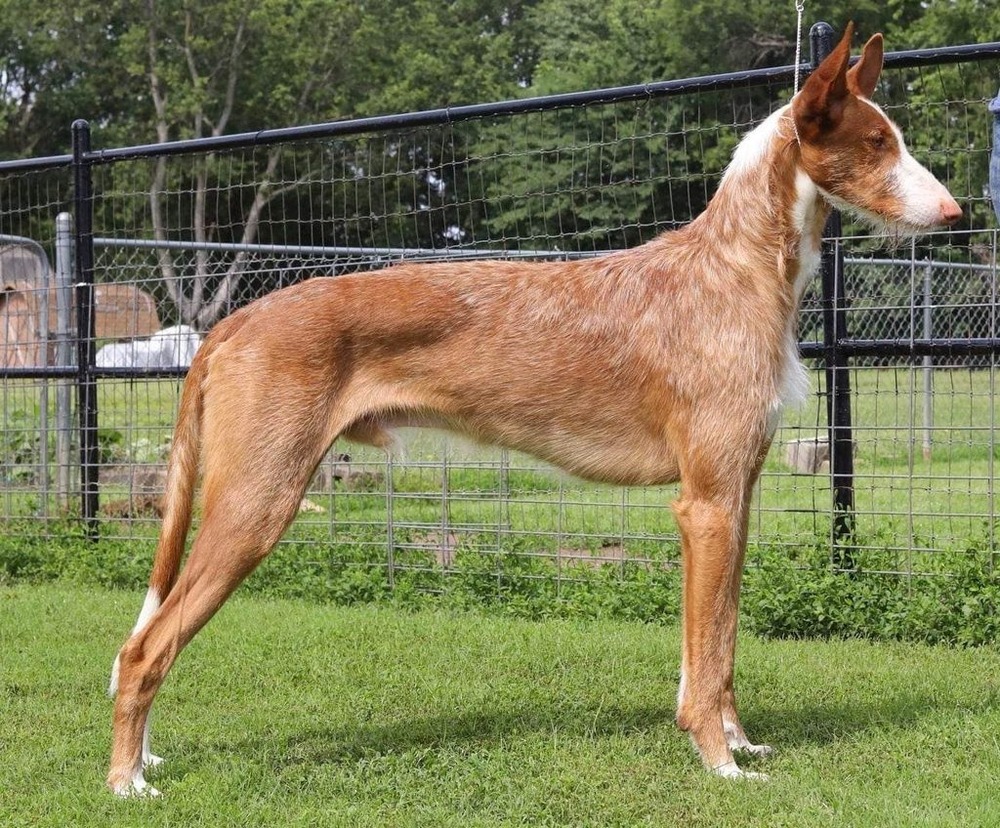
The Ibizan Hound is closely associated with the Balearic Islands of Spain, especially Ibiza. In the islands, the breed is traditionally known as Ca Eivissenc (in Catalan), and in the FCI standard it is listed as the Podenco Ibicenco. The dog’s traditional work is rabbit hunting, often in rough cover and over uneven ground.1
You will sometimes read that these dogs were brought to the islands by ancient traders, and you will also see claims linking the breed to ancient Egyptian depictions. Those ideas may be plausible in a broad “Mediterranean dog types” sense, but the evidence for a direct, unchanged line from ancient Egypt to the modern breed is not straightforward. If the history matters to you, it is worth treating the Egyptian connection as an often-repeated tradition, rather than a settled fact.2
What is clearer is the breed’s long-standing role on the islands. The Podenco Ibicenco is described as a rabbit hunter used day and night, valued for scenting and hearing as well as what it can see. That detail matters, because it explains why many Ibizans will “work” an environment with their whole body, nose, ears, and sudden bursts of motion, even on an ordinary suburban walk.1
Physical characteristics
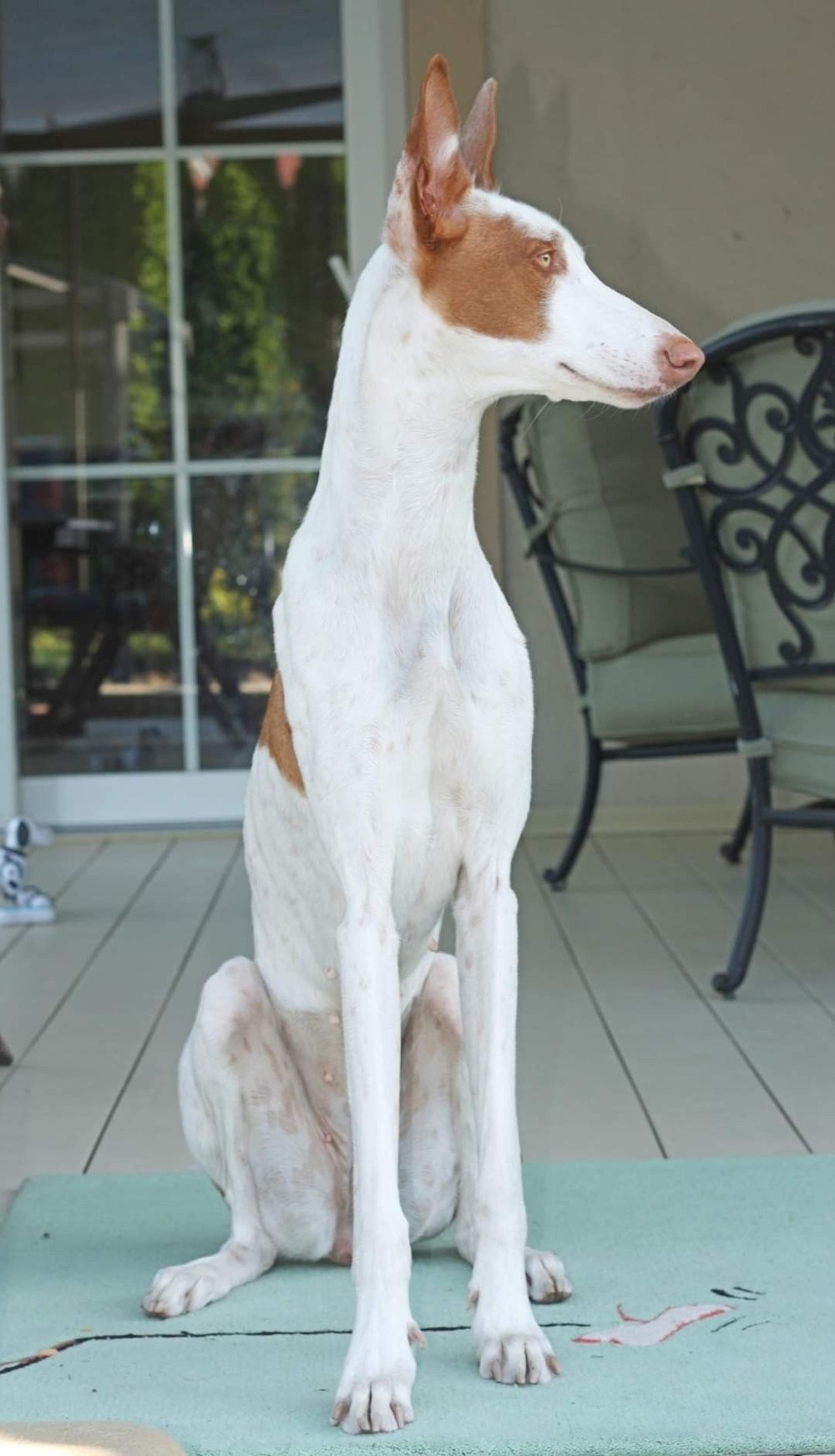
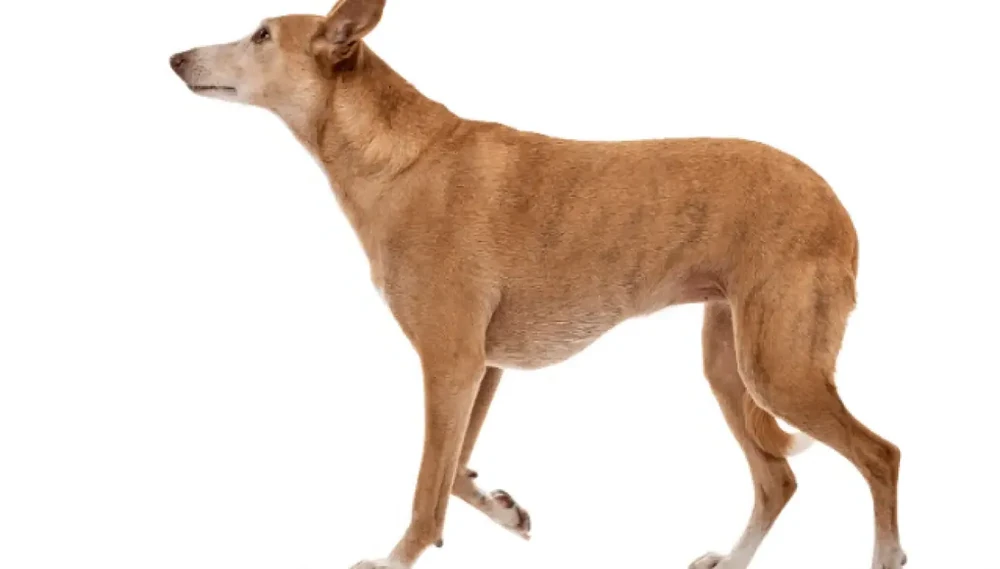
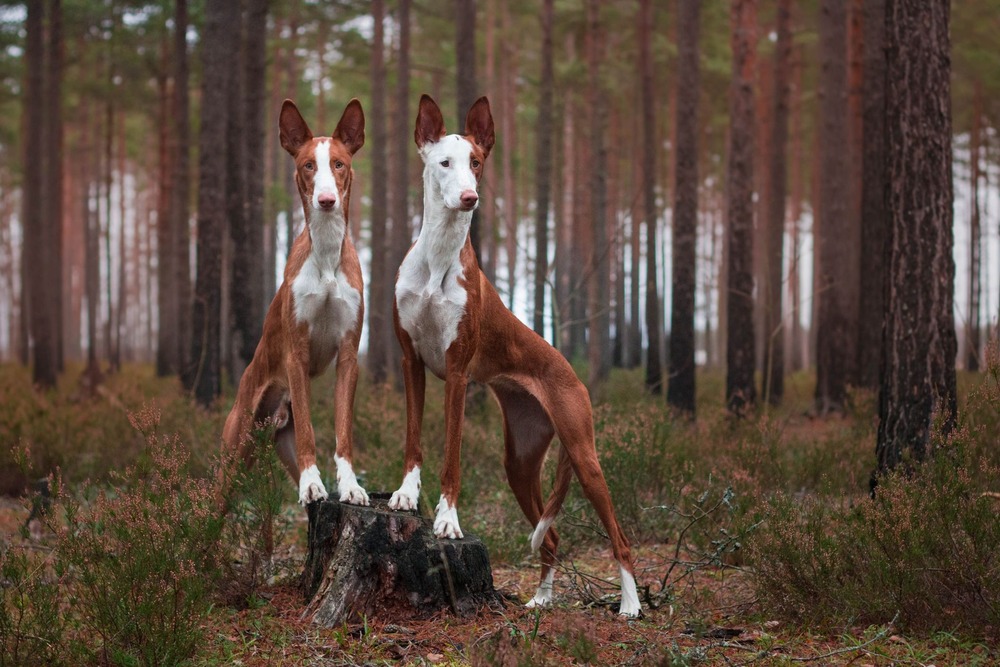
The Ibizan Hound is tall, lean, and lightly built, with a long head, large erect ears, and a tucked-up outline that reads “athlete” from a distance. Most standards describe two coat types: smooth and rough (wire). Colours are typically red and white, in solids or combinations, and most standards do not accept other colours.3, 4
Size ranges depend on the registry, but many fall within roughly 56 to 74 cm at the shoulder. Importantly, judges and breed standards tend to prioritise balance and functional movement over hitting an exact measurement.4
One practical detail that owners mention again and again is jumping. Ibizan Hounds are widely described as capable of impressive vertical leaps. That is part anatomy and part motivation, and it is why a “normal” fence that contains many dogs may not be a meaningful boundary for this breed.5
Temperament and everyday behaviour
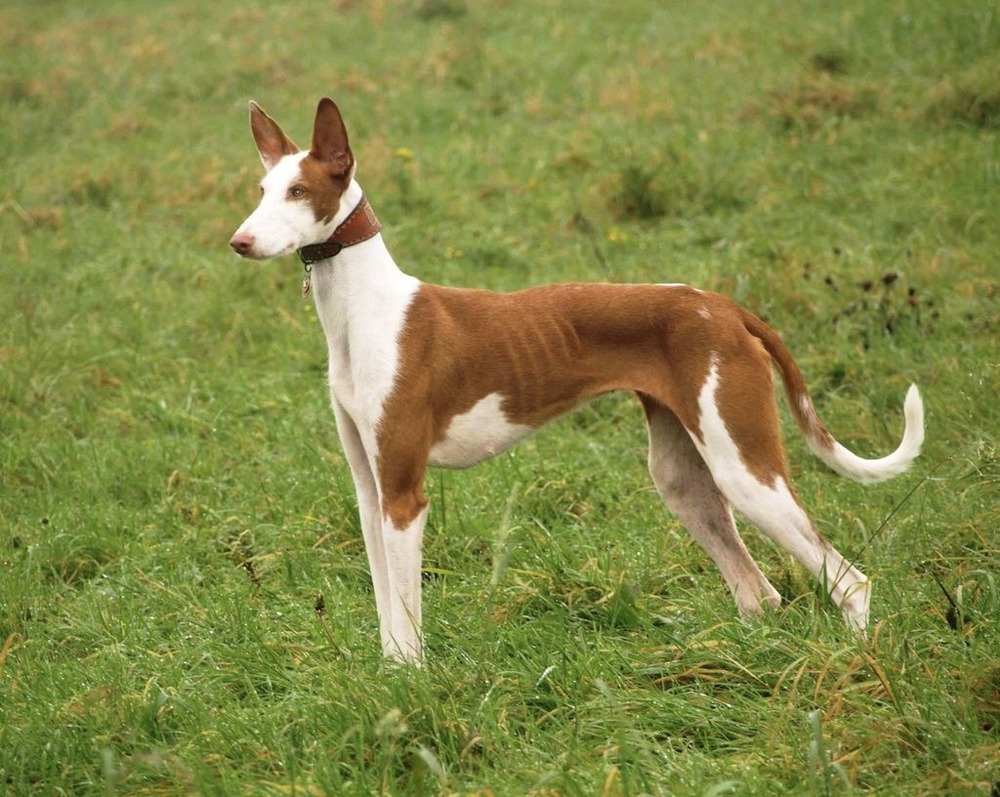
In many homes, Ibizans are calm indoors and lively outdoors. They tend to notice movement quickly, and once their hunting brain switches on, recall can become situational. That does not mean they are “naughty” or “dominant”, it usually means they are doing what they were built to do, with a nervous system that is highly tuned to motion and scent.5
They are often described as bright and independent. Training can feel smooth one day and strangely negotiable the next. With sighthounds and related hunting types, it helps to think in terms of building habits and reinforcement rather than trying to “win” an argument. You are shaping a pattern of choices under distraction, not just teaching commands in the kitchen.
With children, many Ibizans do well when adults keep play sensible and give the dog space to opt out. Their movement is quick and springy, so it is worth supervising excited games, especially with smaller kids, to avoid accidental bumps or a dog becoming overwhelmed by unpredictable grabbing.
With other animals, the main consideration is prey drive. Some Ibizans live peacefully with cats and small pets, especially when raised with them, but it is not something to assume. The safest approach is careful introductions, management, and realistic expectations about what will happen if a small animal bolts across the yard.
Training and exercise needs
Ibizan Hounds need daily movement that allows them to open up their stride, plus time to sniff, explore, and decompress. A short on-lead stroll around the block rarely touches the sides. Many thrive with activities that match their body and instincts, such as lure coursing, agility foundations, or structured free running in a safely enclosed area.5
Training tends to work best when it is reward-based, short, and repeated in different places. The goal is not just obedience in quiet conditions, but skills under real-life distraction. For many owners, the most useful “commands” are actually life skills: checking in, responding to a cue after spotting a bird, settling on a mat, and walking past triggers without escalating.
Because of their jumping ability and hunting drive, management is part of training. That usually means:
- secure fencing that accounts for height and climbing or launch points
- leads and long lines used thoughtfully, not as a substitute for enrichment
- recall practised, then practised again, and still backed up when it matters
Health and lifespan
Many Ibizan Hounds live into their early teens, with commonly cited ranges around 11 to 14 years. As with most purebred dogs, individual health depends on genetics, breeding choices, and everyday care.5, 6
Conditions discussed in veterinary and breed resources include hip dysplasia and inherited eye conditions. Breed-focused guidance often recommends routine screening, particularly for eyes, and sometimes hearing testing in puppies (BAER testing) where concerns exist.6
Like many deep-chested, athletic breeds, bloat and the more serious gastric dilatation-volvulus (GDV) are also mentioned as risks. It is not something to panic about, but it is worth knowing the early signs and having a plan for urgent veterinary care if you ever suspect it.7
Preventive care is mostly the unglamorous stuff done consistently: keeping dogs lean, maintaining fitness, dental care, parasite control, and regular vet checks. For a breed that can move like a cartoon athlete, it is also wise to reduce injury risk with warm-ups, sensible surfaces, and not asking for high-impact jumping as a party trick.
Grooming and maintenance
Grooming is usually straightforward. Smooth coats need occasional brushing to remove loose hair and dust, and wire coats often do best with periodic hand-stripping or grooming that maintains the coat texture. Either way, the breed is not typically high maintenance in the grooming sense.3
What can take more thought is general management. Ibizans are often described as sensitive to cold compared with heavier-coated breeds, so in cooler Australian regions some will appreciate a coat outdoors, and a warm sleeping spot indoors.
Routine checks still matter: ears (especially after running in scrub), nails (active dogs can still get long nails), and teeth. Regular handling from puppyhood makes these chores calmer for everyone, and helps you spot small changes early.
Diet and nutrition
Ibizan Hounds generally do best on a complete and balanced diet that supports a lean, muscular body condition. Because they are athletic, it can be tempting to overfeed, but long-term joint and general health are usually helped by staying trim. If you are unsure, your vet can help you set a target weight and adjust portions over time.8
Rather than obsessing over a single “best” food, focus on a few practical markers: consistent stools, stable energy, a coat that looks and feels healthy, and a dog that maintains condition without constant hunger. Treats are useful for training, but they add up quickly in a breed that benefits from repetition and reinforcement.
If you ever consider a raw or home-prepared diet, it is worth doing it with professional guidance. The biggest risk is usually not one dramatic mistake, but slow imbalances that show up months later.8
Living with an Ibizan Hound
An Ibizan Hound can be a wonderful companion for the right household, especially for people who enjoy being outdoors and like training in a low-pressure, curious way. The breed can also be a poor match for someone who wants an easy off-lead dog by default, or who relies on a small backyard with minimal fencing.
When things go well, it is often because expectations are realistic. The owner plans for exercise, prevents rehearsal of chasing and escaping, and builds a routine that includes rest. The dog gets to do dog things safely, and the household learns the particular rhythm of a hound that is both soft at home and highly switched on in the world.
References
- Federation Cynologique Internationale (FCI): Podenco Ibicenco (Ibizan Hound) breed standard
- Encyclopaedia Britannica: Dog (overview of domestication and breed development context)
- United Kennel Club (UKC): Ibizan Hound breed standard
- The Kennel Club (UK): Ibizan Hound breed standard
- Purina: Ibizan Hound breed information
- PetMD: Ibizan Hound health and care
- American Veterinary Medical Association (AVMA): Gastric dilatation-volvulus (bloat) in dogs
- WSAVA: Global Nutrition Guidelines