

- Breed category: Gundog
- Country of origin: Ireland
- Average height: Males 53 to 59 cm, females 51 to 56 cm
- Average weight: Males 25 to 30 kg, females 20 to 26 kg
- Average life span: 10 to 12 years
- Grooming requirements: Regular brushing and trimming
- Exercise requirements: High, needs daily exercise
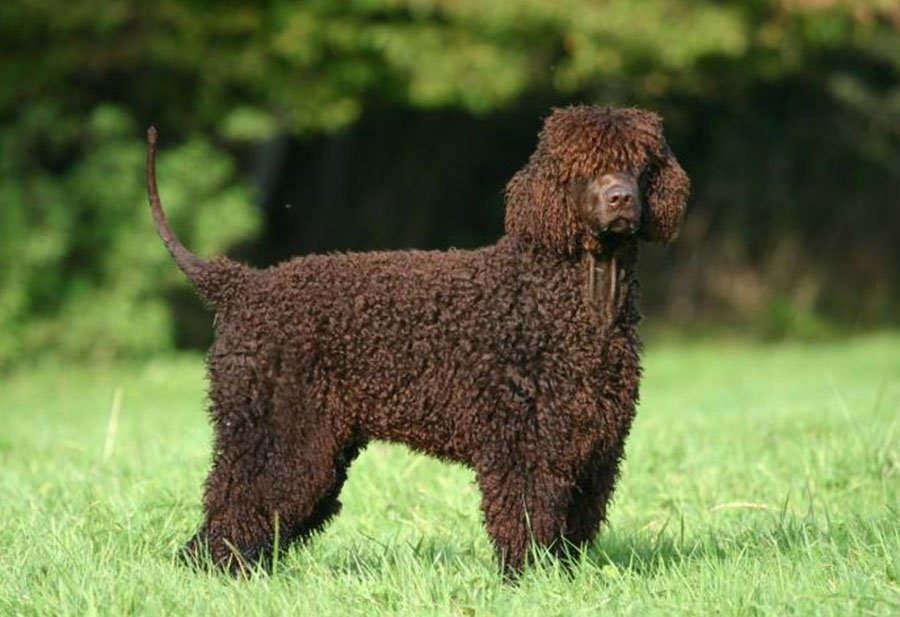
- Coat type: Curly and water-resistant
- Coat colour: Rich liver
- Shedding level: Low
- Ear type: Long and hanging
- Tail type: “Rat tail”
- Temperament: Intelligent, playful, and alert
- Training: Responds well to positive reinforcement
- Common health considerations: Hip dysplasia, ear and eye issues
People often start looking up the Irish Water Spaniel after seeing one at the beach or in the park and doing a double take. The coat looks like tight curls that belong on a different animal, the tail looks unexpectedly smooth, and the dog moves with the steady confidence of something bred to work in water.
It is easy to assume that a curly coat means low effort, or that a “water dog” will be automatically easygoing and content with a quick walk. In practice, this is a bright, athletic gundog that tends to do best with owners who enjoy training, daily movement, and a bit of coat upkeep.
When the match is right, Irish Water Spaniels can be deeply satisfying companions: engaged, capable, and often quietly amusing in the way they problem-solve. The key is understanding what sits underneath the distinctive look, including the breed’s working history and the care routines that keep them comfortable.
Getting to know the Irish Water Spaniel
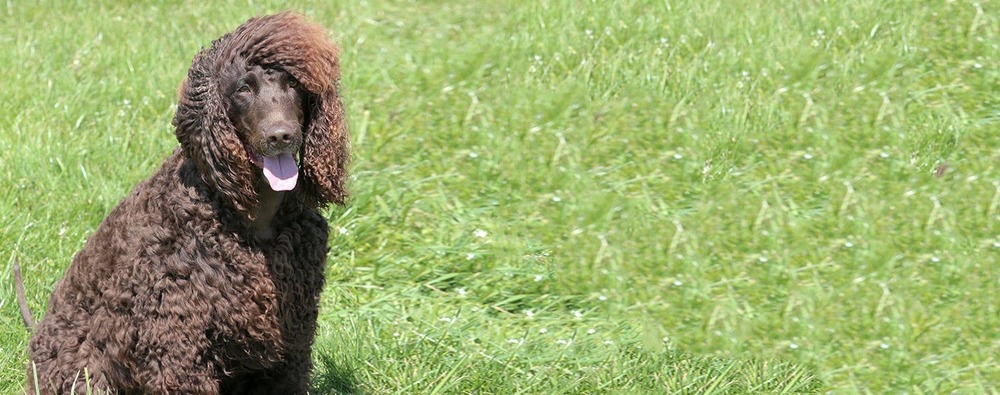
The Irish Water Spaniel is one of the taller spaniel breeds and is closely associated with retrieving work in wetlands, rivers, and cold water. The modern type is generally linked to 19th-century Ireland, with Justin McCarthy often credited for shaping the breed, although early records are incomplete.1
That working background explains a lot of what owners notice at home. Many Irish Water Spaniels have a strong interest in scent, movement, and carrying things, and they often love structured games that resemble retrieving. A dog bred to push through reeds and swim after downed game tends to appreciate purpose, not just passive companionship.
Think “working retriever in curls” rather than a decorative dog. When their daily needs are met, they usually settle more easily and are far less likely to invent their own entertainment.
What makes them look so different?
The classic look includes a dense curly liver coat (often described as water resistant), a pronounced topknot of curls, and the famous “rat tail”, smooth at the base and tapering. The coat can be an advantage outdoors, but it also creates its own grooming reality: curls can trap burrs, sand, and moisture if you are not staying on top of maintenance.2
Temperament, day-to-day behaviour, and suitability
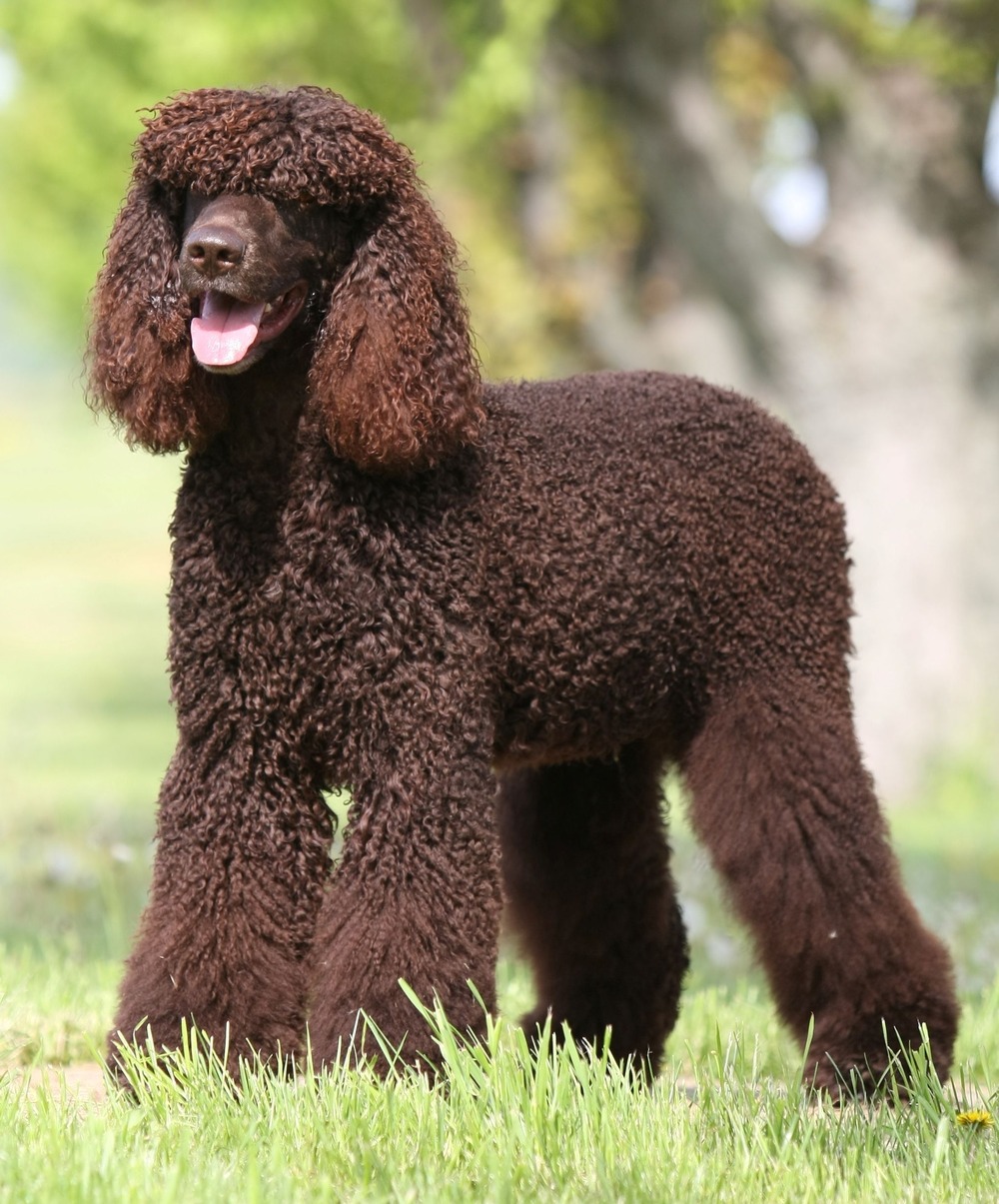
In many homes, Irish Water Spaniels come across as switched-on and responsive, with a playful streak that can catch people off guard. They are often described as intelligent and energetic, and they may be a little reserved at first with strangers, particularly if they have not had much early exposure to different people and settings.2
They tend to bond strongly with their people, but that does not automatically mean they thrive in every household. They usually suit active families, people who enjoy training, and homes where the dog has regular outlets for both movement and thinking.
With children and other pets
With thoughtful supervision and steady socialisation, many do well with children. As with any athletic breed, it helps to teach both dog and kids the same calm habits: no grabbing, no chasing games indoors, and plenty of predictable routines. With other pets, early introductions matter, and it is sensible to be mindful of the retrieving instinct around small animals and fast movement.
Training and exercise that actually works in real life
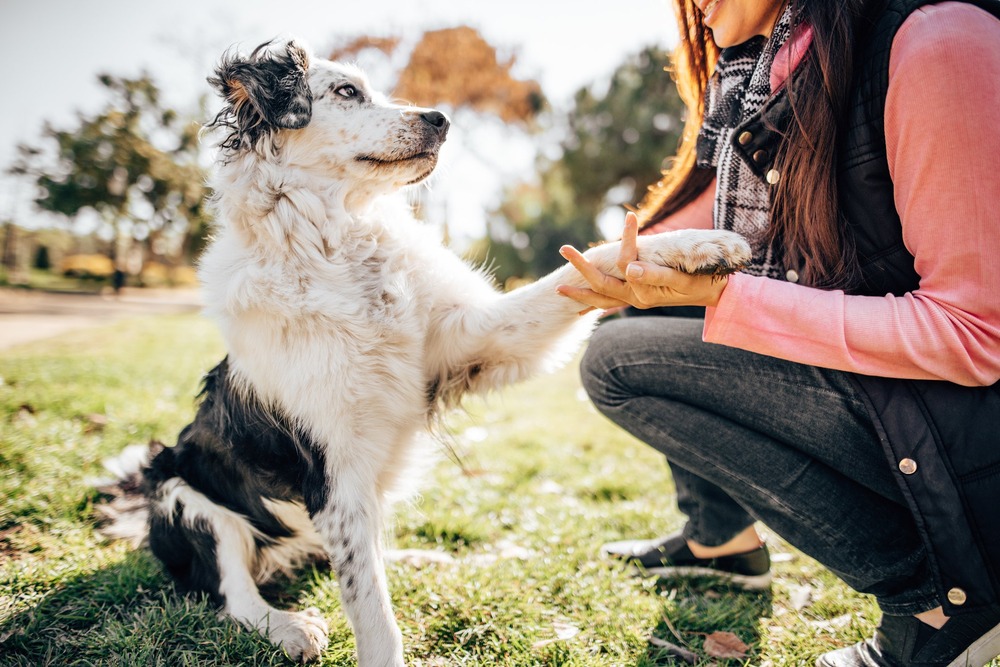
Most Irish Water Spaniels respond best to training that feels like a partnership, short sessions, clear criteria, and rewards that matter to the dog. Many owners find that a mix of food rewards, play, and access to favourite activities (like retrieving or swimming) builds reliability without making training feel heavy.
Start early and stay consistent. Early socialisation, gentle handling practice, and settling skills (like mat training) can make a big difference, especially in a breed that can become inventive when under-stimulated.
Exercise needs, plus heat-aware choices
These dogs generally need daily exercise that includes both physical activity and mental work. Long walks, off-lead runs where safe and legal, retrieving games, scentwork, and training sessions all have a place. Swimming can be a wonderful low-impact option, but it should be introduced safely, and not every dog is automatically sensible around currents, boats, or wildlife.
Because this is a hardworking breed with a dense coat, it is worth being particularly careful in hot weather. In Australia, guidance commonly emphasises walking early or late, avoiding hot pavements, and watching closely for signs of overheating.3, 4
- Choose cooler times of day for exercise and training.
- Use the hand test on pavement, if it is too hot for your hand, it is too hot for paws.3
- In humid heat, shorten sessions and prioritise shade, water, and recovery time.
Health considerations and what to watch for
No breed is “problem free”, and the Irish Water Spaniel is no exception. Breed clubs and veterinary bodies commonly point owners towards joint issues (including hip and elbow dysplasia), plus some eye conditions, and the everyday reality of ear trouble in dogs that swim and have hanging ears.5, 6
Good breeding helps, but it is not a guarantee. If you are buying a puppy, ask what health screening the parents have had (hips, elbows, eyes), and ask to see the relevant results, not just verbal assurances.
Ears and water: a practical note
Water-loving dogs with drop ears can be prone to otitis externa (inflammation and infection of the outer ear). Keeping ears clean and dry after swims, and getting onto early signs (head shaking, redness, odour, increased scratching) can prevent a minor issue from becoming stubborn and painful.6
Coat care, grooming, and everyday maintenance
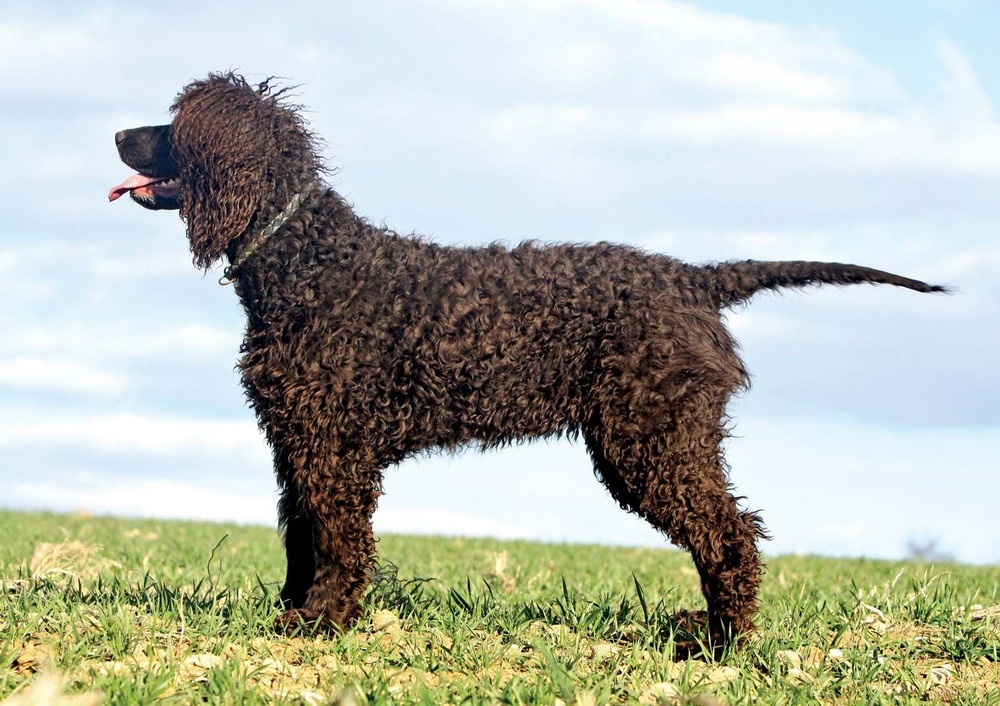
The curly coat is part of the breed’s appeal, but it is not a “set and forget” coat. Curls can mat close to the skin, especially behind the ears, under the collar, and where harness straps sit. Regular brushing and combing, plus occasional trimming, keeps the coat comfortable and reduces the chance of tight mats that tug at the skin.
Plan for routine grooming rather than waiting until the coat is already tangled. Many owners find it easier to do short, frequent sessions, and book a professional groomer every so often for a tidy-up and a reset.
Bathing and post-swim checks
Bathing is usually “as needed”, but swimming often means you should rinse the coat and check for debris. Pay attention to ears, paw pads, and the coat around the neck and chest, places where sand and plant matter can hide.
Feeding, weight, and keeping joints comfortable
Irish Water Spaniels are active dogs, but they can still gain weight if food portions creep up or exercise drops off. Keeping your dog lean is one of the simplest, most practical ways to support long-term joint comfort and overall health, especially in breeds where dysplasia is part of the wider conversation.7
Use body condition, not the scoop. Feeding guides on bags are starting points, not a personal prescription. Your vet can help you assess body condition score and adjust feeding amounts based on age, activity, and desexing status.7
What to be cautious about
If you are considering supplements, raw feeding, or home-prepared diets, it is worth getting qualified advice rather than relying on trends. Nutrient balance matters, particularly for growing dogs and for long-term bone and joint health.8
A few grounded “fun facts” (and what they mean)
Irish Water Spaniels are sometimes nicknamed the “clown” of the spaniels. It is a light-hearted way of describing a dog that can be inventive, persistent, and keen to engage, especially when the household has accidentally taught them that clever behaviour gets attention.2, 9
You may also hear older nicknames such as “Shannon Spaniel” or “Rat Tail Spaniel”, reflecting both regional associations and their distinctive tail. Whatever the label, the main practical takeaway is the same: this is an uncommon, capable water retriever with a very particular look and a very real need for daily outlets.1, 2
Final thoughts
The Irish Water Spaniel tends to suit people who like a dog with opinions, stamina, and a genuine interest in doing things together. When exercise, training, and grooming are treated as normal parts of life, many owners find the breed settles into a steady rhythm and becomes a responsive, enjoyable companion.
If you are drawn to the coat and the water-dog mystique, it is worth looking past the photos and asking the practical questions first. The best match is usually the honest one, where the dog’s needs fit the shape of your weeks, not just your weekends.
References
- Wikipedia: Irish Water Spaniel
- American Kennel Club (AKC): Irish Water Spaniel
- RSPCA Australia: Keeping your pet safe during the heat
- RSPCA Australia: Five ways to keep your animals safe on hot days
- Irish Water Spaniel Club of America: Health Issues
- Merck Veterinary Manual: Ear disorders of dogs
- WSAVA: Global Nutrition Guidelines
- Cornell University College of Veterinary Medicine: Nutrition and feeding your dog
- United Kennel Club (UKC): Irish Water Spaniel