

People usually come across the Istrian Coarse-haired Hound by accident. A photo pops up of a white hound with warm orange markings and that unmistakably wiry coat, or you hear the name mentioned by someone who hunts, follows rare breeds, or has family ties to Croatia.
Then the practical questions start: is this dog simply a “rustic” look, or does that coat actually change how it lives with you? Is it a calm family companion, or a working hound that will invent its own job if you do not provide one?
The Istrian Coarse-haired Hound can be a steady, gentle presence in the home, but it still carries the priorities of a scent hound bred for fieldwork. Understanding that balance is what makes day-to-day life with the breed feel sensible, rather than surprising.
At a glance
Breed type: medium-sized scent hound (FCI Group 6)1
- Height: 46 to 58 cm at the withers1
- Weight: typically 16 to 24 kg1
- Coat: harsh, bristly topcoat with undercoat, usually snow white with lemon-orange markings1
- Originally bred for: hare and fox hunting (also used as a leash hound)1
Origins and working background
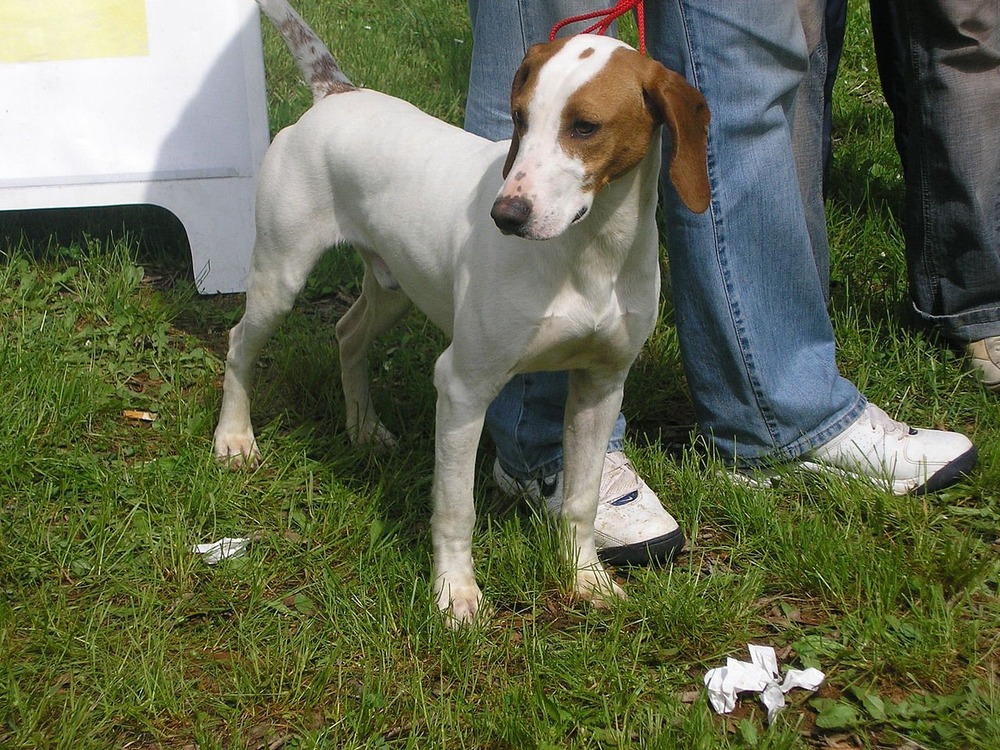
The breed comes from Croatia, with its working identity closely tied to the open terrain of the Istrian region. In the official standard, it is described as a scent hound particularly suited to hunting hare and fox, built to cover ground and keep going.1
Historical notes in the FCI standard also explain why the breed is less frequently depicted in older artwork. Rough-coated dogs were often less favoured by artists, so records can feel patchy compared with some smoother-coated European hounds. Even so, the standard points to written descriptions in the late 1800s, sales in Istria in the early 1900s, and a period of decline around World War I, followed by registration in the Croatian stud-book from 1924 onward.1
A detail that is easy to miss when skimming breed summaries is that FCI recognition dates to 1948, and the first standard was published in 1969. That matters because it anchors the breed’s modern description in a formal working-dog context, not purely as a companion animal trend.1
Appearance and coat, what it means in real life
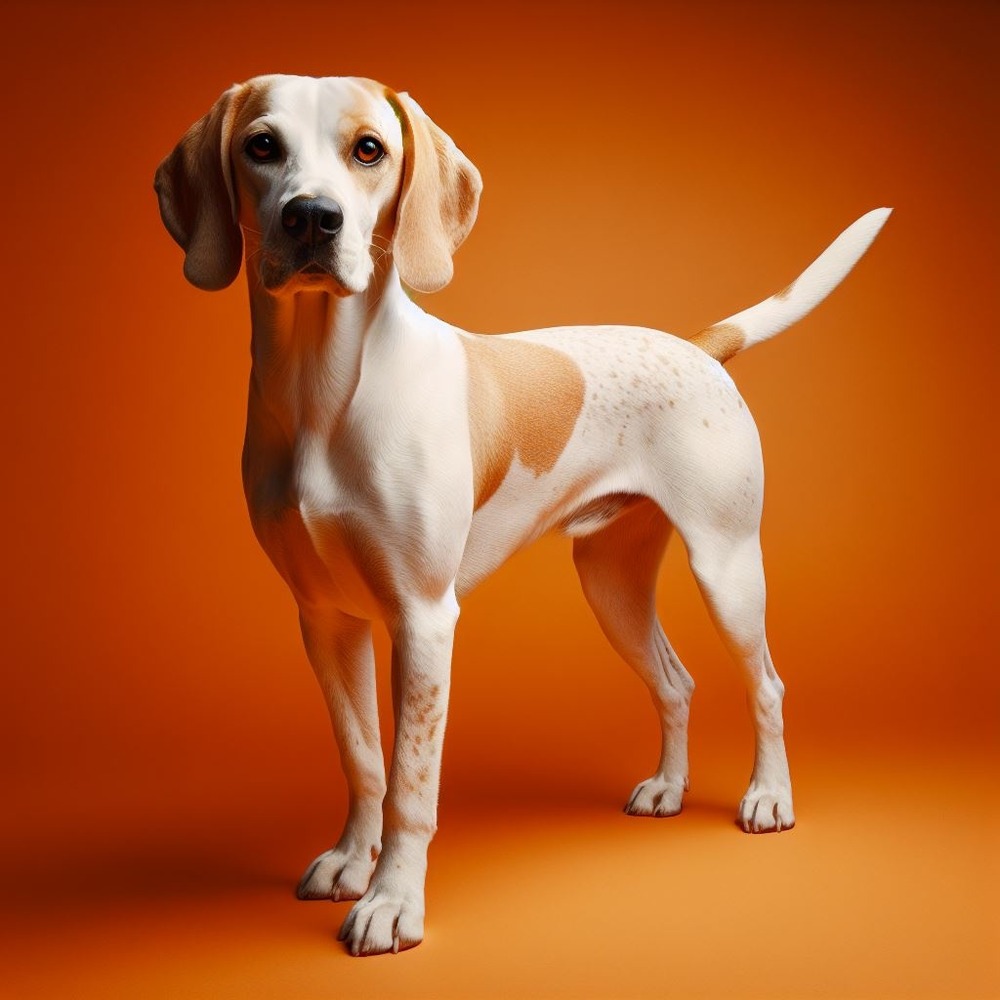
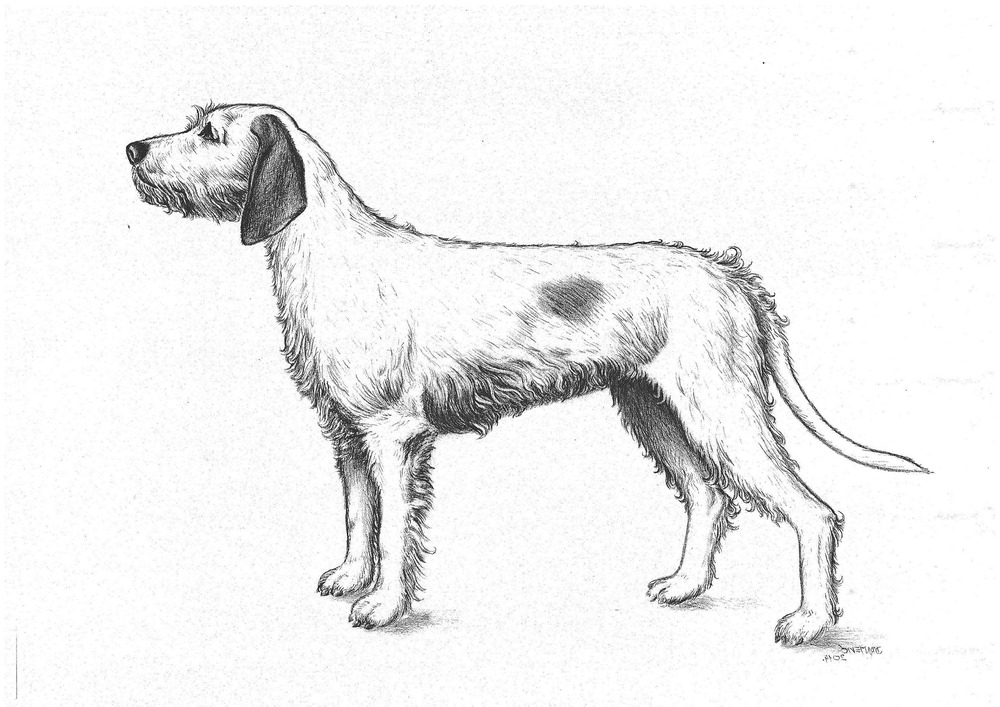
The Istrian Coarse-haired Hound is defined by a harsh, bristly outer coat (about 5 to 10 cm long) with a thick undercoat that can be more noticeable in winter. The coat should not be curly or wavy, and it is described as bristly rather than lying flat to the skin.1
Colour is also quite specific in the standard: a snow-white ground colour with lemon-orange markings, and ears that are always orangey. You will sometimes see richer orange in photos, but what matters in day-to-day terms is that this is a light-coated dog, so mud and burrs can be more visible after a run through scrub.1
Practical coat takeaway: the coat is functional, not ornamental. It is there to protect the dog while moving through rough country, which is one reason many owners find that regular brushing and checking for debris makes life easier, especially after outings in long grass.
Temperament and suitability, family life versus field life
In the FCI standard, the breed is described as gentle, docile, calm, and very attached to its owner, while also being an enthusiastic hunter.1
Those two halves can coexist well, but they shape the kind of home that suits the dog. Many scent hounds are pleasant to live with when their needs are met, yet can become creatively difficult when they are under-exercised or when their world feels too small. It is not “bad behaviour” so much as a mismatch between the dog’s design and the daily routine.
Best fit tends to be: people who enjoy long walks, have a safe area to explore, and are comfortable doing ongoing training and enrichment rather than assuming the dog will self-settle every day.
Training and exercise, working with the nose
Training an Istrian Coarse-haired Hound is usually most successful when you respect what motivates a scent hound. That means keeping sessions short, rewarding, and consistent, and using the environment wisely (for example, training recall first in low-distraction spaces).
Because the breed is built to follow scent, it often benefits from exercise that is not just physical. Scent-based games, tracking-style activities, and structured exploring on a long line can take the edge off in a way that a quick lap of the block does not.
Daily needs vary by age and individual, but many owners do best with a mix of:
- brisk walks plus time to sniff
- training that includes calm behaviours in the home
- puzzle feeding or scatter feeding for enrichment
If you live in a hot climate, take heat seriously. Australian animal welfare groups advise providing shade and water, avoiding walks in the hottest part of the day, and watching for signs of heat stress.6
Health considerations and preventative care
No single article can predict the health of an individual dog, and for rarer breeds the most useful information often comes from a good vet, a responsible breeder, and a clear-eyed approach to prevention. Still, there are a few themes that commonly matter for medium to larger active dogs and for drop-eared hounds.
Hips and joint health
Hip dysplasia is often described in breed round-ups, and it is worth understanding what the term means. Canine hip dysplasia is a developmental condition involving joint laxity (a looser fit of the hip joint) that can contribute to pain, lameness, and progressive joint change over time.4
What helps in practice: keeping your dog lean, building fitness gradually, and speaking with your vet about appropriate exercise and, where relevant, screening.
Ears and recurring ear trouble
Drop ears are not automatically a problem, but the ear shape can make it easier for moisture and debris to linger. If your dog is prone to ear issues, your vet may recommend an ear-care routine and cleaning approach tailored to the individual. Avoid home remedies that can inflame the ear canal, especially if there is redness, pain, or odour.
Grooming and everyday maintenance
The wiry coat is not a “wash-and-wear” coat, but it is manageable. Most owners find that regular brushing helps remove loose hair and reduces tangles, and it also becomes a good moment to check paws, ears, and skin after bush walks.
A sensible routine often includes:
- brushing one to a few times a week (more after adventures outdoors)
- nail trimming as needed
- teeth care as part of general health maintenance
- ear checks, especially after swimming or wet weather
Bathing can be occasional. Over-bathing can dry the skin, and with a working-style coat it is often more useful to brush out dirt once dry.
Feeding and body condition, keeping an athletic hound comfortable
Most people do not struggle with the idea of feeding “good quality” food. The harder part is staying consistent when the dog is active, hungry, and very good at looking persuasive.
The WSAVA Global Nutrition Guidelines encourage a structured approach where veterinary teams assess the individual animal and help owners choose an appropriate diet, rather than relying on marketing cues or ingredient-list assumptions.5
Practical feeding focus: aim for a steady body condition, measure meals, adjust with seasons and workload, and use part of the daily ration for training when you can.
Living with one, what tends to surprise people
Two things catch many new hound owners off guard.
First, a scent hound may look calm in the house and still have a very strong drive outdoors. That can make recall training feel slower than expected, and it is one reason secure fencing and safe lead skills matter.
Second, the coat can be deceptively “natural”. It still needs hands-on upkeep, particularly if your dog spends time in scrub, long grass, or wet paddocks where debris and seeds can collect.
Final thoughts
The Istrian Coarse-haired Hound is not a novelty breed, and it does not ask to be treated like one. It is a practical, working-bred scent hound with a distinctive coat, a steady temperament in the right setting, and a genuine need for daily movement and mental engagement.
If you are drawn to the breed, it is worth seeking out people who understand hounds, not just the look of them. With the right match of home, routine, and training, this can be a deeply satisfying dog to live alongside.
References
- FCI Standard N° 152: Istrian Wire-haired Scent Hound (Dogs Global reproduction of FCI standard)
- United Kennel Club (UKC): Istrian Coarse-haired Hound
- Croatian Kennel Club (HKS): Official breed standards (English site)
- American College of Veterinary Surgeons (ACVS): Canine Hip Dysplasia overview
- World Small Animal Veterinary Association (WSAVA): Global Nutrition Guidelines
- RSPCA ACT: Hot weather tips for pets
- Agriculture Victoria: Caring for animals during extreme heat (includes dogs)
- RSPCA South Australia: Protecting pets during extreme heat