

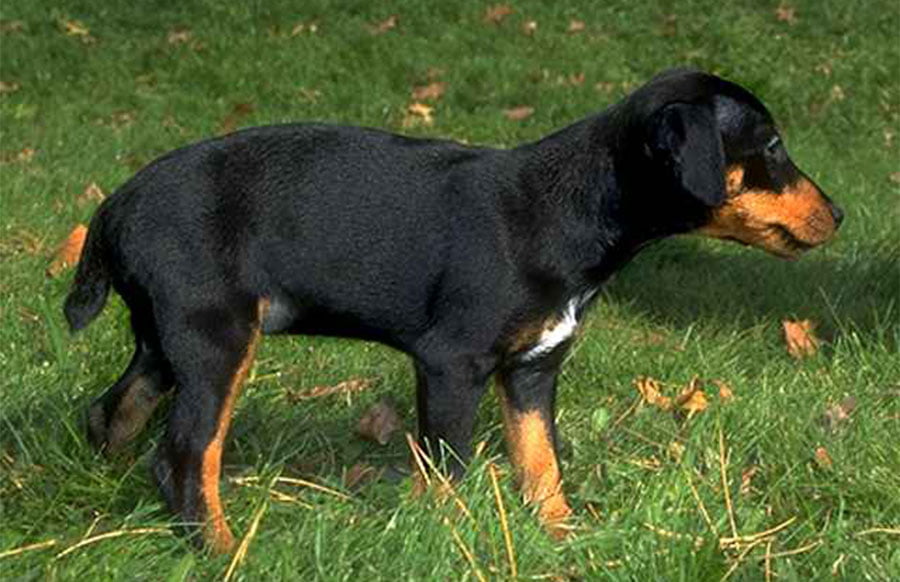
People usually come across the Jagdterrier in a fairly ordinary way: a compact, dark-coated terrier that looks “small enough to manage”, but moves through the world like it has a job to do. Maybe it is the dog at the park that never stops scanning the ground. Maybe it is a quick online search after hearing the name in a hunting context. Either way, the first impression is often the same, plenty of spark in a small body.
That spark is the point. The Jagdterrier (German Hunting Terrier) was developed for work, not for looking pretty in the lounge room, and a lot of the breed’s day-to-day behaviour makes more sense once you view it through that lens. Their energy, their determination, their readiness to follow scent or movement, these are not “bad habits” so much as instincts that need a sensible outlet.
When people and Jagdterriers suit each other, it can feel effortless: an athletic little partner who thrives on training, outdoor time, and clear routines. When they do not, the same traits can turn into frustration, chasing, barking, and a dog that always seems one step ahead. Knowing what the breed was built to do is the most practical starting point.
- Breed category: Terrier
- Country of origin: Germany
- Height: 33 to 40 cm
- Working weight (ideal): Males 9 to 10 kg, females 7.5 to 8.5 kg1
- Typical lifespan: Often around 10 to 12 years2
- Coat: Dense, either rough (hard) or smooth1
- Colour: Black, dark brown, or greyish-black with tan markings, small white markings may be tolerated in some standards1
- Exercise needs: High, daily physical exercise plus mental work
- Training style: Best with reward-based, consistent training3, 4
- Common considerations: Strong prey drive, can chase wildlife and smaller pets
History and origin
The Jagdterrier is, quite literally, a hunting terrier. The breed standard describes a dog built for work above and below ground, with the size and structure to enter dens while still being sturdy enough to cope with a confrontation.1 In practice, that heritage tends to show up as persistence, stamina, and a readiness to keep going long after many pet dogs would have switched off.
It is also worth noting that “working heritage” does not automatically mean a dog must hunt to be happy. It means the dog’s brain and body expect a certain amount of purposeful activity. For many households, that can be channelled into tracking games, structured training, scent work, and dog sports, with the same calm, consistent approach you would take when teaching any high-drive terrier.
Physical characteristics
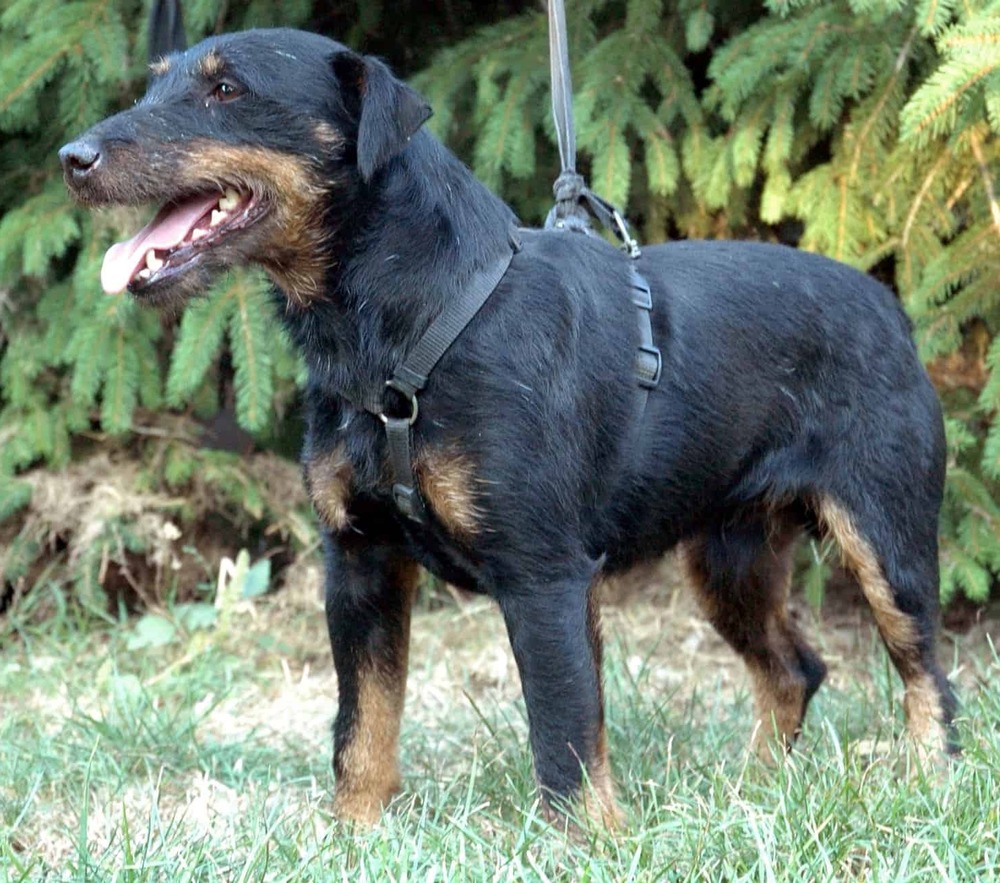
The Jagdterrier is compact and athletic, typically standing 33 to 40 cm at the withers, with an ideal working weight that often sits under 10 kg depending on sex and condition.1 They are not meant to be fine-boned or delicate. The overall picture is of a small dog with serious fitness.
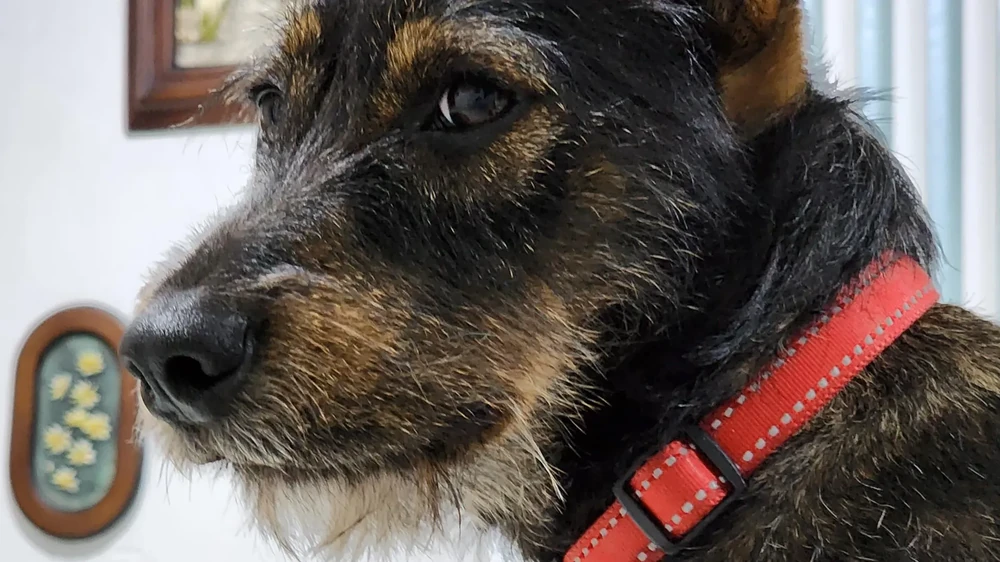
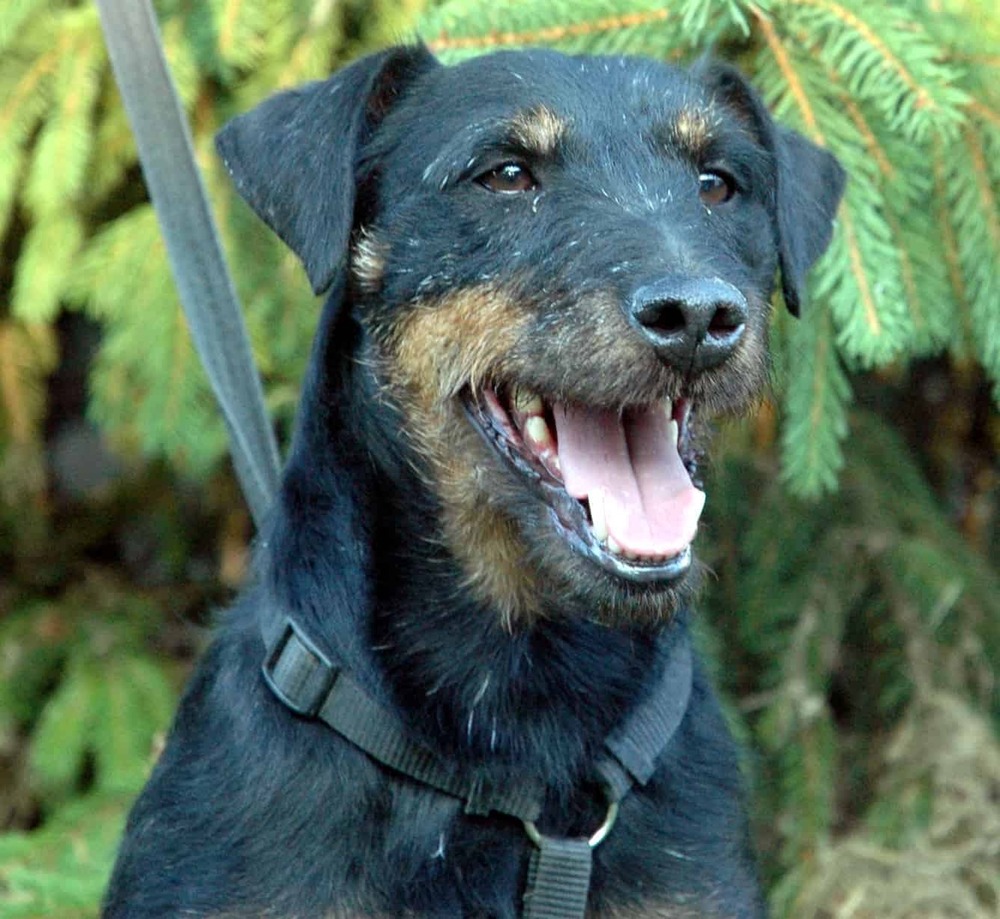
Coats may be hard and rough or coarse and smooth, and should be dense enough to protect the dog from cold, damp, and thick cover.1 Colours are generally dark (black, dark brown, or greyish-black) with clearly defined tan markings on the face and legs, plus small white markings sometimes tolerated depending on the standard.1
Temperament and behaviour
If you enjoy terriers, the Jagdterrier can feel like a very concentrated version of what makes them appealing: bright, responsive, and intensely engaged with their surroundings. A useful way to think about them is that they tend to be quick to practise behaviours. If chasing works, they will repeat it. If barking brings attention, they will try it again. If calm behaviour reliably earns rewards, they can learn that just as fast.
In family life, many Jagdterriers can be affectionate and playful, but the match matters. They generally do best with people who like training, routine, and active time outdoors, not just a quick potter around the block. With children, what helps most is supervision, teaching kids how to interact appropriately, and making sure the dog has a quiet place to rest.
With other animals, the breed’s prey drive is a real factor. Some individuals live well with other pets when raised carefully and managed thoughtfully, but it is sensible to assume that small pets and wildlife will trigger chase behaviour. Management (secure fencing, lead skills, enrichment) is often as important as training.
Training and exercise needs
Most Jagdterriers respond best to reward-based training that teaches the dog what to do, rather than focusing on what not to do. This approach is widely recommended by animal welfare organisations because it supports learning while avoiding the fallout that can come with harsh, aversive methods.3, 4
Early socialisation helps, but it is not a magic shield against instinct. Think of it as building a dog’s coping skills and confidence: new places, different surfaces, friendly people, other dogs at a distance, and calm exposure to everyday life. Pair those experiences with reinforcement for checking in with you, so you are not competing with the whole environment.
Daily needs usually include both physical exercise and mental work. For many Jagdterriers, that looks like:
- Brisk walking and sniff time, not just a short toilet loop.
- Short training sessions (recall games, loose-lead practice, cues around distraction).
- Scent-based enrichment (scatter feeding in grass, “find it” games, simple tracking lines).
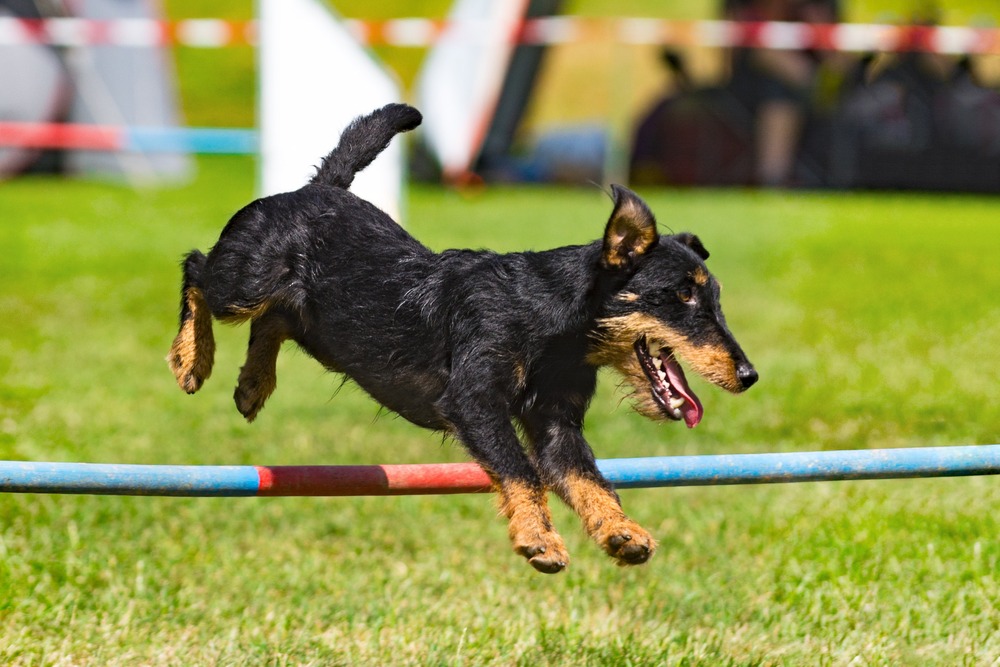
- Sport outlets if available, such as agility or organised scent work.
If you are managing chasing, it helps to train a strong recall and an emergency interrupt, but also to accept that a prey-driven dog may need more lead time and secure areas than you first expected. That is not failure, it is simply choosing safety over wishful thinking.
Health and lifespan
Many Jagdterriers are robust dogs, with a commonly cited lifespan around 10 to 12 years, although individuals can vary.2 Like any breed, they are not immune to inherited or developmental issues, and it is wise to ask breeders about health screening and family history.
Joint health is a practical focus for active dogs. Canine hip dysplasia is a developmental condition influenced by genetics and environment, and appropriate screening and weight management can matter over the dog’s lifetime.5
Eye health is another area to take seriously. Jagdterriers are among the breeds discussed in relation to primary lens luxation (PLL), an inherited condition where the lens can shift out of place and can be painful and vision-threatening if not addressed promptly.2
Preventative care is not glamorous, but it is often what keeps a busy terrier comfortable:
- Keep body condition lean and athletic, not “solid”.
- Ask your vet about appropriate joint and eye checks at routine visits.
- Use parasite prevention suited to your area and lifestyle.
- Prioritise dental care early, because small dogs can be prone to dental disease.
Grooming and day-to-day maintenance
Grooming is usually straightforward. The coat is designed to cope with rough conditions, so you are generally maintaining it rather than styling it. A weekly brush is often enough to remove loose hair and dirt, with more frequent brushing during heavier sheds.
For rough-coated dogs, some owners choose occasional hand-stripping to maintain coat texture, while others keep it simple with brushing and tidying as needed. Whichever coat type you have, focus on the basics: nails, ears, and teeth. Those small routines tend to matter more than the occasional bath.
Diet and nutrition
Jagdterriers often eat like they live: enthusiastically. A high-quality diet that matches their age and activity level helps support muscle, recovery, and stable energy. The practical guide is to feed to body condition, adjust portions as activity changes, and keep treats as part of the overall intake rather than “extra”.
It is also worth being clear about common food hazards. In Australia, government and animal welfare sources consistently warn against giving dogs foods such as chocolate, grapes or raisins, onions and garlic, and cooked bones, which can cause serious illness or injury.6, 7, 8 When in doubt, check with your vet rather than relying on social media lists.
Tail docking and what you may see
You may notice some Jagdterriers with docked tails in older photos or in certain working contexts. In Australia, routine or cosmetic tail docking is generally prohibited, with laws and enforcement set at state and territory level, and exceptions typically limited to therapeutic procedures performed by a veterinarian in the dog’s welfare interests.9
In day-to-day life, most owners will simply live with a full tail, and the dog will communicate perfectly well with it. If you are comparing puppies, it is one of those details that can reveal a lot about a breeder’s practices and their relationship with modern welfare standards.
Final thoughts
The Jagdterrier is not difficult in the way some people mean it, but it is honest about what it needs. It needs movement, problems to solve, and clear boundaries that are taught with patience. If you like training and you enjoy life outdoors, the breed can be deeply satisfying, a small dog with real substance.
If what you want is an easygoing companion who is content with low activity, it is kinder to choose a different type of dog. With Jagdterriers, the best outcomes tend to come from a simple agreement between human and dog: you bring the structure and outlets, and they bring the heart, the grit, and the tireless curiosity they were bred for.
References
- Dogs Global: German Hunting Terrier (Jagdterrier) FCI standard
- PetMD: Jagdterrier health issues and care
- RSPCA Knowledgebase: Reward-based dog training and why the RSPCA supports it
- RSPCA Knowledgebase: Training recommendations and avoiding aversive methods
- Orthopedic Foundation for Animals (OFA): Hip dysplasia overview
- Agriculture Victoria: Human foods to avoid for cats and dogs
- RSPCA Australia: Household dangers to your pet (toxic foods and more)
- RSPCA Pet Insurance: Foods to avoid feeding your dog
- Queensland Government (Business Queensland): Ban on docking dogs’ tails