

You might come across a Jämthund because you have seen one out on a track, heard a big, ringing bark carry through the bush, or noticed a grey, wolf-like dog in photos labelled “Swedish Elkhound”. At a glance, it is easy to assume it is just another Nordic spitz, built for cold weather and a busy life.
Spend a little longer around the breed, though, and the differences start to matter. The Jämthund was shaped for a particular job: locating large game, holding it in place with persistent “stand barking”, and working with a handler over distance. That history sits quietly underneath the things people notice day to day, like independence on walks, a strong interest in scent, and a coat that sheds with conviction when the seasons change.
For the right household, a Jämthund can be an outstanding companion, steady, capable, and engaging to live with. But the “right household” usually means space, routine, and an owner who enjoys training as an ongoing practice, not a quick box to tick.
Quick breed snapshot
Breed type: Nordic hunting spitz (Spitz and primitive types, FCI Group 5).1
- Origin: Sweden, associated with the Jämtland region.2
- Size: medium to large, athletic and substantial without being heavy.
- Coat: dense double coat for cold conditions.1
- Typical lifespan: often around the low to mid teens (individual variation is normal).3
- Best fit: active homes with outdoor time, structured enrichment, and training that continues into adulthood.
The Jämthund in context, not just “another Nordic breed”

In Sweden, the Jämthund is closely tied to moose (elk) hunting culture. The breed is typically described as a “stand dog”, meaning it is expected to locate game, keep it in place, and signal the situation with a sustained bark so the hunter can approach.4
That working pattern helps explain why many Jämthunds feel different to live with compared with more handler-focused breeds. A dog bred to work at distance often develops a strong capacity for independent decision-making. In a family setting, that can show up as a dog that is thoughtful and steady, but not automatically compliant.
The breed was formally recognised in Sweden in 1946, after long being judged alongside similar elkhound types. The FCI accepted the breed on a definitive basis in 1954, and the current FCI standard was published in 2019.4, 1
What they look like, and what the coat is for

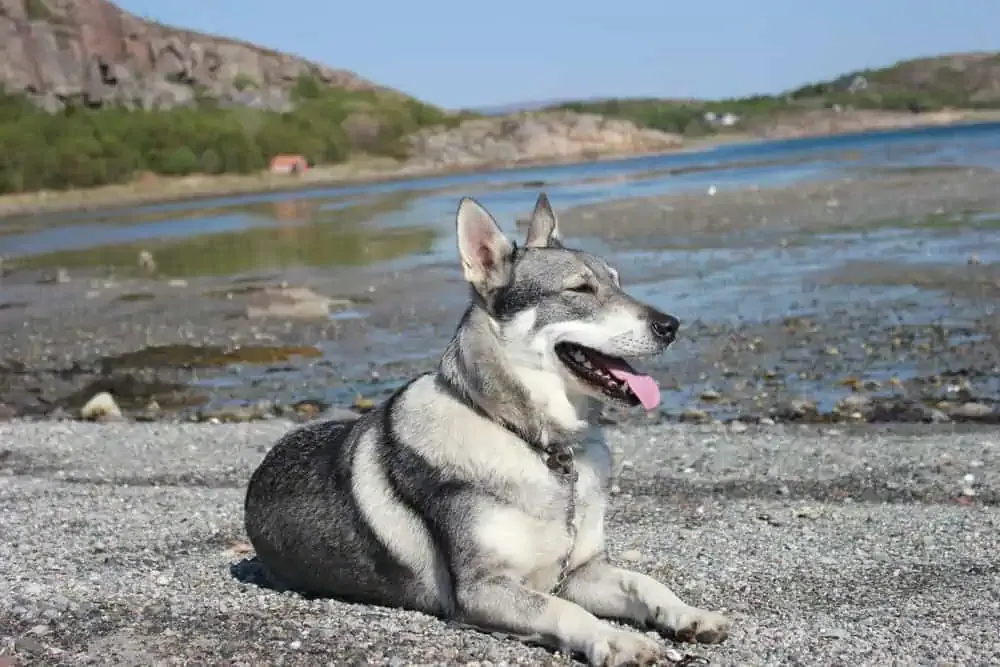
The Jämthund is a rectangular, strong spitz with erect ears, a curled tail, and a dense coat designed for harsh weather. Grey shading with lighter markings is typical, and the overall impression is agile and capable rather than bulky.1
It helps to think of the double coat as functional equipment. It insulates against cold, sheds water and snow, and protects the skin from scrub and rough terrain. The trade-off is that coat maintenance is not optional, especially when the undercoat “blows” seasonally.
Practical takeaway: if you do not enjoy brushing, shedding seasons can feel endless. Regular grooming is usually easier than trying to catch up later.
Temperament, voice, and everyday behaviour

Well-bred, well-raised Jämthunds are often described as steady and confident. They can be sociable with their own people, and many are calm in the home once their daily needs are met.3
They are also a breed with a working voice. Because barking is part of the traditional job, it is not surprising that some individuals are more vocal than owners expect. The important distinction is whether the barking is purposeful and manageable, or whether it has drifted into boredom, under-stimulation, or over-arousal.
What helps most: a predictable routine, real outlet for sniffing and tracking, and early work on “quiet” and settle skills, taught with rewards rather than confrontation.
Training and socialisation, getting the best of that independence
Jämthunds tend to learn quickly, but they often do best with training that is clear, consistent, and worth their time. Reward-based methods are widely recommended by animal welfare organisations because they build skills without relying on fear or pain, and they reduce the risk of fallout such as avoidance or defensive behaviour.5
Early socialisation matters, but it is easy to misunderstand what “socialisation” should look like. It is not about flooding a pup with constant greetings and chaotic dog parks. It is about helping the dog build safe, neutral experiences with people, dogs, vehicles, surfaces, grooming, handling, and time alone, at a pace they can process.
- Keep sessions short: finish while the dog is still engaged.
- Reward the behaviours you want: check-ins, loose lead walking, calm greetings.
- Practise real life skills: settling on a mat, waiting at gates, coming away from scents.
If you are considering harsh corrections because the dog is “stubborn”, it is usually worth pausing and looking at the setup first. Many so-called stubborn moments are the dog being over-threshold, under-rewarded, or unclear on what is being asked.5
Exercise and enrichment, more than just kilometres
These dogs are built for endurance, but a long run is not always the whole answer. For many Jämthunds, scent work is the real fatigue, the kind that leaves them settled at home rather than simply fitter and more restless.
Ideas that tend to suit the breed include:
- long-line “sniffari” walks where the dog can follow scent trails safely
- tracking-style games in the backyard (hidden treats, dragged scent lines)
- structured hiking and bushwalking, with planned rest breaks
- obedience and life skills training embedded into daily routines
Heat awareness: a thick double coat can make hot days harder. Adjust exercise to early mornings and evenings, carry water, and watch for overheating, especially when humidity is high.
Health considerations and sensible prevention

No breed is “problem free”, and individual risk depends on genetics, growth, workload, and environment. For Jämthunds, orthopaedic issues such as hip dysplasia are often mentioned, and eye conditions may also occur in the wider population, which is why health testing and responsible breeding choices matter.6
From an owner’s perspective, prevention is mostly unglamorous: keeping the dog lean, building fitness gradually, avoiding repeated high-impact exercise during growth, and being thoughtful about slippery floors and awkward jumping in and out of vehicles.
Useful habit: ask your vet to show you how to monitor body condition score, and recheck it across seasons. A dog can gain weight under a thick coat before you notice it.
Grooming, shedding, and coat maintenance

The coat is dense and weatherproof, and it tends to shed steadily with heavier seasonal “blow-outs”. A weekly brush is a reasonable baseline for many dogs, with more frequent sessions when the undercoat is coming out. The goal is not perfection, it is comfort, skin health, and keeping the coat functional.
Bathing is usually occasional rather than frequent. Over-bathing can strip oils and make the coat less effective. Focus instead on brushing, checking ears, keeping nails neat, and rinsing off mud or salt water when needed.
Small but important: teach cooperative handling early, so brushing and nail trims become normal life rather than a wrestling match later.
Feeding and nutrition, keeping a working body in balance
A Jämthund’s diet should suit their life stage, workload, and body condition. “High protein” claims are often thrown around, but the more practical question is whether the food is complete and balanced, and whether your dog maintains a healthy condition on it.
The WSAVA Global Nutrition Guidelines recommend a structured approach: assess the individual dog, choose an appropriate diet, and monitor outcomes over time, including weight, body condition, stool quality, coat condition, and energy levels.7
- Feed for condition: adjust portions if weight creeps up or drops off.
- Use treats strategically: count them as part of daily intake, especially during training blocks.
- Talk through changes with your vet: particularly for puppies, seniors, or dogs with orthopaedic issues.
Is a Jämthund a good fit for your life?

In the right home, the Jämthund can be deeply satisfying to live with. They often suit people who enjoy training, value a dog with presence and capability, and have time for daily outdoor life.
They can be a harder fit for households that want an easy, highly biddable dog, or for people in small spaces without regular access to safe off-lead areas and enriching walks. It is not a moral judgement, just a practical one.
Good match signs: you like long walks in all weather, you enjoy teaching skills over time, and you are comfortable managing a strong dog with an independent streak.
References
- Fédération Cynologique Internationale (FCI), JÄMTHUND (No. 42) breed listing and standard information
- Jämthund overview and background (Wikipedia, with links to SKK standard PDF)
- Royal Canin Australia, Jämthund (Swedish Elkhound) breed profile
- Svenska Jämthundklubben, background on the Jämthund and its traditional working role
- RSPCA Australia Knowledgebase, recommendations for reward-based dog training
- Orthopedic Foundation for Animals (OFA), hip dysplasia information
- World Small Animal Veterinary Association (WSAVA), Global Nutrition Guidelines
- Swedish Kennel Club (Svenska Kennelklubben), official organisation site
- Association of Pet Dog Trainers Australia (APDT Australia), position statements on dog-friendly training