

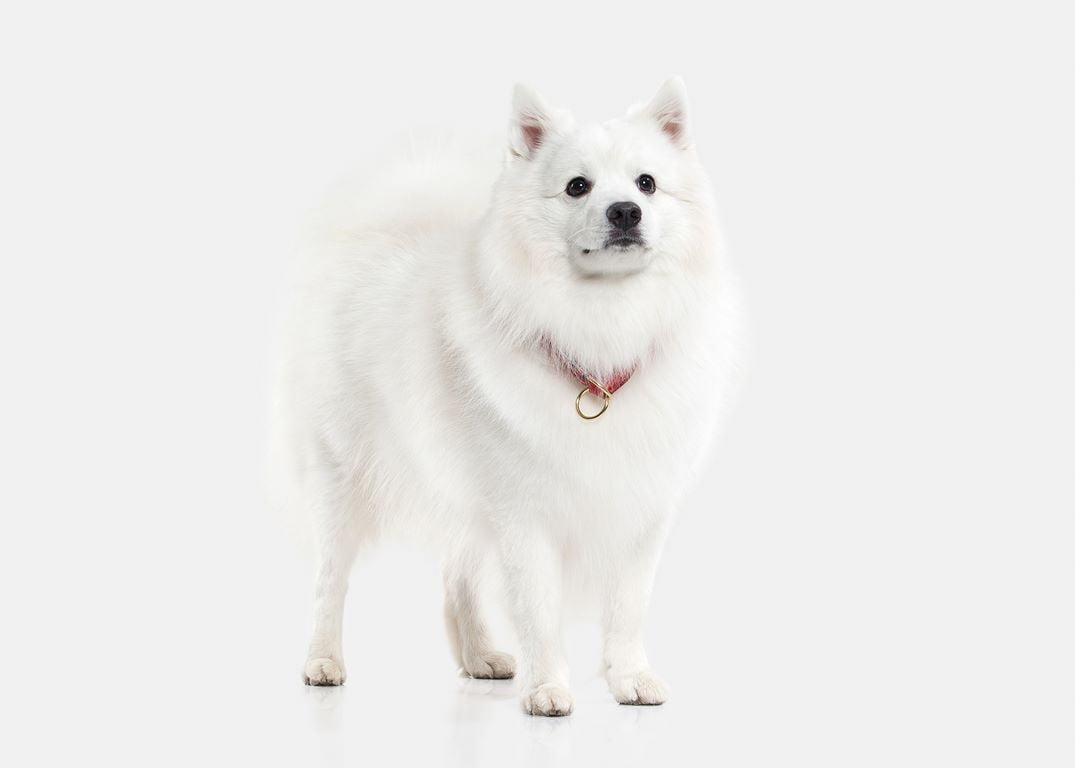
At some point you notice it, a small white dog with a fox-like face, upright ears, and a coat that looks as if it has been blow-dried into a cloud. People often assume it is “some kind of Pomeranian” or a white toy breed, until they meet the dog and realise the manners and movement feel a bit different.
The Japanese Spitz tends to win people over quietly. They are companion dogs through and through, usually sociable, quite trainable, and surprisingly practical in day-to-day life if you understand what that dense white coat does, and does not, mean.
It also helps to know what sits behind the breed’s neat outline: a standard that’s fairly specific about size and coat, and a few predictable care points that show up repeatedly in vet clinics and grooming salons, like knees, teeth, and heat.
- Breed category: Companion dog
- Country of origin: Japan
- Typical height: Dogs 34 to 37 cm at the shoulder, bitches 30 to 34 cm1, 2
- Typical weight: Often around 5 to 10 kg (varies by individual and build)3
- Typical lifespan: Commonly into the teens with good care (many sources quote roughly low-to-mid teens)3
- Coat: Double coat, pure white1, 4
- Exercise needs: Moderate, regular walks and play suit most
- Apartment living: Often suitable, provided they get daily exercise and company3
Where the Japanese Spitz comes from, and why the standard matters

The Japanese Spitz developed in the early 20th century, during a period when small companion dogs were becoming more common in urban households. In practical terms, that origin story shows up in the breed’s “job description” today: to live closely with people, learn household routines, and travel easily between home, street, and social settings.
If you read the breed standard, you can see what breeders have been trying to hold steady: a firm, sturdy little dog, pure white, with an abundant stand-off coat, dark eye rims and nose, and a plumed tail carried over the back.1, 2 Standards are not just show paperwork, they also influence everyday traits like coat type, size range, and overall soundness.
One small but helpful detail is size. Different registries describe the ideal height in slightly different ways, but in Australia the Dogs Australia (ANKC) standard places dogs at 34 to 37 cm and bitches at 30 to 34 cm at the shoulder.1 That can be useful context when you meet a “Japanese Spitz” that is much smaller or much larger.
Appearance and the traits people notice first
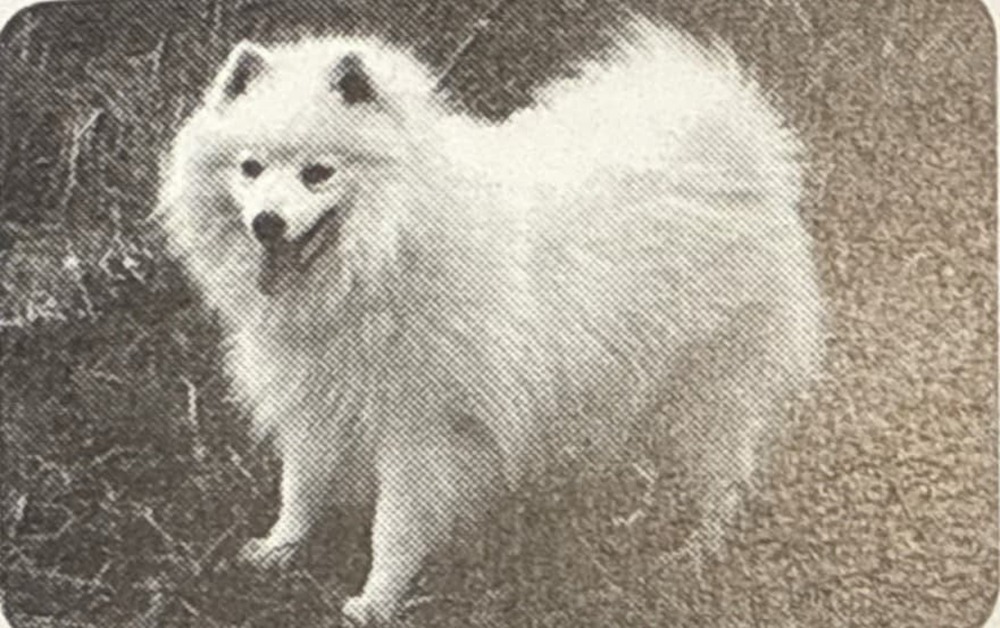
The look is distinctive: a dense double coat that stands away from the body, a wedge-shaped head, small triangular ears held erect, and a curled, well-feathered tail.1, 2 The colour is meant to be pure white only in the standard.2, 4
That coat often creates two assumptions that are only half true. The first is that they must be high-maintenance. The second is that they must be “fine in the heat because they’re white”. In reality, the coat can be quite functional and dirt-shedding for many dogs, but it still needs thoughtful brushing, and thick-coated dogs can overheat quickly in warm, humid weather if they are exercised at the wrong time of day.
If you are comparing breeds, Japanese Spitz are sometimes confused with American Eskimo Dogs or small Samoyed-type dogs. The most reliable clues are usually the dog’s overall size, head shape, and what registry the breeder is working under, rather than coat fluff alone.
Temperament and what they are like to live with
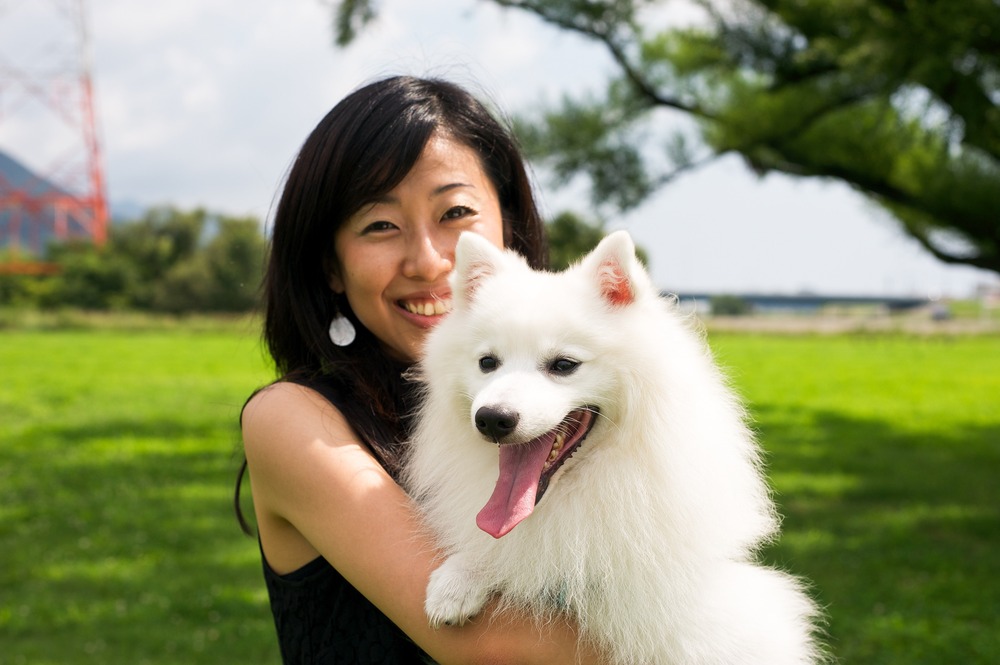
In many homes, the Japanese Spitz comes across as bright, people-focused, and responsive. Because they were developed as companion dogs, they often cope well with indoor life, and many enjoy being near the “centre” of the household, following people from room to room without being physically demanding all day.3
They are commonly described as alert, which can translate to barking when they hear new sounds. That is not automatically a problem, but it is worth shaping early, especially in apartments. The aim is not silence, it is quick recovery: notice, take a cue from you, and settle.
With children and other pets, outcomes tend to be best when the dog is well-socialised, the kids are coached in respectful handling, and everyone has a bit of structure around play. Like any small-to-medium dog, they can be overwhelmed by rough grabbing or chaotic games, even if they are generally friendly.
Training and exercise that suits the breed
Training a Japanese Spitz usually goes best when it feels like a conversation rather than a contest. These dogs often respond well to rewards and clear routines, with short sessions that finish before the dog gets bored. For many, a few minutes sprinkled through the day is more effective than one long session.
If you are working on barking, separation tolerance, or over-excitement, it helps to think in terms of prevention and practice. Teach what you want the dog to do instead, such as going to a mat, chewing a safe enrichment toy, or checking in with you at the door.
Exercise needs are often moderate. A daily walk plus play, sniffing time, and a little training will suit most dogs, though individuals vary. The easiest mistake is to assume a fluffy companion breed does not need activity. The second easiest mistake is to overdo it in summer.
Health considerations, knees and teeth are worth watching
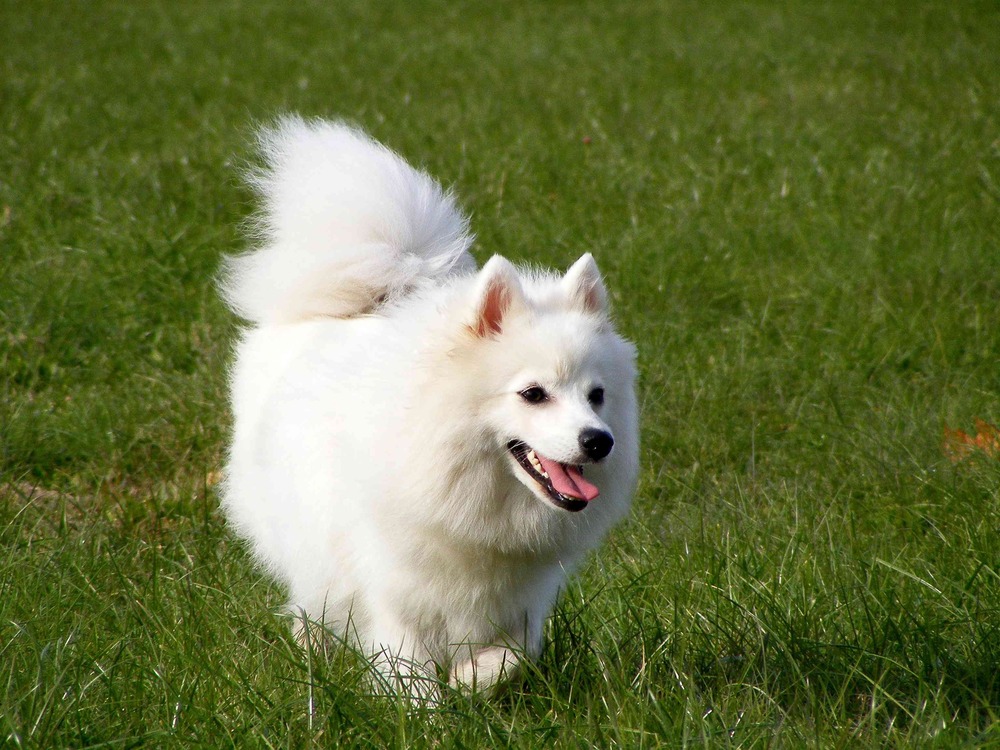
No breed is perfectly “problem free”, but it is sensible to focus on the issues that appear repeatedly across small and medium companion dogs, and in breed discussions.
Patellar luxation (a kneecap that slips out of place) is a well-known condition in many small breeds. Owners might notice an occasional skip or a brief three-legged hop that resolves quickly, especially in mild cases.5 If you see anything like that, it is worth a vet check, not because it is always urgent, but because grading and management matter over a dog’s lifetime.
Dental disease is another predictable theme in smaller dogs. Home care makes a genuine difference, and many veterinary dental resources still place daily tooth brushing at the top of the list, with dental diets and certain chews as helpful extras.6, 7 If you like using dental chews, look for products that have been reviewed for plaque or tartar claims, such as those listed by the Veterinary Oral Health Council (VOHC).7
As always, a reputable breeder should be able to talk you through health screening and the lines behind their dogs, and your vet can tailor preventative care to your individual Spitz.
Coat care, shedding, and what “easy grooming” really means
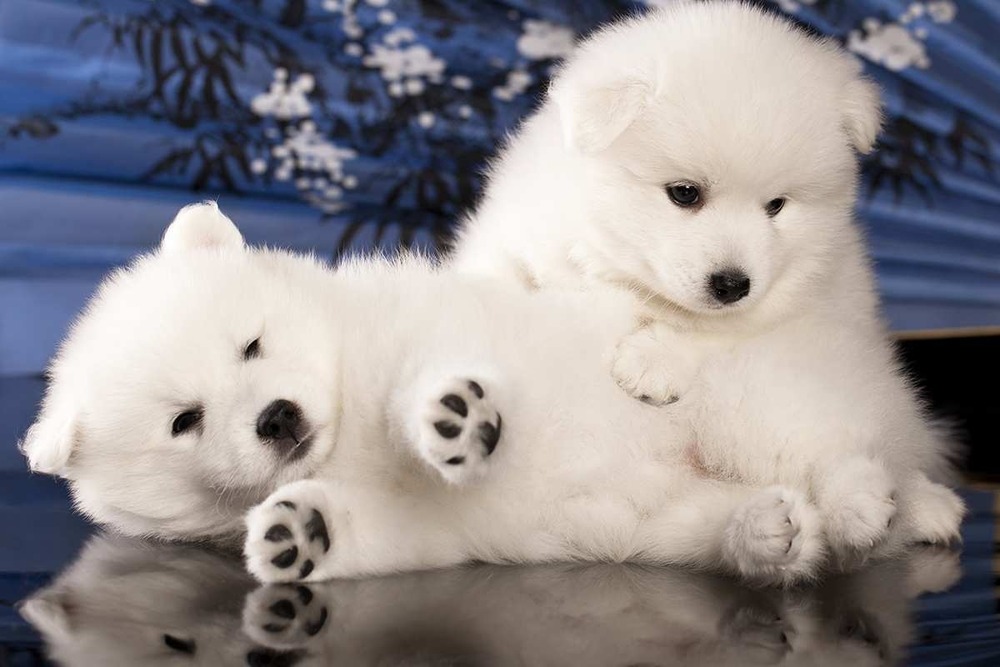
The Japanese Spitz coat is designed to stand off the body. It is typically a double coat, with a shorter dense undercoat and a straight outer coat, and shorter hair on the face, ears, and lower legs.1, 2
In practice, that means brushing is not just cosmetic. It helps air move through the coat, reduces matting, and lets you spot skin irritation early. Many owners do well with a thorough brush once or twice a week, then more during heavier seasonal shedding.
If you are choosing tools, look for something that can reach the undercoat gently without scraping the skin. If you are unsure, asking a groomer to show you a calm, efficient routine can save a lot of frustration.
A common temptation with thick-coated dogs is to clip them short in summer. Talk to your vet or groomer before making big coat changes, because double coats can behave unpredictably when clipped, and you still need a plan for sun exposure and overheating.
Feeding and keeping them comfortable in Australian weather
Most Japanese Spitz do well on a complete and balanced diet that suits their life stage, with portions adjusted to maintain a lean body condition. If you are not sure whether a food is appropriate, your veterinary team can help you assess diet quality, body condition, and calorie intake using established nutrition frameworks.8
The other piece, especially in Australia, is heat management. Thick-coated dogs can struggle in hot, humid weather, even if they look “bright” and keen for a walk. RSPCA advice for hot weather focuses on shade, ventilation, reliable water access, and changing exercise times to cooler parts of the day. It also lists common warning signs of heat stress and heatstroke, such as heavy panting, drooling, agitation, vomiting, weakness, confusion, tremors, or collapse, with a clear recommendation to seek veterinary help promptly if you suspect heatstroke.9
On very warm days, aim for early morning or evening walks, choose shaded routes, and keep sessions short. Indoors, fans and cool surfaces help, and calm enrichment (sniffing games, slow feeding, basic training) can replace high-energy play.
Choosing a Japanese Spitz thoughtfully
If the breed suits your lifestyle, the next step is not just finding a puppy, it is finding the right support system. A good breeder should be transparent about health, temperament, and the realities of coat care, and should match puppies to households rather than selling purely on appearance.
It is also worth meeting adult Japanese Spitz in everyday settings if you can. You will get a clearer sense of typical energy levels, vocal habits, and how the coat looks when it is maintained normally, not styled for a photo.
When everything lines up, the Japanese Spitz is often what people hope for when they imagine a companion dog: close to the family, bright and responsive, and happy with a life that includes both outings and quiet time at home.
References
- Dogs Australia (ANKC), Japanese Spitz breed standard
- The Kennel Club (UK), Japanese Spitz breed standard
- Royal Canin Australia, Japanese Spitz breed guide
- United Kennel Club (UKC), Japanese Spitz breed standard
- VCA Animal Hospitals, Luxating patella in dogs
- American Animal Hospital Association (AAHA), Your pet’s dental care
- Veterinary Oral Health Council (VOHC), Accepted products
- World Small Animal Veterinary Association (WSAVA), Global Nutrition Guidelines
- RSPCA Australia, Protect pets from heatstroke in warm weather