

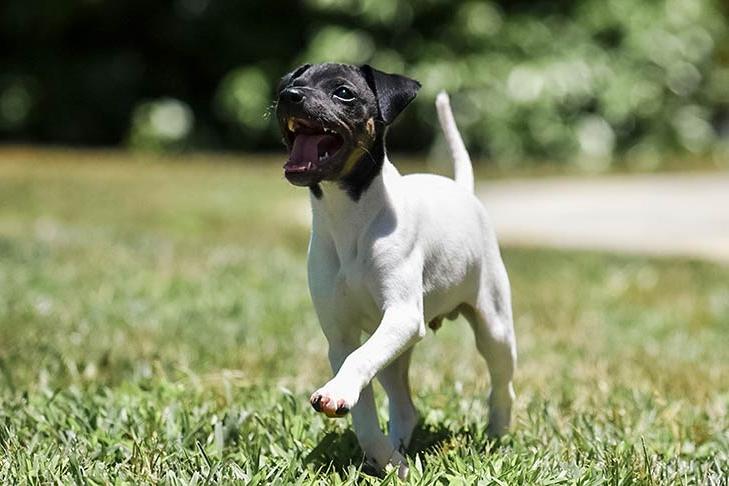
People usually come across the Japanese Terrier by accident. A photo in a breed group, a quick glimpse at a dog show, or a small, fine boned terrier on a lead that moves with surprising lightness. It can look a bit like a tiny sighthound at first glance, yet it still has that terrier readiness in the face and posture.
Because they are uncommon outside Japan, there is often a lot of guesswork around what they are like to live with. Some assume “toy” means delicate or low effort. Others hear “terrier” and picture a busy, noisy dog. In practice, the Japanese Terrier tends to sit somewhere in the middle: small and companionable, with a bright, quick mind that does best when it has gentle structure and daily outlets.
If you are considering one, or you have met one and felt curious, it helps to understand where the breed came from, what their body language tends to look like, and what everyday care matters most for a short coated, small framed dog.
- Breed group: Small sized terrier (often described as a toy companion in standards)
- Height: Around 30 to 36 cm at the withers1, 2
- Weight: Commonly around 2.2 to 4.5 kg (individual dogs vary)3
- Coat: Short, smooth, dense1, 2
- Typical colours: Tricolour, or white with black or tan markings1, 2
- Life expectancy: Often quoted as 12 to 15 years (as a general guide for small breeds)
Heritage and what it shaped
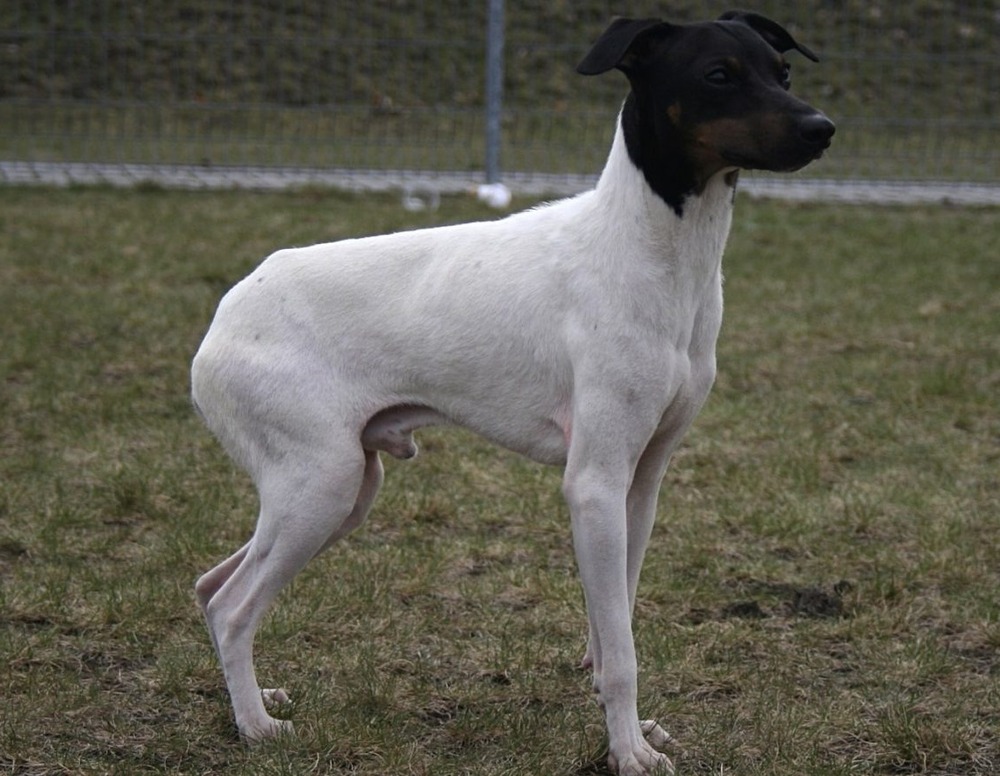
The Japanese Terrier (Nihon Teria) is closely tied to port cities and trade. Breed history in official standards describes smooth haired Fox Terriers arriving via the Netherlands in the 17th century, then being crossed with small pointers and small native dogs, with the resulting dogs kept mainly as lap dogs in ports such as Kobe and Yokohama.1
It is worth noting that “created” in a standard does not mean a single, neat moment. It usually reflects a long, practical process: dogs that suited local preferences were repeated, dogs that did not were not. Over time, type becomes more consistent.
Planned breeding is described as beginning around 1920, with the type becoming fixed around 1930.1 Different kennel bodies recognise the breed on their own timelines, so it helps to separate when the look stabilised from when registries formalised it.4
Appearance and movement
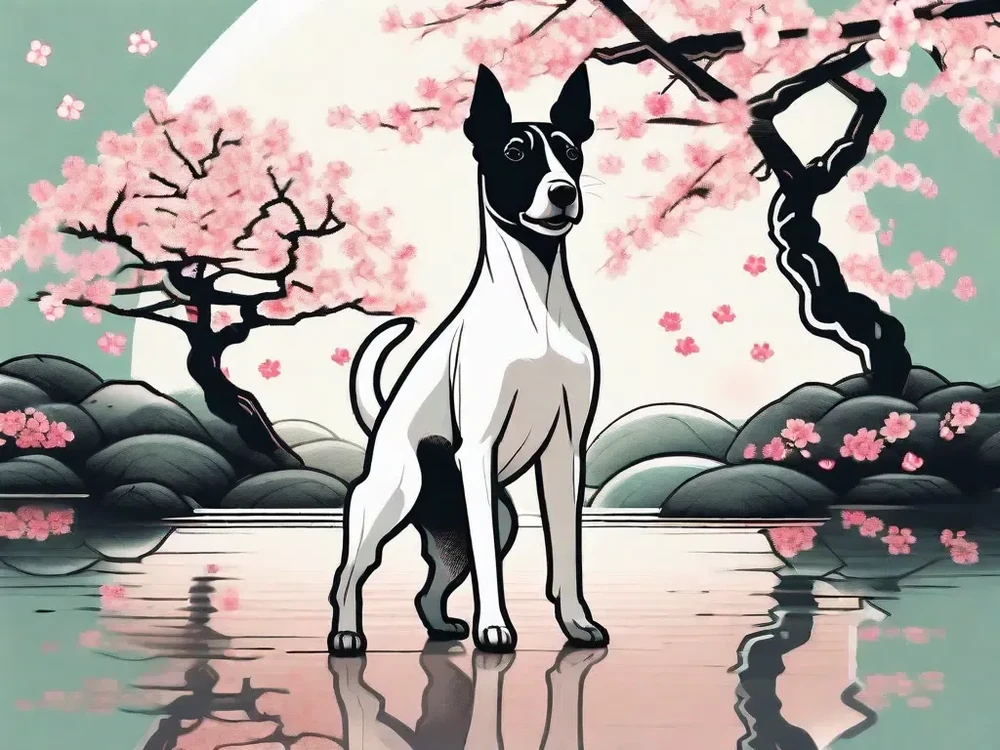
The Japanese Terrier is a small, clean cut dog with a compact outline. In the FCI standard, the coat is described as very short, about 2 mm, and the overall impression is light and agile rather than stocky.1
Colour is part of what catches people’s eye. You will often see a dark head with tan points and a mostly white body with markings. In standard language, colour includes tricolour (black, tan and white) and white with black spots, black markings, or tan markings on the body.1, 2
One practical point: because the coat is so short, you tend to notice the dog’s condition quickly. Weight changes and muscle tone show up earlier than they do in fluffier breeds, which can be helpful for catching small issues before they become big ones.
Temperament in a normal household
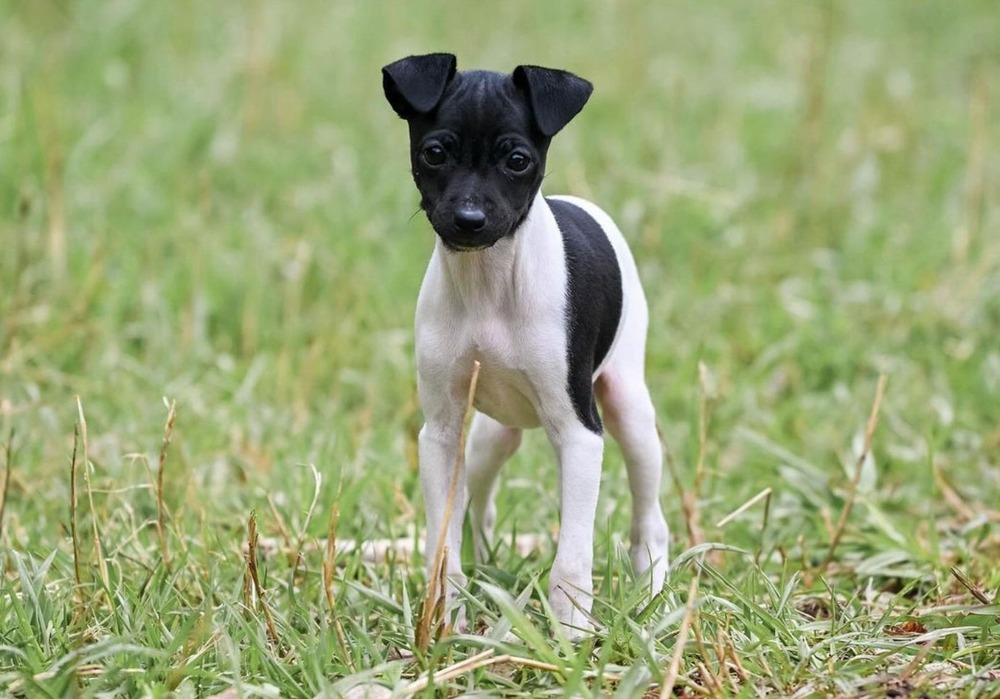
In standards, the Japanese Terrier is described as lively, cheerful, swift, and lively in temperament.1, 2 Those words can sound like a lot, but in everyday terms it often translates to a dog that is quick to notice patterns, quick to respond to movement, and very interested in what their person is doing.
Many owners find the breed settles best with a predictable rhythm: short walks, small training moments, and plenty of calm time close to the household. If they are under-stimulated, you can see it in pacing, busy sniffing indoors, or an increase in alert barking. If they are over-stimulated, you may see the opposite problem, a dog that struggles to “come down” after excitement.
A gentle assumption that helps is this: small does not mean low needs. It usually means the needs are easier to meet in short bursts, and they matter just as much.
Training and exercise that fits the breed
With bright, people-focused dogs, training is often less about “getting compliance” and more about building a shared language. Keep sessions short, use food and play, and finish while the dog is still engaged. Over time you are shaping a dog that looks to you for information, which is especially useful in busy places.
Exercise does not need to be extreme. A couple of walks most days, plus little bits of sniffing and problem solving at home, is a sensible baseline. Because they are light and agile, they often enjoy games that use their body carefully, like low jumps, balanced stepping, or simple agility style handling in the backyard.
- Prioritise socialisation early, with calm exposure to people, surfaces, traffic sounds, and friendly dogs.
- Teach a reliable recall and a “let’s go” cue before testing off lead freedom.
- Build a settle on a mat, so the dog learns that rest is also a trained skill.
Health considerations to watch for
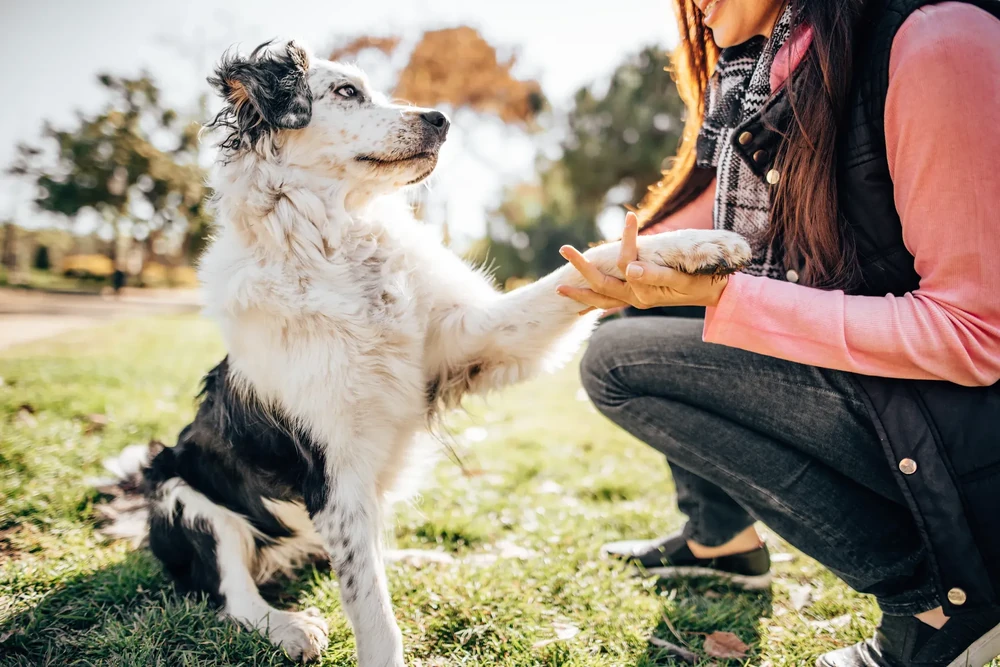
Japanese Terriers are not commonly discussed in large scale health surveys outside Japan simply because they are relatively rare. So it is more accurate to talk about small breed patterns and what you can reasonably screen for with your vet, rather than claiming a definitive list of breed-specific problems.
One issue that comes up often in small dogs is patellar luxation, where the kneecap can slip out of place. A classic sign is an intermittent skipping or hopping step in a hind leg that resolves after a few strides.5 Mild cases may be managed conservatively, while more significant cases may need surgical correction, and your vet can grade severity on exam.5, 6
Dental disease is another area where small dogs can be vulnerable. Not every Japanese Terrier will have problems, but small jaws and crowded teeth can make plaque management harder. If you want one simple, high value habit, it is this: get comfortable with tooth brushing early, and ask your vet to check the mouth at routine visits.7
Grooming, coat care, and staying warm
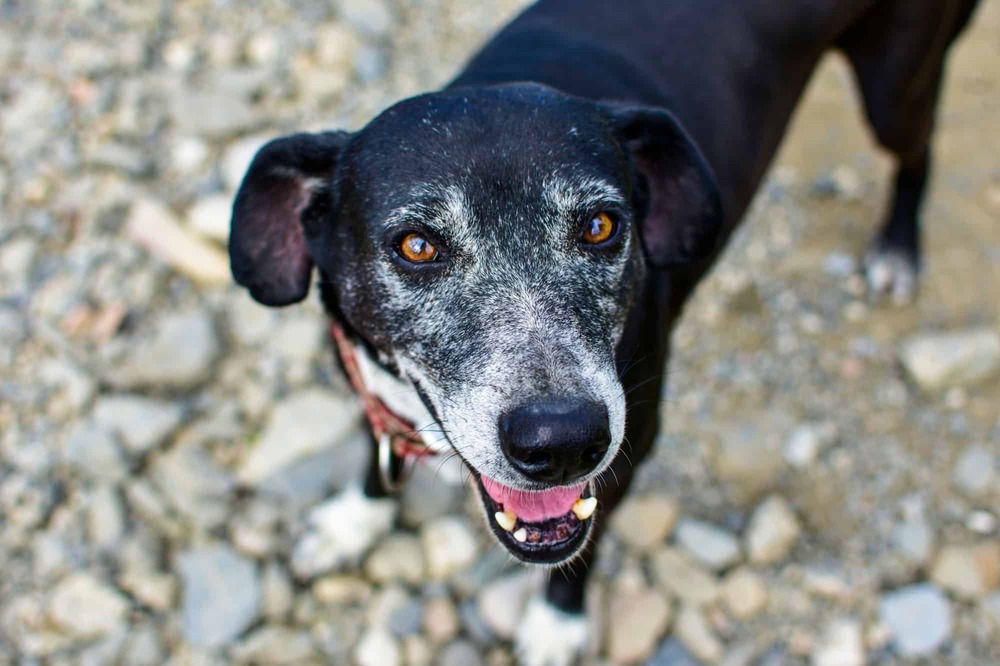
Coat care is straightforward. A soft brush or grooming mitt once a week is usually enough to lift loose hair and keep the coat glossy. Because the coat is short, grooming is also your chance to notice little changes, like dry skin, redness, or new lumps.
Short coated dogs can feel the cold more than people expect, particularly in the evening or on early morning walks. In cooler weather, many do better with a well fitted coat and a warm sleeping spot. It is a small adjustment that can make a noticeable difference to comfort.
Also keep the basics ticking along: nail trims, ear checks, and a quick look at the paws after walks. These tiny routines are often what keep a “low maintenance” dog truly low maintenance.
Feeding and dental support
Choose a complete, balanced diet appropriate for a small dog, and measure meals rather than free-pouring. With compact breeds, even small daily extras can add up over a few months, and extra weight does the joints no favours.
For dental support, it helps to be selective. The Veterinary Oral Health Council (VOHC) reviews data and awards a seal to products shown to reduce plaque and or calculus when used as directed, which can be a useful shortcut when you are faced with a shelf full of claims.8, 9
- Brush with pet toothpaste, not human toothpaste.7
- Ask your vet what professional dental checks make sense for your dog’s age and mouth shape.
- If using chews, pick an appropriate size and supervise chewing.8
Tail docking and what you might see in Australia
In Australia, cosmetic tail docking has been banned for many years, with docking generally limited to therapeutic circumstances and performed by a vet. NSW, for example, describes tail docking as an offence under the Prevention of Cruelty to Animals Act, with exceptions only when done by a veterinary practitioner in the interests of the dog’s welfare.10
This matters because some breed descriptions mention docked tails as traditional. If you see a Japanese Terrier with a short tail in Australia, it is sensible to consider that the dog may have been imported, may have had a medically necessary amputation, or could have been sourced irresponsibly. When in doubt, ask the breeder or rescue for the dog’s history and veterinary paperwork.
Living with a rare breed, what to ask before you commit
Rarity can be appealing, but it changes the practicalities. You may have fewer breeders to choose from, longer wait times, and less local experience among groomers or trainers. None of that is a deal-breaker, but it does mean you want to slow down and choose carefully.
- Ask what health checks are done on breeding dogs (including knees) and what the vet has documented.
- Ask how puppies are socialised in the first weeks, and what they are exposed to before going home.
- Expect honest conversation about the dog’s likely energy and barking patterns in a typical household.
The best match is usually a home that enjoys a small dog with opinions, appreciates a bit of daily engagement, and is happy to keep life steady rather than chaotic.
References
- FCI: Japanese Terrier (Nihon Teria) breed nomenclature and standard publication details
- United Kennel Club: Japanese Terrier breed standard
- Wikipedia: Japanese Terrier overview (weight and general description)
- NihonTeria.com: Reproduction of FCI Japanese Terrier standard text (history and characteristics)
- Cornell University College of Veterinary Medicine: Patellar luxation in dogs
- Orthopedic Foundation for Animals (OFA): Patellar luxation information and grading
- RSPCA Pet Insurance Australia: Guide to dog dental care
- Veterinary Oral Health Council: About the VOHC and the Seal of Acceptance
- Veterinary Oral Health Council: VOHC accepted products list
- NSW Department of Primary Industries: Tail docking of dogs in NSW