

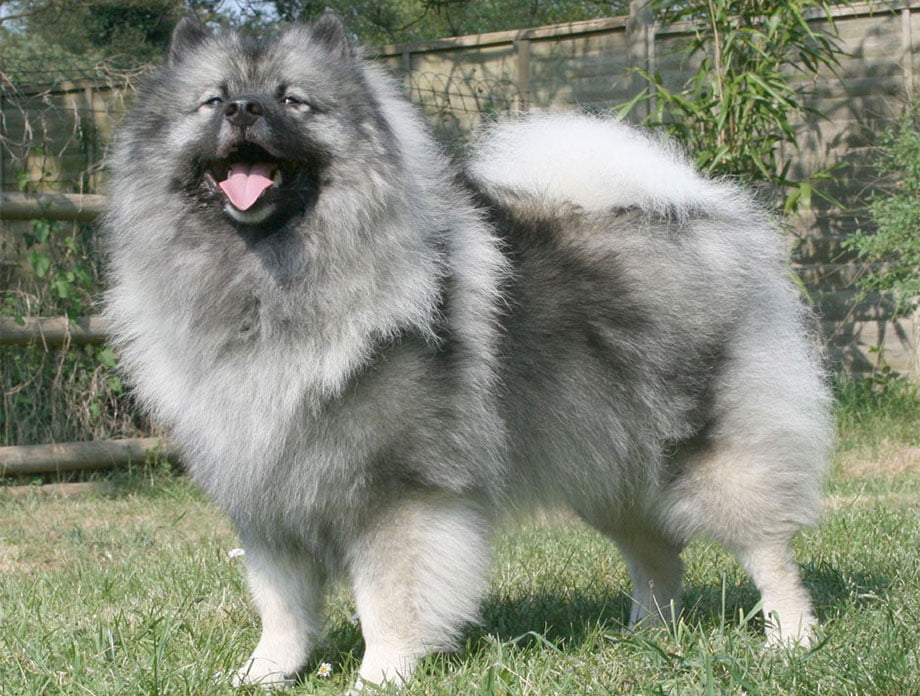
You often notice a Keeshond before you know what you are looking at. The thick silver-and-black coat catches the light, the tail sits neatly over the back, and those distinctive facial markings can make the eyes look outlined, like small spectacles.
For many people, the questions come later and they are practical ones. Is that fluff going to end up on every surface? Will this dog be noisy in an apartment? Are they happy with children, or do they get overwhelmed?
The Keeshond is best understood as a companion breed with a working past. They were shaped to live close to people, keep an eye on what is happening, and sound the alarm. That combination can make them wonderfully connected family dogs, and it also explains why they do not thrive when they are treated like a garden ornament.
- Breed category: Companion dog
- Country of origin: Netherlands
- Typical height: Around 40 to 49 cm at the withers (varies by standard)
- Typical weight: Often around 14 to 18 kg, sometimes higher depending on build
- Typical lifespan: About 12 to 15 years
- Coat type: Dense double coat, plush and off-standing
- Shedding: High, with heavier seasonal shedding
- Exercise needs: Moderate daily exercise plus mental enrichment
- Heat tolerance: Often struggles in hot weather
- Temperament: Friendly, alert, people-oriented, can be vocal
History and origin
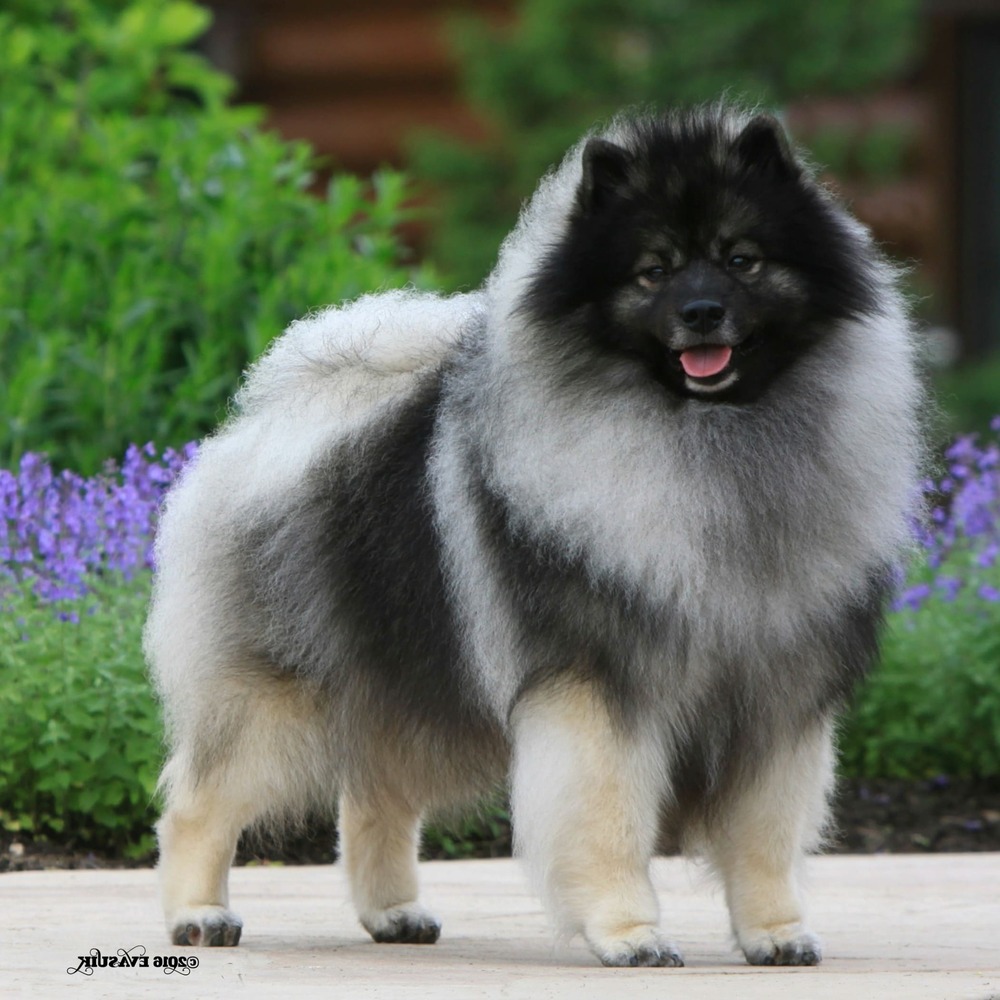
The Keeshond is closely tied to everyday Dutch life of earlier centuries. They were commonly seen on canal barges and river boats, where a compact, watchful dog made sense: close to the family, quick to alert, and sturdy enough to handle the bustle of working waterways.1, 2
They also carry an unusual piece of political history. In the late 1700s, the Keeshond became associated with the Dutch Patriot faction and is commonly linked to Cornelis (Kees) de Gijselaar, a prominent Patriot figure. The breed’s symbolic role is remembered today as part of why it is sometimes described as a symbol of Dutch patriotism.1, 2
In modern times, most Keeshonden are bred purely as companions. Even so, that earlier job description still shows through in small ways, especially the tendency to monitor the home and comment on anything unusual with a bark.
What a Keeshond looks like
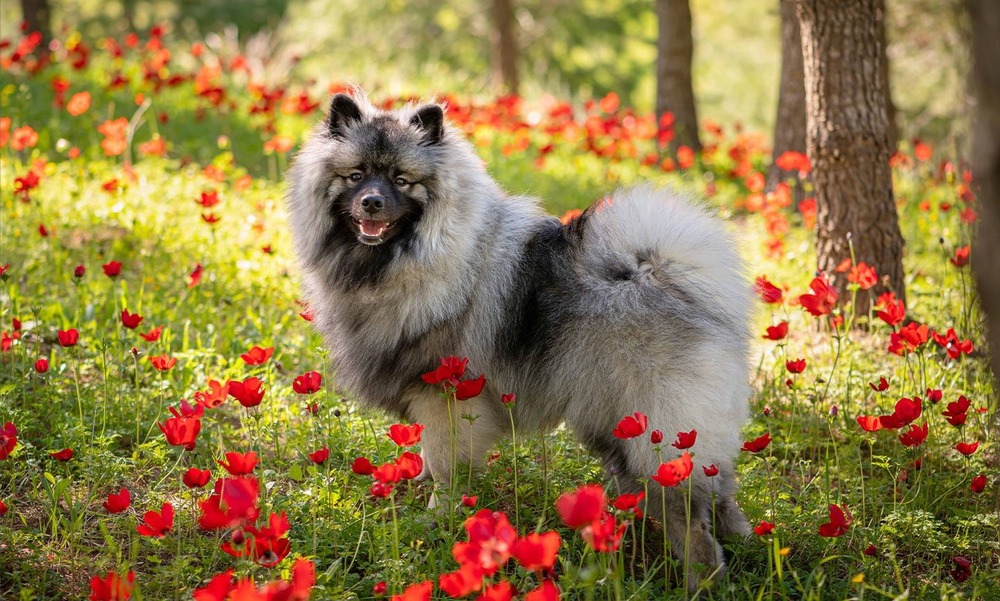
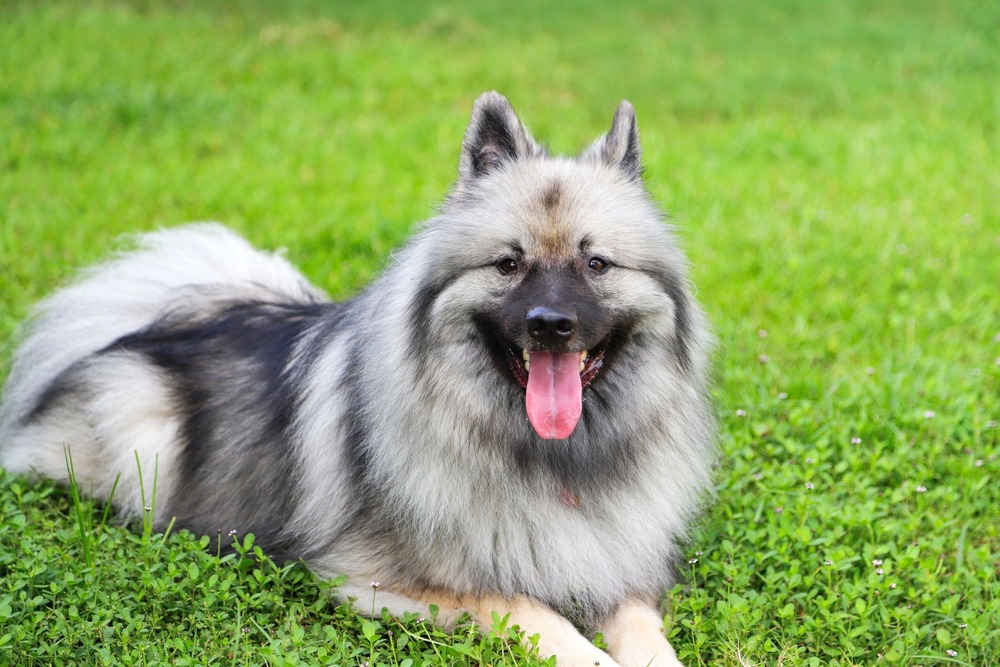
People sometimes describe the Keeshond as fox-like, but it is more accurate to call them a classic spitz type: a compact, square outline, pricked ears, and a tail that curls over the back. The coat stands off the body rather than hanging flat, which is part of what gives the breed its plush look.3, 4
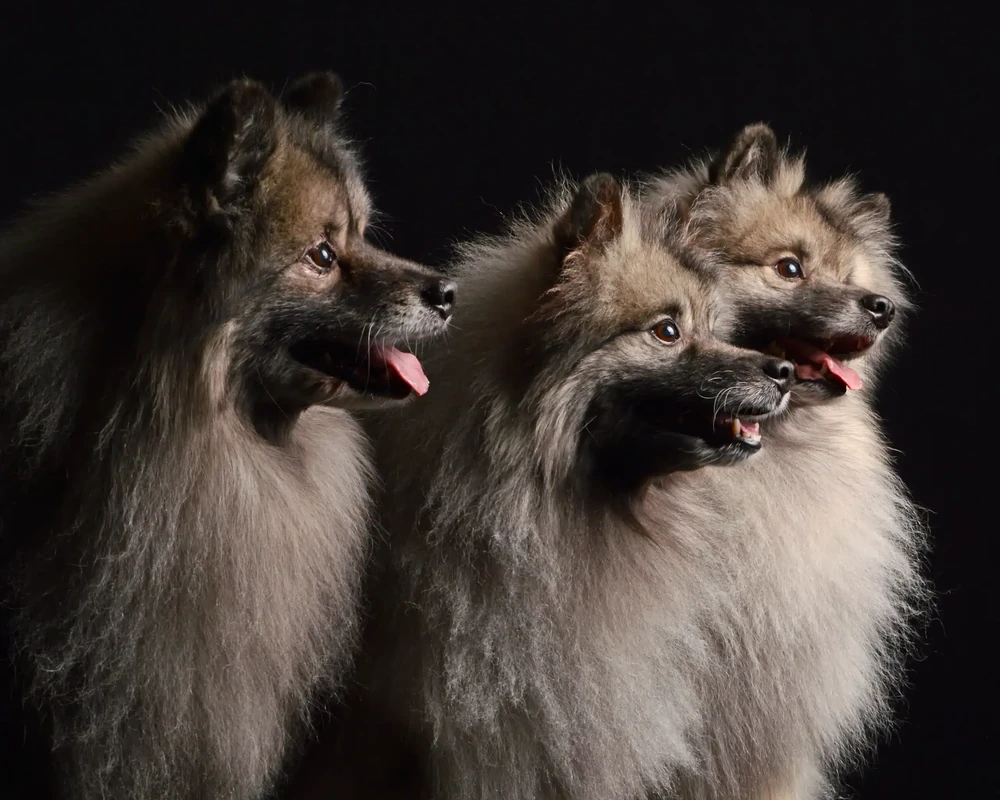
The most recognisable feature is the facial patterning. Breed standards describe “spectacles” as delicate lines and shading that run from the outer corner of the eye towards the ear, paired with small eyebrow-like markings. On some dogs it is subtle, on others it is crisp and dramatic, but it is part of the breed’s hallmark expression.4
The coat is double, with a soft undercoat and harsher outer coat. That design helps in cold weather, but it also means you are living with a dog that sheds and needs coat care to stay comfortable.
Temperament and everyday behaviour
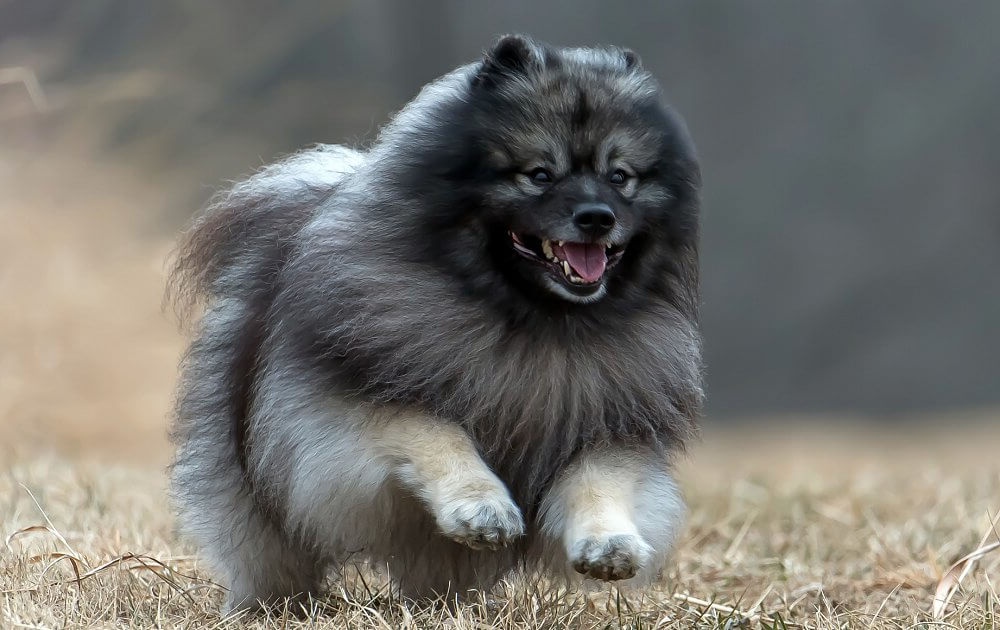
Keeshonden tend to be tuned in to their people. They often choose to be near the action, and they can struggle if they are left isolated for long stretches. This is not “clinginess” so much as a breed history of living alongside humans all day, not on the fringes.
A common surprise is how vocal they can be. Many are natural “announcers”, which can be helpful if you want an alert companion, and tiring if you are sensitive to noise. It is worth treating barking as a behaviour to shape early rather than something the dog will simply grow out of.
With children and other pets, they are often steady when they are well socialised and given space to opt out. The key is not assuming friendliness equals endless tolerance. Good introductions and calm routines usually matter more than the breed label.
Training and exercise needs
Keeshonden are typically quick to learn and responsive to people, which is why they are often described as “easy to train”. What makes the difference in real homes is not intelligence, it is clarity. Short sessions, consistent cues, and rewards that actually matter to your dog go a long way.
Training methods that rely on intimidation tend to backfire with breeds like this. Many do best with positive reinforcement, where you actively teach what you want, then reward it, rather than focusing on correcting what you do not.5
Exercise needs are usually moderate, but they are not optional. Think in terms of a daily walk (or two shorter walks) plus something that uses the brain: scent games, basic obedience practice, puzzle feeders, or low-pressure agility foundations in a safe space.
- For busy households: aim for reliable routines, even if the walk is shorter.
- For apartments: plan for barking management and enrichment, not just toilet breaks.
- For young dogs: prioritise socialisation and calmness training alongside play.
Health, lifespan, and sensible prevention
Most Keeshonden live into their early teens, with many sources commonly citing around 12 to 15 years as a typical range.1
Like all breeds, they have conditions that show up more often in the population. Issues reported in Keeshonden include hip dysplasia, luxating patellas (kneecaps that slip), and endocrine problems such as hypothyroidism, along with some other inherited disorders that reputable breeders may screen for.1
The most useful “prevention” is often plain, unglamorous care: keeping them lean, staying current with parasite control, and booking routine veterinary checks. If you are choosing a puppy, ask what health testing has been done in the line, and ask to see results, not just reassurances.
Heat and weather: the double-coat reality
A thick double coat is not automatically “too hot” in every climate, but in Australian summers many Keeshonden do struggle with heat. The practical point is that they may not cope well with midday walks, hot cars, or poorly ventilated spaces.
Learn the early signs of heat stress and heatstroke, including heavy panting, excessive drooling, weakness, vomiting, and collapse. Heatstroke is a veterinary emergency, not a wait-and-see situation.6, 7
- Walk early or late, and keep exercise gentle on hot days.
- Prioritise shade, airflow, and cool water access at home.
- Be cautious with “cooling hacks”. If you are unsure, call your vet for advice quickly.
Grooming and coat care
The coat is beautiful, but it is also a maintenance commitment. Most owners find that brushing a few times a week keeps the undercoat from compacting into mats, especially behind the ears, under the legs, and around the ruff and trousers.8, 9
Seasonal “blowing coat” periods can be intense. During those weeks, more frequent brushing is kinder for the dog and easier on your vacuum. If you are using a groomer, look for someone comfortable with double coats who avoids unnecessary close clipping. In general, the coat’s structure matters for comfort and skin health.
Beyond brushing, keep an eye on nails, ears, and skin. Grooming sessions are a good moment to notice small changes before they become bigger problems.
Diet and weight management
Keeshonden do best on a complete and balanced diet suited to their age and activity level, with portions adjusted so they stay lean. Because the coat is so generous, weight gain can creep up unnoticed, especially around the ribs and waist.
Treats are useful for training, but they add up. A common, practical guideline is to keep treats to about 10 percent of daily calories, and make the rest of the intake a balanced diet.10
If you are changing foods, do it gradually, and if you are unsure about amounts, your vet can help you work out a realistic target weight and feeding plan that suits your dog’s life.
Living with a Keeshond: who they suit best
The Keeshond can be a wonderful match for people who want a dog that is present, responsive, and part of daily routines. They often suit families who enjoy including the dog in ordinary life, and who have the patience for training and coat care.
They are less suited to homes where the dog is expected to be quiet without guidance, entertained without engagement, or left alone for long periods. If you meet their needs with steadiness, the relationship can feel easy and companionable, not demanding.
References
- Wikipedia: Keeshond
- Keeshond Club of America: History of the Keeshond
- The Kennel Club (UK): Keeshond breed standard
- United Kennel Club (UKC): Keeshond breed standard
- RSPCA Knowledgebase: Positive reinforcement (reward-based) training
- RSPCA Pet Insurance: Heatstroke (hyperthermia) in cats and dogs
- RSPCA Knowledgebase: How can I protect my dog from heatstroke?
- Keeshond Club of America: General Keeshond information
- Dial A Vet: How often should I groom my Keeshond?
- Australian Animal Protection Society: What to avoid when shopping for dog treats