

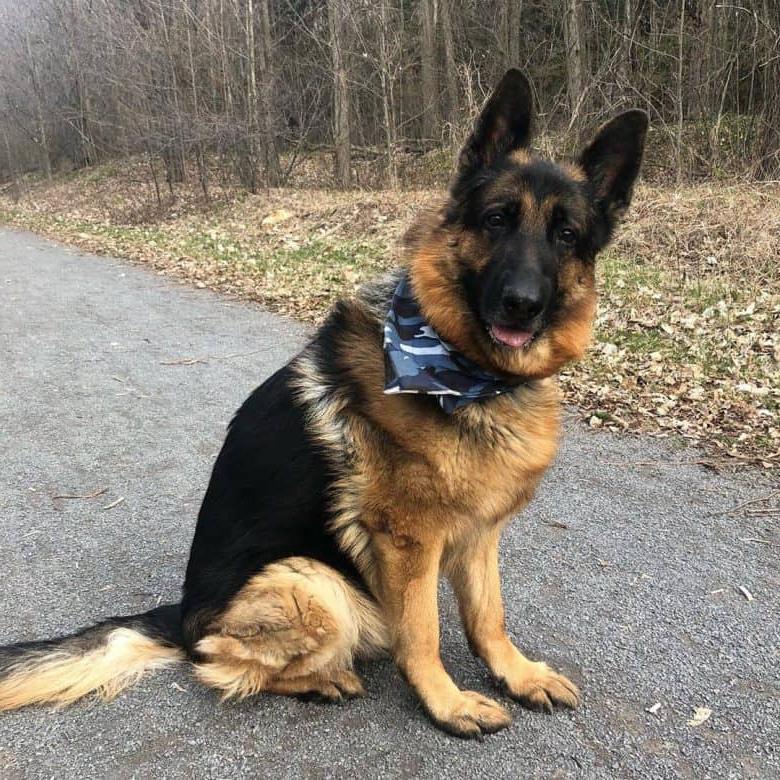
- Breed category: Working type (developed as a larger shepherd-style dog)
- Country of origin: United States
- Typical height: Males 66 to 76 cm, females 63 to 71 cm
- Typical weight: Males 41 to 68 kg, females 34 to 50 kg
- Average life span: About 10 to 11 years
- Coat: Dense double coat
- Colours: Black, sable, tan, bi-colour
- Shedding: High, with heavier seasonal shedding
- Exercise needs: High, daily exercise and enrichment
- Grooming: Moderate to high, regular brushing
- Temperament (general): Loyal, protective, intelligent
- Common health concerns: Hip and elbow dysplasia, bloat (GDV) risk in large, deep-chested dogs
- Kennel club recognition: Not recognised by the American Kennel Club as a fully recognised breed
You might come across a King Shepherd because someone calls their dog a German Shepherd, but the dog looks noticeably bigger, heavier-boned, and more “bear-like” through the chest and coat. Or you might be comparing large family guardians and realising that “King Shepherd” is mentioned often, but not always in the same way or by the same organisations.
Part of the confusion is that the King Shepherd is best understood as a modern, purpose-bred type rather than a long-established, universally standardised breed. That does not make the dogs any less real, but it does change what “breed information” can reliably mean. Two King Shepherds can look and behave quite similarly, yet come from different clubs, different lines, and different health-testing cultures.
In day-to-day life, what matters most is practical: the size you will be living with, the training and enrichment the dog will need, and the health risks that come with a large, deep-chested, fast-growing youngster. Those factors are far more predictable than any single slogan about loyalty or gentleness.
History and where the King Shepherd fits
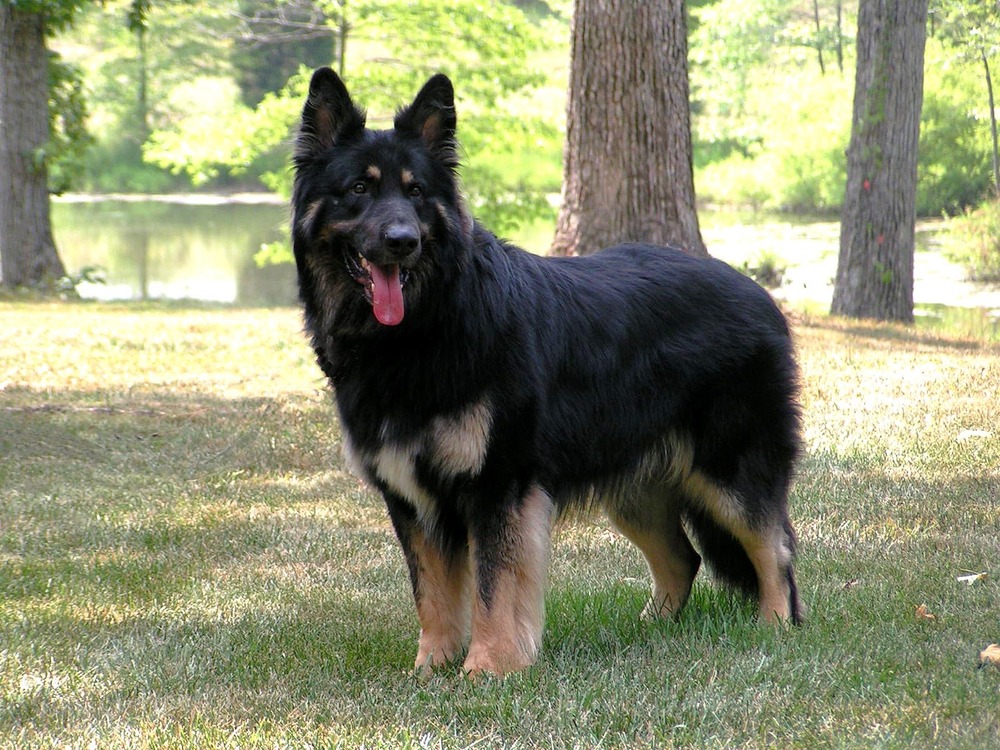
The King Shepherd developed in the United States in the late 20th century, drawing on German Shepherd Dog lines and other large working breeds. You will often see Alaskan Malamute and Great Pyrenees mentioned in summaries of its development, although exact ancestry can vary by line and by the goals of particular breeders and clubs.
It helps to keep one grounded point in mind: there is no single global registry for King Shepherds in the way there is for many established breeds. Different breed clubs and registries may record pedigrees and run shows, but they may not share a single, unified standard.
That is also why “recognition” can be slippery. The American Kennel Club’s Foundation Stock Service is a record-keeping pathway for some breeds not fully recognised by the AKC, but the King Shepherd is not an AKC recognised breed in the way people usually mean it. 1, 2
Why this background matters to owners
When a dog is still developing as a consistent type, the quality of the individual breeder matters even more than the label. Temperament, joint health, and how puppies are raised and socialised can vary widely across large-breed litters. If you are choosing a pup, you are not only choosing a look, you are choosing a health-testing and rearing culture.
Physical characteristics that show up in real life
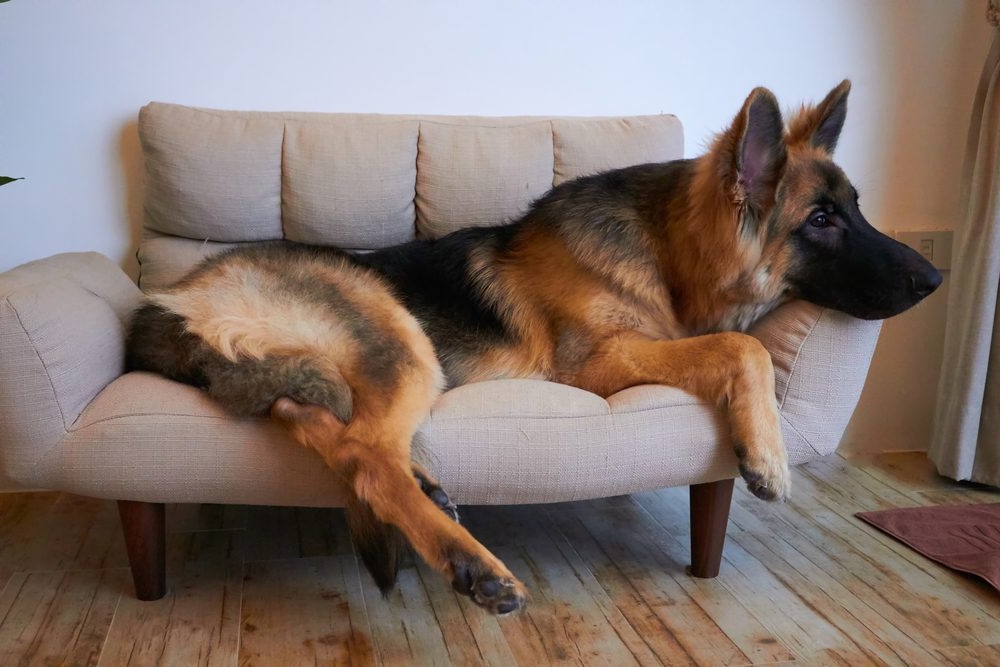
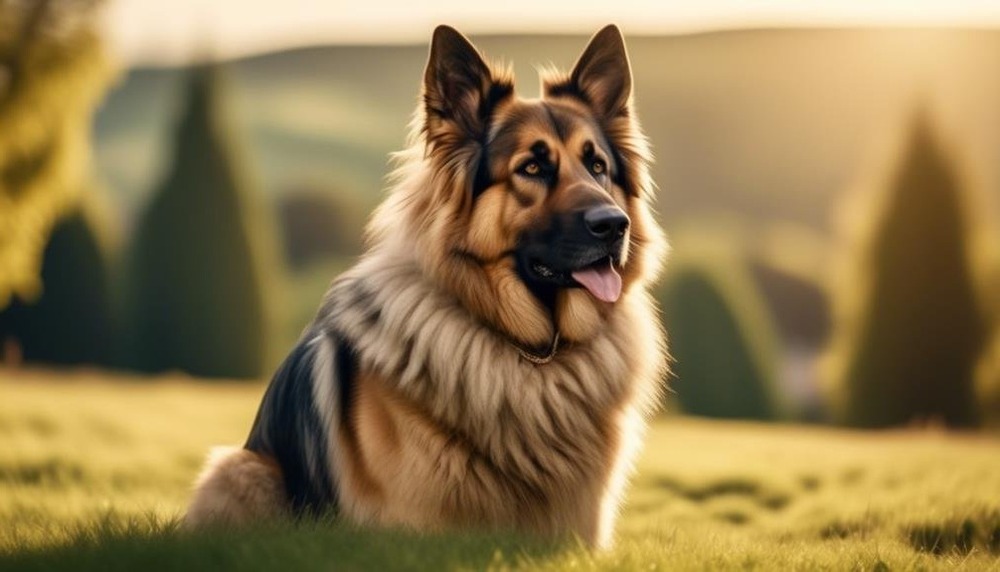
Most people notice three things first: size, coat, and bone. King Shepherds are typically taller and heavier than many German Shepherd Dogs, with a dense double coat and a broad, substantial frame. Their ears are usually erect, and the tail tends to be full and carried in a gentle curve.
That size has practical consequences. A dog in the 40 to 60+ kg range can be wonderfully steady to live with, but only if their body is supported thoughtfully as they grow. Large-breed pups are not just “big puppies”, they are a long-term project involving careful feeding, sensible exercise, and joint-aware handling.
Coats vary from plush to quite heavy. Expect noticeable shedding and plan for regular brushing, not only to keep fur off your floors, but to reduce matting and to help you monitor skin, parasites, and hot spots.
Temperament and behaviour: what tends to be consistent
Many King Shepherds are described as loyal, watchful, and people-focused. In a well-bred, well-raised dog, that often shows up as a steady preference to stay near their family, a tendency to notice changes around the home, and a willingness to learn routines quickly.
It is worth separating two ideas that get muddled. Protective behaviour can be a normal part of shepherd-type dogs, but good guardianship is trained, it is not left to chance. A dog that is uncertain, under-socialised, or overwhelmed can appear “protective” when they are actually struggling to cope.
When people say the King Shepherd is gentle with children, the best version of that is a large dog with sound nerves, predictable behaviour, and an owner who manages arousal and boundaries. Supervision still matters, simply because a very large dog can knock a child over without meaning to.
Other pets and social life
With early, careful introductions, many individuals live well with other dogs and cats. The key is to build calm familiarity and to avoid letting the youngster rehearse chasing or body-checking games. If there is herding-style behaviour, it is usually easiest to redirect early, before it becomes a habit.
Training and exercise needs for a dog this size
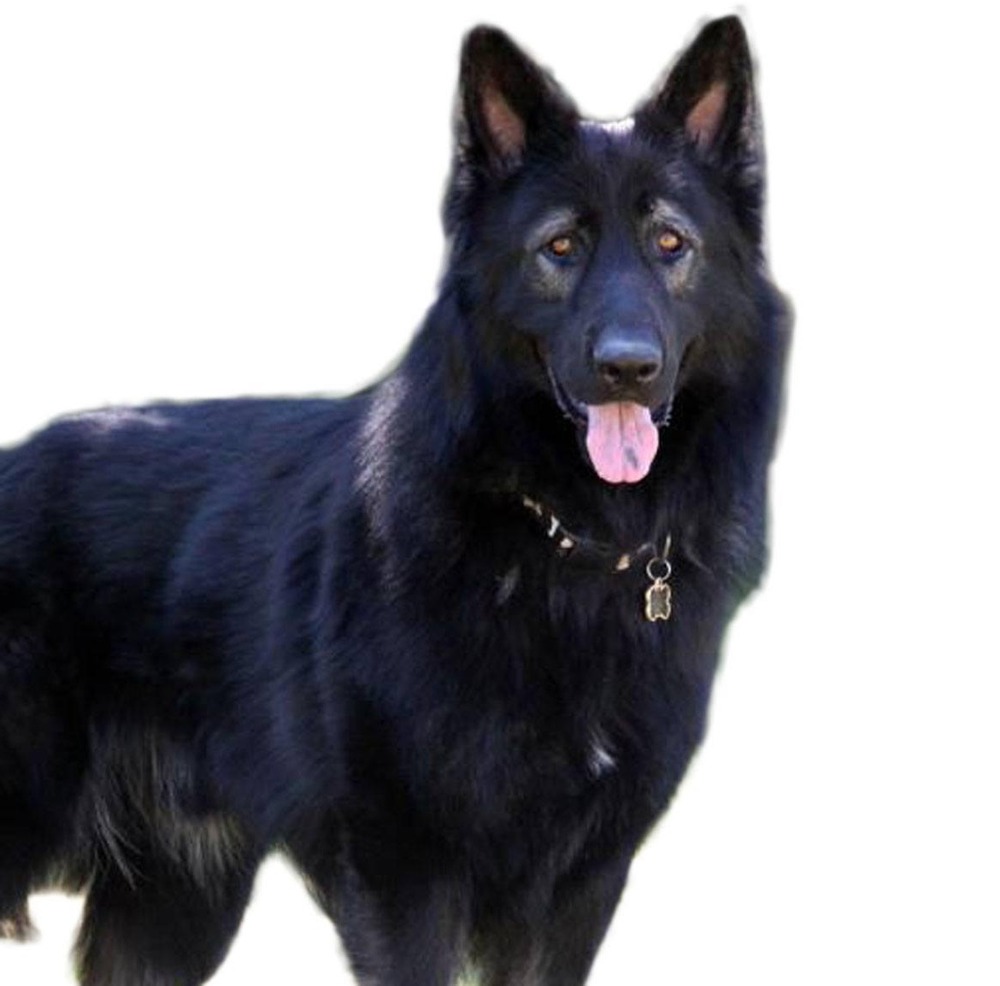
King Shepherds tend to do best with training that is clear, consistent, and reward-based. These are smart dogs, but intelligence does not automatically create self-control. The goal in the first year is not flashy obedience, it is settle skills and manners: learning to wait, to switch off, to walk without dragging, and to handle visitors without spiralling into alarm barking.
Socialisation is often misunderstood as “meeting lots of people”. In practice, it is exposure that stays under the dog’s threshold, so the puppy learns that the world is predictable and safe. Short, calm experiences, paired with good food and an exit plan, usually beat busy dog parks and chaotic greetings.
Adult exercise needs are high, but “exercise” should be more than distance. Many large working types thrive on a mix of:
- brisk walks with sniffing time
- structured play (tug with rules, retrieve with pauses)
- training games for impulse control
- enrichment (food puzzles, scent work, scatter feeding)
If you want a useful benchmark for everyday manners, programs like Canine Good Citizen outline the sorts of behaviours that make a big dog welcome in public spaces, whether or not you ever sit a formal test. 3
Health and lifespan: what to plan for
Large dogs can live long, comfortable lives, but they benefit from planning rather than optimism. For King Shepherds, the recurring themes are joints and the risks that come with size.
Hips and elbows
Hip dysplasia and elbow dysplasia are common concerns across many large breeds. If you are speaking with a breeder, ask what joint screening is done and how it is documented. Formal radiographic screening programs (such as OFA-style evaluations) describe standard positioning and identification, which helps keep results comparable and traceable. 4
Even with good genetics, environment matters. Rapid weight gain, overfeeding, and repetitive high-impact exercise on a growing skeleton can all stack the deck the wrong way.
Bloat (GDV) risk in large, deep-chested dogs
Gastric dilatation-volvulus (GDV), often called bloat, is a life-threatening emergency that is more common in large, deep-chested dogs. Risk is associated with factors such as eating one large meal daily, exercising soon after eating, and family history. 5, 6
Some owners of at-risk dogs discuss prophylactic gastropexy with their vet, particularly if the dog is already undergoing another procedure. It is not a casual decision, but it is one of the few interventions shown to reduce the risk of the stomach twisting, which is the most dangerous part of GDV. 6
Heat and thick coats
A dense double coat can make hot, still weather harder to manage. The safest pattern is usually to exercise in the cooler parts of the day, keep water and shade available, and recognise early signs of heat stress. Guidance from Australian animal welfare organisations emphasises moving pets to a cooler area, using cool (not icy) water, and contacting a vet promptly if heatstroke is suspected. 7
Grooming and everyday maintenance
Grooming is not only cosmetic for this type of coat. Regular brushing helps remove dead undercoat, reduces matting, and lets you notice skin changes early. Many owners do well with a simple rhythm: a thorough brush a few times a week, then more frequent brushing during seasonal coat blows.
Bathing is usually occasional rather than frequent. Over-washing can dry the skin and strip oils that help the coat do its job. If the coat is thick, focus on rinsing completely and drying properly, especially in cooler weather.
Because these dogs are heavy, nail care also matters. Long nails can subtly alter gait and load joints differently. If you are unsure, a vet nurse or groomer can show you what “short enough” looks like for your dog’s feet and posture.
Diet and feeding: supporting growth without pushing it
For large-breed dogs, diet is less about chasing the highest protein number and more about long-term structure: steady growth, a lean body condition, and a food that is truly complete and balanced.
One helpful reminder from veterinary nutrition guidance is that an ingredient list does not reliably tell you whether a food is high quality. Instead, look for evidence of formulation expertise, quality control, and whether the company can answer detailed questions about nutrient profiles and testing. 8
To reduce GDV risk, many veterinarians suggest splitting food into multiple meals and avoiding intense exercise immediately before and after eating. If your dog eats very fast, discuss practical options with your vet, such as slow feeders, food-dispensing toys, and changing the feeding set-up. 5, 6
Is a King Shepherd a good fit for your home?
For the right household, a King Shepherd can be a steady, capable companion, the kind of dog that likes having a job, even if that “job” is learning routines and coming along on daily adventures. But the fit is less about admiration and more about logistics.
This is usually a better match if you can offer space, structure, and time, along with a willingness to train for manners early and keep the dog lean. It is often a harder fit for apartment living, not because big dogs cannot be calm indoors, but because meeting their needs takes planning, consistency, and access to suitable exercise spaces.
If you are considering one, ask direct questions about health testing, what the parents are like to live with, and how puppies are raised in the first eight weeks. With a dog this size, those early choices echo for years.
References
- American Kennel Club: Foundation Stock Service (Program Home)
- American Kennel Club: Foundation Stock Service (Overview)
- American Kennel Club: Canine Good Citizen (CGC) Program
- Orthopedic Foundation for Animals (OFA): Hip Screening Procedures
- Cornell University College of Veterinary Medicine: Gastric Dilatation-Volvulus (GDV) or Bloat
- American College of Veterinary Surgeons: Gastric Dilatation-Volvulus and Gastropexy
- RSPCA Australia: Keeping Your Pet Safe During the Heat
- WSAVA: Global Nutrition Guidelines