

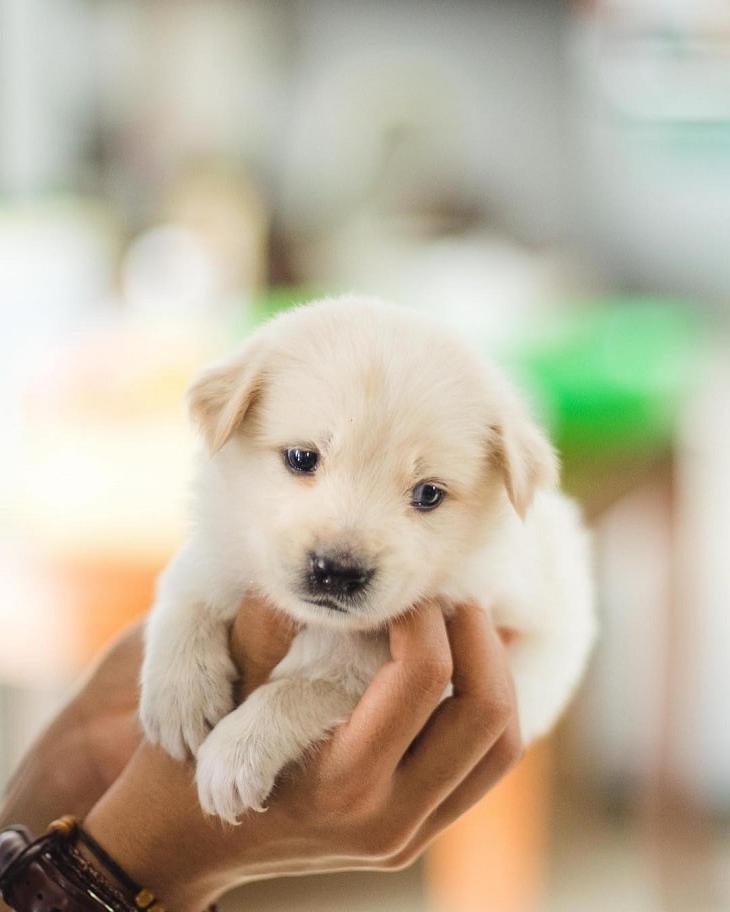
People usually come across the Kintamani because they have seen a striking, fox-faced dog in a photo from Bali, or they have heard someone call it the “Balinese mountain dog” and wondered if it is a recognised breed or simply a local type.
It is tempting to assume that any dog from a tourist hotspot is either a fashionable import or a mixed-breed street dog. The Kintamani sits in the more interesting middle ground, a landrace that has been shaped by place and people over time, and then formalised into a breed standard.
That matters in practice because “what a dog is” often drives expectations about training, exercise, coat care, and social life. With the Kintamani, the details are worth getting right, especially if you are considering living with one outside Bali.
Quick snapshot of the Kintamani
The Kintamani, also known as the Kintamani-Bali Dog, is a spitz-type dog from the highlands of Bali, Indonesia.1 It is recognised by the Federation Cynologique Internationale (FCI) on a provisional basis, with the FCI publication dated March 26, 2019, and provisional acceptance dated February 20, 2019.1
- Group: FCI Group 5 (Spitz and primitive types)1
- Typical size: medium, with males generally taller than females (see the FCI standard for the breed’s defined size range)1
- Coat: harsh, double coat, with a noticeable neck ruff in many dogs1
- Look: pricked ears, wedge-shaped head, and a tail carried high, often curved or sickle-shaped1
The Kintamani in Bali, a dog shaped by landscape and community

When people describe the Kintamani as a “mountain dog”, they are pointing to something real. The breed is associated with the cooler highland region around Kintamani, where a thicker coat is practical, not decorative.2
The FCI standard lists origin details that anchor the breed to place, including Sukawana Village in the Kintamani district (Bangli Regency, Bali Province).1 That kind of specificity is a clue that this is not just a look-alike type that has been marketed after the fact.
It is also helpful to hold two truths at once. Kintamani dogs have been developed from local Bali dogs, and they have shared space with free-roaming dogs for a long time, which is part of why their social habits and territorial responses can differ from many modern companion breeds.3
Recognition and what “provisional” actually means
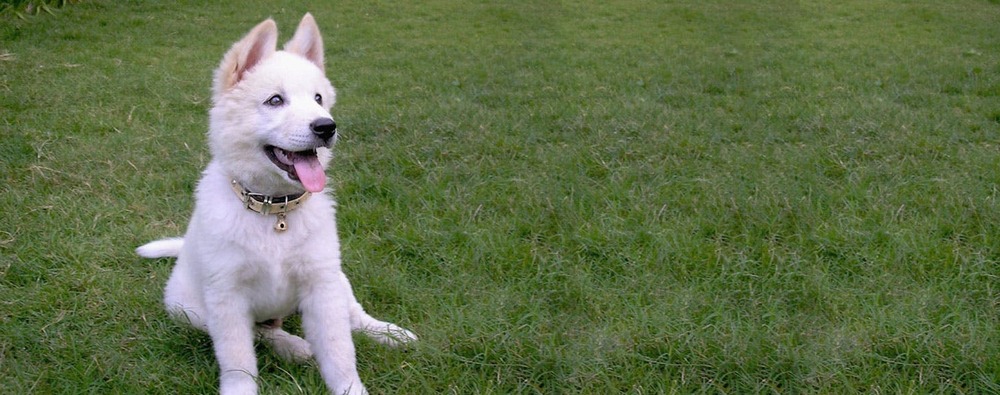
Breed recognition can sound like a stamp of quality, but it is more accurate to think of it as a formal description. The FCI listing for the Kintamani-Bali Dog includes its group classification and notes that it is recognised on a provisional basis.1
In practical terms, this means the breed has an official standard and an international framework for showing and breeding, but it is still being monitored and consolidated over time within the FCI system.1 If you are comparing sources, you will often see 2019 referenced because that is when the FCI published the English version of the standard and provisionally accepted the breed.1
It also explains why descriptions can vary. Some writers focus on a very classic “white with biscuit points” look, while the FCI standard allows multiple colours.1
Temperament, alertness, independence, and what that looks like at home
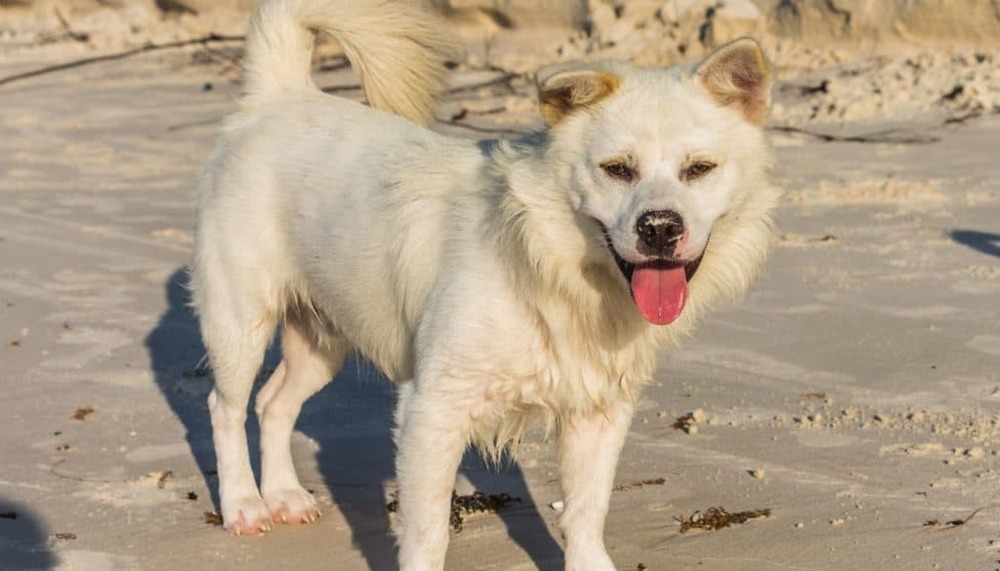
The Kintamani is commonly described as watchful, intelligent, and loyal, with a degree of independence that can surprise people who are used to highly biddable breeds.1 In day-to-day life, that independence often shows up as a dog that notices changes quickly and makes its own decisions about what matters.
Many owners are drawn to the breed because it can be a natural “presence” around the home. The flip side is that early socialisation really matters, particularly around unfamiliar visitors, new environments, and other dogs, so that alertness does not harden into persistent suspicion.4
Territorial behaviour is reported in the breed, especially dog-to-dog, which is not unusual for spitz and primitive-type dogs. That does not mean a Kintamani cannot live with other animals, but introductions and ongoing management need to be thoughtful rather than rushed.5
Training approach that suits the breed
With Kintamani dogs, consistency tends to work better than intensity. If you push hard, you can end up with a dog that simply opts out. If you build habits patiently, you are more likely to get reliable behaviour.
Reward-based training methods are widely recommended because they support clear communication while reducing the risks that can come with harsh equipment or punishment-based approaches.4 For an independent breed, make the right choice easy with good routines, well-timed rewards, and management that prevents rehearsing unwanted behaviour.
- Keep sessions short, and finish while the dog is still engaged.
- Practise calm behaviours around gates and fences, especially if the dog tends to patrol its boundaries.
- Build recall in low-distraction spaces first, then slowly add real-world complexity.
Exercise and enrichment, more than just “a long walk”
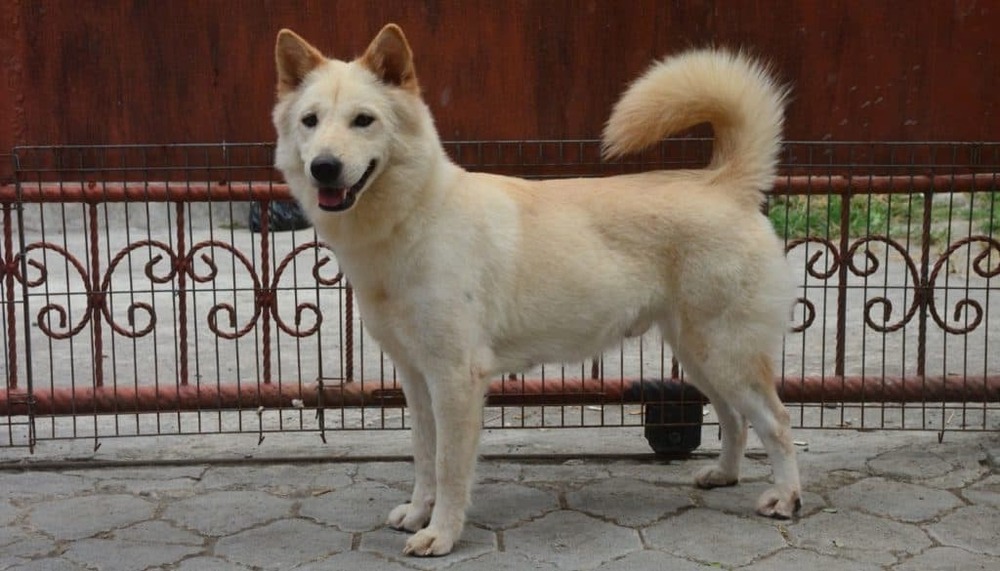
This is an active, athletic dog. While exact exercise needs vary by age and temperament, most Kintamani dogs will do best with daily activity that includes both movement and thinking time.
Consider mixing physical exercise with problem-solving. Sniff walks, food puzzles, and simple training games can take the edge off restlessness in a way that repetitive laps of the same route sometimes cannot.
One practical note that comes up in multiple descriptions is that Kintamani dogs can be capable climbers and may seek higher vantage points.5 Secure fencing and sensible supervision are part of responsible ownership, particularly in new environments.
Health considerations and what to watch for
There is not the same depth of global health data for the Kintamani as there is for long-established Western breeds, so it is wise to stay humble about sweeping claims. Still, a few themes come up often enough to be useful.
Like many medium dogs, hip dysplasia is a potential risk. It is best approached proactively: keep your dog lean, build fitness gradually, and ask your vet whether screening is appropriate, especially if you are buying a puppy and want to understand the parents’ health history.6
Skin irritation and itch can also occur in many dogs, whether from parasites, allergies, or secondary infections. If your dog is scratching, licking, or developing sore patches, a vet check is worthwhile rather than cycling through shampoos and diet changes without a plan.
Coat care, shedding, and everyday maintenance
The Kintamani has a double coat. That usually means shedding is a normal part of life, with heavier coat drop at certain times of year depending on climate and daylight patterns.
A few sessions each week with an appropriate brush or comb will generally keep the coat in good order, reduce tangles in the ruff and tail, and help you spot skin problems early. Aim for gentle, thorough grooming rather than aggressive “raking out” that irritates the skin.
Do not forget the boring essentials. Nail trims, ear checks, and basic dental care make a bigger difference to comfort than most people expect, particularly as dogs age. The Veterinary Oral Health Council (VOHC) lists accepted dental products that have met its standards for helping reduce plaque and tartar.7
Feeding and keeping weight steady
Most Kintamani dogs do well on a balanced, complete diet appropriate to their age and activity level. What matters most is not the trendiness of the food but whether it maintains steady body condition, healthy stools, and a stable coat and skin.
If you are trying to prevent joint strain, weight is one of the most powerful levers you can control. Your vet can help you set a realistic target and adjust portions, especially after desexing or during quieter seasons.
Travel and biosecurity, especially if you are thinking internationally
Some people meet the Kintamani in Bali and wonder about bringing a dog home. If Australia is involved, import rules are strict, and timelines can be long. The Australian Department of Agriculture, Fisheries and Forestry sets detailed conditions, including rabies vaccination, antibody titre testing (RNATT), and waiting periods depending on the country category.8, 9
For anyone travelling in rabies-endemic areas, it is also sensible to take public health advice seriously. NSW Health recommends avoiding contact with animals overseas and considering pre-travel rabies vaccination based on your itinerary and risk of exposure.10
Living with a Kintamani, who it suits best
The best home for a Kintamani is usually one that enjoys an active routine, values a dog that is observant and sometimes self-directed, and is prepared to invest in socialisation and training that builds trust rather than compliance.
If you want a dog that greets every stranger like a long-lost friend, or you need a very low-maintenance companion, this may not be the easiest fit. If, however, you appreciate a dog with quiet confidence and clear boundaries, the Kintamani can be a deeply rewarding presence, especially when its needs for enrichment, structure, and space are met.
References
- Federation Cynologique Internationale (FCI): Kintamani-Bali Dog (Standard and breed status)
- The Jakarta Post: Kintamani dog becomes first Bali breed to get global recognition (2019)
- Wikipedia: Kintamani dog (overview and history summary)
- RSPCA Australia Knowledgebase: Dog training recommendations (reward-based training)
- Bali Veterinary Clinic: The Kintamani dog, Bali’s natural inhabitant
- American Kennel Club (AKC): Hip dysplasia in dogs (signs and management)
- Veterinary Oral Health Council (VOHC): Accepted products list
- Australian Department of Agriculture, Fisheries and Forestry: Step-by-step guide to import dogs from a Group 3 country
- Australian Department of Agriculture, Fisheries and Forestry: Rabies vaccination and tests (RNATT) for cats and dogs
- NSW Health: Rabies information for travellers