

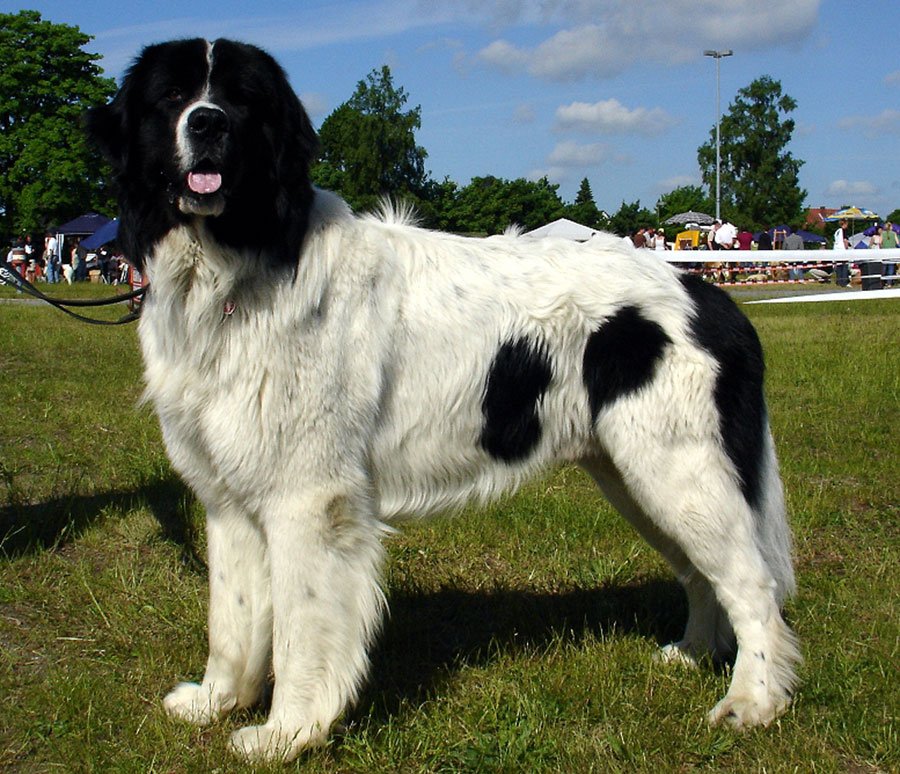
You might come across the Landseer E.C.T. after spotting a huge black-and-white dog at the beach, or meeting one on a quiet suburban walk and realising it is not quite a Newfoundland. The outline is similar, but the overall look can feel taller, more “leggy”, and a touch more athletic.
It is also a breed people stumble into when they want a family dog with a steady presence, but they are wary of the practical realities of living with a giant breed. With Landseers, the day-to-day matters, space, joints, grooming, travel, and the sort of training that keeps a powerful dog easy to live with.
So it helps to look past the lovely coat and the “gentle giant” reputation and understand what the Landseer E.C.T. was shaped to do, and what that means in a normal household.
- Breed group: Working type (FCI Molossoid, mountain type)
- Origin (FCI): Germany and Switzerland1
- Typical size: Giant, tall and powerful, with males often 72 to 80 cm and females 67 to 72 cm (breed standard ranges vary by authority)1
- Coat: Long, dense, with undercoat
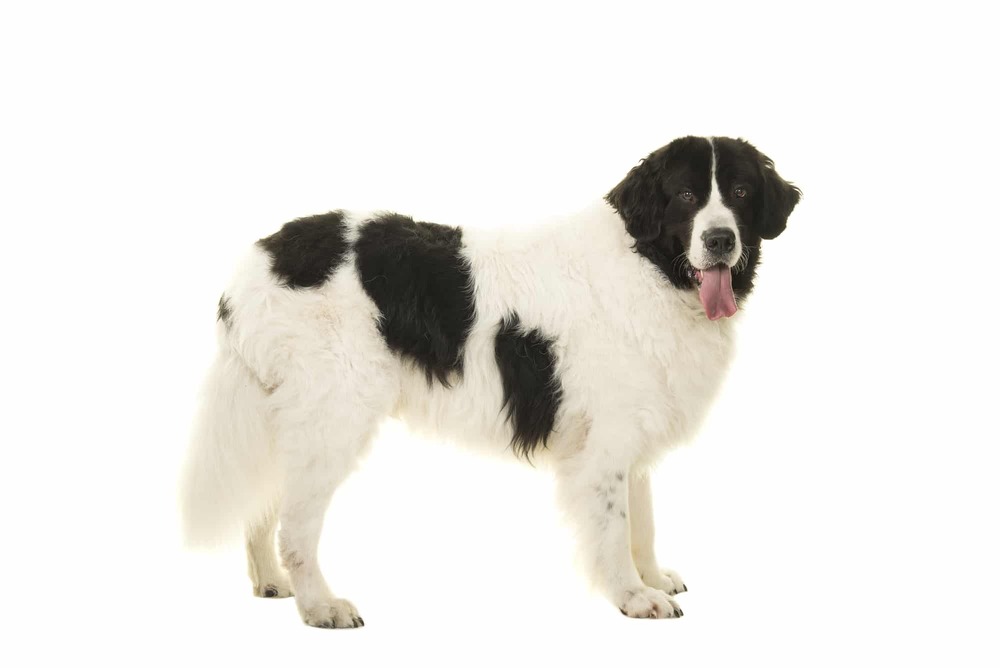
- Colour: White with distinct black patches; black head with white blaze is typical1
- Life expectancy: Commonly around 8 to 10 years (giant-breed typical range varies by individual and breeding)
Where the Landseer E.C.T. fits in dog history
The name “Landseer” is tied to the black-and-white Newfoundland-type dogs that appear in nineteenth-century European art, especially works by Edwin Landseer. Over time, continental Europe treated the black-and-white type as distinct, and the Landseer (European Continental Type) became recognised by the FCI as its own breed, with Germany and Switzerland listed as countries of origin in the FCI standard.1
It is still helpful to think of the Landseer E.C.T. as part of the wider Newfoundland family tree. Many of the traits people love, the impressive water ability, the heavy coat, the calm presence, overlap with Newfoundland-type dogs, even if the Landseer is often described as taller and more athletic in outline.1
When people talk about “water rescue dogs”, they are often thinking about the Newfoundland’s long association with water work, including modern water rescue tests developed by breed clubs. That context helps explain why Landseer-type dogs are so often drawn to water and tend to move confidently in it.2
What they look like in real life
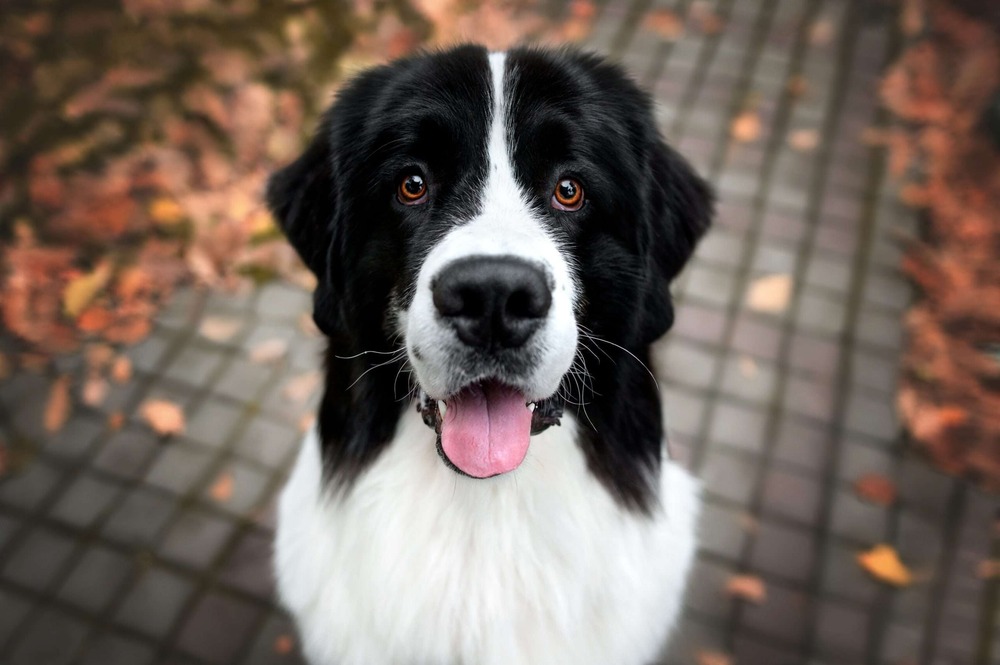
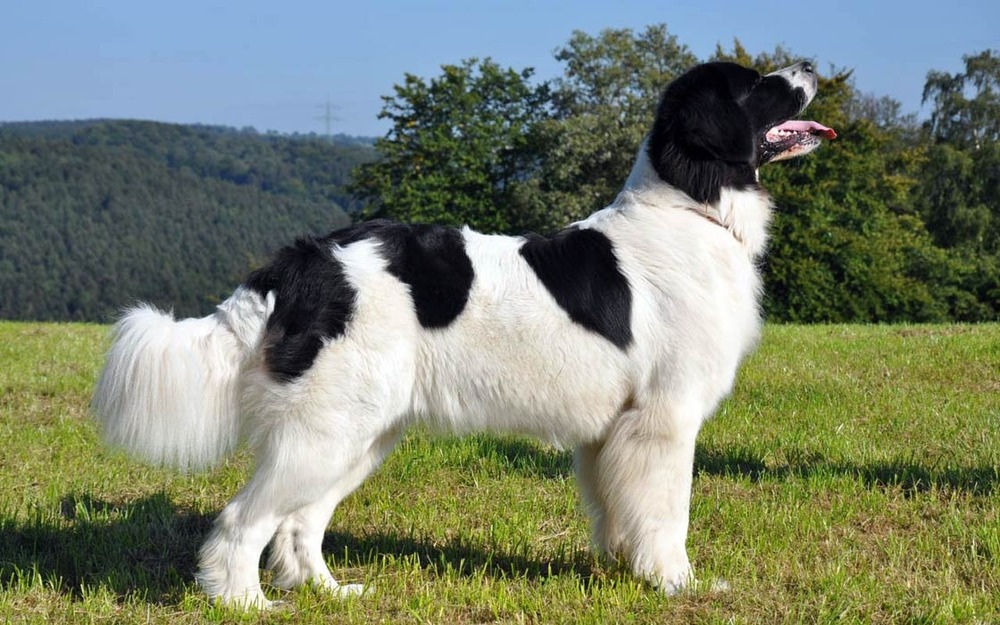
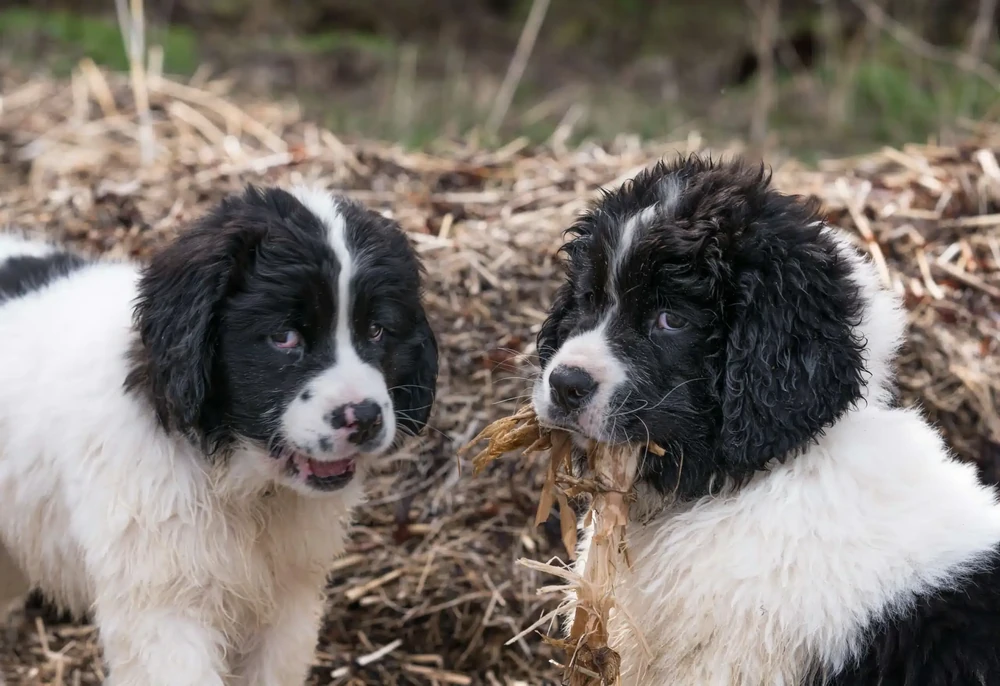
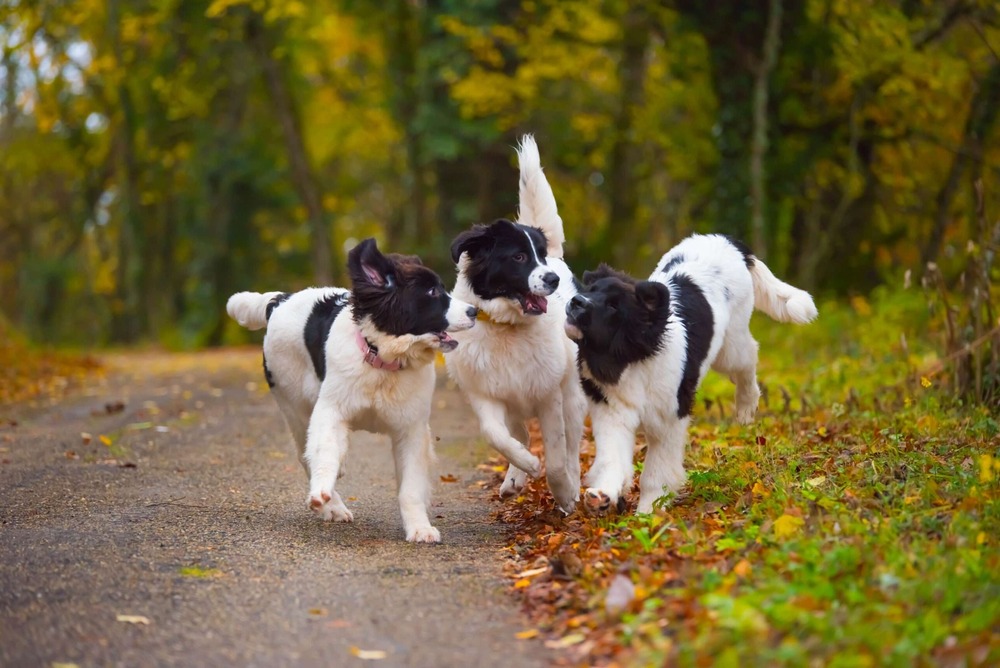
A Landseer E.C.T. should give an impression of a tall, balanced, strongly built dog, with a long, dense coat. The classic pattern is a clear white base with distinct black patches on the body, plus a black head with a white blaze and muzzle marking described in the breed standard.1
Owners often notice the “big dog details” straight away: broad feet, a substantial tail, and a coat that collects a surprising amount of sand, grass, and leaf litter. Expect seasonal shedding to be part of the deal, even with good grooming.
Many water breeds and water-inclined breeds have physical features that support swimming, including webbing between toes. This is widely discussed in relation to Newfoundlands and helps explain why closely related types are often comfortable in the water too.2
Temperament, the gentle reputation and the reality
The Landseer’s breed standard language leans towards calm, trustworthy, and well-intentioned. In practical terms, many Landseer households describe a dog that is socially interested, steady with familiar people, and not especially yappy, but still very capable of taking up space and making their presence known just by standing in a doorway.1
It is worth holding two truths at once: many are genuinely easy companions, and they are still giant dogs with strength, momentum, and a long reach. A Landseer that leans, barges, or grabs things with a big mouth is not being “naughty” in a human sense, it is being under-trained or under-practised for the environments you are asking them to cope with.
With children, the usual advice applies: choose calm introductions, supervise closely, and teach kids how to move around a large dog. A tolerant dog can still be overwhelmed, and a clumsy toddler can still be bowled over by an enthusiastic wag and a half-step sideways.
Training, socialisation, and living with a big body
The training conversation with Landseers is less about tricks and more about everyday manners. Loose-lead walking, calm greetings, a reliable recall in safe areas, and being able to settle on a mat are the kinds of skills that make a giant breed feel manageable.
Socialisation is not about forcing friendliness. It is about building comfort with people, dogs, surfaces, handling, and everyday noises, especially during the commonly cited “critical socialisation period” in early puppyhood. The RSPCA frames this as giving puppies lots of positive experiences so they grow into confident adults, and recommends reward-based training methods.3, 4
Because this breed becomes physically powerful long before their brains are fully mature, it helps to keep sessions short and consistent. Reward-based methods, clear routines, and thoughtful management (like using baby gates and practising calm doorways) typically get better outcomes than trying to “out-muscle” a dog that will soon outweigh many adults.
Exercise needs, especially if they love water
Landseers generally do best with daily movement that matches their size and age: steady walks, sniffy exploration, and controlled off-lead time where safe and legal. Many will happily swim, and for some dogs, water is a low-impact way to exercise, although you still need to build fitness gradually and keep an eye on currents, heat, and safety.
It also helps to remember that exercise is not just physical. Giant-breed adolescents often benefit from mental work that slows them down, scent games, simple obedience patterns, food puzzles, and calm training around distractions.
If you are raising a puppy, be conservative with hard impact and repetitive jumping while they are growing. Your vet can help you match activity to development and body condition.
Health considerations in a giant breed
Landseers share many of the health conversations that come with giant breeds. Joint disease risk matters, including hip and elbow dysplasia, and it is one reason responsible breeders use health screening and take pedigrees seriously. If you are choosing a puppy, ask what testing has been done and how results are interpreted, then confirm what it means with an independent vet.5
Another practical topic is bloat, also called gastric dilatation-volvulus (GDV), which is seen more often in large, deep-chested dogs. It is a veterinary emergency, and prevention advice commonly focuses on feeding management and avoiding vigorous exercise around mealtimes, although no strategy can remove risk entirely.6, 7
- Know the warning signs of bloat and have an after-hours plan with your local clinic.
- Feed measured meals rather than free-feeding, and consider slower feeding for dogs that gulp.
- Keep your dog in a lean, athletic body condition to reduce strain on joints and heart.
Life expectancy is often shorter in giant breeds, so the aim is not perfection. It is steady, thoughtful care, early veterinary attention when something changes, and choosing breeding lines that prioritise health.
Grooming and the “white dog” lifestyle
A Landseer coat is beautiful, but it is not low-maintenance. Regular brushing helps prevent mats, keeps shedding under control, and lets you check skin, ears, and feet. Expect seasonal coat “blows” where you will do more work for a few weeks and then settle back into a routine.
White fur shows everything. If your dog loves water and mud, you may find yourself making peace with a certain level of mess, or choosing dog-friendly covers in the car and a sensible rinse routine at home.
Keep nails trimmed, clean and dry ears after swims, and talk with your vet if you notice recurrent ear irritation, hotspots, or persistent itch.
Feeding and growth, keeping it slow and steady
Feeding a Landseer is less about chasing the biggest body and more about supporting sound growth and long-term comfort. For large and giant breeds, vets often emphasise measuring portions, monitoring body condition, and adjusting food to activity and life stage, rather than relying on the packet alone.7
If you are raising a puppy, ask your vet about an appropriate large-breed puppy diet and growth pattern. Rapid weight gain can add avoidable load to developing joints, and that matters in a dog that is already headed towards a very large adult size.
Treats are part of life, especially when training. Just keep them as a small portion of overall intake, and use lower-calorie options when you are doing lots of repetition.
Choosing a Landseer E.C.T., and who they suit
A Landseer E.C.T. tends to suit people who like big dogs for big-dog reasons: they enjoy a steady companion, they have the time for training and grooming, and they have the space to live comfortably with a dog who can fill a room without trying.
They are usually not ideal for small apartments, not because they are frantic, but because daily logistics become hard. Think about stairs, cars, wet coat management, and whether you can safely handle a heavy dog if they are unwell.
If you are deciding between a Landseer and a Newfoundland, it can help to meet adult dogs of both types, talk to breed clubs or experienced breeders, and be honest about what you can manage week to week. The best match is usually the one whose normal needs fit your normal days.
References
- Federation Cynologique Internationale (FCI): Landseer (European Continental Type) breed standard summary
- American Kennel Club (AKC): Newfoundland dogs and water rescue (traits and history)
- RSPCA Australia: Socialising your puppy
- RSPCA Knowledgebase: Is socialising my puppy important?
- Orthopedic Foundation for Animals (OFA): Hip dysplasia overview
- VetZone (Australia): Gastric dilatation and volvulus (bloat) in dogs
- VCA Animal Hospitals: Nutritional considerations for large and giant breed dogs
- WSAVA: Global Nutrition Guidelines