


- Breed category: Terrier
- Country of origin: United Kingdom
- Typical height: about 38 to 41 cm at the shoulder
- Typical weight: around 5 to 10 kg
- Typical lifespan: often 12+ years, many live into their mid-teens
- Coat: short, smooth, glossy
- Colour: black and tan
- Grooming: low, weekly brush for most dogs
- Exercise: generally up to about an hour a day, plus enrichment
- Energy level: high
- Barking tendency: moderate, often alert-based
- Apartment living: can suit, if exercise and training are consistent
People often meet the Manchester Terrier through a moment of contrast. A small, sleek dog that looks almost polished, then suddenly moves like a little athlete, fast on the turn, sharply attentive to what is happening around the home. If you have only known terriers as scruffy, busy bodies, the Manchester can feel different in the hand and in the room.
It is tempting to assume their short coat means they are an easy, low-input pet. In some ways they are, grooming is straightforward, and many are very settled indoors once their needs are met. The part that catches people out is the mind. A Manchester Terrier usually wants purposeful activity, not just a lap and a quick stroll.
Understanding what shaped the breed, and what still shows up in daily life, helps you decide whether this is a dog that will thrive with you. It also helps you avoid common friction points, like chasing, alert barking, or a dog that becomes restless when the household routine is quiet.
Where the Manchester Terrier came from

The Manchester Terrier developed in and around Manchester in the United Kingdom, with a practical job in mind: keeping rats down in a time when towns, mills, and crowded housing made vermin a daily problem.1 Unlike some terriers that are closely associated with rural hunting, this breed is strongly tied to urban life and working streets.
Breed histories commonly describe an influence from earlier black and tan terriers, with Whippet blood added for speed and a more streamlined outline.1, 2 You can still see the result in the way many Manchester Terriers move: quick, efficient, and ready to sprint if something triggers their chase instinct.
One historical detail worth understanding, even if it is confronting, is that ear cropping was practised in the breed’s early days. It was done to reduce injuries in ratting, and also in staged contests that were popular at the time.1 Today, cropping is not part of everyday pet keeping in Australia, and many owners live happily with the breed’s natural ear carriage, whether it sits erect or folds in a small V.
What they look like, and what that means for care

The Manchester Terrier is compact and elegant, with a short, close coat and sharply defined black and tan markings.2 In the official UK breed standard, the ideal height is around 41 cm for dogs and 38 cm for bitches, and the desired colour is jet black with rich tan markings in specific placements on the face, chest, and legs.2
That short coat usually means low grooming, but it does not mean they are weatherproof. Many feel the cold more than double-coated breeds, and in cooler parts of Australia you may find your dog is more comfortable with an indoor bed away from draughts, and a coat for winter walks.
Their athletic build can also hide weight gain until it is advanced. It helps to keep an eye on waist shape and energy levels, not just the number on the scales.
Temperament, in real household terms
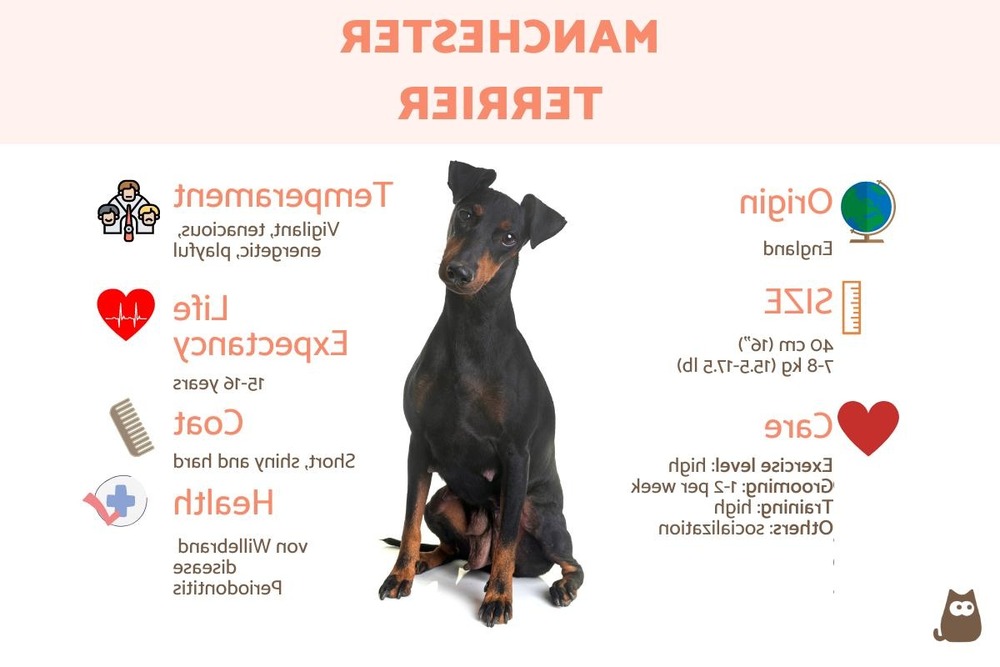
Breed descriptions tend to use words like keen, alert, discerning, devoted, and sporting.2 In a home, that often looks like a dog that notices patterns quickly, learns routines fast, and watches visitors carefully before deciding whether to engage.
A common misunderstanding is that an alert terrier is “being stubborn” when they are actually processing a lot of information. The Manchester Terrier can be sensitive to sudden changes in the environment, including noise, unfamiliar dogs, or unpredictable handling. A steadier approach, clear cues, and rewards for calm behaviour usually go further than repetition or firm correction.
If you have small pets, it is wise to assume there may be some prey drive. Management, training, and careful introductions matter, and for some households a Manchester Terrier simply will not be the easiest match for free-roaming pocket pets.
Training and exercise that suits the breed
A Manchester Terrier often trains well because they like to engage. The catch is that they also notice what works. If barking at the window makes the interesting thing go away, the behaviour can become a habit. If pulling gets them to a smell faster, that can become the default. Training is not just about teaching commands, it is about shaping the pattern of daily life.
Reward-based training is strongly recommended by Australian animal welfare organisations, and it suits terriers who respond best when learning feels like a game with clear outcomes.3 Keep sessions short, rotate rewards, and give the brain a job, not only the legs.
For many Manchester Terriers, “exercise” works best when it includes variety:
- Brisk walks with time to sniff (sniffing is work)
- Recall games and controlled fetch in a safe area
- Simple agility-style activities at home, like stepping over low poles
- Food puzzles and scatter feeding for mental effort
UK guidance suggests many will be content with up to about an hour of daily exercise, adjusted for age and health, plus enrichment at home.1 Adolescents may need more input, and older dogs often do best with shorter, more frequent outings.
Socialisation, without flooding your puppy

Socialisation is not just meeting people and dogs. It is learning the world is safe, and that novelty predicts good things. The RSPCA describes a critical socialisation period in puppyhood, roughly spanning early weeks through to around 14 to 17 weeks, when positive experiences can have an outsized impact on later behaviour.4, 5
For a Manchester Terrier, this is especially valuable because they can be observant and quick to form associations. Aim for calm exposure to:
- different surfaces and sounds
- people with hats, prams, walking frames, and umbrellas
- gentle handling, including paws, mouth, and collar touches
- brief, positive encounters with steady adult dogs
Go slowly. If your puppy is hesitant, distance and choice are your friends. Confidence tends to build when the dog controls the pace.
Health topics to discuss with your vet and breeder

No breed is completely free of inherited risk. The practical approach is to work with a reputable breeder who health tests, then keep your own dog on steady preventative care with a vet you trust.
Manchester Terriers are generally considered a robust breed, but there are a few issues that appear in breed health discussions. The UK Kennel Club has approved official DNA testing schemes for juvenile dilated cardiomyopathy (a serious early-onset heart condition) and xanthinuria (type 2), both described as autosomal recessive conditions in the breed.6
They can also be affected by orthopaedic issues seen in many smaller dogs, including patellar luxation. This is when the kneecap moves out of its normal position, and it can show up as a skip, hop, or an intermittent three-legged run that resolves quickly.7
If you are comparing breeders, it is reasonable to ask what testing they do and why. If you already own a Manchester Terrier, it is reasonable to ask your vet what to watch for across your dog’s life stage, including dental care, body condition, and any breed-relevant screening.
Grooming and day-to-day maintenance
The coat is the easy part. A weekly brush and an occasional bath when needed keeps most Manchester Terriers tidy. The more important maintenance is often the quiet routine work: nails, teeth, ears, and skin checks.
In practical terms, aim for:
- Weekly coat brush to lift loose hair and spread natural oils
- Regular nail trims so the feet stay comfortable and balanced
- Tooth brushing as often as you can manage, dental disease is common across breeds
- Ear checks, particularly if your dog has folded ears and swims often
Because the coat is short, you will also notice bumps, scrapes, and grass seeds more quickly. That is a small advantage, it helps you catch problems early.
Feeding, weight, and what “good food” really means
Manchester Terriers tend to do well on a complete and balanced diet suited to their life stage and activity level. If you are choosing between brands, it can help to look beyond the ingredient list.
The WSAVA Global Nutrition Guidelines highlight that ingredient lists can be misleading, and encourage owners to focus on whether the diet is complete and balanced, whether the manufacturer has appropriate expertise and quality control, and whether the food suits the individual pet.8
For an active, lean breed, the main feeding pitfalls are usually:
- too many training treats without reducing meal portions
- free feeding that makes appetite hard to read
- underestimating the calories in human leftovers
If your dog is gaining weight or always seems hungry, your vet can help you set a calorie target and adjust meal size without leaving your dog frustrated.
Living with a Manchester Terrier, the good parts and the fine print

At their best, Manchester Terriers are bright, responsive companions who bring a sense of precision to daily life. They often like being close to their people, but they also like having a job, even if that job is learning a new cue, trotting beside you on a walk, or searching the grass for scattered kibble.
The fine print is manageable, but it helps to be honest about it. This breed often does best with people who enjoy training, can provide regular exercise, and are willing to guide alert behaviour into calm routines. If you can offer that, the Manchester Terrier can be a small dog with a surprisingly complete presence in the home.
References
- The Kennel Club (UK): Manchester Terrier (Breeds A to Z)
- The Kennel Club (UK): Manchester Terrier breed standard
- RSPCA Australia: Socialising your puppy
- RSPCA Knowledgebase: Is socialising my puppy important?
- RSPCA Knowledgebase: How can I socialise my puppy?
- The Kennel Club (UK): New DNA testing schemes for the Manchester Terrier and English Toy Terrier
- VCA Animal Hospitals: Luxating Patella in Dogs
- WSAVA: Global Nutrition Guidelines