

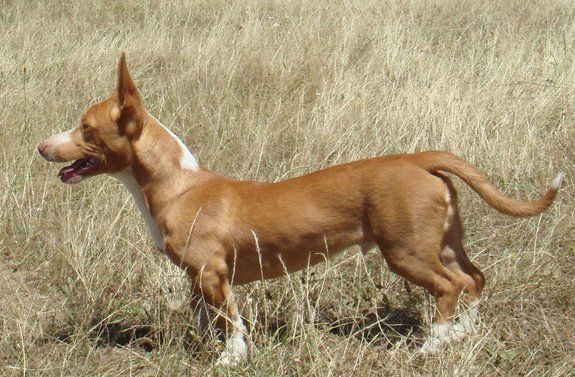
People usually come across the Maneto the same way they come across a lot of regional working breeds: a photo of a small dog with very short legs, a long body, and a surprisingly “houndy” look, then a pause while you try to place it. Is it a Dachshund type? A terrier? A Podenco? The answer is closer to a scent hound story from southern Spain than a modern designer cross.
What makes the Maneto interesting is not just its shape. It is a practical hunting dog built for thick scrub and tight cover, and that working background still shows up in day-to-day life as alertness, a strong nose, and a tendency to be busy if nothing is happening. If you are thinking about living with one, or you have met one and wondered why it behaves the way it does, it helps to understand where the breed came from and what its body was designed to do.
It is also worth knowing that, outside Spain, information can get fuzzy. The Maneto is recognised by Spain’s national kennel club, but it is not widely recognised internationally, so you will often see it described in inconsistent ways. That does not make it any less real, it just means you need to lean on solid sources and practical care principles when making decisions.
- Breed category: Scent hound type (recognised by Spain’s national kennel club)1
- Place of origin: Andalusia, Spain1
- Typical size: about 30 to 35 cm, around 8.5 to 11.5 kg (varies by line)1
- Coat: short, smooth1
- Life expectancy: commonly around the low to mid teens (individuals vary)
Origins, purpose, and why the legs are short
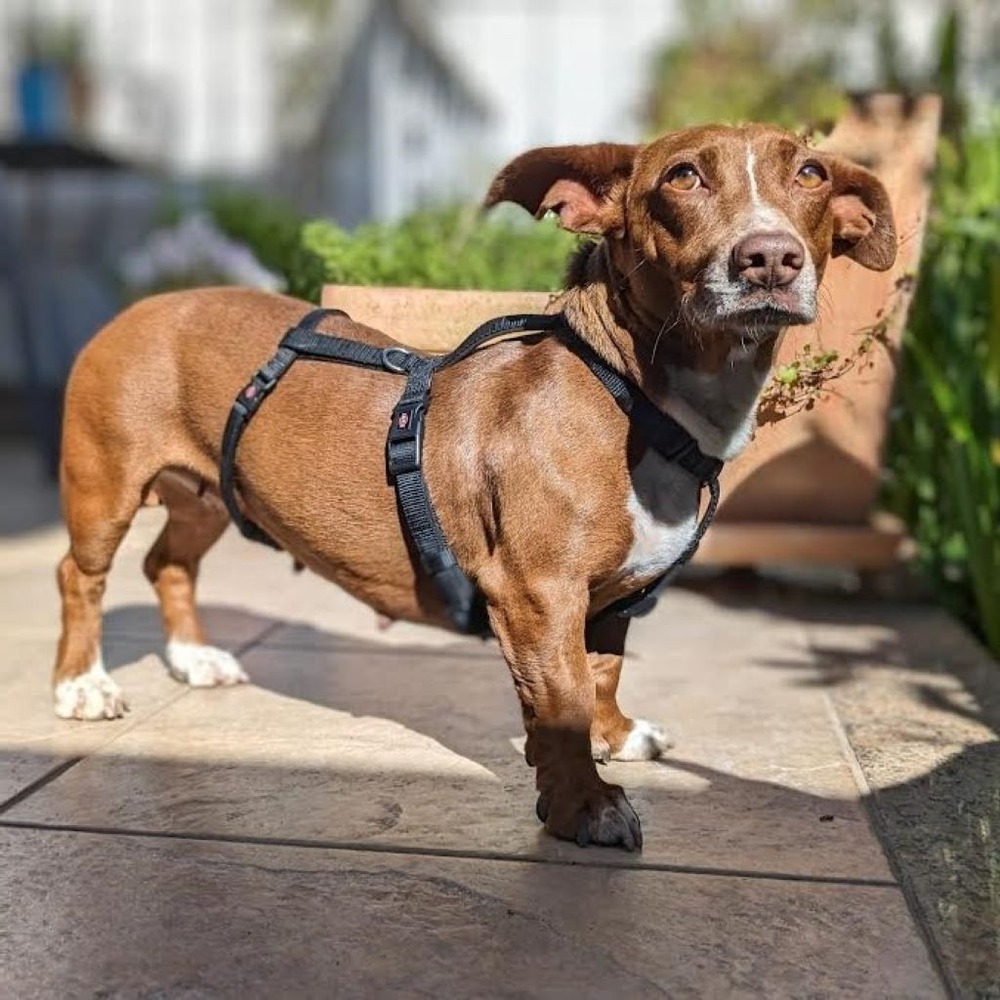
The Maneto is a Spanish breed from Andalusia, developed as a small-game hunting dog in terrain where low clearance is an advantage. In practice, that means a dog that can push into dense scrub and work close to the ground without losing stamina or determination.1
A common assumption is that the Maneto must be the result of deliberate crossbreeding with another short-legged breed. The more likely explanation, and the one that fits what we see across dog genetics, is that short limbs can arise through chondrodystrophy-related variants that alter cartilage and bone development. This is the same broad biological theme behind the “long back, short legs” body type in several established breeds.3, 4
That shape is functional in the field, but it also comes with practical implications for owners, particularly around spine care, weight management, and how much impact (jumping down from furniture, launching off steps) is part of everyday routine.
Appearance and the traits people notice first

The Maneto’s outline is distinctive: an elongated body with short legs, paired with a compact, muscular feel rather than a delicate one. The coat is typically short and smooth, which suits a working dog that is meant to move through vegetation without collecting burrs and debris.1
In day-to-day life, the most noticeable “hound” feature is often not the ears or the tail, but the way the dog uses its nose. Many Manetos will spend a walk reading scent trails with deep concentration, which can look like stubbornness if you are expecting a heel-focused stroll.
Temperament, family life, and what they are like to live with
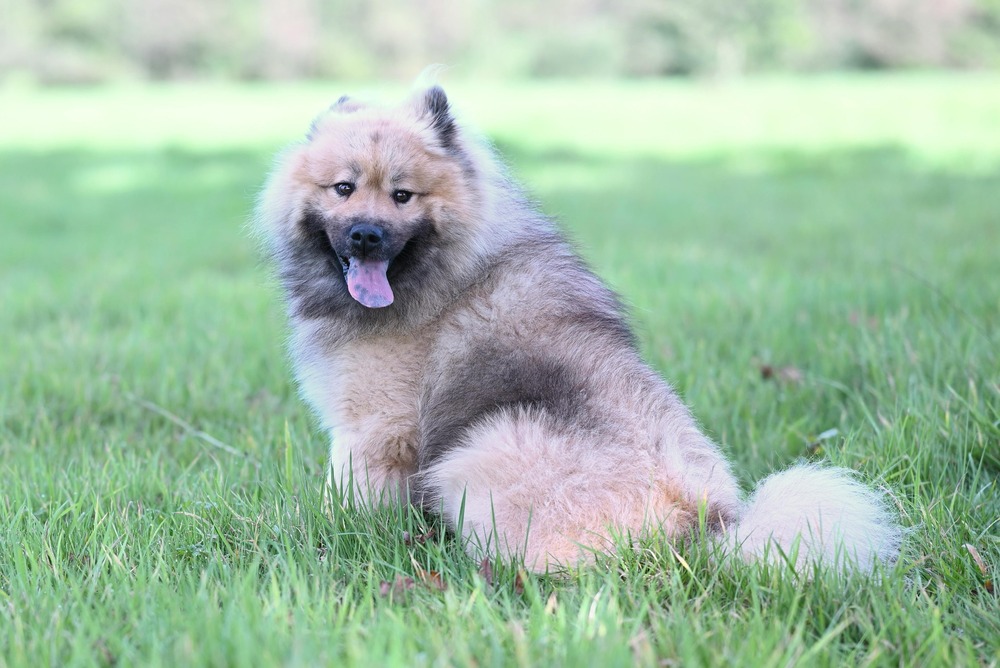
Well-bred, well-socialised Manetos are often described as friendly, alert, and loyal. It is a combination that makes sense for a dog expected to work closely with people, stay aware of its environment, and persist when following scent.
For families, the key is matching expectations to the dog in front of you. A Maneto can be affectionate and engaging, but it will not thrive as an ornament. Many individuals need regular, purposeful activity plus time to sniff and explore, not just a quick loop around the block.
With children, the usual small-dog rules still apply: supervise, teach kids to avoid grabbing or cornering, and make sure the dog has a quiet retreat. With other pets, early introductions and steady social learning matter, especially if the dog’s instinct to chase small moving animals is strong.
Training and exercise, keeping the clever nose on your side
Manetos tend to do best with training that is calm, consistent, and reward-based. If you lean too hard on repetition, you may get the classic “I heard you, I am busy” look that scent-driven dogs can perfect. Short sessions with clear outcomes often work better than drilling.
In practical terms, it helps to build life skills that protect both your relationship and your dog’s safety:
- Recall practice in low-distraction settings before you trust it near wildlife scents.
- Loose-lead walking that still allows sniffing, rather than treating sniffing as “bad behaviour”.
- Settle-on-a-mat or quiet time training, so the dog can switch off indoors.
Exercise needs are usually moderate, but “moderate” still means daily movement plus mental work. Sniffy walks, simple tracking games, and food puzzles can do a lot of heavy lifting for this breed type.
Health considerations, especially back care and weight

The Maneto is often described as robust, but its body shape means you should be thoughtful about spinal health. In short-legged, long-backed dogs, chondrodystrophy-related traits are associated with a higher risk of intervertebral disc disease (IVDD). That risk is not a prediction for an individual dog, but it is a sensible reason to be proactive.3, 5
Simple, boring routines are often the most protective:
- Keep your dog at a lean body condition, since excess weight adds load through the spine.2
- Use ramps or steps for favourite furniture if your dog tends to launch on and off.
- Choose low-impact fitness, steady walks and controlled play rather than repeated high jumps.
Know the red flags. Back pain, reluctance to jump, wobbliness, weakness in the back legs, or changes in toileting can be signs that need a veterinary check promptly.5
Grooming, coat care, and everyday maintenance
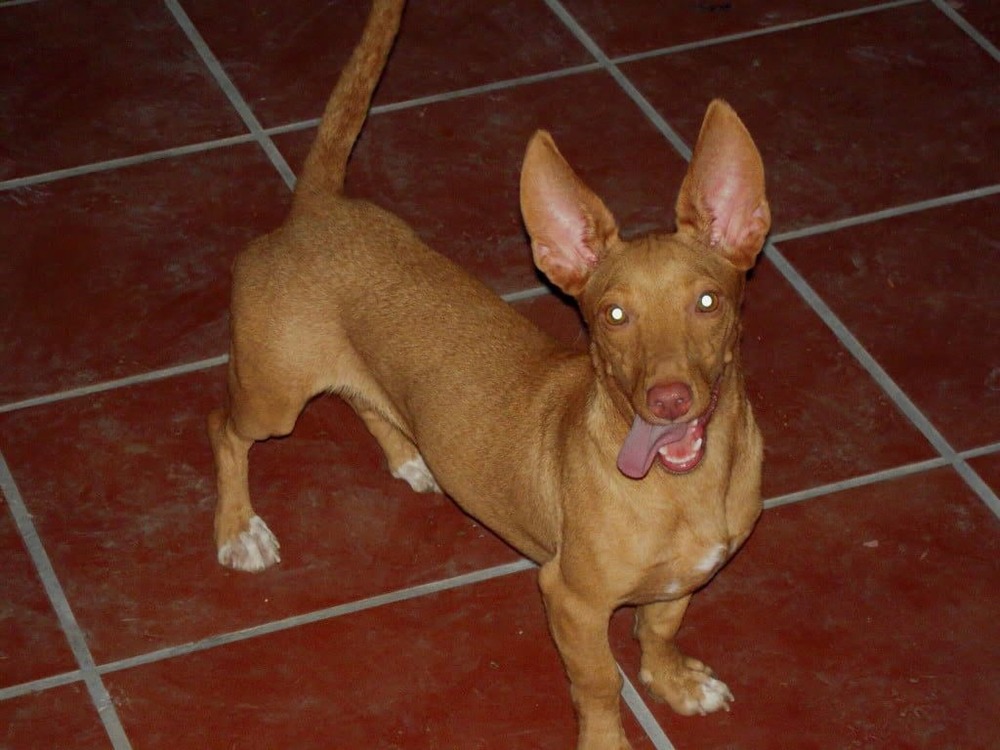
A short, smooth coat is usually low fuss. Occasional brushing helps remove loose hair and gives you a chance to check skin, nails, and any little scrapes from outdoor exploring. Many owners find that a quick weekly routine is enough most of the year.
Pay extra attention to the basics that keep working-type dogs comfortable: nail length (short nails change posture and gait), ear cleanliness (especially if the dog is out in grass and scrub), and dental care. None of it is glamorous, but it is the kind of maintenance that keeps small issues small.
Feeding, appetite, and avoiding the slow creep of extra kilos
Manetos are small enough that a modest amount of overfeeding can show up quickly on the body. The most reliable guide is not the packet, it is your dog’s condition over time. Veterinary organisations encourage using tools like body condition scoring to adjust portions based on what you can see and feel, not what you hope is happening under the coat.2
If you are using treats for training, it helps to plan for them. Either reserve part of the daily ration for training, or choose tiny, low-calorie rewards so you can reinforce behaviour without accidentally doubling your dog’s intake.
Final thoughts
The Maneto makes more sense when you see it as a practical Andalusian hunting dog in a compact frame, rather than a novelty. Its strong nose, alertness, and persistence can be a joy for the right household, especially one that values daily walks with plenty of sniffing and a bit of training as part of normal life.
If you are considering a Maneto, focus less on the romance of a rare breed and more on the quiet details that matter: good socialisation, sensible exercise, and protecting the spine through weight and low-impact habits. Those are the things that tend to shape the next decade of life together.
References
- Wikipedia: Maneto
- WSAVA: Global Nutrition Guidelines (resources including body condition scoring)
- Cornell University College of Veterinary Medicine: Chondrodystrophy and intervertebral disc disease (CDDY/IVDD)
- UC Davis Veterinary Genetics Laboratory: CDDY and IVDD risk test information
- American College of Veterinary Surgeons: Intervertebral Disc Disease (IVDD)
- The Animal Medical Center: Intervertebral disc disease (IVDD) in dogs
- Fédération Cynologique Internationale (FCI): Ratonero Bodeguero Andaluz nomenclature entry
- Real Sociedad Canina de España (RSCE): Maneto breed standard (PDF)