

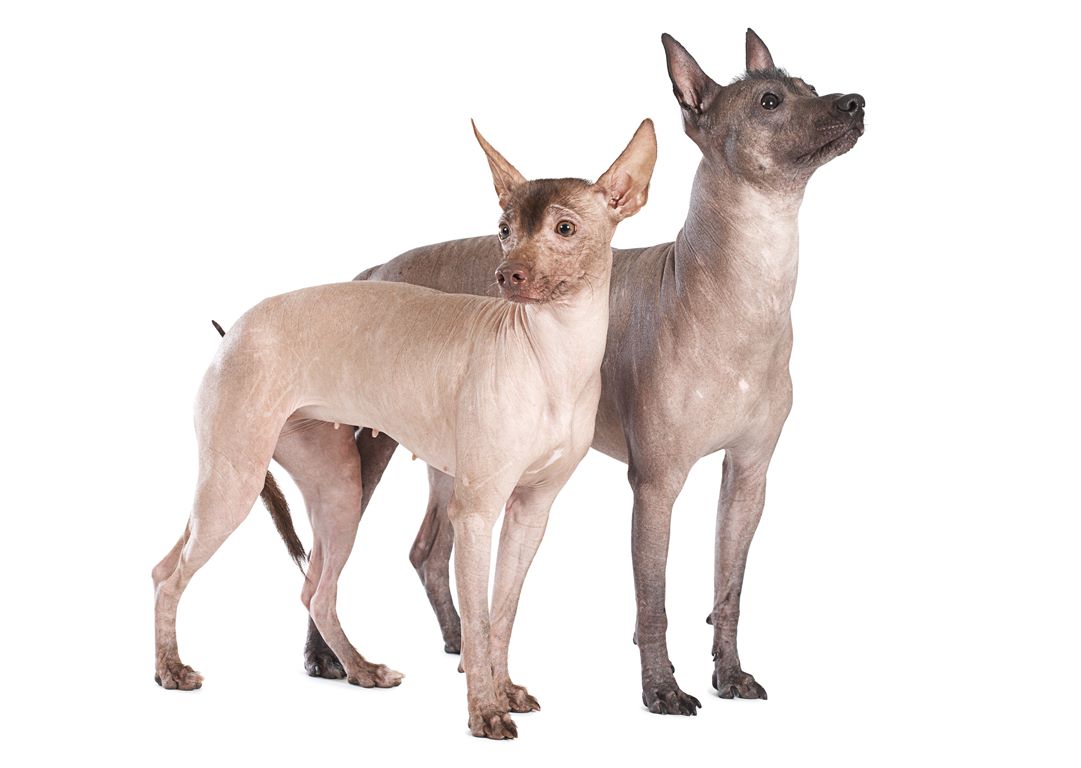
People usually find their way to the Mexican Hairless Dog after noticing one in the park, in a film, or in an old artwork, and then realising it does not quite fit the usual “small companion” mould. The Xoloitzcuintli (often shortened to Xolo) can look otherworldly at first glance, but in day to day life they are simply a dog with some very specific practical needs.
One common assumption is that “hairless” automatically means easy care, or that it means “hypoallergenic”. In reality, a hairless coat changes the sort of care you do, not whether you do it. Skin, sun, temperature, and even teeth can matter more than first time owners expect.
When you understand what the Xolo was bred alongside, not just what it looks like, the breed starts to make sense. They tend to be observant, steady, and close to their people, and they do best in homes that enjoy a calm routine and can stay on top of the small, regular bits of care that keep them comfortable.
- Country of origin: Mexico
- Coat varieties: Hairless or coated (short coat)
- Size varieties: Toy, Miniature (Intermediate), Standard
- Typical nature: Calm, alert, often reserved with strangers
- Care watch-outs: Skin protection, dental care, temperature sensitivity
Ancient roots and cultural significance
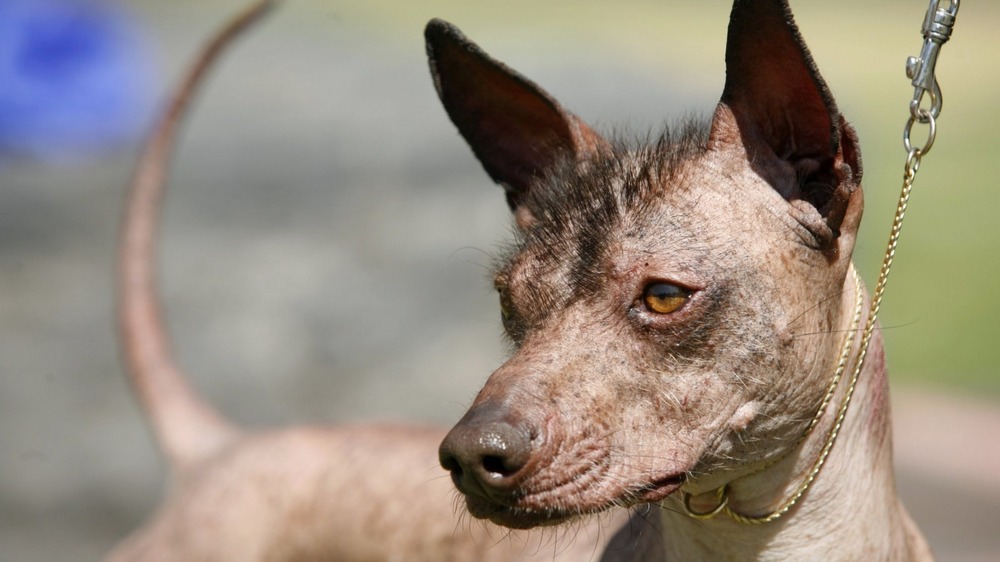
The Xoloitzcuintli is widely described as an ancient Mexican breed, and it still carries that “primitive type” outline: clean lines, athletic body, and an attentive way of moving through the world. Modern kennel bodies recognise it as a breed from Mexico, with published standards that describe three size varieties and both hairless and coated dogs.1
In Mexican history and art, Xolos are often associated with belief systems around protection and the journey after death. It is easy to romanticise this, but the practical takeaway is simpler: this is a dog that has long lived close to people, and many Xolos still prefer to stay near their household rather than range far and wide.
If you are meeting the breed for the first time, it helps to hold two ideas together. The Xolo can be remarkably calm at home, but also very alert to changes in the environment, which is part of why they can make steady watchdogs without necessarily being noisy about it.2
What a Xolo actually looks like in real life
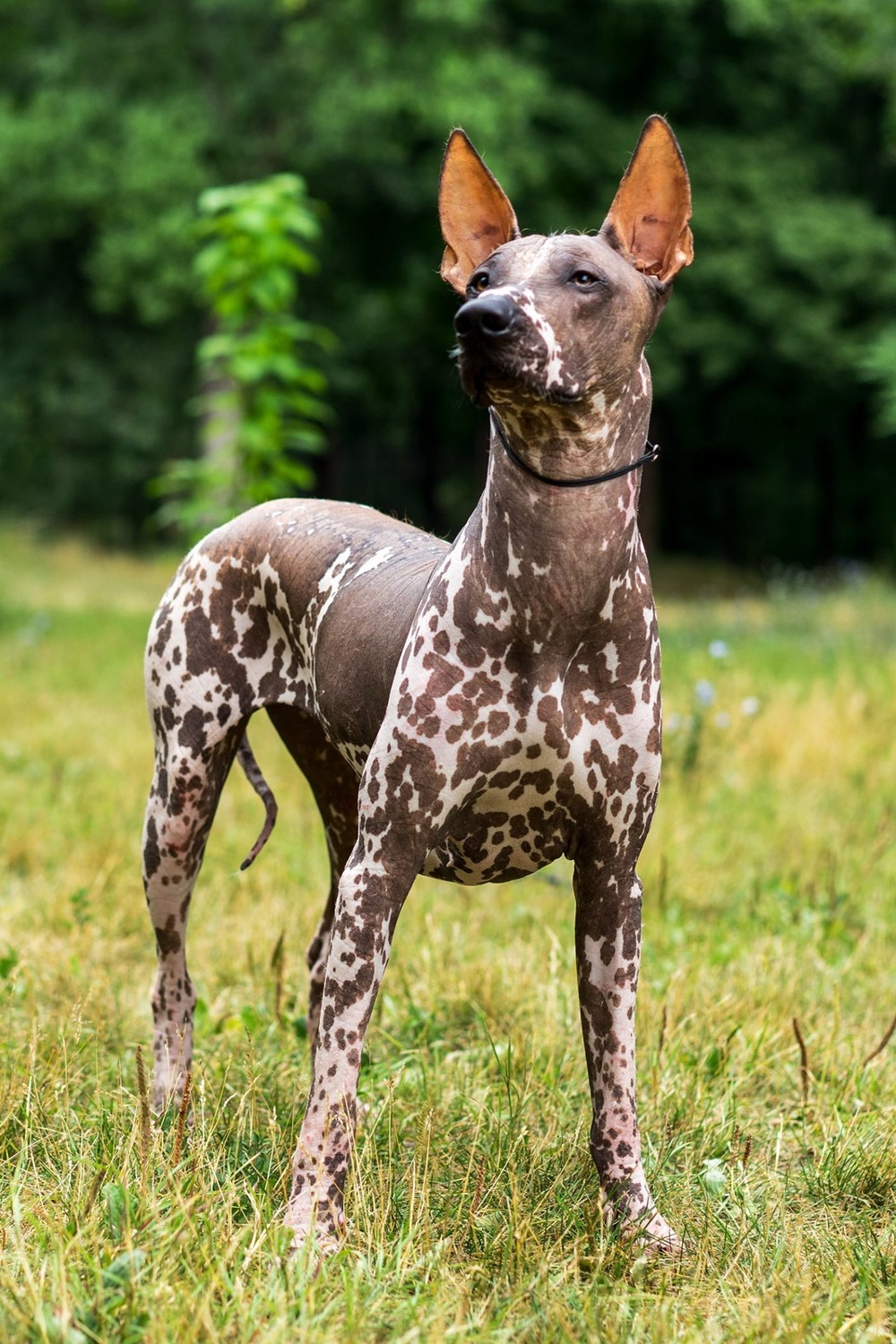
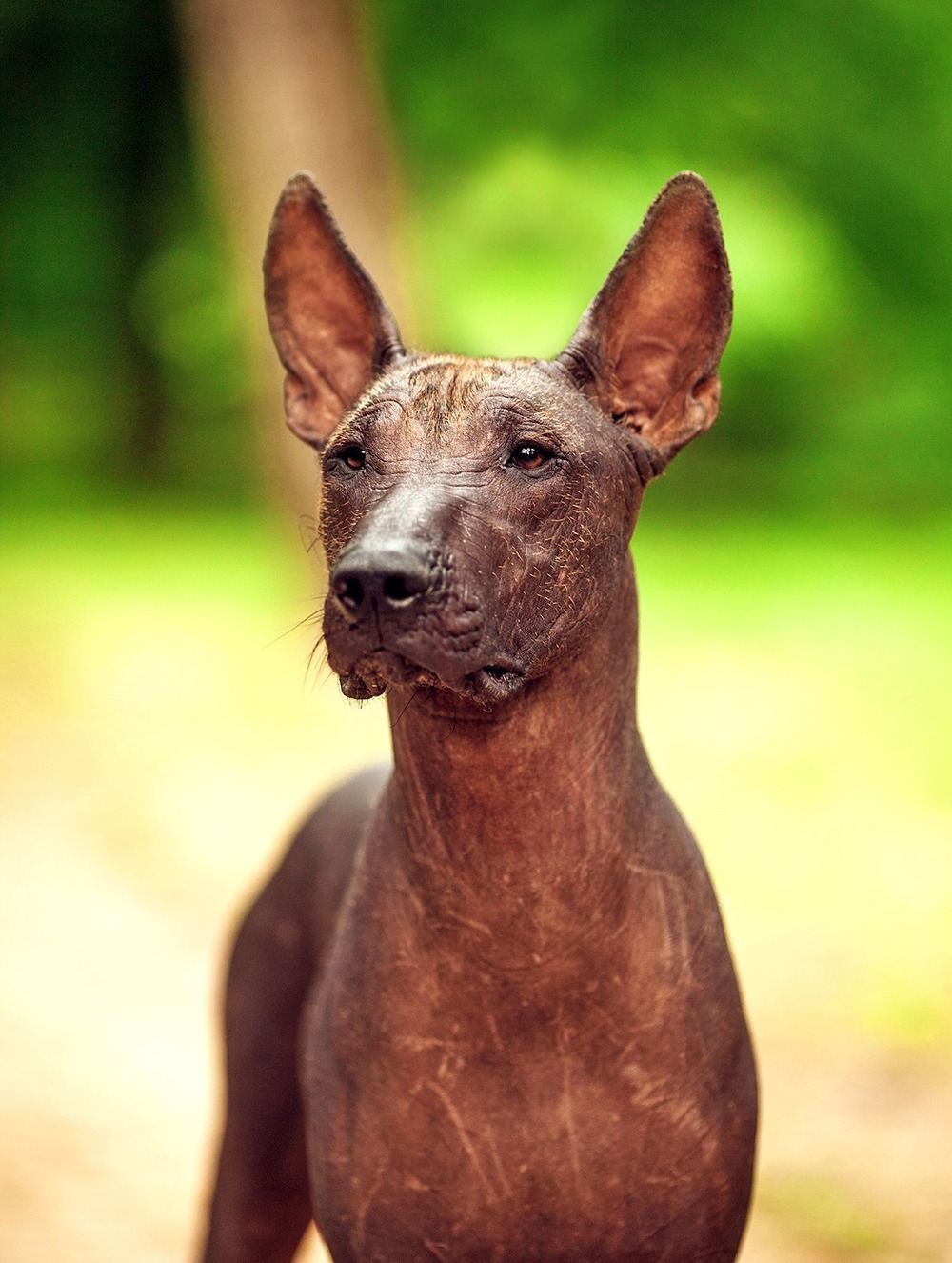
Most people start with the obvious: the hairless skin, the big upright ears, the smooth silhouette. But “hairless” does not mean perfectly bald. Many hairless Xolos have small tufts of hair on the head, feet, or tail, and the coated variety has a short, close coat.2, 3
Size can also surprise people. Depending on the registry, you will see them described as toy, miniature (often called intermediate in FCI material), and standard. In practical terms, that means you might meet a compact apartment sized Xolo, or a taller, more substantial dog with the same overall type.1, 3
Colour is varied, including dark shades like black and grey, plus bronzes and other tones. Skin colour and markings are normal, and they are part of the breed’s look, not a flaw. What matters day to day is the condition of the skin: comfortable, supple, and free of ongoing irritation.
Temperament, bonding, and family fit
Xolos are often described as calm and attentive, with a tendency to be reserved with unfamiliar people. That reserve is not the same thing as “unfriendly”. In many dogs it shows up as watchfulness and a preference to observe first, especially if the household is busy or there are lots of visitors.2
With their own people, many Xolos are quietly affectionate and settle well into routines. If you like a dog who can relax on the couch but still perks up when something changes outside, the breed can fit that rhythm. If you want a dog who greets every stranger as a best friend, a Xolo may not be your easiest match.
For families, the usual rules apply and matter even more with a sensitive, observant breed: children need coaching to be gentle, avoid grabbing skin, and allow the dog an “off switch” when it has had enough interaction. With respectful handling and sensible supervision, many Xolos live well in family homes.2
With other animals, early socialisation and thoughtful introductions make the biggest difference. A Xolo that learns, from puppyhood, that other dogs and cats are part of normal life is usually much easier to live with than a dog who meets them for the first time as an adult.
Training and exercise that suits the breed
Training tends to go best when it is steady, reward based, and not overly intense. Xolos are smart and quick to notice patterns, including the unhelpful ones, like when a behaviour accidentally earns attention. The aim is not constant drilling, but clear, consistent practice that fits into normal life: short sessions, simple cues, and plenty of calm praise.4
Exercise needs are usually moderate. Daily walks, sniffing time, and a bit of play at home often meet their needs, especially for toy and miniature dogs. Standard Xolos may enjoy more distance and variety, but they still tend to prefer doing it with their people rather than being left to entertain themselves.
If your Xolo is wary of strangers, focus training less on “making them social” and more on teaching predictable routines: going to a mat, checking in with you, walking past distractions, and settling after excitement. Over time, that sense of predictability often helps the dog cope with novelty more comfortably.
Skin, sun, and weather sensitivity
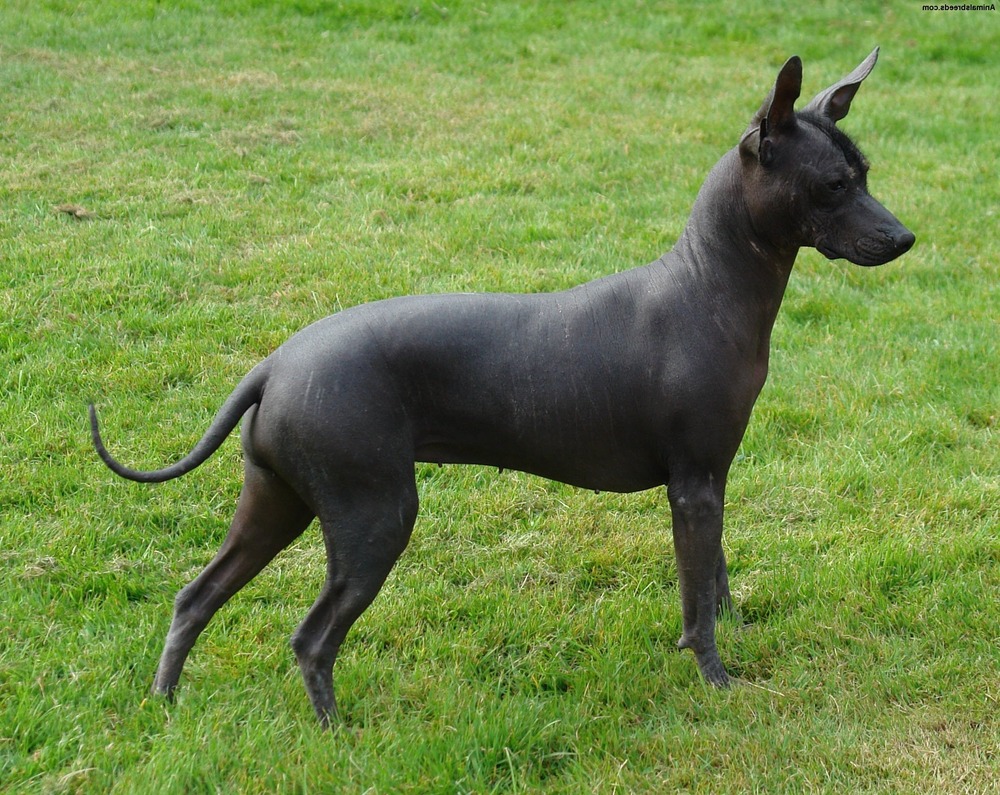
Skin care is where hairless dog ownership becomes real. Hairless breeds can be more vulnerable to sunburn, and repeated sun damage is not trivial. If your dog is out in strong sun, think in terms of shade, timing (avoid the middle of the day when you can), and protective gear like a lightweight shirt if your dog tolerates it.5
When sunscreen is appropriate, use a product intended for dogs, and ask your vet for guidance if your dog has sensitive skin or a history of reactions. It is also important to prevent licking after application, since ingestion can upset some dogs.5
Moisturising is sometimes helpful, but more is not always better. Heavy products can clog pores and contribute to breakouts in some dogs. A good routine is simple and consistent: gentle bathing only when needed, rinse thoroughly, then reassess. If the skin is persistently flaky, red, smelly, or sore, it is a veterinary problem, not a cosmetics problem.
Cold and wind can matter too. Many Xolos appreciate a coat in winter, and some will choose warmth over adventure on a frosty morning. That is normal for a dog with less insulation.
Dental health, and why it comes up so often with Xolos
Dental care is a big quality of life issue for many dogs, and it is one area owners sometimes underestimate until there is bad breath, gum redness, or pain. Regular home care can make a genuine difference, especially when started early and kept low stress.6, 7
For some hairless dogs, missing teeth can occur, and in Xolos this is commonly discussed as part of the hairless type. That does not automatically mean a dog will have problems, but it does mean you should pay attention to how your individual dog chews, whether they drop food, and whether their gums look healthy. If you are choosing a puppy, ask the breeder what they see most often in their lines, and ask your vet when a first dental check is sensible.
- At-home basics: dog safe toothpaste, gentle brushing, and gradual training
- Vet support: regular dental checks, and professional cleaning when needed
- Watch for: bad breath, red gums, reluctance to chew, pawing at the mouth
Feeding and everyday care
A balanced diet matters for every dog, but with hairless breeds owners often watch the skin closely and assume food is always the cause of irritation. Sometimes it is, but many skin issues come down to environment, sun exposure, over-bathing, or product sensitivity. Start with steady, high quality nutrition, keep treats reasonable, and change diets thoughtfully, ideally with your vet’s input if you are addressing a health concern.
For portions, let your dog’s body condition, not the packet alone, guide you. Xolos can look naturally lean and athletic, especially the larger dogs, so it helps to learn what a healthy waist and rib feel actually means for your individual dog. If you are unsure, your vet can show you how to assess condition in a way that is more useful than chasing a number on the scales.
Famous Xolos, and why they became so recognisable
Many people first recognise the breed from modern media, particularly the character Dante in Pixar’s film Coco. The visibility helped, but it also simplified the breed into a symbol, which can make real ownership feel unexpectedly practical. These dogs still need training, boundaries, and thoughtful care, even when they look like a mythical companion.
Xolos also appear in Mexican art history, including in works associated with artists such as Diego Rivera and Frida Kahlo, which is part of why the breed is often discussed as a cultural icon as well as a companion animal.2
Living with a Xolo, the quiet rewards
A well matched Xolo often feels like a calm presence in the house: watchful without being busy, affectionate without being overbearing, and content to follow the household’s rhythm. The trade-off is that you cannot ignore the basics. Skin protection, temperature comfort, and regular dental care are not optional extras, they are part of keeping the dog well.
If you are considering the breed, it is worth meeting adult Xolos as well as puppies, and talking with breeders or breed clubs who can describe what their dogs are like across the years. The best outcomes usually come from expectations that are quietly realistic.
References
- Federation Cynologique Internationale (FCI): Xoloitzcuintle breed nomenclature and standards information
- Purina: Xoloitzcuintli dog breed information
- American Kennel Club (AKC): Xolo varieties and sizes
- RSPCA Australia Knowledgebase: Dog training guidance (reward based approach)
- TIME: Yes, your dog can get sunburned, here’s what to know
- RSPCA Australia: Importance of dental health in pets
- RSPCA South Australia: Dental care for dogs and cats
- Merck Veterinary Manual (MSD): Overview of skin disorders in dogs
- Merck Veterinary Manual (MSD): Overview of dental disorders in dogs