

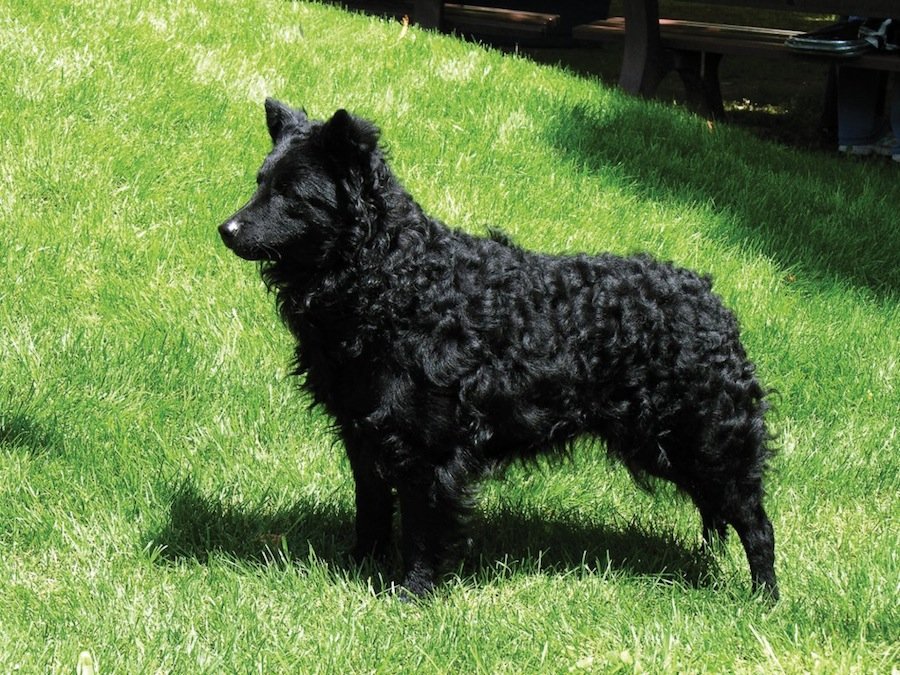
People often meet the Mudi by accident. You see a compact, curly-coated dog moving like it has springs in its legs, ears pricked and ready, and you assume it must be a Pumi, a Poodle mix, or “some sort of kelpie type”. Then you notice how quickly it reads the room, how intensely it watches movement, and how much work it seems to be doing even while standing still.
That combination can be appealing, especially if you love training and outdoor time, but it can also catch new owners off guard. Herding breeds are sometimes described as “high energy”, yet what many people actually experience is high initiative: a dog that notices everything, makes decisions quickly, and looks for a job when none is offered.
The Mudi is a Hungarian herding dog with a practical build, a distinctive coat, and a mind that likes to stay busy. Understanding what shaped the breed helps you make better day-to-day choices about exercise, training, and the sort of household where a Mudi can genuinely settle.
At a glance: what a Mudi is like to live with
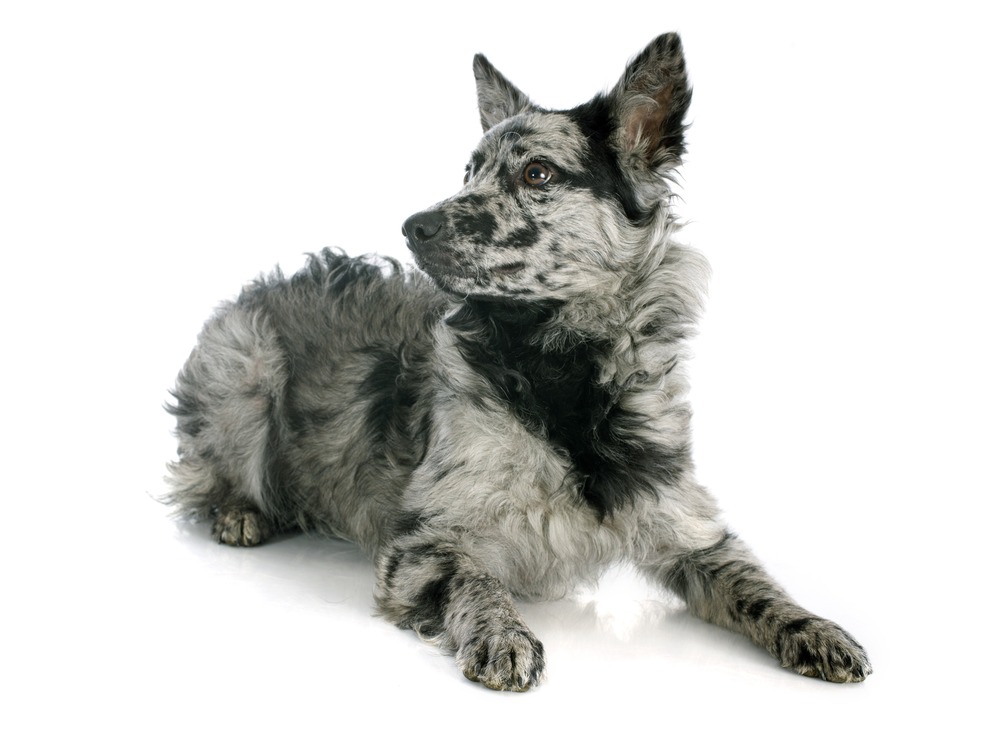
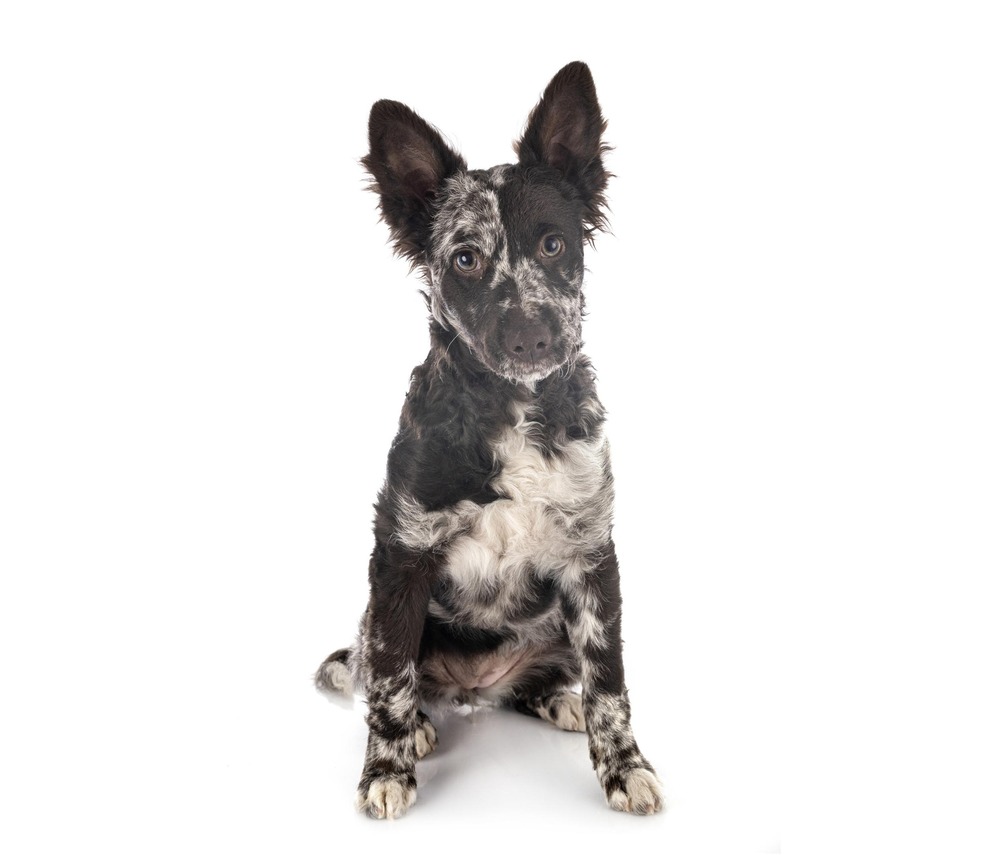
Breed standards describe the Mudi as a medium-sized herding dog with an alert, adaptable working temperament and a coat that is short on the face and legs, and wavy to slightly curly on the body.1, 2 In practice, many people experience the Mudi as fast to learn, quick to react, and happiest when it has both physical outlets and something to think about.
- Size: typically around 38 to 47 cm at the withers, and roughly 8 to 13 kg (sex and individual build matter).2
- Coat: short and smooth on head and front of limbs, longer and wavy or lightly curled on the body.2
- Temperament: lively, watchful, keen to work, and generally very trainable with the right approach.2
- Common owner challenge: managing barking and motion sensitivity in busy neighbourhoods, particularly if exercise is repetitive rather than enriching.
Where the breed came from, and why that still matters
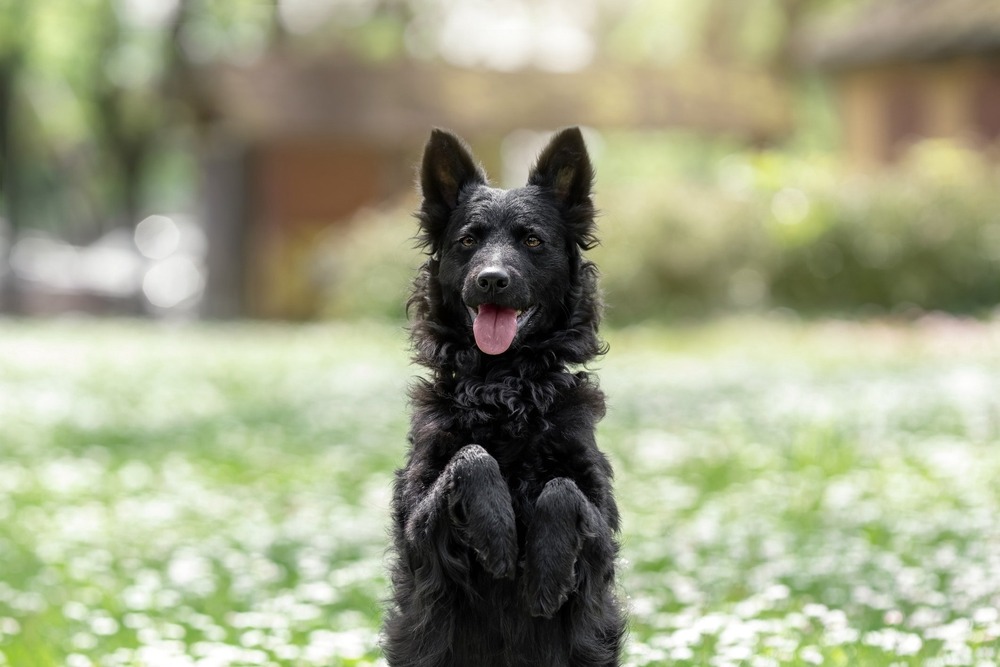
The Mudi developed in Hungary from the 18th to 19th century, emerging from local herding dogs and likely influence from prick-eared German-type herding dogs.2 That background is useful context, because it helps explain the breed’s “always on” observational style, and its comfort with varied tasks rather than one narrow job.
International recognition details can be confusing because different kennel bodies record different milestones. The FCI lists the Mudi as accepted on a definitive basis on 25 March 1963, with updated standards published in 2023.1 The UKC (United Kennel Club) recognised the Mudi on 1 July 2006, which is sometimes mistakenly repeated as the year of global recognition.3
If you are reading older summaries that place the breed’s “official recognition” in the 2000s, it usually reflects a particular registry’s timeline, not the full history. Knowing which organisation is being referenced prevents a lot of mix-ups when you are researching breeders and pedigrees.
Appearance and the little details people notice day to day
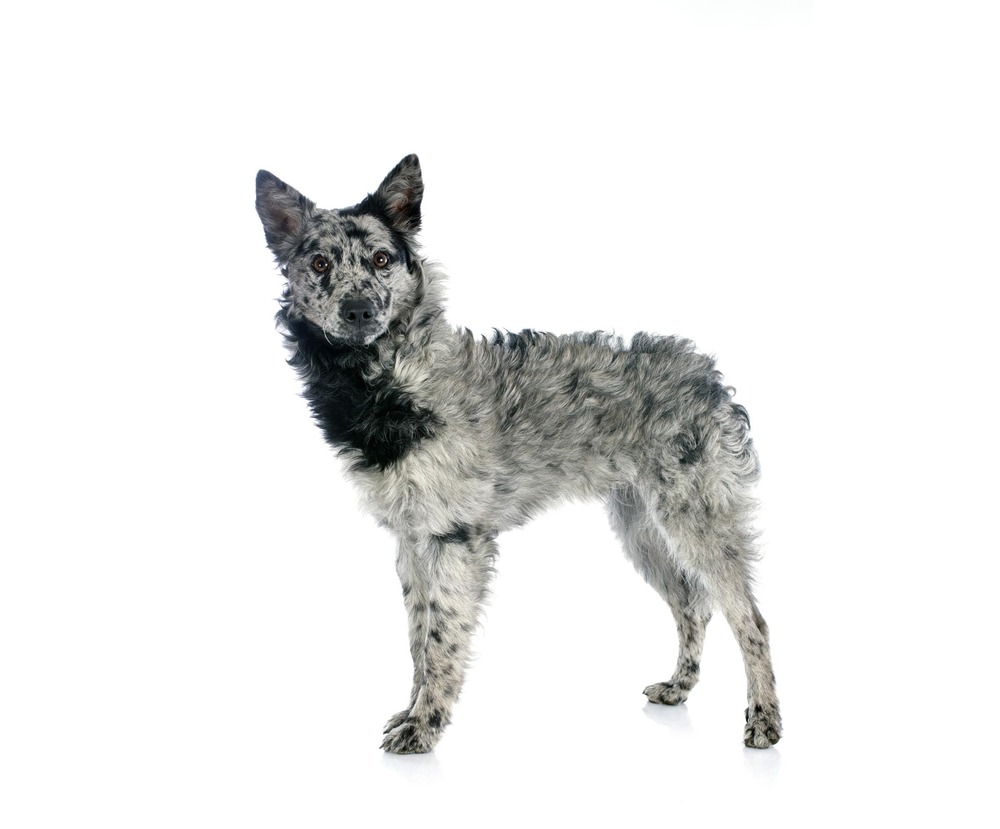
Mudis tend to look like they are built for movement: moderate bone, athletic shape, and ears that sit upright and forward-facing when engaged.2 Many also have a lively, “ready” posture that can make them look larger than they are.
The coat is one of the breed’s signatures. It is not a full “poodle coat”, and it is not a wash-and-forget situation either. The body coat is described as very wavy to slightly curled, typically a few centimetres long, and it can form ridges and cow-licks.2 That texture is part of what attracts people, but it also shapes grooming choices.
Colour varieties listed by the FCI include black, liver, fawn, ash, white, and merle (described as “cifra”).1 If you are drawn to merle, it is worth knowing that merle genetics require careful breeding decisions to avoid producing double-merle puppies, which are at increased risk of serious eye and ear problems.4
Temperament: what “smart” looks like in a herding dog

The Mudi is often described as intelligent and eager to learn, and that tends to be true. The more useful framing is that many Mudis are pattern seekers. They quickly connect small cues to outcomes, which is wonderful for training, and also means they can rehearse unwanted behaviour just as efficiently if the environment rewards it.
Watchfulness is part of the breed description, and in modern suburbia that can translate into frequent “noticing” of passers-by, noises, and movement beyond fences.2 Some Mudis will default to barking when they are uncertain or over-aroused. That is not “naughty”, it is information. The practical question is what you do next: do you teach a settle and reinforce quiet scanning, or do you accidentally reward the alarm pattern by rushing in each time?
With children and other animals, the usual herding-breed cautions apply. Many individuals do well in family life with thoughtful management, but they can be quick and mouthy in play, and they may try to control movement. Early, calm socialisation and teaching alternative behaviours around running and squealing make a big difference.
Training and exercise that actually suit the Mudi
For a dog like this, exercise is not just distance. A long lead walk around the same oval every day can leave a Mudi physically tired but mentally underfed. The aim is a rhythm of movement, skill-building, and decompression.
Reward-based training tends to work well because it matches the breed’s enthusiasm for learning and helps keep arousal at a workable level. If you find your dog escalating, it is often a sign to simplify the task, reduce distractions, and reward smaller pieces of calm behaviour rather than pushing through.
Many Mudis enjoy activities that let them use their brains and bodies together, such as:
- agility foundations and low-impact jump skills (appropriate for age and conditioning)
- scent games and simple tracking
- obedience and rally-style training
- structured tug and retrieve games with clear start and finish cues
It can also help to plan for the “in-between” moments. Teach a mat settle, practise short pauses during play, and build a habit of checking in. Those small skills are often what make an active dog workable in a normal household.
Health to discuss with your vet and breeder
Mudis are generally robust, but no breed is free of inherited risk. Hip dysplasia is a known concern across many medium-sized working breeds, and screening of breeding dogs is a sensible baseline conversation.5 Epilepsy is also discussed within the breed community and, if it appears in a line, it is worth asking how it has been managed and what support the breeder offers.
One practical health topic that often gets missed with herding types is drug sensitivity linked to the ABCB1 (MDR1) gene variant. This is best known in Collies and related breeds, and it can affect how dogs respond to certain medications, including some antiparasitics and sedatives.6 It is not accurate to assume every Mudi is at risk, but it is reasonable to ask your vet whether genetic testing is appropriate given your dog’s pedigree and your local parasite prevention options.
If you are choosing a puppy, ask what health testing has been done, what the results were, and how long-term health issues are handled. A good breeder welcomes specific questions and can explain decisions without becoming defensive.
Grooming and coat care without overcomplicating it

The Mudi coat is usually described as moderate maintenance. A weekly brush-through is often enough for many individuals, with a bit more attention during seasonal change when loose coat can tangle. The goal is to prevent tight knots forming at friction points, such as behind the ears, under the collar area, and around the backs of thighs.
Keep grooming functional: a quick check after bush walks, regular ear inspections, and nails kept short enough that the dog can move confidently. If you bathe, rinse thoroughly and let the coat dry properly so the curl does not trap dampness close to the skin.
Is a Mudi a good fit for your life?
A Mudi can be a brilliant match for someone who enjoys training, likes a dog that participates in daily life, and has time for varied enrichment. The breed is also still relatively uncommon in many countries, including the United States, which means you may have a longer wait for a well-bred puppy and fewer local mentors to lean on.7
They are not always easy “go anywhere and ignore everything” dogs. Many will notice the world intensely, and the difference between a thriving Mudi and a stressed one is often the owner’s ability to provide structure, recovery time, and clear guidance about what matters and what does not.
If you like the idea of a dog that can work, learn, and move with you, and you are willing to train the calm parts as carefully as the clever parts, the Mudi can be deeply rewarding.
References
- Federation Cynologique Internationale (FCI): Mudi (Breed No. 238)
- Dogs Australia: Mudi breed standard
- United Kennel Club (UKC): Mudi breed standard and history
- The Kennel Club (UK): Merle gene in dogs and associated health risks
- Orthopedic Foundation for Animals (OFA): Hip dysplasia information
- UC Davis Veterinary Genetics Laboratory: Multidrug Sensitivity (MDR1/ABCB1)
- American Kennel Club (AKC): Mudi recognition and breed overview
- RSPCA Australia: Choosing the right dog for your lifestyle
- American Veterinary Medical Association (AVMA): Socialisation for dogs and puppies