

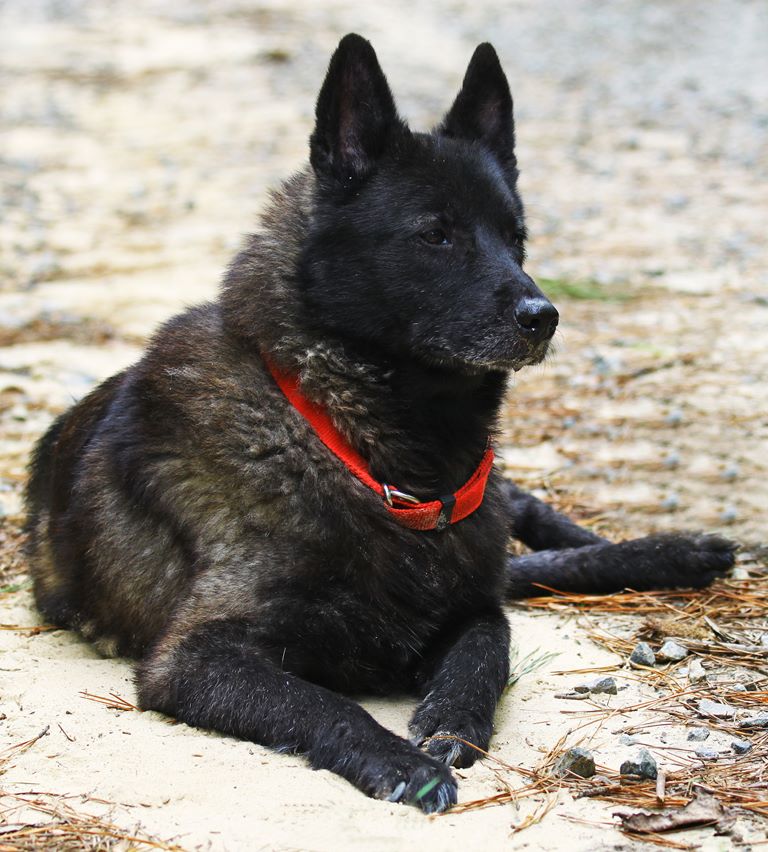
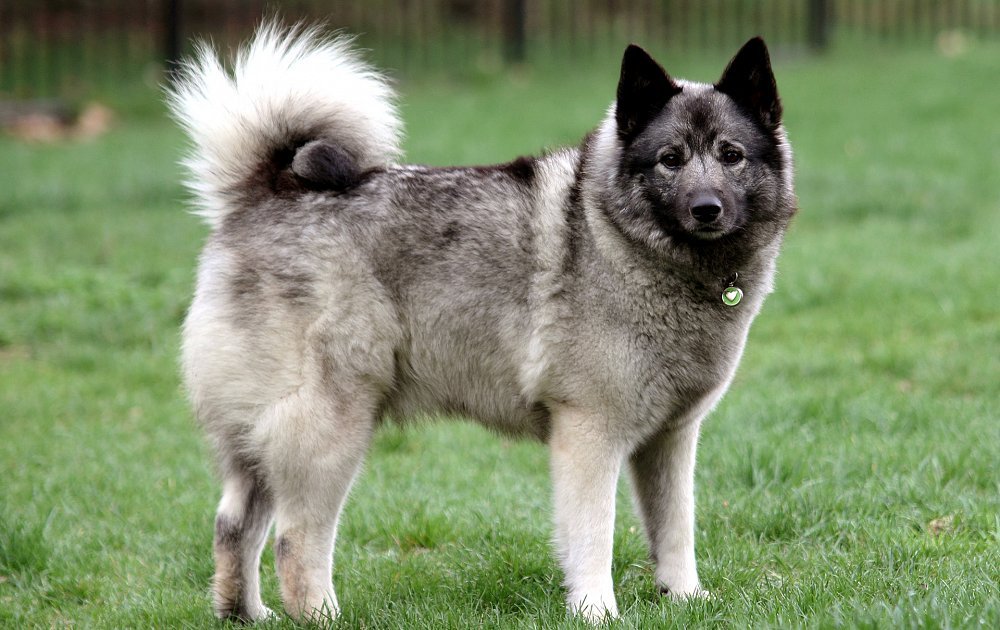
You might come across a Norwegian Elkhound in a park and notice two things straight away: the wolfish outline and the voice. They have a way of standing squarely in the world, ears forward, tail curled tight, as if they are listening for something you cannot quite hear. People often assume that look means “easy outdoorsy dog”, but daily life with an Elkhound is more specific than that.
These dogs were shaped by work that rewards independence, stamina, and a willingness to use sound as a tool. In a modern home, those same traits can show up as strong opinions about where to walk, a deep interest in scent, and a tendency to comment on what is happening outside the fence. Once you understand what the breed was designed to do, their behaviour starts to make more sense.
For the right household, a Norwegian Elkhound can be a steady, engaging companion: alert without being fragile, affectionate without being clingy. The trick is matching expectations to reality, especially around exercise, training style, and the practical realities of a dense double coat in warm weather.
Quick breed snapshot
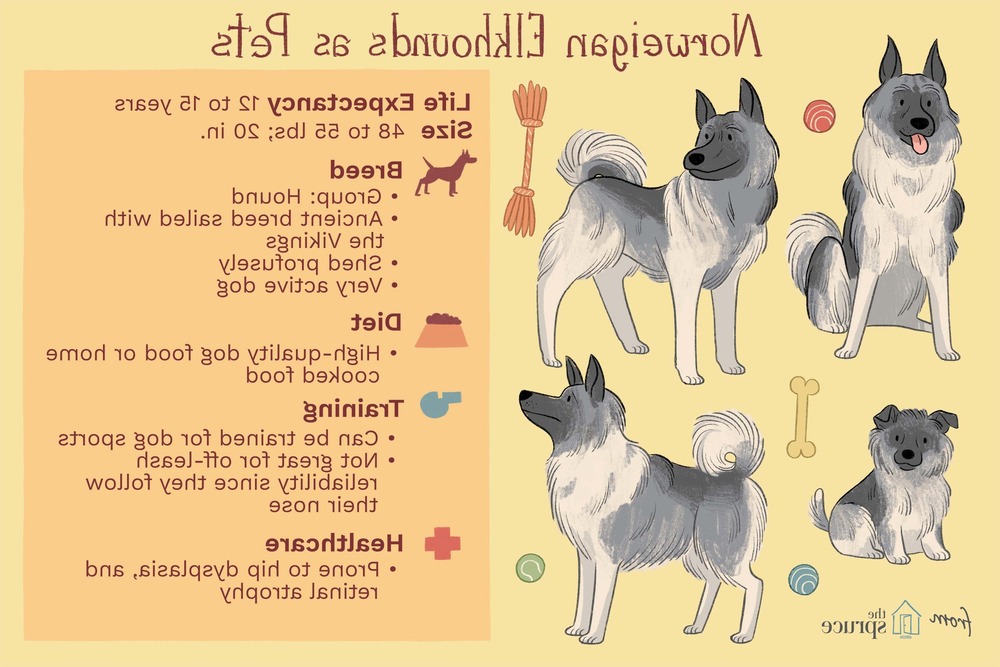
Breed type: Northern spitz with a long hunting tradition, commonly grouped with hounds in some kennel club systems.1, 2
- Origin: Norway, known locally as Norsk elghund grå (grey Norwegian Elkhound).3
- Size (guide): around 49 to 52 cm at the shoulder, and roughly 20 to 23 kg, with males typically larger.2
- Coat: thick, weather-resistant double coat, grey shades with black-tipped guard hairs and a darker mask.2
- Life expectancy: commonly 12 to 15 years (individuals vary).4
- Known for: stamina, scent work, and a very audible bark that historically helped hunters locate them.1, 5
Where the Norwegian Elkhound comes from, and what that means today
The Norwegian Elkhound is closely tied to big-game hunting in Scandinavia, particularly moose (called elg in Norwegian, which is why “elkhound” is a slightly misleading English name). Their traditional job was not to retrieve, but to track, hold, and signal, working at a distance and using persistent barking to help the hunter find the stand.1, 5
It is common to hear the breed described as a Viking dog. What is true is that spitz-type hunting dogs have a long history in the region, and the Elkhound’s type looks “ancient”. What is less straightforward is the idea of an unbroken, unchanged line from Viking times to the modern breed. Norway’s national kennel club notes that many popular origin stories are myths, and describes the modern breed as shaped through selective breeding in the 1800s.3
For owners, this matters because it frames the Elkhound as a dog built for real work: self-directed, environmentally aware, and motivated by scent and movement. If you expect a dog that automatically checks in every few steps, you may find the early months surprisingly humbling. If you enjoy training as an ongoing conversation, they can be deeply satisfying.
Temperament in real households
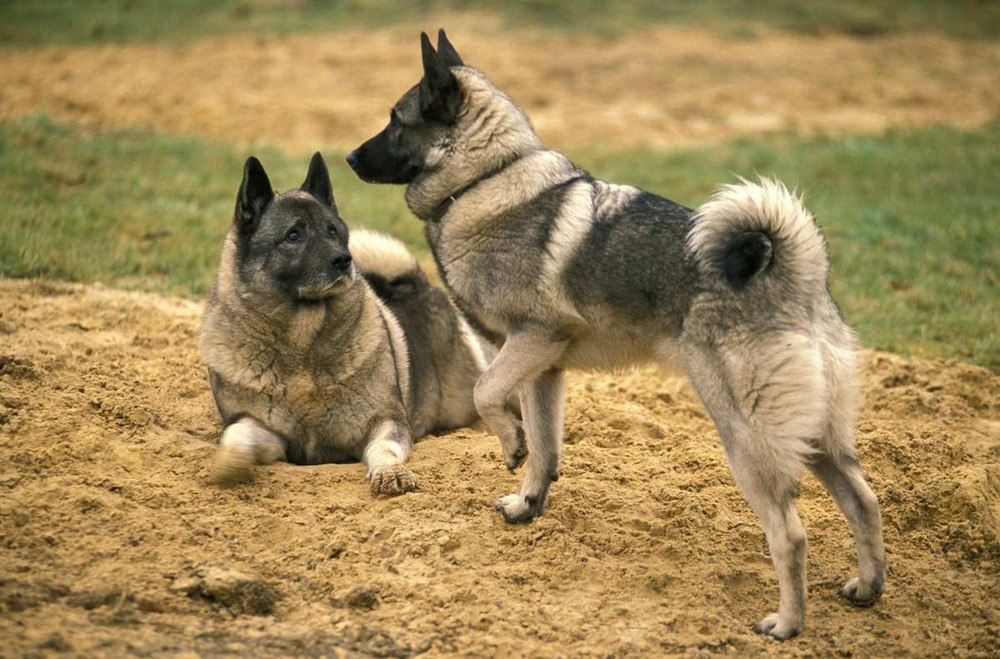
Most Norwegian Elkhounds are best described as alert and steady. They often bond strongly with their people, and can be reserved with strangers, especially if they have not had much thoughtful exposure early on.5
Independence is part of the design. On a hike, that can look like a dog that wants to follow a scent trail with purpose. At home, it might look like a dog that chooses a vantage point near the front window, or one that is quick to “announce” changes in the environment. If you like a quiet house, it is worth taking the barking tendency seriously before you commit.1, 5
With children, many Elkhounds do well when the household is calm and respectful, and when the dog has space to opt out. As with any breed, supervision, dog-friendly handling, and age-appropriate expectations make a bigger difference than any temperament label.
Training and exercise, channelling the working brain
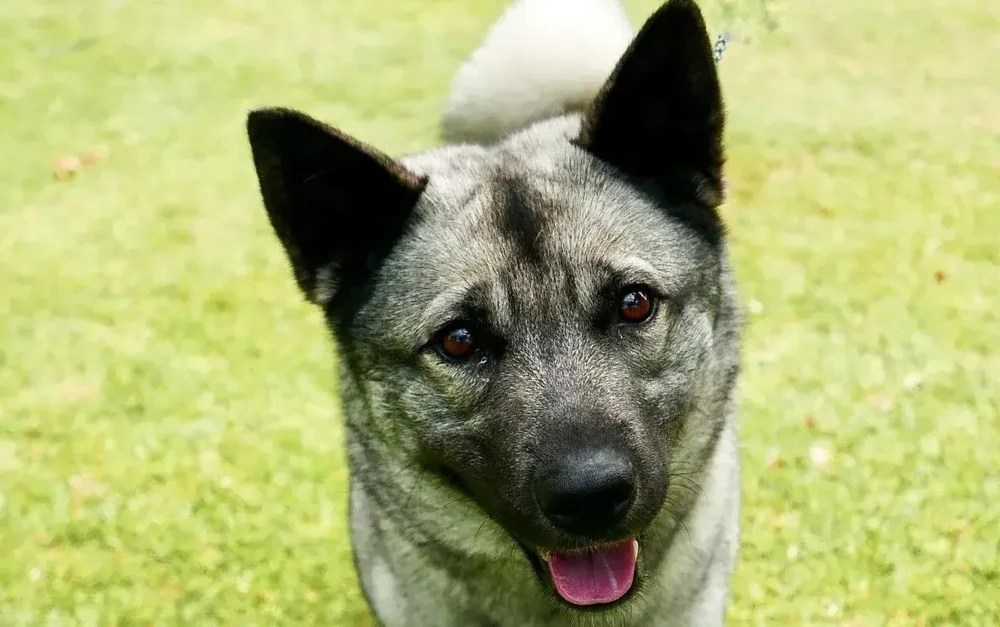
The Norwegian Elkhound tends to thrive on training that is consistent, practical, and rewarding. They are often intelligent and capable, but not automatically compliant, especially if a scent trail is more interesting than you are. This is where reward-based training and thoughtful management shine, rather than heavy-handed corrections.5
Exercise needs are usually high. Many do best with a mix of steady movement and “job” time, not just a quick walk around the block. Useful outlets include:
- Long, sniff-heavy walks on varied routes
- Hiking and controlled off-lead time where safe and legal
- Scent games, tracking-style activities, and food puzzles
- Short training sessions that build recall, leash manners, and calm settling
If you are working on recall, remember what you are asking the dog to do: disengage from a powerful reinforcer (scent and movement) and return to you. Start easy, pay well, and keep practising long after the “cute puppy” phase has passed.
Health considerations and preventative care
No breed is free of health risk. Norwegian Elkhounds are often described as generally robust, but they can be affected by inherited conditions. Two issues that commonly come up in breed overviews are hip dysplasia and certain eye diseases, including progressive retinal atrophy (PRA).4, 6
Practical steps that help in the real world include:
- Choosing breeders who screen breeding dogs and share results transparently (for hips and eyes where relevant).6
- Keeping body condition lean, especially through adolescence and middle age, to reduce avoidable strain on joints.4
- Regular veterinary checks, plus prompt assessment if you notice stiffness, reluctance to jump, or changes in vision.
Coat care, shedding, and living with the double coat
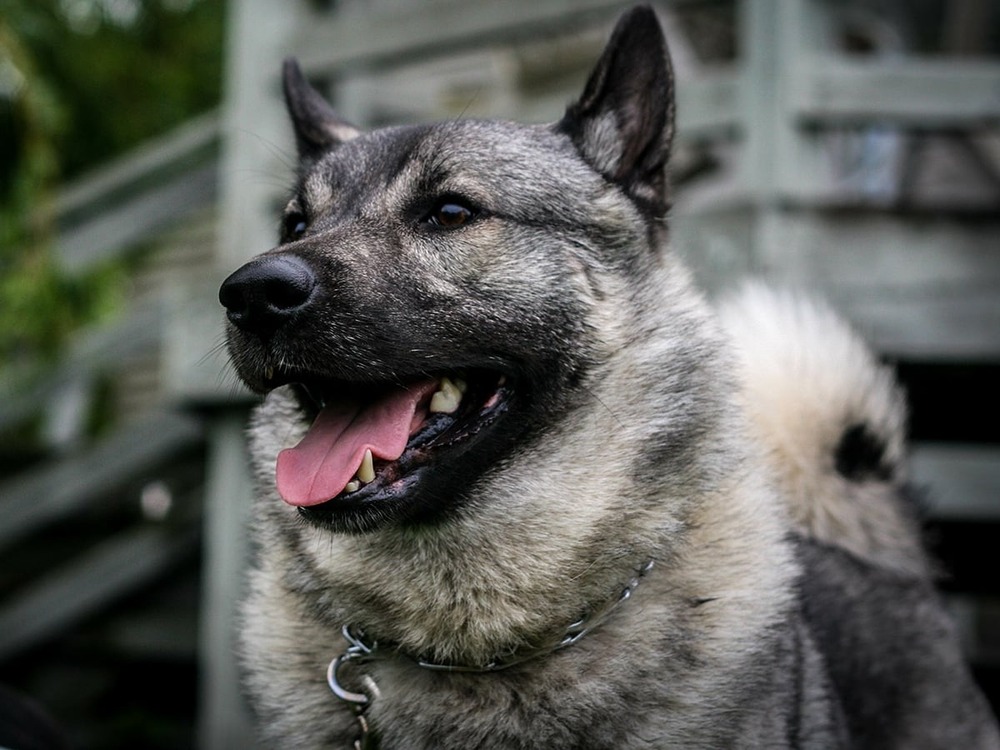
The Elkhound coat is one of their great strengths and one of their daily realities. It is designed to protect in harsh weather, which is why it can feel almost weatherproof to the hand. It also means seasonal coat blows are not a small event.4
For many households, the most workable routine is:
- Brushing weekly most of the year, and more often during heavy shedding
- Checking ears, nails, and teeth as part of a calm weekly handling routine
- Bathing only when needed, since frequent bathing is not usually required for coat health4
If your dog hates grooming, it is rarely a “stubborn breed” problem. More often it is a handling history problem. Go slowly, use food, and make the tools and sensations predictable.
Heat, summer management, and safe exercise choices
A dense double coat does not automatically mean a dog cannot live in warmer climates, but it does mean you need a plan. Norwegian Elkhounds can be prone to overheating in hot weather, so it is sensible to adjust exercise timing, offer shade and water, and use cooler activities (such as gentle swimming where safe).4
Watch for early signs of heat stress and act quickly. The American Veterinary Medical Association advises that pets can be at risk of heat-related illness, and highlights that some animals are more vulnerable depending on circumstances and environment.7
In practice, many owners do well with early morning and evening walks in summer, shorter training sessions, and indoor enrichment on extreme days. The goal is not to “toughen them up”, it is to keep the dog comfortable enough to make good choices.
Feeding and body condition, keeping an active dog lean
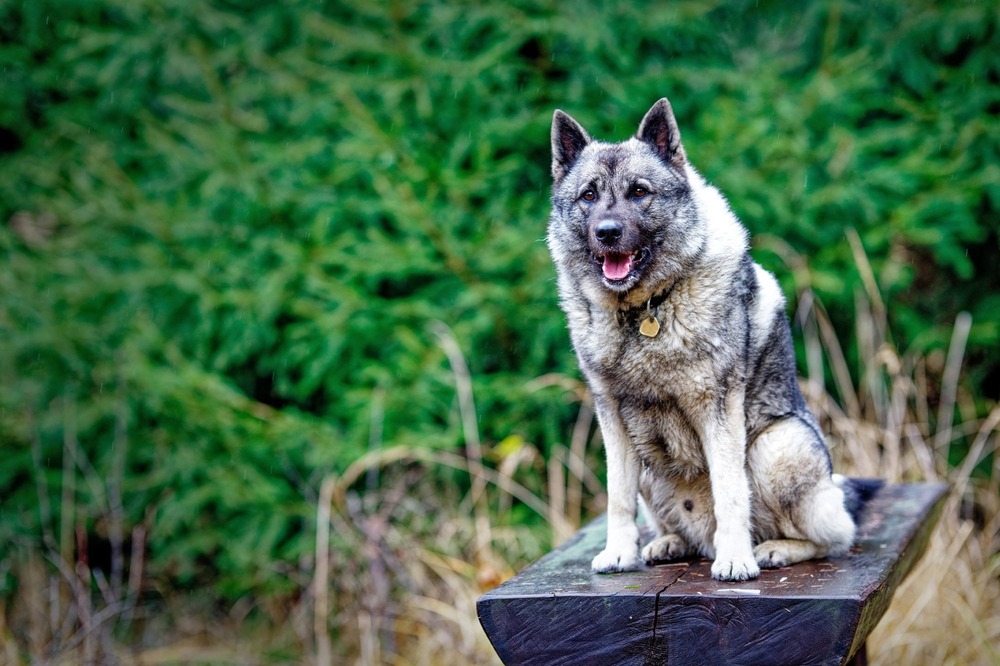
Most Norwegian Elkhounds do best on a complete and balanced diet matched to life stage and activity level. The most useful day-to-day target is not a specific brand, but a healthy body condition you can maintain over time.
If you are unsure, the World Small Animal Veterinary Association (WSAVA) provides practical guidance on selecting pet foods and evaluating quality and suitability, which can be a helpful anchor in a noisy marketplace.8
Because Elkhounds are often food-motivated, treats can be a brilliant training tool. They can also quietly inflate daily calories. Measuring meals, using part of the daily ration for training, and weighing your dog periodically can prevent the slow creep that owners only notice once joints start complaining.
Is the Norwegian Elkhound right for you?
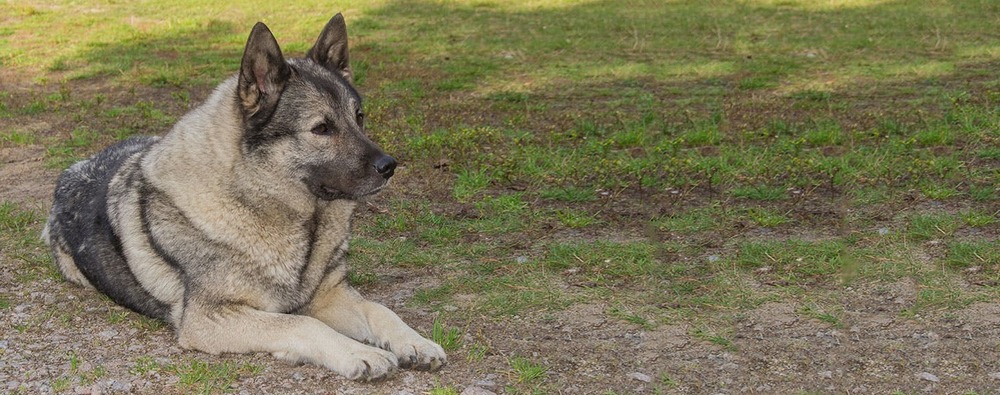
Norwegian Elkhounds tend to fit best with people who enjoy an outdoorsy routine, can tolerate a fair bit of fur, and are willing to live with a dog that has opinions. They are often devoted companions, but they are rarely “easy mode”.
If you are considering one, it helps to seek out dogs in real homes, not just in curated photos. Talk with breed clubs and reputable breeders, and pay attention to the unglamorous details: barking in suburban streets, recall around wildlife, grooming during coat blow, and heat management in summer. When those realities line up with your life, the breed’s steadiness and capability are much easier to appreciate.
References
- Wikipedia: Norwegian Elkhound
- The Kennel Club (UK): Norwegian Elkhound breed standard
- Norwegian Kennel Club (NKK): Norsk elghund grå (breed information)
- PetMD: Norwegian Elkhound
- Hill’s Pet Nutrition: Norwegian Elkhound breed profile
- Orthopedic Foundation for Animals (OFA): CHIC requirements, Norwegian Elkhound
- American Veterinary Medical Association (AVMA): Hot weather pet safety
- WSAVA: Global Nutrition Guidelines