

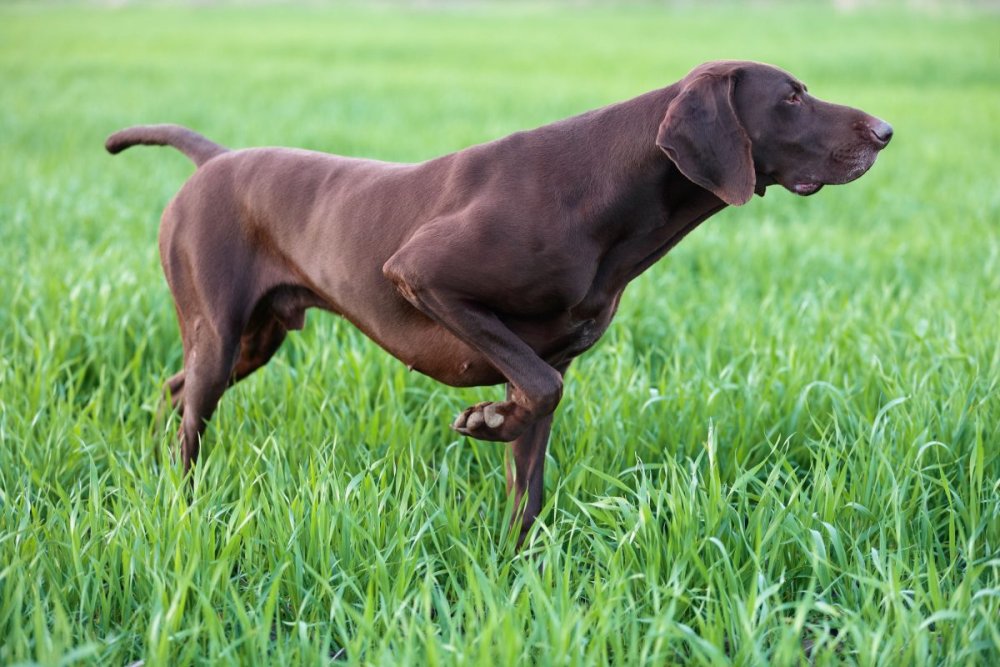
You might first notice a Pointer because of the way they move. Even on an ordinary lead walk, there is a sort of forward focus in their body, a long, elastic stride, and a head that lifts into the air as if it is reading a scent trail you cannot see. People often describe them as “high energy”, but that label can miss what is really going on.
Pointers were shaped for open ground and for finding birds by scent, then holding a still, unmistakable stance that tells a hunter where the game is hiding. That history still shows up in modern homes, in the way they scan, run, and sometimes struggle when life gets too small or too repetitive for them.1, 2
When a Pointer is a good fit, they can feel like the easiest dog in the world to live with, calm indoors after a proper outlet, affectionate without being clingy, and wonderfully trainable. When the fit is off, the problems are usually practical rather than “bad behaviour”, not enough movement, not enough mental work, or expectations that do not match a working gundog’s needs.
Quick profile: what a Pointer is built for

The Pointer (often called the English Pointer) is a large, athletic gundog developed in Britain to range across fields, pick up scent, and freeze into the classic “point”.1, 2 In practical terms, that means most Pointers still do best with room to move and a daily life that includes purposeful activity.
- Size: commonly around 61 to 69 cm at the shoulder, roughly 20 to 34 kg depending on sex and build.3
- Coat: short and smooth, typically easy care, but not much insulation in cold or wet weather.1
- Exercise needs: generally high, with many breed guides suggesting more than two hours a day for adult dogs, plus off-lead running where safe and legal.1
- Typical temperament: sociable and biddable in the right environment, often friendly with people, and still strongly motivated by scent and movement.2, 3
History and working instincts that still show up at home
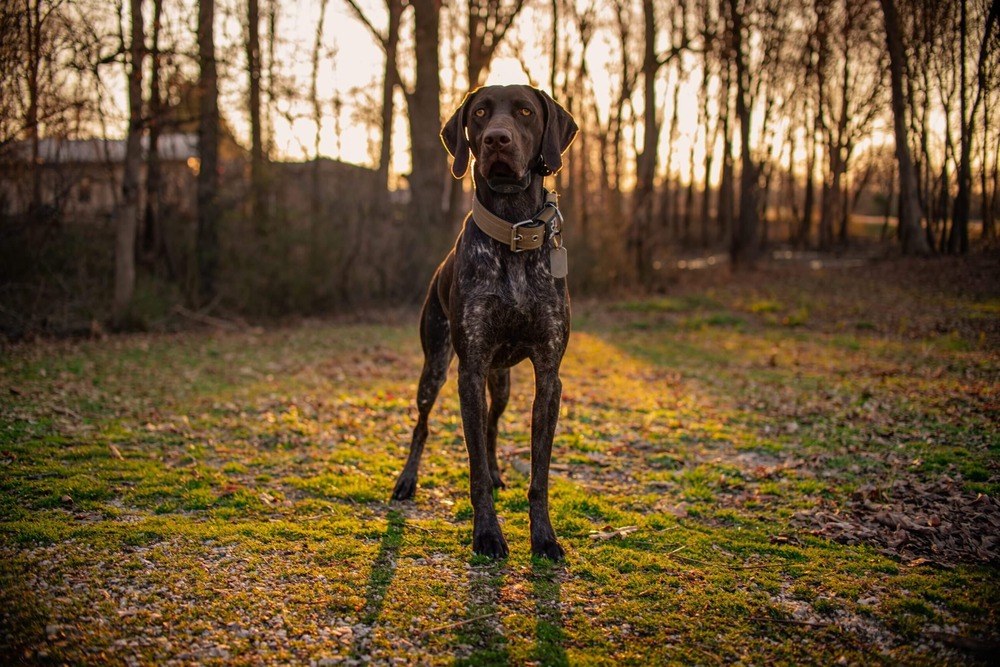
It is tempting to treat “pointing” as a party trick, but it is better understood as a working pattern bred into the dog: search, locate scent, then pause, body aligned, to indicate where the game is. The Kennel Club description is blunt about it, the Pointer was built to cover large expanses of land and stop in a point when it finds scent.1
That background is one reason many Pointers can look “restless” on slow, repetitive walks. They are not necessarily anxious, they are often under-employed. Scent work games, varied routes, and opportunities to run can make a noticeable difference to how settled they seem at home.
Breed history can be messy and often includes competing origin stories. Some sources suggest Spanish pointing dogs influenced the modern Pointer type, while British development and refinement is well documented in kennel club material.1, 4 The details matter less than the outcome: a dog designed to work far ahead, make decisions, and keep going.
Appearance and the “Pointer shape”
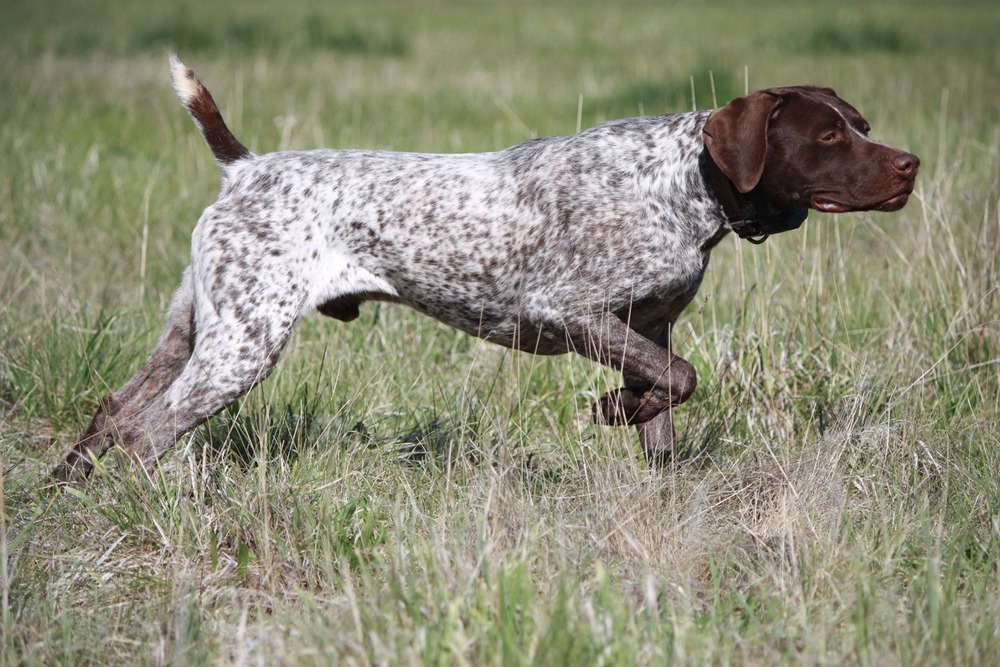
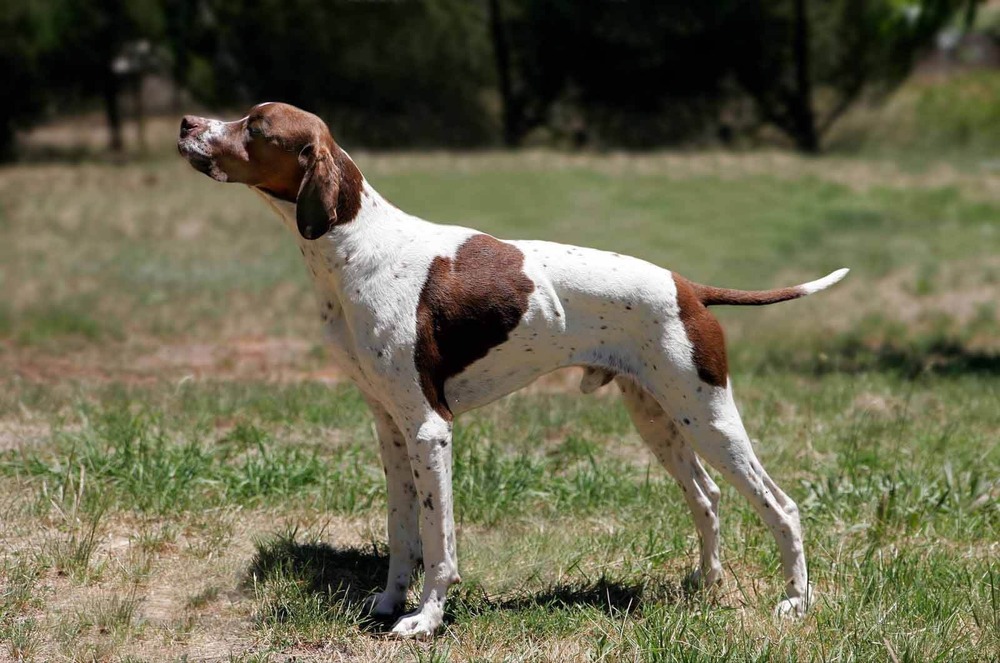
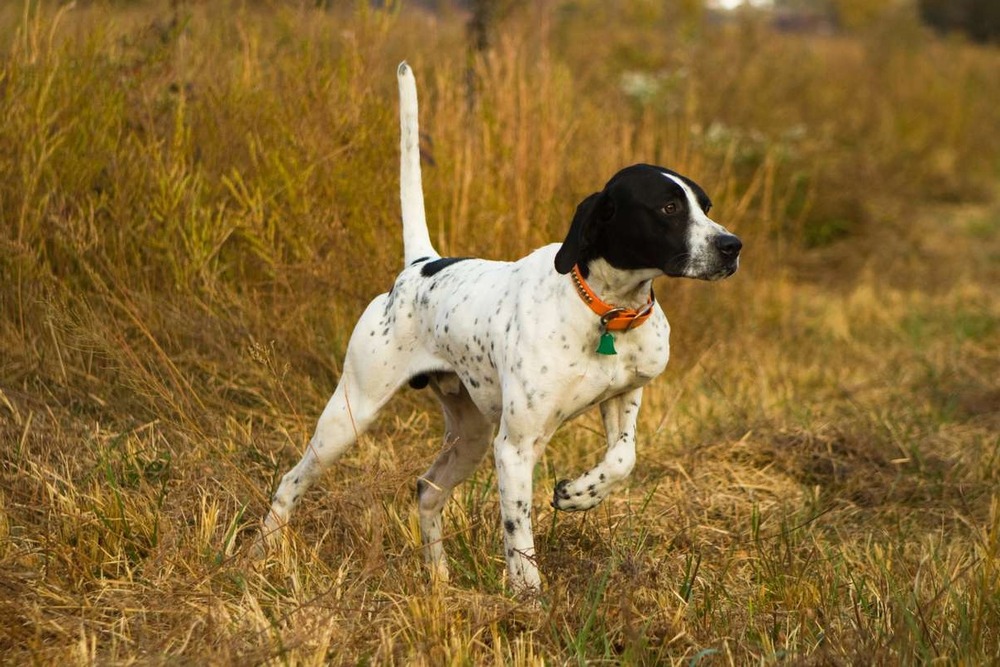
A well-bred Pointer tends to look like an athlete, all curves and clean lines, with a head and muzzle shaped to carry the nose high. Breed standards describe a symmetrical, well-built dog, with a medium-length tail that tapers and is carried level, lashing side to side in motion.5
Colour is usually some combination of white with lemon, orange, liver, or black markings. You will also see tri-colour and, more rarely, self-colour in some lines.4, 5 The coat is short, which is convenient for grooming, but it can also mean the dog feels the cold more than people expect, especially in wet winter weather.4
Temperament and suitability: who a Pointer tends to suit
Pointers are often described as friendly, outgoing, and smart. In real homes, that can look like a dog who enjoys company, learns quickly, and relaxes beautifully after a proper run. It can also look like a dog who becomes noisy, mouthy, or destructive when their day is too small for them.
They are commonly a strong match for people who genuinely like being outside most days. Active families, runners, hikers, and anyone who enjoys structured training often do well with the breed. If your household is quiet, time-poor, or mostly indoors, it is worth being honest about the mismatch before it becomes stressful for everyone.
With children, many Pointers are gentle and social, but their size and enthusiasm can knock over a small child without any intent. Supervised introductions and teaching kids how to interact calmly still matter. With other pets, early socialisation helps, but many Pointers remain interested in moving animals. That is not “aggression” so much as a working dog’s response to motion and scent.
Training and exercise: making room for a working brain
Pointers are usually responsive to training when it is consistent and rewarding. The trick is not intensity, it is clarity. Short sessions, clear cues, and plenty of reinforcement tend to suit them best, especially during adolescence when their bodies are fast but their judgement is still catching up.
Exercise is not just kilometres. A Pointer that runs hard but never gets to use their nose can still feel unsatisfied. Try building days that include both:
- Free running in safe areas (or long-line exploring when you cannot trust recall)
- retrieve games that end before they get frantic
- scent-based games, such as scatter feeding in grass, hide-and-seek with toys, or beginner tracking lines
- basic obedience that supports real life, like loose-lead walking, settle on a mat, and calm greetings
If recall is unreliable, that is normal in a breed that has been selected to work at distance. Management is not failure. It is often the most humane bridge between the dog you have today and the dog you are training for the future.
Health: what to watch for, and what good care looks like
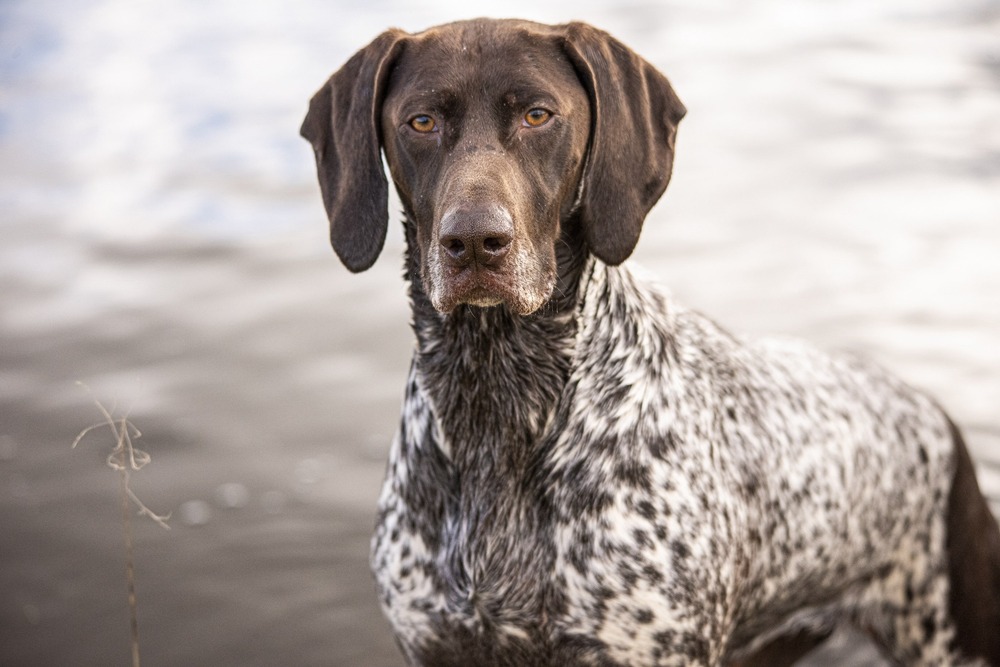
Pointers are generally robust, with many living into their early teens, but like most larger athletic breeds they can be affected by orthopaedic issues. Hip dysplasia is a key one to understand because it can start during growth and may lead to arthritis over time.6, 7
If you are choosing a puppy, ask what health screening the breeder does and what the results mean. Screening programs vary by country, but the underlying idea is the same: reduce the chance of inherited joint disease and make informed breeding decisions.7
At home, one of the most helpful, unglamorous health tools is keeping your dog lean. Excess weight can worsen joint strain and can complicate orthopaedic conditions. A body condition scoring approach, paired with regular weigh-ins, is often more useful than focusing on “average breed weight”.8
Eye disease is also mentioned in many breed summaries. Because “eye problems” is a broad bucket, it is worth asking your vet and breeder exactly what is seen in your lines, and whether formal eye testing is done.
Grooming and everyday care
The Pointer coat is short, smooth, and usually straightforward. A weekly brush and a wipe-down after muddy outings is often enough to keep them comfortable and reduce loose hair. The Kennel Club lists grooming as about once a week for the breed.1
Do not forget the small maintenance jobs that prevent bigger issues later: nails kept at a healthy length, ears checked regularly (especially after swims or long grass), and teeth care that is realistic for your household. For many dogs, a few calm minutes a couple of times a week beats the occasional heroic grooming session.
Food and nutrition: steady fuel for an active dog
Pointers tend to do best on a complete and balanced diet that matches their life stage and activity. If your dog is in full work or doing long runs, they may need more calories. If they are a suburban pet with short walks, they may need less than you expect, even though they look “sporty”.
Nutrition advice online can be noisy, and ingredient lists can be misleading if you use them as the main quality test. The WSAVA Global Nutrition Guidelines encourage an individual nutritional assessment and emphasise choosing foods based on overall formulation and suitability, not marketing claims.9
If you are unsure, bring it back to practical markers: stool quality, coat condition, sustained energy, and a healthy body condition score. Your vet can help you adjust portions and choose an appropriate diet for your dog’s workload and any medical history.
Living well with a Pointer in Australia
Many Pointers adapt nicely to family life, but they usually thrive when their daily routine is built around doing something. That “something” can be hunting, but it can also be canicross, obedience, scent work, or simply reliable off-lead time in appropriate places.
If you live in a smaller home, it is still possible to meet a Pointer’s needs, but you will need a plan, not just goodwill. Space helps, structure helps more. If you can provide both, the breed can be a joyful companion who feels uncomplicated to live with.
For those looking for more breed-specific guidance in an Australian context, Dogs Australia affiliated information sites and kennel club resources are a sensible place to start, then follow up with your vet for advice tailored to your individual dog.3
References
- The Kennel Club: Pointer (breed information)
- Westminster Kennel Club: Pointer
- Dogz Online (Dogs Australia community): Pointer breed information
- Wikipedia: Pointer (dog breed)
- The Kennel Club: Pointer breed standard
- American College of Veterinary Surgeons: Canine hip dysplasia
- Orthopedic Foundation for Animals (OFA): Hip dysplasia
- FOUR PAWS Australia: Body condition score and overweight pets
- WSAVA: Global Nutrition Guidelines