

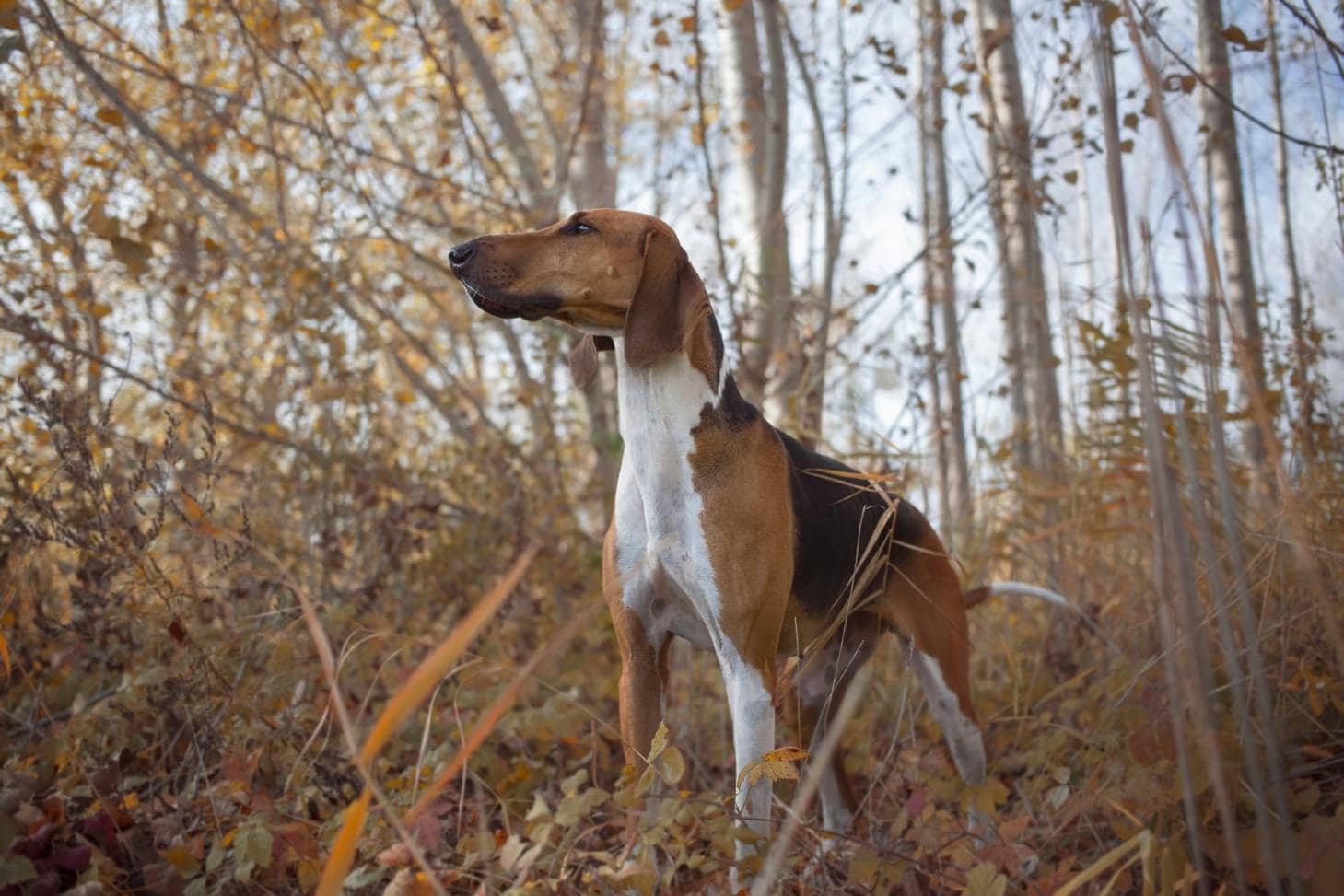
People usually come across the Poitevin the same way they discover many rare scenthounds: they see a tall, leggy hound in a photo, hear a deep baying voice in a hunting clip, or meet a dog who seems to come alive the moment there is a scent on the wind.
It is tempting to assume that a hound like this will settle happily into everyday pet life as long as it gets “a good walk”. With Poitevins, that idea is only partly true. They can be sociable and steady with people, but the breed was shaped for long hours of purposeful movement, usually alongside other dogs, and that heritage still shows up in how they handle boredom, confinement, and inconsistent routines.
If you are considering a Poitevin, or already living with one, it helps to understand what the breed was built to do, and what that means for training, exercise, and health in a modern home.
Quick profile: what a Poitevin is (and is not)
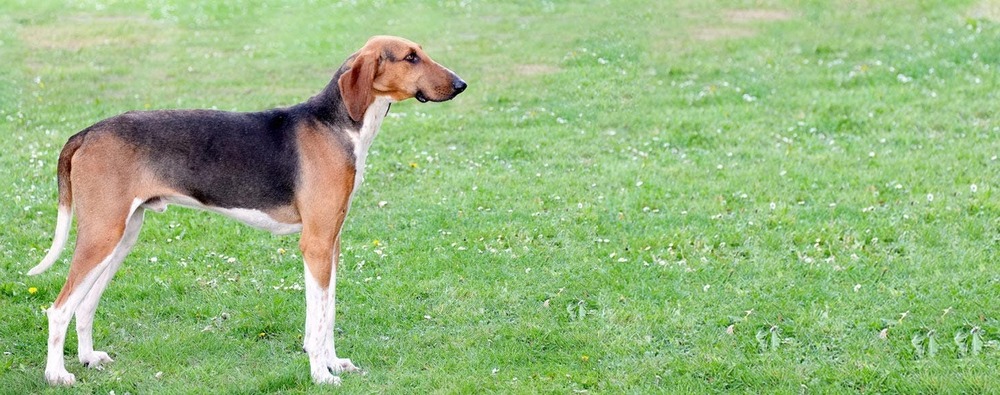
The Poitevin is a French scenthound recognised by the Federation Cynologique Internationale (FCI) in Group 6 (scent hounds and related breeds). It is a working hound breed, historically kept and hunted in packs, rather than a breed developed primarily for companionship. 1
In practical terms, that tends to mean:
- High daily movement needs, not only short bursts of play.
- A strong interest in scent trails, which can override recall without careful training.
- A voice that can be musical to some people, and too much to others, especially in close suburban settings.
Where the breed came from, and why it still matters
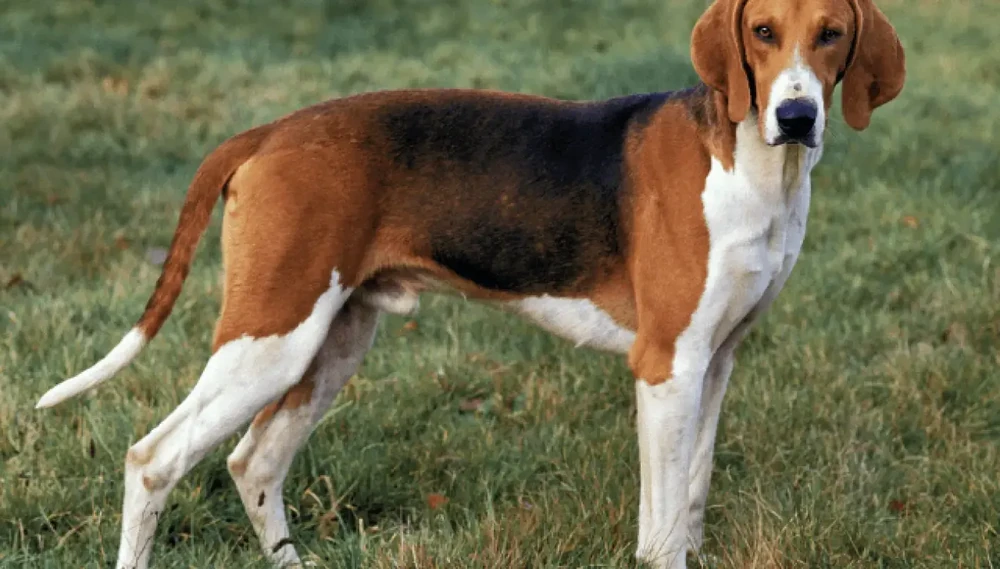
The Poitevin developed in France as a large scenthound used for traditional hunting, including wolf hunting in earlier periods. Accounts of the breed’s development often mention breeding programs that included English hounds and local French lines, with the Marquis de Larrye (Marquis of Haut-Poitou) commonly cited in historical summaries. 2
You do not need to be involved in hunting to live well with a Poitevin, but you do need to respect the “job” the dog expects. Purposeful scent work can be the difference between a calm hound at home and a dog who paces, vocalises, or seeks its own entertainment.
Temperament in everyday life
Many Poitevins present as friendly and open when they are well exercised and well socialised. They can also appear a little reserved with strangers compared with breeds selected for close household companionship, which is not a flaw so much as a clue about their background. 2
In a family context, the best outcomes usually come from matching the dog to the household, rather than trying to “train the breed out of the breed”. A Poitevin often suits people who enjoy being outdoors, who can provide structure, and who are comfortable living with a dog that is observant and environmentally focused.
Children and other animals
With children, think less about labels like “good with kids” and more about the real-life variables: a large, energetic dog, a long tail, a fast turn of speed, and a nose that can switch the dog’s attention very quickly. Supervision and calm handling matter, especially with younger children.
With other pets, many Poitevins do well with other dogs, particularly if they have been raised with them. With smaller animals, management is sensible. Scent hounds vary, and you cannot assume low prey drive just because a dog is gentle indoors.
Training that works with a scenthound brain
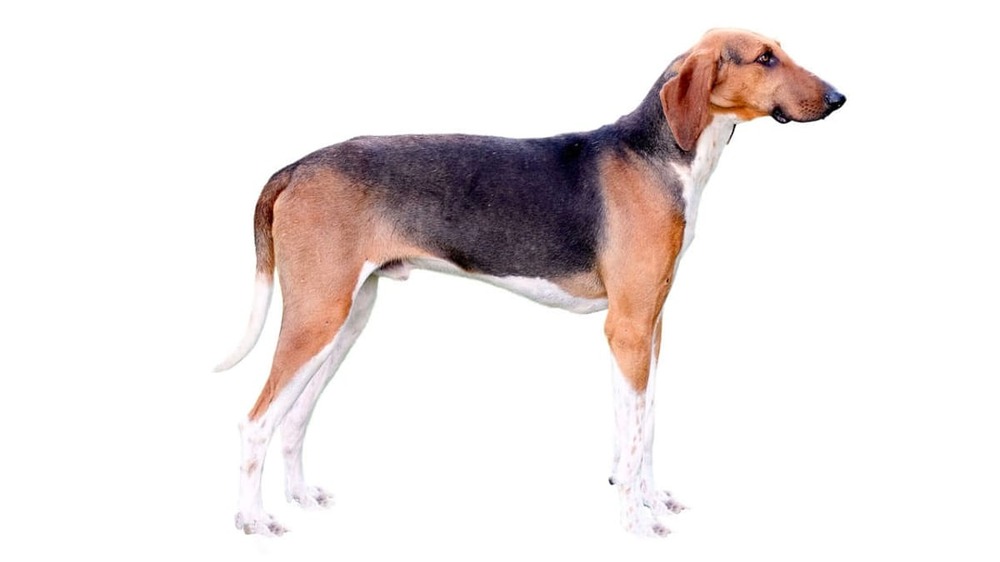
Poitevins are capable learners, but they are not typically “do it to please you” dogs. They were selected to make decisions while moving across terrain, often at distance from the handler. Training goes best when it is consistent, rewarding, and built around what the dog naturally values, which is usually food, movement, and access to interesting smells.
Helpful focuses include:
- Recall with layers: start on a long line, practise in low-distraction spaces, and expect to proof slowly.
- Loose lead walking that allows sniffing on cue, rather than trying to suppress it completely.
- Settle skills at home (mat training, calm routines), because exercise alone does not always teach an off-switch.
Exercise and enrichment: the part people underestimate
“High energy” can sound like a generic breed note, but with a Poitevin it is more specific. These dogs were built for sustained work and sensory engagement. They often do best with a combination of movement and brain work each day, not just one or the other.
RSPCA Australia notes that enrichment supports wellbeing, and that physical enrichment can also provide mental stimulation, especially when dogs have the chance to sniff and explore. 3
Options that tend to suit scenthounds include:
- Long, varied walks where the dog can sniff safely.
- Scent games at home (find-it searches, scent trails in the yard).
- Structured running alongside a fit adult, where safe and appropriate.
- Canine sports that use nose and stamina (scent work, tracking-style games).
If you are weighing up whether the breed could manage in an apartment, it is worth being honest. Space helps, but it is not the only factor. The bigger issue is whether you can reliably meet the dog’s daily needs without creating conflict with neighbours over noise, and without relying on off-lead freedom that is not safe.
Health considerations: what to watch over a lifetime
There is not the same breadth of publicly summarised health data for Poitevins as there is for very common breeds. Still, some issues are sensible to keep on your radar based on size, structure, and hound anatomy.
Hips and joint health
Large, athletic dogs can be affected by hip dysplasia, a condition where the hip joint forms improperly and may lead to arthritis over time. Genetics play a major role, and environment can influence how severely it shows up, particularly through growth rate and nutrition in puppyhood. 4, 5
If you are buying a puppy, ask what screening is done in the breeding program, and what the results mean. Organisations such as the Orthopedic Foundation for Animals (OFA) describe how hip grading works and why radiographic screening matters. 5
Ears and recurring infections
Long, floppy ears can reduce airflow and trap moisture, which increases the likelihood of otitis externa (outer ear infections). Causes can include allergies, yeast, bacteria, parasites, and foreign material picked up outdoors. 6
Two habits help more than most people expect: regular ear checks and thoroughly drying ears after baths or swimming. 6
Grooming and day-to-day care
The Poitevin’s coat is typically short, which keeps grooming straightforward. Occasional brushing helps lift loose hair and gives you a chance to check skin, paws, and ears after time outdoors.
Try to think of grooming less as “beauty care” and more as a weekly health scan. You are looking for grass seeds, irritation, new lumps, sore pads, and ear odour that suggests the start of a problem.
A note on ear cleaning
Ear cleaning is often overdone, or done with the wrong technique. Some Australian veterinary clinics advise gentle cleaning and avoiding cotton buds, which can push debris further in. If there is pain, heavy discharge, or a strong smell that returns quickly, a vet check is the safer choice than repeated home cleaning. 7, 8
Feeding and keeping a working body in good condition
Most Poitevins do best on a balanced diet that supports lean muscle and joint health, with portions adjusted to real activity level rather than habit. The practical goal is a dog that stays light on its feet, because extra weight puts avoidable strain on hips and elbows over time.
If you are raising a puppy, talk with your vet about growth pace and appropriate feeding, especially given what is known about the interaction between genetics and environment in hip dysplasia. 4
Is a Poitevin a good fit?
A Poitevin can be a rewarding companion for the right home, especially for people who enjoy the steady rhythm of training, long walks, and outdoor time that is about the dog’s senses as much as the human’s step count. The breed tends to be at its best when life includes regular movement, purposeful sniffing, and clear boundaries.
Before committing, it is worth asking one calm question: can you provide daily structure and outlets for a dog that was designed to work for hours? If the answer is yes, you are much more likely to enjoy what makes this hound distinctive, rather than struggling with what makes it different.
References
- Federation Cynologique Internationale (FCI): Poitevin (No. 24)
- Wikipedia: Poitevin hound (overview and history summary)
- RSPCA Australia: The importance of enrichment for dogs
- Cornell University College of Veterinary Medicine: Canine hip dysplasia (CHD)
- Orthopedic Foundation for Animals (OFA): Hip dysplasia
- The Animal Medical Center: Ear infections in pets (causes, risk factors, prevention)
- Turramurra Veterinary Hospital: How to manage and prevent dog ear problems
- The Village Vet (Australia): Ear care for pets, signs of infection and cleaning tips