

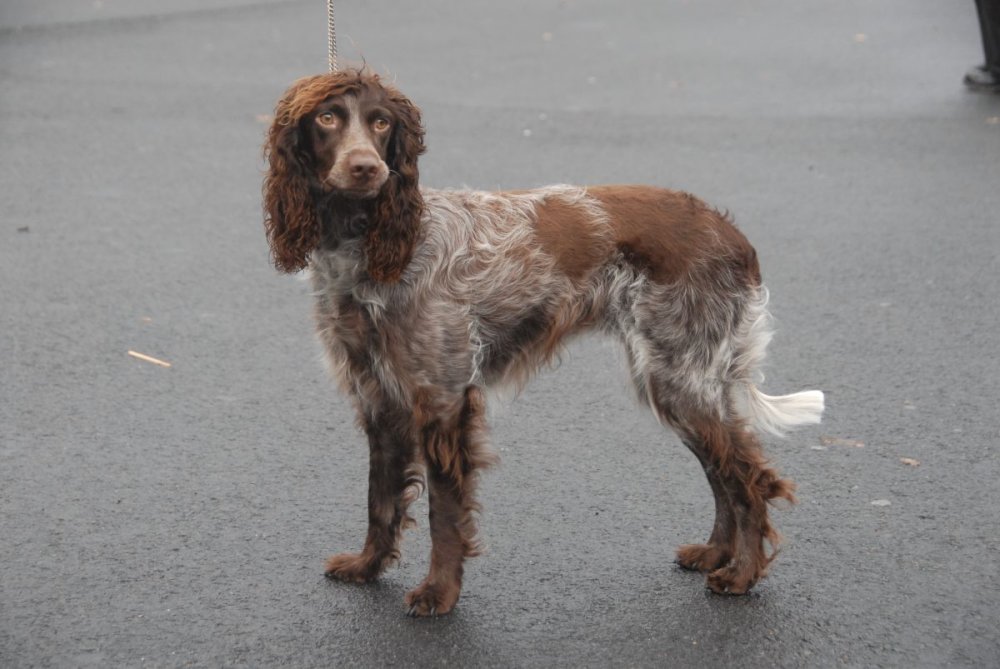
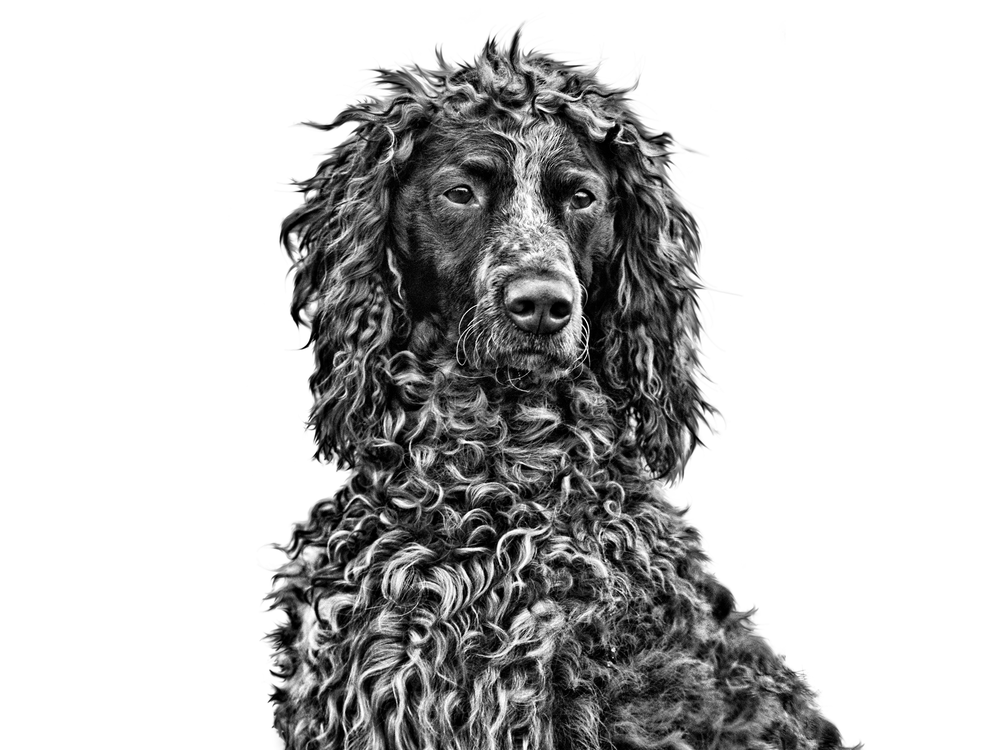
You might first notice a Pont-Audemer Spaniel in a photo rather than at the local park: a medium-sized gun dog with a curly “wig” and an expression that looks alert without being sharp. If you have only met the more common spaniels, it is easy to assume this one will be much the same, just with different styling.
In practice, the Pont-Audemer is its own thing. It was shaped by wet ground and cold water, and you can still see that in the coat, the feet, and the way many individuals move through the world with a steady, searching focus. They can be warmly people-oriented at home, but they are not a low-key “set and forget” companion.
For anyone thinking about living with one, it helps to look past the rarity and the charm of the topknot and ask a more useful question: what does a dog bred to work marshes need, day to day, to stay settled, fit, and well?
At a glance: the Pont-Audemer Spaniel
- Origin: France (Normandy)
- FCI group: Group 7 (Pointing Dogs), “Spaniel” type
- Typical height: about 50 to 58 cm at the withers (varies by standard and sex)
- Typical weight: about 20 to 27 kg
- Life expectancy: often reported around 12 to 14 years
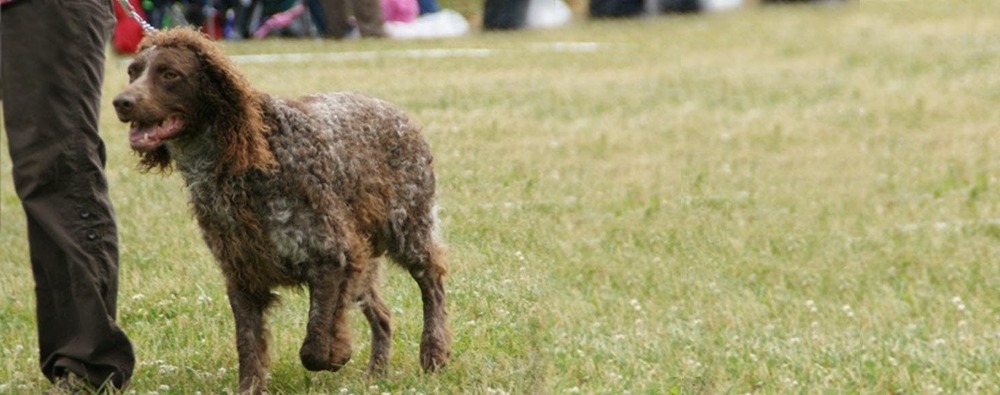
- Coat: wavy to curly, with a distinctive curly topknot
- Best suited to: people who enjoy training, outdoor time, and purposeful exercise
Depending on the registry, you may see the Pont-Audemer described as a spaniel-type pointing dog rather than a flushing spaniel, which is a helpful clue about the way many individuals work in the field.1, 2
Where the breed came from, and what it was made to do
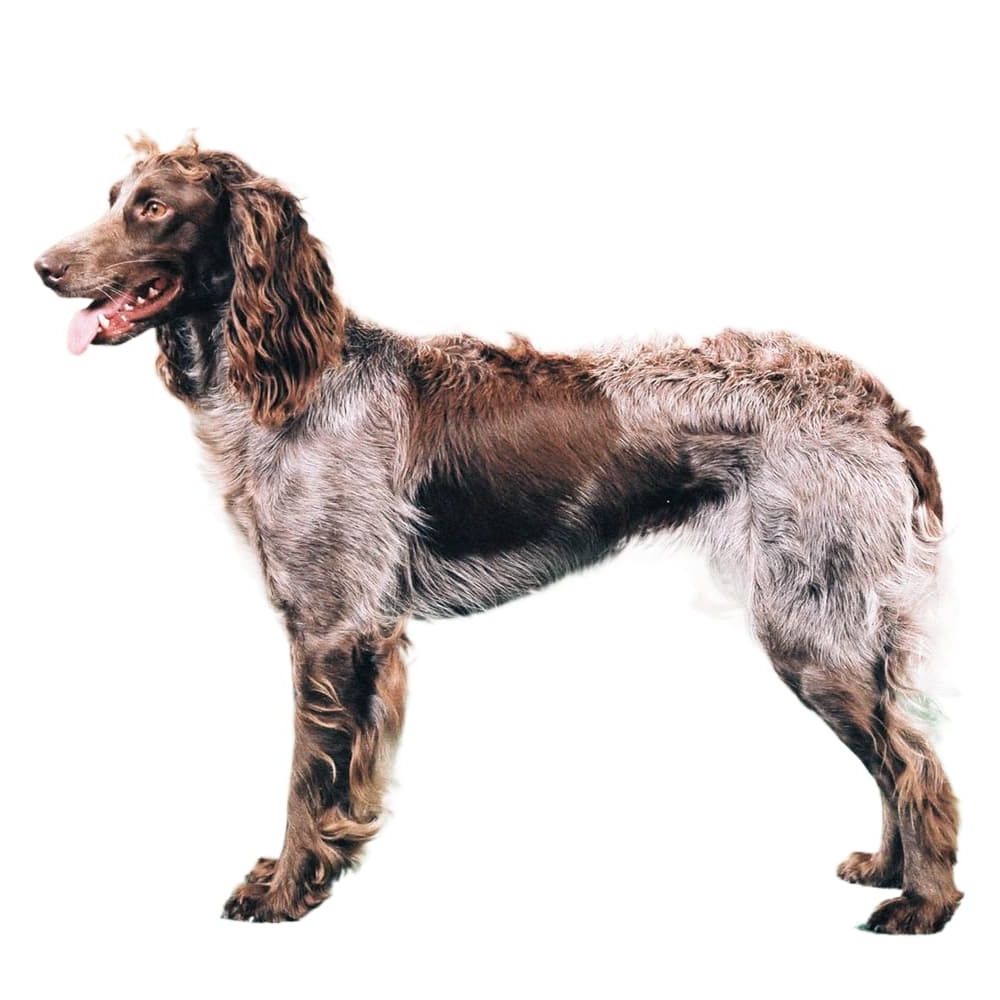
The breed developed in France, closely associated with the Pont-Audemer area of Normandy, where hunting often meant reeds, mud, and water. A dog built for that job needs more than enthusiasm. It needs a coat that copes with wet, a body that can push through cover, and enough persistence to keep working when conditions are uncomfortable.1, 2
One detail that surprises people is that, despite the name, the Pont-Audemer is commonly described as a pointing dog in the FCI classification. In other words, it may show a steadier, more “set” style than you might expect if your reference point is a typical flushing spaniel.2
The breed has also been historically rare, and numbers dropped sharply after the Second World War. Breed history mentions controlled outcrossing being permitted at times to protect the population from the risks of a very small gene pool, which is part of why careful breeder selection matters with uncommon breeds.1
Temperament: bright, social, and best with structure
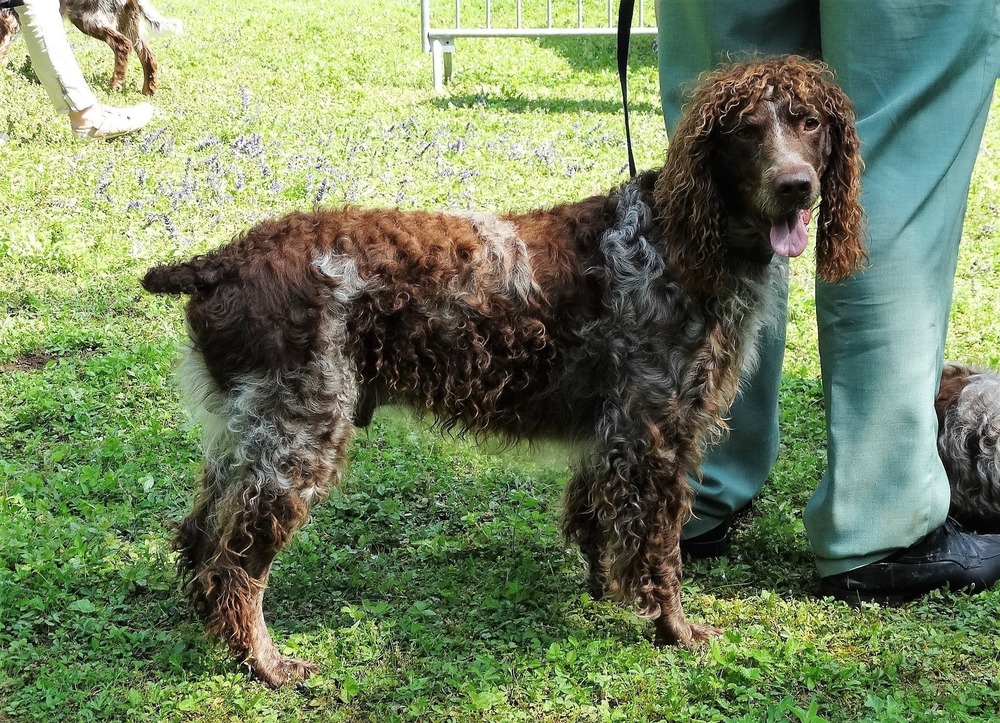
Well-bred Pont-Audemer Spaniels are often described as friendly, biddable, and lively. Many enjoy being close to their people, but it is more accurate to think of them as relationship-driven workers rather than natural couch companions. They tend to do best when daily life includes shared activity, training, and time outdoors.4
With children and other pets, the biggest predictors are sensible supervision, early socialisation, and whether the household can meet the dog’s need for movement and engagement. A busy, under-exercised gundog can become noisy, grabby, or frustrating, not because it is “naughty”, but because it is under-occupied.
If you are choosing this breed, it helps to enjoy the process of shaping behaviour: reinforcing calm, teaching boundaries, and giving the dog an appropriate outlet for scenting, retrieving, and exploring.
Training and exercise that actually works for this breed
Most Pont-Audemers respond well to reward-based training. Keep sessions short, clear, and frequent, and focus on skills that make daily life easier, like recall, loose-lead walking, and settling on a mat. For a dog with hunting heritage, practising “come away”, “leave it”, and calm waiting is not just manners, it is real-world safety training.
Exercise needs are usually high, but “more running” is not always the answer. A better goal is a mix of:
- steady aerobic exercise (walks, hikes, off-lead time where safe and legal)
- retrieving and water play (many individuals enjoy swimming)
- scent games (scatter feeds, tracking-style games, hiding toys)
- brain work (obedience, gundog foundations, puzzle feeders)
When people struggle with this breed, it is often because the dog is physically fit but mentally under-fed. Purposeful training and scent work can change the whole feel of the household.
Health considerations: joints, ears, and the basics done well
No breed is “problem free”, and with a rare breed you may have less large-scale data than you would for a popular one. Two practical areas worth taking seriously are hips and ears.
Hips and long-term joint comfort
Hip dysplasia is a heritable condition influenced by multiple genes and by environmental factors, and it can contribute to arthritis over time. Screening breeding dogs and keeping growing pups lean are both part of reducing risk. If you are buying a puppy, ask what hip scoring system is used and to see documentation, not just verbal reassurance.5, 6
Ears and recurrent infections
Those long, floppy, well-furnished ears are part of the look, but they can also trap moisture and reduce airflow. Dogs that swim often may be more prone to otitis externa, so it helps to build a routine of gentle ear checks and drying after water play. Avoid over-cleaning or pushing into the canal. If an ear looks red, smells unusual, or your dog is shaking its head, involve your vet early.7
Weight and general resilience
Keeping a Pont-Audemer at a healthy weight is one of the most practical ways to support joints and overall comfort. If you are unsure, ask your vet to show you body condition scoring and what “healthy” looks like on your individual dog, not just on a chart.8
Grooming and coat care, without fuss
The coat is usually wavy to curly, with the famous topknot developing over time. It is not typically “high shed”, but it does need regular attention so it does not mat, especially around the ears, legs, and any areas that stay damp.
A simple, sustainable routine tends to work best:
- brush through a few times a week, more often if the coat is longer
- check for burrs and grass seeds after outings
- keep ear fringes tidy and dry ears after swimming
- bathe as needed, then dry thoroughly to avoid that persistent damp-coat smell
If you are unsure what tools suit your dog’s coat texture, a groomer can help you avoid the common trap of brushing the surface while tangles build underneath.
Feeding and day-to-day care
Most Pont-Audemer Spaniels do well on a complete and balanced diet appropriate to life stage, with portion sizes adjusted to activity level and body condition. Because they can be active and food-motivated, it is easy to accidentally over-feed through treats, training rewards, and “extras”.
A practical approach is to measure meals, use part of the daily ration for training, and keep an eye on waistline and ribs. If your dog is doing heavy exercise or regular swimming, your vet can help you adjust calories without drifting into weight gain.8
Is a Pont-Audemer Spaniel the right fit?
This breed tends to suit people who like a dog that participates. If you enjoy training, outdoor time, and the quiet satisfaction of a dog that becomes more settled as its needs are met, the Pont-Audemer can be deeply rewarding.
It is less ideal if you need a low-exercise dog, if most days are spent indoors with limited enrichment, or if you are hoping grooming will be occasional. The best match is usually an owner who can offer consistent structure and outlets, not perfection, just steady follow-through.
References
- Wikipedia: Pont-Audemer Spaniel
- Fédération Cynologique Internationale (FCI): Standard No. 114, Pont-Audemer Spaniel (PDF)
- Société Centrale Canine: Épagneul de Pont-Audemer (breed page)
- Wisdom Panel: Spaniel de Pont-Audemer breed overview
- Australian Association of Miniature & Companion Venues (AMCV): Hip dysplasia overview
- Dogs Australia: Canine Hip and Elbow Dysplasia Scheme (CHEDS)
- The Kennel Club (UK): Otitis externa in dogs
- RSPCA Australia Knowledgebase: How to tell if my dog is overweight
- UK Picardy Spaniel Club: Pont-Audemer (Ponto) breed standard (FCI text)