

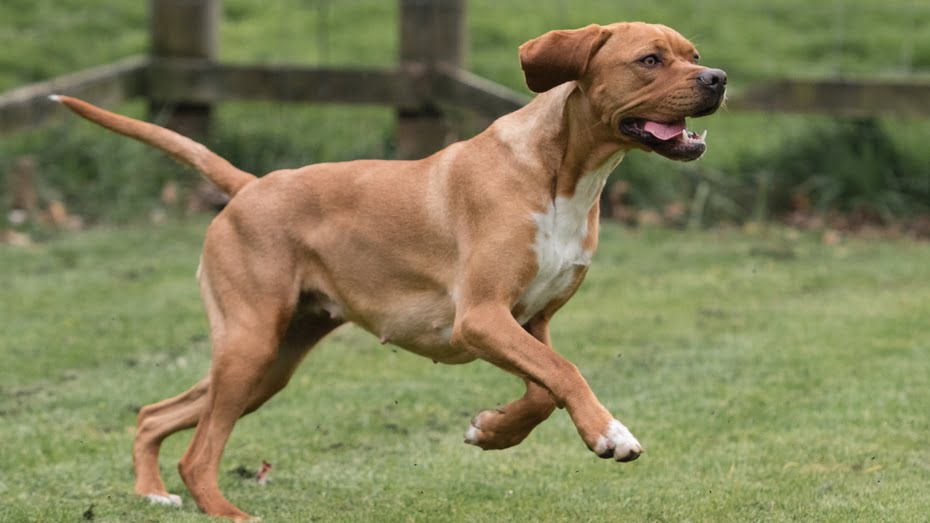
You might first notice a Portuguese Pointer because of a particular look: a neat, athletic dog with soft drop ears and an alert, searching way of moving through the world. Or you might meet one on a walk and wonder why this friendly, people-focused dog suddenly becomes intensely interested in scent on the breeze.
It is easy to assume they are simply “a high-energy hunting dog”, full stop. In practice, they are more nuanced than that. The Portuguese Pointer (Perdigueiro Português) has been shaped for centuries to work closely with a person, read the landscape, and stay persistent without becoming chaotic. That history still shows up in everyday life, even in suburban backyards.
When you understand what the breed was built to do, decisions about training, exercise, and even ear care make more sense. It also helps you decide whether this is the right dog for your household, not just in theory, but on a Tuesday afternoon when the weather is ordinary and the dog still needs to be someone.
Where the Portuguese Pointer comes from
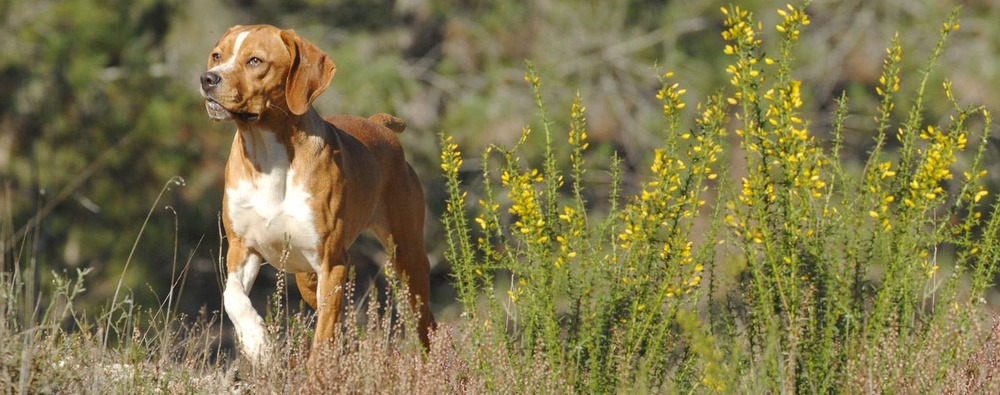
Breed histories can get a bit romantic, but the reliable thread for the Portuguese Pointer is consistent: it is a Portuguese gundog developed for finding and pointing game birds, working at close range with the hunter. The Clube Português de Canicultura describes roots on the Iberian Peninsula and a long period of selection for local terrain, climate, and hunting style.1
Historical summaries commonly place pointer-type dogs in Portugal as early as the 12th century, with the name “perdigueiro” linked to partridge (“perdiz”), reflecting its core job in the field.1, 2
For modern owners, the key point is not the exact date, but the purpose. This is a dog bred to stay engaged, cover ground efficiently, and respond to guidance, which is why many Portuguese Pointers do best when their daily routine includes more than a quick potter around the block.
A note on kennel club recognition
Some breed summaries still repeat a single “recognition year”, but recognition depends on the organisation. The Portuguese Pointer is recognised by the Fédération Cynologique Internationale (FCI), with FCI listing definitive recognition in 1955 and the current standard publication dated 4 November 2008.2
What they are like to live with

In many homes, the Portuguese Pointer comes across as warm, steady, and surprisingly close-working. Breed standards emphasise a dog that is kind, sociable, and persistent in the field, with an inclination to stay connected to the handler rather than ranging far away.1
That can be a lovely match for people who want a dog that checks in naturally, but it also means these dogs often do poorly when their social and mental needs are treated as optional. They tend to notice everything, especially scent, movement, and changes in routine.
With children, what matters most is the same as for any active medium-sized breed: supervision, sensible boundaries, and teaching kids how to handle excitement without turning the dog into a toy. With other pets, early, calm introductions help, and you should assume that a birdy scent trail may switch the dog into work mode.
Apartment life and space
A Portuguese Pointer can cope with smaller living spaces if exercise and enrichment are genuinely handled well, but many will find apartment life frustrating if it relies on short walks and long hours alone. If you want an easy, low-output companion, this is usually not the breed.
Training and exercise that suits the breed

Portuguese Pointers are typically responsive learners, especially when training is consistent and reward-based. The challenge is less about teaching behaviours and more about meeting the dog’s need for purposeful activity, then training in a way that channels that energy into cooperation.
If you have ever watched a pointing dog “lock on” to scent, you will know why punishment-heavy methods often backfire. The dog is not being stubborn for the sake of it, it is doing the job its nervous system is tuned for. Short, regular sessions are usually more effective than long drills.
- Recall practice in low-distraction areas before you rely on it around birds.
- Food scatters, sniffing games, and simple tracking exercises to give scent work a safe outlet.
- Field-type games (find it, retrieve, “go out” then return) to build cooperation without over-arousal.
Exercise needs vary with age and temperament, but most adults require daily opportunities to move at pace and use their brain. A long lead in open areas, structured retrieves, and off-lead time (where safe and legal) tend to make a noticeable difference to behaviour at home.
Health considerations and sensible care
The Portuguese Pointer is generally regarded as a robust, functional breed, but no breed is free of risk. Owners commonly keep an eye on joint health and ear health, partly because medium athletic dogs can develop orthopaedic issues, and drop ears can reduce airflow to the ear canal.
Hip dysplasia is not unique to this breed. If you are buying a puppy, ask about health testing and the breeder’s approach to selecting breeding stock. If you already have an adult dog, focus on body condition and fitness, since excess weight increases pressure on joints and can make small issues bigger over time.
Ear health and infections
Drop-eared dogs can be more prone to outer ear infections because reduced ventilation can trap moisture. Checking ears regularly, keeping them dry after swimming, and using a vet-approved cleaner when needed are practical, low-drama habits that help.6, 7
Do not push cotton tips into the ear canal, and do not “clean through” pain, redness, strong odour, or heavy discharge. Those signs warrant a vet visit rather than a more determined home clean.7, 8
Grooming and coat care

The coat is short, dense, and relatively straightforward to maintain. Weekly brushing is usually enough to lift dead hair and spread skin oils, with extra brushing during heavier shedding periods. Most owners find the bigger “maintenance” work is not the coat, it is the dog’s need for exercise and company.
Nails, teeth, and ears still matter. Nail length affects movement and comfort, and teeth benefit from routine care. If you build these small tasks into a normal weekly rhythm, the dog is more likely to accept handling calmly.
Feeding for a busy, athletic dog
A Portuguese Pointer’s diet should match life stage and workload. Many do well on a quality complete diet, adjusted to keep them lean and well-muscled rather than heavy. If you are unsure whether your dog is carrying extra weight, your vet can help you assess body condition and adjust feeding without guesswork.9
Treats are useful for training, but they can quietly unbalance a diet. A common rule used in veterinary nutrition guidance is to keep treats to a small portion of overall intake. It is often easiest to be practical and consistent: measure meals, account for training rewards, and use part of the dog’s daily ration for reinforcement when you can.9, 10
Final thoughts on choosing a Portuguese Pointer
The Portuguese Pointer tends to suit people who like doing things with their dog, not just owning one. When their day includes movement, training, and shared routines, many settle into the home as calm, pleasant company.
If you are drawn to the breed, look beyond appearance and ask yourself one honest question: can you provide daily outlets for scent, movement, and connection? If the answer is yes, the Portuguese Pointer can be a deeply satisfying dog to live with, practical, responsive, and very much present.
References
- Clube Português de Canicultura: Portuguese Pointing Dog (Perdigueiro Português)
- Fédération Cynologique Internationale (FCI): Perdigueiro Português (Standard No. 187)
- The Portuguese Pointer Club UK: History of the Breed
- Wikipedia: Portuguese Pointer
- Wisdom Panel: Portuguese Pointer Facts
- VetZone: Taking Care of Your Dog’s Ears and Eyes
- MustCare Vet Centres: Dog Ear Cleaning, A Safe Step-by-Step Guide
- PAW by Blackmores: A Guide to Caring for Your Dog’s Ears
- WSAVA: Global Nutrition Guidelines
- Cornell University Riney Canine Health Center: Obesity in Dogs