

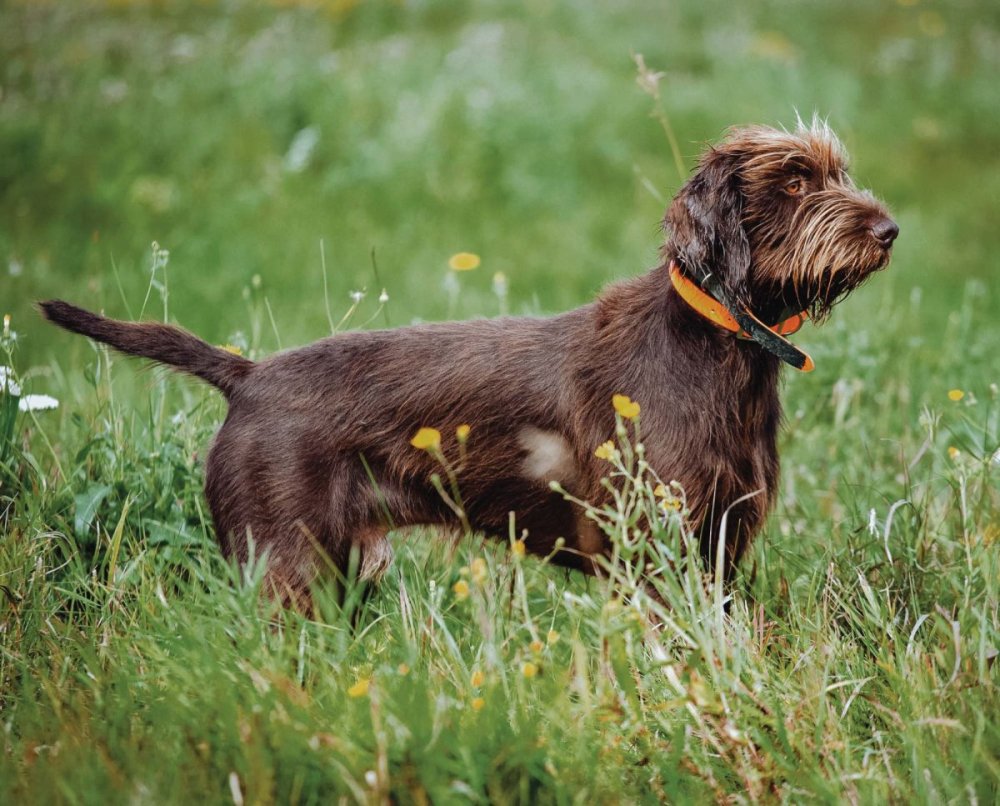
Most people first notice a Pudelpointer when they meet one in the wild places dogs tend to love most: on a long bushwalk, at the edge of a dam, or arriving home with that steady, wiry-coated confidence that says, “I have energy to spare.” They often look a bit like a practical, no-fuss gundog, but they move with the purpose of a dog bred to work.
It is easy to assume that a “hunting breed” will be intense in a way that makes family life harder. With Pudelpointers, the picture is a little more nuanced. They are typically bred for performance and trainability, which can make them wonderfully straightforward companions, provided their exercise and enrichment needs are met.
What matters in practice is fit. A Pudelpointer can be a calm presence in a busy household, but only after they have had the sort of day their body and brain were built for.
At a glance: the Pudelpointer
Breed type: Versatile gundog (pointing, tracking, retrieving).1
- Origin: Germany.1
- Size: Medium to large, athletic and workmanlike.1
- Coat: Harsh, wiry and dense, typically low shedding compared with many double-coated breeds (individuals vary).1
- Life expectancy: Often around the low teens, with the usual caveat that genetics, care, and workload all play a part.
- Best suited to: People who genuinely enjoy training and daily outdoor activity, including swimming and retrieving games.
History and purpose
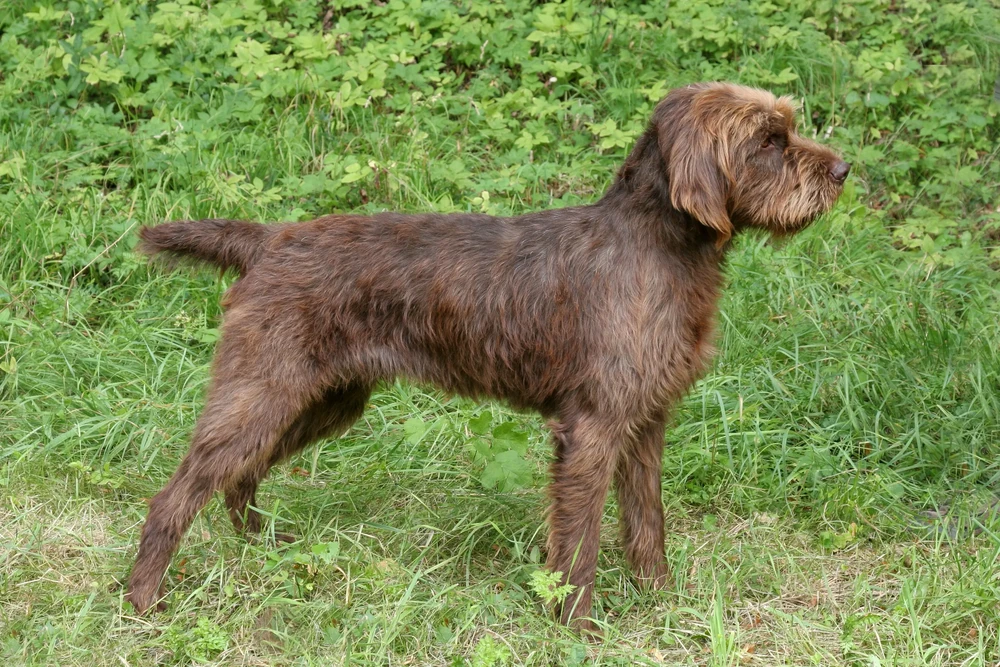
The Pudelpointer was developed in Germany as a practical hunting dog, intended to work both on land and in water. The breed is commonly described as coming from Poodle and English Pointer foundations, with selection focused on the kind of dog that could point, track, and retrieve, then reliably live alongside people when the day’s work was done.2, 1
You will sometimes see different versions of the early story, but one name appears repeatedly: Baron (Hegewald) von Zedlitz, who began breeding efforts in the late 1800s with a clear idea of the “all-rounder” he wanted.2
That original purpose still shows up today. Even in a suburban backyard, many Pudelpointers carry a strong pattern of behaviour that makes sense for a gundog: scanning, ranging, using their nose, and being highly responsive to what the handler is doing.
Practical takeaway: when people say “this breed needs a job”, they often mean a mix of physical outlet and structured teamwork, not simply running in circles.
Physical characteristics
Pudelpointers are built to cover ground efficiently. They are typically medium to large, with a deep chest, strong topline, and an athletic, balanced outline suited to endurance rather than bulk. Breed standards emphasise a functional coat and a body designed for work in rough cover and cold water.1
The coat is one of the first things people comment on. It is usually harsh, wiry and dense, with enough weather resistance to keep the dog moving comfortably through scrub, reeds, and water. Colours commonly include liver and similar earthy tones, with black also seen.1
Worth knowing: “low shedding” is not the same as “non-allergenic”. If allergies matter in your household, it is wise to spend time with adult dogs from the same lines before committing.
Temperament and everyday behaviour
In day-to-day life, many Pudelpointers come across as bright, steady, and very capable of learning routines quickly. They are often most settled when there is a clear rhythm to the week: training, exercise, downtime, then more training.
Because they were selected for cooperation in the field, they commonly enjoy working with their person and can be highly responsive to reward-based training. That said, “biddable” does not mean effortless. A clever dog with gundog drive can rehearse unwanted habits just as efficiently as they learn good ones if boundaries are fuzzy.
With children and other pets, the biggest predictor of harmony is usually management and learning history. Early, thoughtful socialisation helps, but it is equally important to keep arousal levels sensible, protect rest time, and prevent chasing games that accidentally teach predatory patterns.
Training that suits the breed
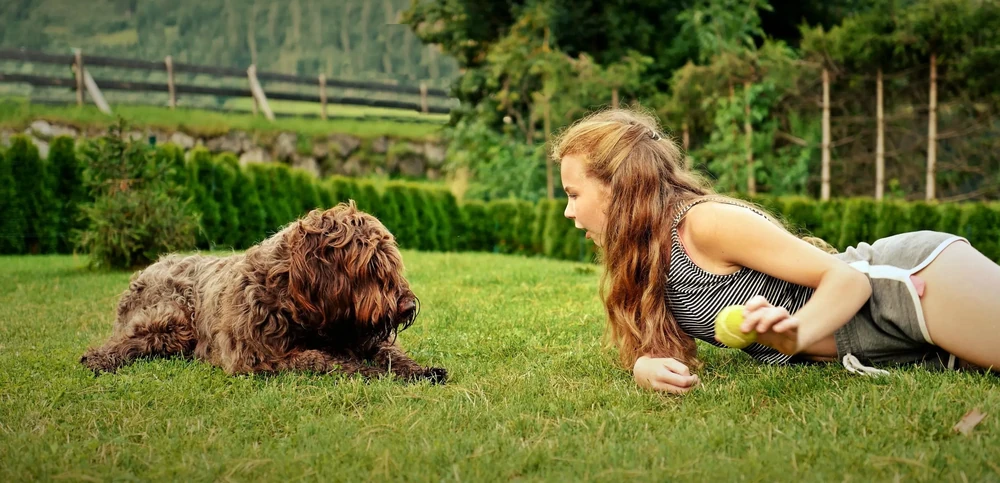
Pudelpointers often do best with training that is calm, consistent, and based on reinforcement rather than intimidation. Reward-based methods, including food, play, and access to what the dog wants, are widely recommended by animal welfare organisations because they support learning while reducing the risk of fear and conflict.3, 4
If you are raising a Pudelpointer puppy, it helps to think beyond “basic obedience”. The real work is teaching skills that make freedom possible later, such as recall around wildlife scents, settling on a mat, loose-lead walking when the world is exciting, and comfortable handling for grooming and veterinary care.
A helpful mindset: reward the behaviours you want to see again, then arrange the environment so the dog gets fewer opportunities to practise the ones you do not.
Exercise and enrichment needs
This is a high-energy working breed. A quick lap of the block rarely scratches the itch, particularly for young adults. Most do best with daily movement plus “thinking work”, and many relish swimming and retrieve-style games that let them use their body and nose together.
- Physical outlet: brisk walks, running with you (once mature), hiking, structured off-lead time where legal and safe.
- Brain work: short training sessions, scent games, retrieving drills, puzzle feeders, and searching for hidden items.
- Social needs: plenty of dogs prefer a smaller circle of well-matched playmates rather than chaotic dog-park sessions.
Boredom tends to look like restlessness, nuisance barking, or “creative” self-employment such as digging and grabbing household items. When that happens, it is not a moral failing on anyone’s part. It is usually feedback that the plan needs adjusting.
Health and lifespan considerations
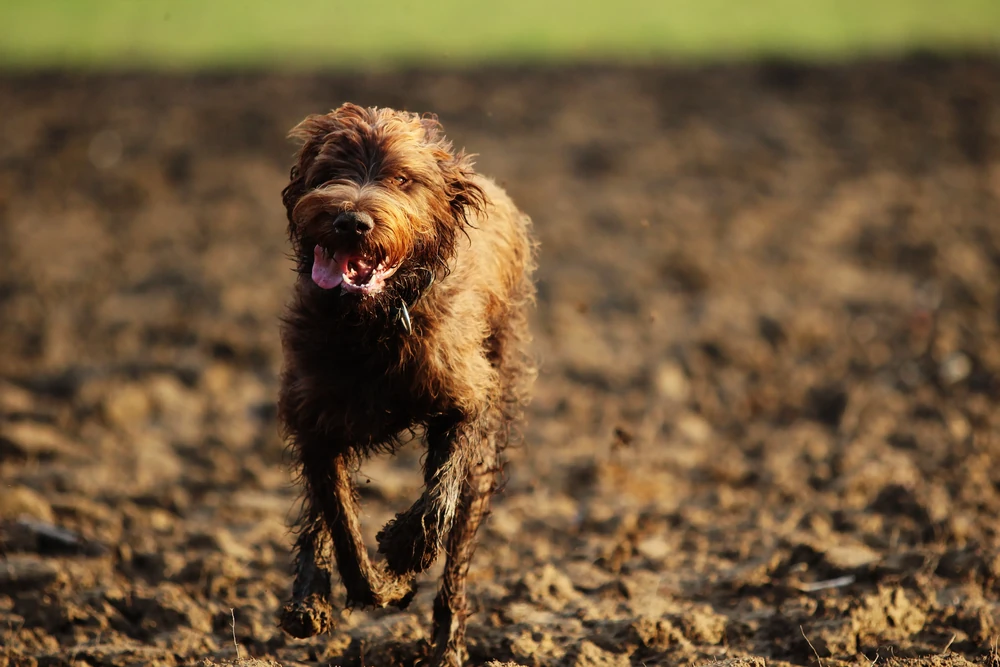
No breed is immune to health issues, and active medium to large dogs are often discussed in the context of orthopaedic risk. Hip dysplasia, for example, is a developmental condition seen across many breeds. Screening schemes and thoughtful breeding decisions are part of how risk is managed over time.5, 6
For owners, the practical side is watching for early signs that something is not quite right, such as stiffness after rest, reluctance to jump, changes in stride, or reduced enthusiasm for exercise. Those signs are not “proof” of hip dysplasia, but they are a good reason to book a veterinary check.7
Useful to ask a breeder: what health testing is done in their lines, what the results mean, and how they make breeding decisions based on those results.
Grooming and general maintenance
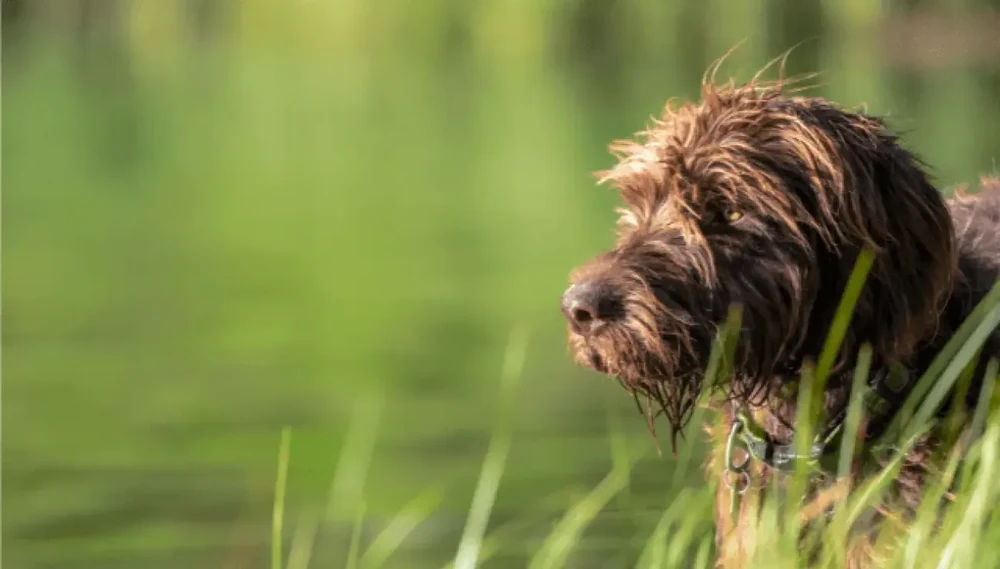
The wiry coat is usually fairly practical. A regular brush-through helps remove burrs and dirt, and a quick check after outings can prevent little problems from becoming sore ones, especially around ears, feet, and armpits.
Many owners find a simple routine works best: brush weekly, rinse mud as needed, and keep nails and teeth on a schedule. If your dog swims often, it is worth adding a gentle ear check to your usual routine and speaking with your vet if you notice redness, smell, or increased scratching.
Low fuss, not no fuss: even “easy coats” still need consistent, kind handling so grooming stays stress-free.
Diet and nutrition
An active gundog type usually thrives on a balanced diet that matches their workload, life stage, and body condition. Rather than chasing trends, it helps to focus on consistency, appropriate portions, and a clear plan for treats so training rewards do not quietly unbalance the day’s intake.
Be careful with “people food”. Several everyday items are genuinely dangerous to dogs, including chocolate, grapes and raisins, and onion and garlic, even in some cooked forms or powders.8, 9
Practical action: if your dog eats something toxic, call your vet or an emergency clinic straight away, and if possible, bring packaging or details of what was eaten.
Living with a Pudelpointer: who they suit best
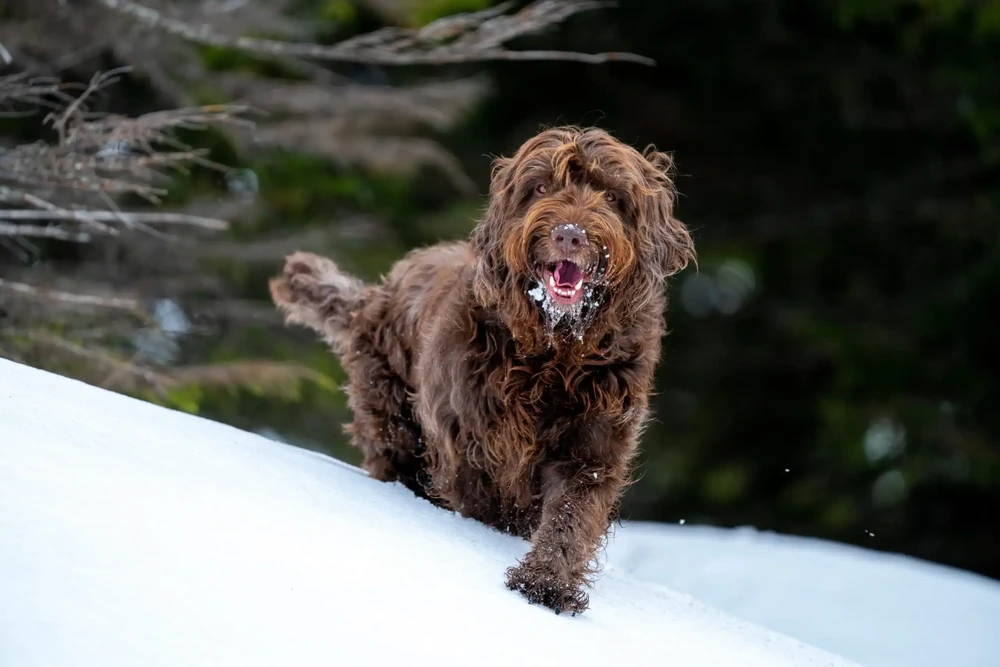
Pudelpointers often suit people who like doing things with their dog, not just owning a dog in the background. They can be wonderful companions for active households, and they tend to shine when given purposeful outlets, whether that is hunting work, retrieving sports, scent work, or simply being a well-trained adventure dog.
They are not usually the easiest match for very sedentary homes or for people hoping a high-drive dog will “grow out of” needing daily exercise. In many cases, the opposite happens. Adolescence arrives, confidence grows, and the dog needs more structure, not less.
The good news: if you enjoy training, you rarely run out of opportunities to build a capable, steady companion with this breed.
References
- Federation Cynologique Internationale (FCI): Pudelpointer (Standard No. 216)
- Wikipedia: Pudelpointer (history overview and origin notes)
- RSPCA Knowledgebase: Training recommendations and reward-based methods
- RSPCA ACT: Reward-based dog training principles
- Orthopedic Foundation for Animals (OFA): Hip dysplasia overview
- OFA: Hip grade details and what results mean
- American Kennel Club: Hip dysplasia signs and diagnosis basics
- ABC News: Common foods that can poison dogs
- Guardian Pet Insurance (Australia): Foods toxic to dogs