

People usually stumble into the idea of “S to Z dog breeds” in a catalogue, on a shelter website, or halfway through a breed list while comparing a few favourites. It sounds tidy, like a category with shared traits. In practice, it is just an alphabetical slice of the dog world, and it includes everything from tiny companion breeds to powerful working dogs.
That matters because it is easy to carry assumptions across names that happen to sit near each other on a list. A Siberian Husky and a Shih Tzu might both be “in the S section”, but their day to day needs can look nothing alike. If you start with your home, your time, your budget, and your tolerance for noise, hair, and training, you tend to make better choices than if you start with looks alone.1
Below is a grounded way to think about S to Z breeds, with a focus on what owners and trainers see in real homes: energy, coat, sociability, and the health and handling realities that shape a dog’s life.
What “S to Z breeds” really means

“S to Z” is not a breed group in the way “Working”, “Toy”, or “Hound” is. It does not tell you temperament, size, coat type, or whether a dog will be easy to live with. It simply means the breed name starts with a letter between S and Z.
If you are using a list like this to narrow options, treat it as a filing system only. Then zoom in on the things that actually predict day to day fit: exercise needs, grooming, trainability, noise, and how a dog copes with being left alone.1, 2
Size and “breed category”, why labels can mislead

Within S to Z you will find a huge range of body types and roles, including lap dogs, herding breeds, guarding types, gundogs, and sled dogs. That is why any one set of numbers like “average height” or “average weight” can be misleading unless you are talking about a specific breed.
Even within a recognised category such as “Working”, individual breeds were developed for different jobs, and they bring different levels of stamina, intensity, and independence into a household. A useful shortcut is to think in “breed type” behaviours, then confirm with breed specific information and, ideally, the temperament of the individual dog in front of you.1
Coat length, colour, and what grooming really involves
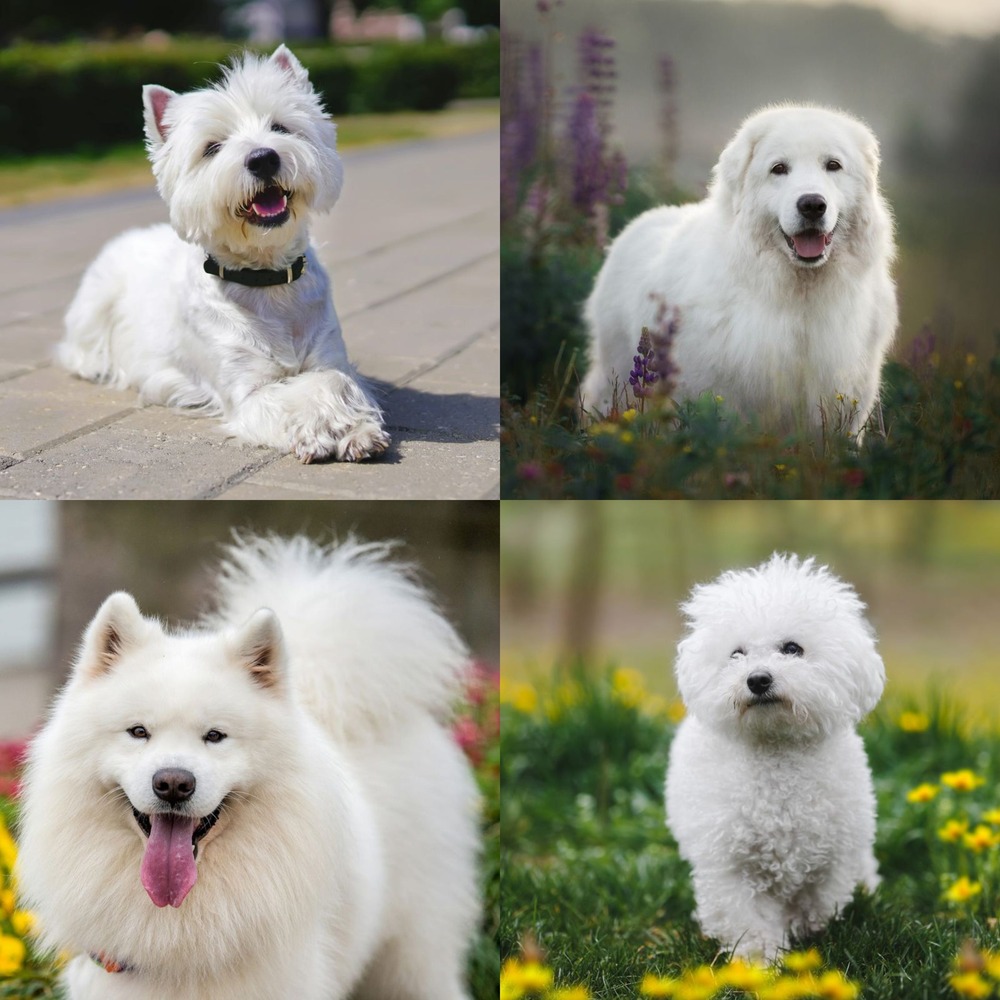
Coat descriptions are often written like fashion notes, but for owners the coat is mostly about maintenance. A “moderate” coat can still shed heavily. A long or curly coat can mat quickly, especially behind ears, in armpits, and around collars and harness straps.
It helps to plan for what your week will actually contain. Grooming is also a health check. Brushing is when people notice grass seeds, sore patches, parasites, lumps, and skin irritation early, before a dog is properly uncomfortable.2
- Double coats often shed seasonally and can benefit from regular brushing rather than frequent bathing.
- Drop coats and curls usually need more frequent brushing, plus professional grooming for many households.
- Short coats can be simple to maintain, but still shed and still need routine skin checks.
Temperament and trainability, what people usually mean
It is tempting to label a breed as “friendly” or “stubborn” and stop there. A more helpful lens is to ask what motivates the dog and how quickly it settles. Some dogs are highly people oriented and responsive to food or play. Others are more environmentally focused and can look “independent” because sniffing, scanning, and moving are more rewarding than repeating cues.
For many S to Z breeds that are described as energetic, the key is not just exercise but daily mental work: sniff walks, simple training games, problem solving toys, and calm exposure to the world. When those needs are met, you often see a dog that is pleasantly unremarkable at home, they rest, they recover, and they can cope with routine.2
Training that tends to hold up in real homes
Across breeds, reward based training, good timing, and consistency are the levers most owners can control. If a dog is struggling, it is worth checking whether the environment is too difficult before assuming the dog is being wilful. The same cue can be easy in the kitchen and surprisingly hard at the park.
If your dog is showing persistent fear, shutdown behaviour, or escalating reactivity, get advice early from a vet, qualified trainer, or veterinary behaviourist. Forcing exposure in the name of “socialisation” can backfire for some dogs.4
Social behaviour: strangers, dogs, and the shape of early experiences

Some dogs are naturally social with unfamiliar people. Others are polite but reserved. Others again are wary and need space. Breed tendencies play a part, but early handling and learning history matter enormously.
Most veterinary and welfare guidance emphasises that puppies benefit from gentle, positive exposure to the things they will meet as adults, during a sensitive developmental window that begins around three weeks and runs to roughly 12 to 14 weeks (with individual variation). The quality of those exposures matters more than the quantity, and pushing a worried puppy can make things worse.4, 5, 6
If you are choosing a puppy, ask what has already been introduced thoughtfully: household sounds, handling, car rides, a range of safe surfaces, and calm contact with different kinds of people. If you are adopting an adult, ask what situations the dog currently finds difficult, and what support has helped so far.1, 6
Playfulness and energy, and why “more exercise” is not always the answer

Many S to Z breeds are described as high energy, but “energy” can look like different things: endurance, sprinting bursts, intensity, vocalising, or constant movement. Owners often try to solve this with longer and longer outings, then end up with a dog that has become fitter but not calmer.
A steadier approach is to aim for balanced daily outlets: some physical activity, some mental work, and some practice settling. Most dogs benefit from at least one daily walk, but how much more depends on age, health, and individual needs, not just breed reputation.1, 2
Children and family life
There is no universal “best family breed”, and even famously good natured breeds can struggle in a chaotic household if they do not get rest, predictability, and gentle handling. What tends to matter most is supervision, teaching children how to interact safely, and choosing a dog whose arousal levels and tolerance match your home.
When you are assessing fit, look for the practical signs of a dog who can live well with kids: they can recover after excitement, they can be handled without escalating, and they can settle when nothing interesting is happening. Shelter staff and foster carers can often describe these patterns more accurately than a breed description can.1
Living with other pets
Some dogs are naturally sociable with other animals, while others have stronger chase instincts or a narrower comfort zone. Early social learning can help, but it does not erase genetics, and it does not guarantee instant harmony.
For multi pet homes, slow introductions, management, and separate safe spaces usually make the biggest difference in the first few weeks. If you already have a cat, rabbits, poultry, or small dogs, ask direct questions about prey drive and past history, and consider professional help for introductions if you are unsure.1
Health considerations: what you can and cannot predict
The original idea that “S to Z” has its own health conditions is not accurate. Health risks are specific to each breed, and also to the individual dog and how it was bred, raised, and cared for.
When you are choosing a dog, it is worth thinking in two layers:
- Breed related risks, which you can research and discuss with your vet.
- Individual signals, such as coat and skin condition, movement quality, breathing, and behaviour under mild stress.
For puppies from breeders, ask for evidence of relevant health testing for that breed and a clear plan for early socialisation. For rescue dogs, ask about veterinary checks and any known ongoing conditions. In either case, a relationship with a local vet who knows your dog and your context is one of the most practical supports you can put in place.1, 7
Housing and space, focusing on what the dog needs to do
Dogs do not need a particular number of square metres. They need the chance to move, rest undisturbed, toilet safely, and get daily enrichment. Many smaller dogs can thrive in apartments if their exercise and stimulation needs are met. Some larger or more active dogs can also do well in smaller homes, but only if the household routine reliably covers their needs.
Before you commit, picture an average weekday: who walks the dog, when, where toileting happens, where the dog rests, and how you will handle hot weather, wet weather, and busy weeks. This is where mismatches show up, not in a breed description.1, 2
Bringing it together: choosing within S to Z without getting lost
S to Z breeds are not a single “type”, and that is the point. If you begin with your lifestyle and constraints, then look for a dog whose needs fit inside them, you are less likely to end up negotiating daily conflict with exercise, grooming, or behaviour.
A helpful final check is to write down what you can genuinely provide most days, not on your best days. Then look for a dog that can thrive with that, and be prepared to support the dog in the areas that are predictable challenges for their breed type or history.1, 4
References
- RSPCA Pet Insurance Australia: Considerations when choosing a dog
- Purdue University, Canine Welfare Science: Socialization and early exposure
- Canstar: How to select the right dog breed for you
- American Animal Hospital Association (AAHA): Canine and feline behavior management guidelines, age and behavior
- UC Davis School of Veterinary Medicine: Puppy socialization
- The Ohio State University, Indoor Pet Initiative: Puppy socialization
- RSPCA Knowledgebase: What should I look for when buying a puppy?
- American Kennel Club: Puppy socialization starts with the breeder, the crucial third week
- World Small Animal Veterinary Association (WSAVA): Vaccination Guidelines (2015 PDF)