


You usually start thinking about Saint Bernards after seeing one in the flesh, or on a screen, and realising how calmly they carry that much dog. People tend to assume a giant breed must be either hard work, or a bit intimidating. With Saint Bernards, the reality is often quieter and more practical: they are typically steady, people-focused dogs who still come with very real size-related needs.
They are also a breed that gets wrapped up in legends, like the famous brandy barrel. The truth is more interesting than the myth. The Saint Bernard’s reputation was built on centuries of work around an Alpine hospice, and on the way a well-bred, well-managed dog can use its body and senses in service of people.1, 3
If you are considering living with one, or you already have one, the questions that matter are everyday ones: how much space is enough, what does “moderate exercise” look like in practice, how do you manage drool and shedding, and what health risks should you plan around in a calm, sensible way.
- Breed category: Working group
- Country of origin: Switzerland (Alpine region)
- Typical height: Males 70 to 90 cm, females 65 to 80 cm2
- Energy level: Moderate
- Coat: Dense, short or long
- Shedding: High, often heavier seasonally
- Life expectancy: Commonly around 8 to 10 years for a giant breed4
History and origin
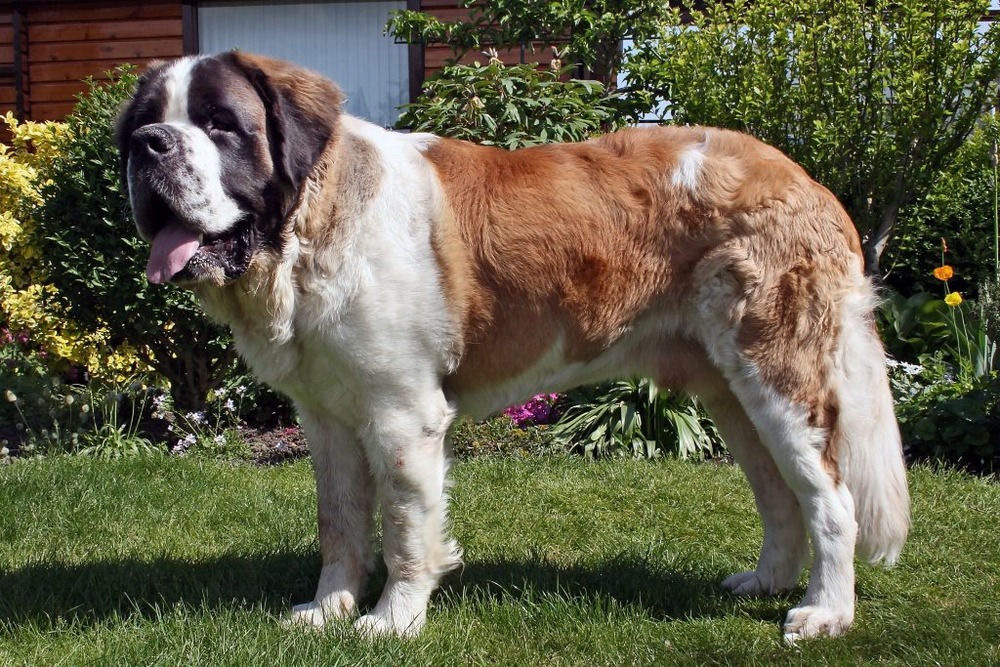
The Saint Bernard is closely tied to the Great St Bernard Pass, a high mountain crossing between what is now Switzerland and Italy. The hospice there became known as a refuge for travellers, and over time the dogs kept by the hospice moved from general farm and guard types into a recognisable working strain suited to the conditions.1
It helps to think of the breed as a product of place. A dog built to move in snow, cope with cold, and keep going steadily has a different shape and temperament from a dog bred for speed or sharp guarding. That background is part of why many Saint Bernards today still come across as unhurried and thoughtful in their movement and responses, even when they are young and clumsy.
The rescue stories are real, but the popular image of every dog carrying a barrel is mostly a later embellishment. There is evidence the barrel became a strong 19th-century symbol rather than an everyday working tool.1, 3
One of the best-known dogs associated with the hospice tradition is Barry, often credited with saving more than 40 people. The details have been retold and polished over time, but Barry’s place in the breed’s cultural history is well established.3
Physical characteristics that shape daily life
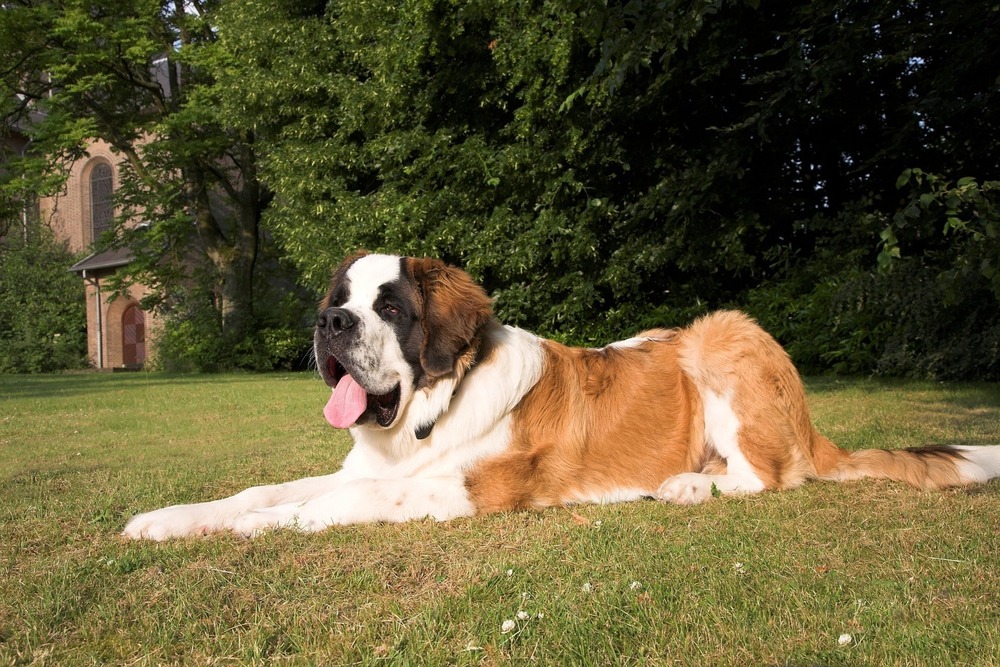
Most people notice size first, then everything that follows from it. A Saint Bernard’s height range is broad, and dogs at the upper end can feel almost architectural in a home. Breed standards commonly cite 70 to 90 cm for males and 65 to 80 cm for females, with soundness and balance valued over sheer height.2
The coat can be short or long, but in both cases it is dense. That density matters in real life: it affects how often you vacuum, how much mud comes inside in winter, and how carefully you need to manage heat. Many Saint Bernards cope better in cool weather than in hot, humid conditions, and they benefit from shade, airflow, and sensible timing for walks.
Then there is drool. It is not a behavioural issue, it is anatomy. Loose lips and a big mouth mean many Saint Bernards will drool, especially around meals, after drinking, or when excited. If you enjoy a neat house, it is worth accepting early that a towel will become part of your routine.
Temperament and behaviour

Saint Bernards are often described as gentle, and that can be true, but it is more useful to think in terms of steadiness. Many are socially tolerant, slow to escalate, and comfortable being close to people. They can also be surprisingly sensitive to household tension or chaotic handling, not because they are fragile, but because they tend to do better with calm, predictable interactions.
With children, the common picture is a patient giant. That can be a good fit, but supervision matters. A friendly Saint Bernard can still knock a toddler over simply by turning around. The practical goal is good manners plus good management, not expecting a dog to intuit what is safe in every situation.
With other pets, early socialisation helps, but the biggest factor is often the individual dog and the household setup. A Saint Bernard who has practised polite greetings, gentle play, and settling near other animals usually carries those skills into adulthood.
Training and exercise needs
Training a Saint Bernard is less about creating drive and more about building cooperation. Their size means small habits become big problems. A dog that pulls lightly at 15 kg is inconvenient. The same behaviour at 70 kg can be dangerous.
Early training pays off most in these areas:
- Loose-lead walking, with real-life practice in quiet places before busy ones
- Comfort with handling (paws, ears, mouth), so grooming and vet visits are easier
- Polite greetings, including four paws on the floor
- Settling, which is often more valuable than teaching endless tricks
Exercise is typically moderate, but that does not mean optional. Saint Bernards still need daily movement for joint health, body condition, and mental wellbeing. The key is choosing activities that match their build: steady walks, sniffing time, gentle hill work if your vet is happy with it, and low-impact play.
For growing puppies, it is wise to avoid repetitive high-impact exercise. A vet or qualified trainer can help you balance fitness with joint care, especially during the fast growth stages common in giant breeds.
Health and lifespan: what to plan for

Giant breeds tend to have shorter lifespans than smaller dogs, and Saint Bernards are commonly reported in the 8 to 10 year range.4 That number can feel confronting, but it also encourages a grounded approach: prevention where possible, early detection where you cannot prevent, and comfort-focused care as dogs age.
Orthopaedic issues are a real consideration in such a heavy dog. Hip dysplasia is a complex condition influenced by genetics and environment, and screening programmes exist to help breeders reduce risk over time.8
Another risk that deserves calm respect is gastric dilatation-volvulus (GDV), often called bloat. Deep-chested breeds, including Saint Bernards, are overrepresented. GDV is a medical emergency, and it is worth learning the signs even if you never need them.6
Some risk-reduction practices commonly recommended by veterinary sources include feeding two to three smaller meals rather than one large meal, avoiding vigorous exercise around meals, and reducing fast, gulping eating where possible.5, 6, 7
Grooming and maintenance

A Saint Bernard’s grooming needs are rarely complicated, but they are relentless. The coat is designed to protect, which means it holds hair and undercoat and releases it steadily into your home. Regular brushing is the difference between manageable shedding and a constant layer of fluff on everything you own.
For many households, the simplest routine is:
- Brushing several times a week, more often during seasonal coat blow
- Checking ears and drying them after swims or baths
- Keeping nails short enough to support steady movement
Bathing can be occasional, but drying a giant dog properly takes time. If you live somewhere cool, plan for a warm space so the coat dries thoroughly and skin stays healthy.
Diet and nutrition
Saint Bernards need food that supports slow, steady condition rather than rapid growth or excess weight. In practice, the “right” diet is the one that keeps your dog lean, energetic, and comfortable in their joints.
If you are choosing a commercial diet, WSAVA’s guidance for pet owners is useful because it focuses on the quality controls behind the food, not just marketing language on the ingredient list. It is a good framework to discuss with your vet, especially for puppies and seniors.9
Because GDV risk is part of the picture for many Saint Bernards, feeding routines matter as much as what is in the bowl. Two to three smaller meals, calm mealtimes, and strategies to slow fast eating are commonly suggested for at-risk dogs.5, 6, 7
Fun facts, with a reality check
There is a claim that Saint Bernards can “predict avalanches”. Dogs can certainly notice environmental changes and cues that humans miss, but avalanche prediction is not something you can rely on a companion dog to do. It is kinder, and safer, to treat that idea as folklore rather than a breed trait.
What is well supported is the breed’s long association with the Great St Bernard Pass, and the way that history is still actively preserved. Since 2005, the Barry Foundation has been responsible for the hospice dogs’ breeding tradition, with a focus on animal welfare and suitable roles for modern dogs, including visitor programmes and social activities.10
And yes, the breed has had its media moment. The film character Beethoven helped fix the Saint Bernard in the public imagination as a big, family-friendly dog, even if real life is usually less cinematic and far more about towels, training, and thoughtful routines.
Final thoughts
Living with a Saint Bernard tends to simplify your priorities. You make peace with hair on your clothes. You learn that training is not a weekend project. You pay attention to flooring, shade, car space, and how your dog’s body is coping, because you can see the cost of discomfort in such a large animal.
If you can offer room to move, steady companionship, and practical care, many Saint Bernards repay that with a kind of presence that feels quietly reassuring. Not heroic, not mystical, just a big working dog shaped by history and made easier by good everyday choices.
References
- Great St Bernard Hospice (history and hospice dogs)
- Fédération Cynologique Internationale (FCI): Saint Bernard breed standard (PDF)
- Barry (dog) and the Saint Bernard rescue legend
- PetMD: Saint Bernard breed overview (lifespan and common issues)
- VetZone (Australia): Gastric dilatation-volvulus (bloat) in dogs
- Cornell University College of Veterinary Medicine: GDV (bloat) overview and risk factors
- American College of Veterinary Surgeons: GDV and gastropexy
- Orthopedic Foundation for Animals (OFA): Hip dysplasia in dogs
- WSAVA Global Nutrition Guidelines (pet owner tools and label guidance)
- Fondation Barry du Grand-Saint-Bernard: History and modern stewardship of Saint Bernards