

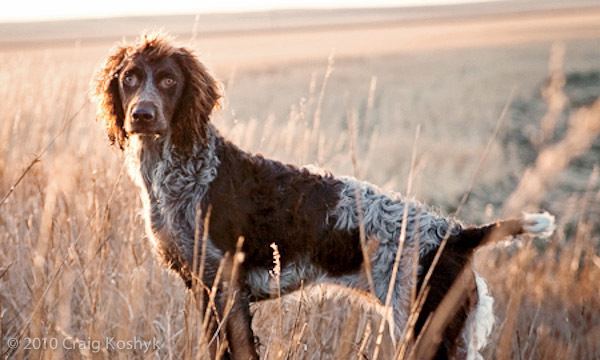
People usually come to the Saint-Usuge Spaniel after noticing a photo of a brown-and-white gundog that looks a bit like a smaller Münsterländer, or after hearing the name and wondering whether it is a true “spaniel” in the modern sense. It is not a common breed outside France, so the information you find can be patchy, and sometimes a little over-confident.
What stands out in real life is how purpose-built the breed is. This is a working pointing dog from the Bresse region, shaped by hunting culture and practical selection, then carefully rebuilt after the Second World War when numbers fell dangerously low.2
That history matters, because it explains why Saint-Usuges often do best with people who enjoy training, walking, and spending time outdoors, even if the dog is also a steady companion at home. When expectations match the dog in front of you, day to day life tends to feel easier for everyone.
Quick breed snapshot

Also known as: Épagneul de Saint-Usuge.
- Origin: France, with strong ties to the Bresse area.2
- Type: Continental pointing dog, “type épagneul” in French classification (often discussed alongside spaniels, but functionally closer to a pointing gundog).1, 2
- Typical height: males about 45 to 53 cm, females about 41 to 49 cm at the withers (breed standard sources vary slightly by translation and publication).1, 3
- Common colours: brown (liver) and brown roan, some descriptions include brown with white markings depending on how roaning is described.1, 3
- Energy needs: generally high, this is a dog bred for active work in cover.2
If you see wildly different weight ranges online, treat them as broad estimates. The more reliable anchor points are the official breed standard and the dog’s body condition, not a single number on a chart.3
Where the breed comes from, and why it nearly disappeared
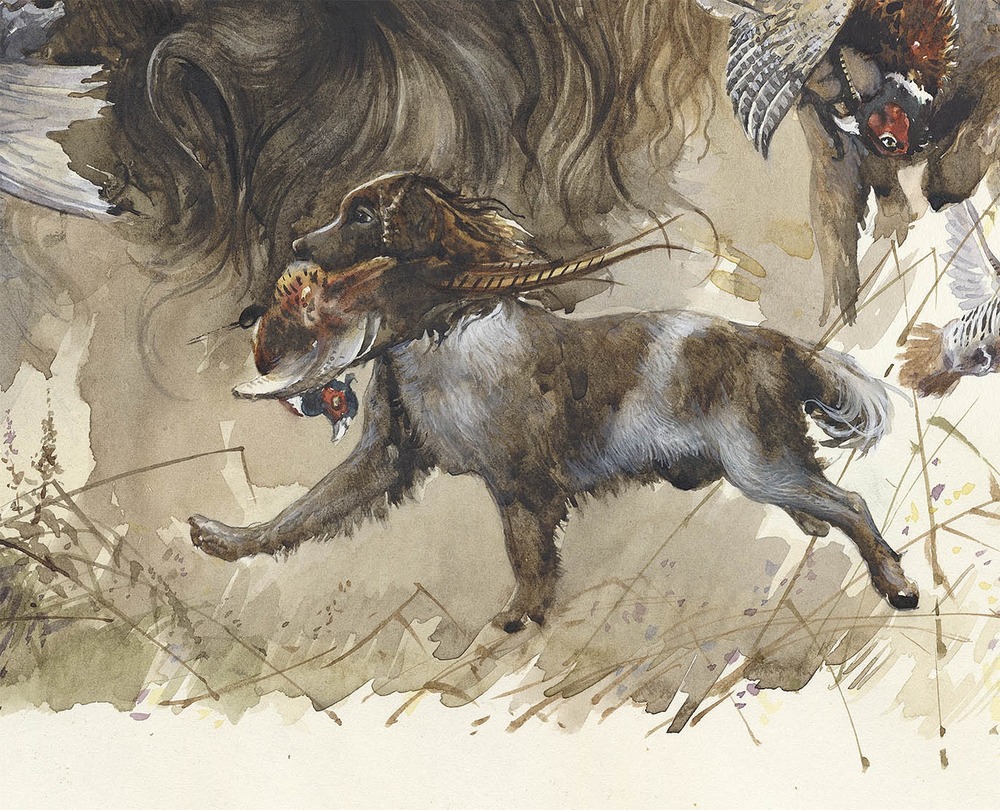
The Saint-Usuge Spaniel is generally described as an old French gundog with roots going back at least to the 1500s, connected to rural hunting traditions in eastern France.2
By the end of the Second World War, the breed was close to disappearing. Revival work is most often linked to Father Robert Billard, with later involvement from other enthusiasts, and a formal national club forming in 1990.2
In 2003, the breed received national recognition from France’s Société Centrale Canine (SCC). It is not currently recognised by the FCI, which is worth knowing if you are trying to understand show eligibility and international paperwork.1, 2
Appearance, coat, and the practical bits people notice

Most Saint-Usuges have a medium coat with some wave and feathering, built to cope with field conditions rather than salon styling. The colour is usually described in the brown spectrum, including roan patterns, which can read as “brown with white” in everyday language.1, 3
Those long, low-set ears are part of the breed’s look, but they also change the care routine a little. With floppy ears, airflow is reduced, and moisture can linger after swimming, baths, or wet-weather walks.4
A handy mindset is to focus on function over perfection. A clean coat, clear ears, and comfortable movement matter more than a perfectly sculpted outline.
Temperament and everyday suitability
Well-bred Saint-Usuges are usually described as gentle, biddable, and attentive. In the home, that often shows up as a dog that likes being near their people and responds well to calm, consistent handling, particularly when training is made rewarding rather than forceful.2
They are typically at their best when they have an outlet for sniffing, exploring, and learning. A daily wander on a long line, scent games in the yard, and some retrieval work can go a long way, especially if you are not hunting.
For families, the question is less “Are they good with children?” and more “Can we supervise, teach respectful handling, and meet the dog’s exercise needs?” When those basics are in place, many gundogs settle well into family life.
Training and exercise, keeping the brain busy as well as the body
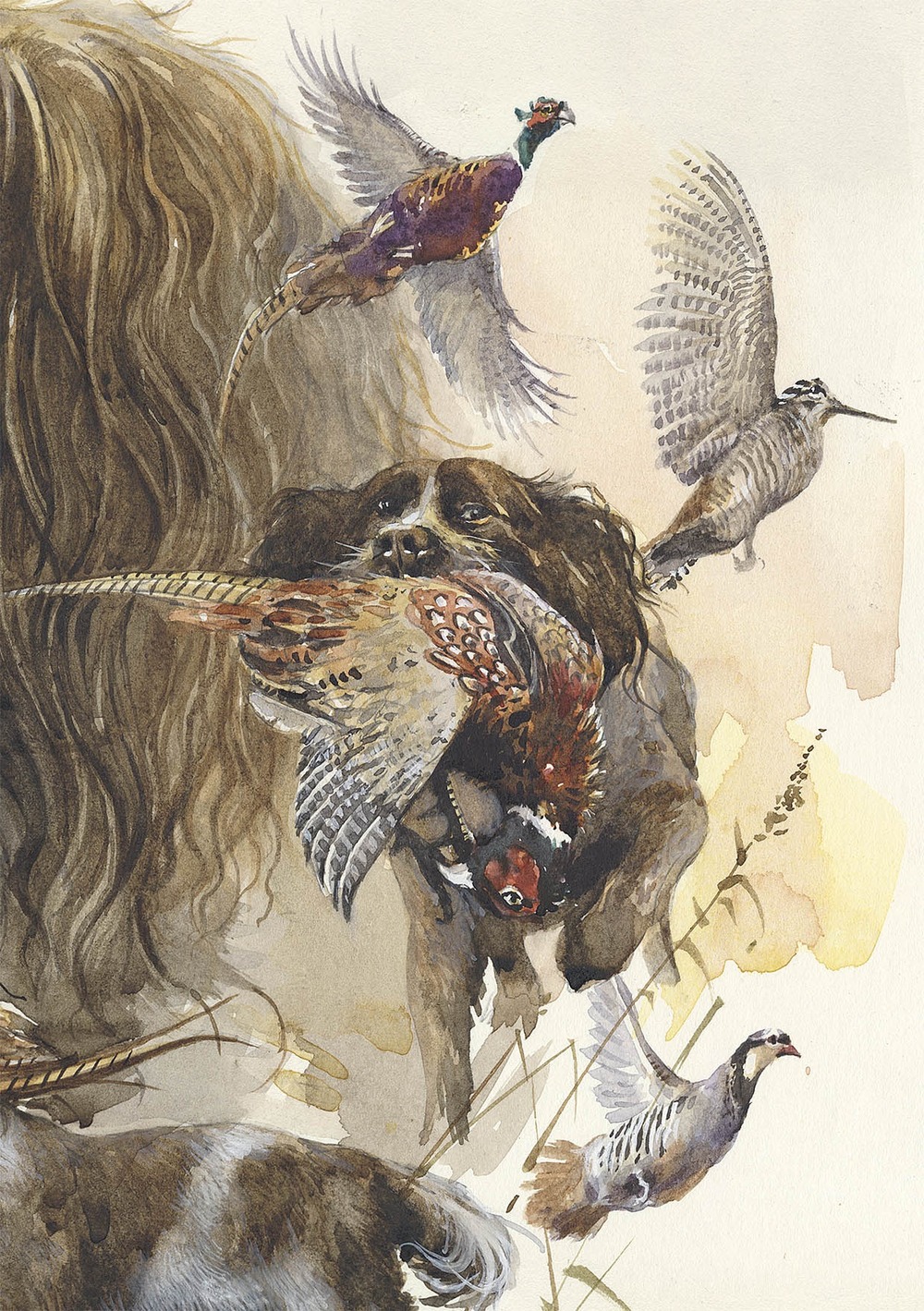
This is a dog shaped by work, so training tends to go best when it feels like a shared project. Short sessions, clear markers, and rewards that matter to the dog (food, play, access to sniffing) usually outperform heavy repetition.
If you are building a reliable recall, remember that scent can be a powerful competing motivator in gundog types. It is not stubbornness so much as a very strong behavioural habit, shaped by genetics and reinforcement history. Plan your environments, use long lines early, and build success gradually.
Mental exercise counts. Nosework-style games, scatter feeding in grass, and hide-and-seek with toys can take the edge off restlessness in a way that an extra kilometre of jogging sometimes does not.
Health considerations and sensible prevention
No single health issue defines the Saint-Usuge, but like many medium to larger athletic dogs, discussions commonly include hip dysplasia risk. Hip dysplasia is influenced by inheritance and environment, and is confirmed via imaging rather than guesswork from the way a dog walks on one particular day.5
Floppy ears also mean you should be alert to irritation and infection, particularly after water exposure. The aim is not constant cleaning, but appropriate, gentle maintenance based on what your dog actually needs.4
- If the ears look red, painful, or smelly: skip home cleaning and book a vet check, cleaning can make some problems worse.4
- For routine cleaning: avoid cotton buds inside the canal, and use a vet-recommended ear cleaner and soft cotton pads instead.4
- For hips and joints: keep dogs lean, avoid sudden spikes in high-impact exercise for young dogs, and ask breeders about health screening and results where available.5
Life expectancy is often described in the low-to-mid teens, but it is best treated as a general guide, not a promise. Genetics, lifestyle, and preventative care all matter.3
Grooming, feeding, and what “moderate maintenance” really looks like
Most owners will find the coat manageable with regular brushing a few times a week, plus extra attention to feathering if burrs or grass seeds are common in your area. Check paws, ears, and armpits after walks in long grass.
For feeding, the most useful principle is to choose a diet that is clearly complete and balanced for your dog’s life stage, and then adjust portions based on body condition and activity. Ingredient lists can be misleading if they are the only thing you use to judge quality.6
If you are comparing brands, WSAVA’s practical guidance focuses on transparency, formulation expertise, and quality control, rather than marketing claims. It is also worth noting that WSAVA does not “approve” particular brands, despite how often that phrase appears online.6, 7
Final thoughts
The Saint-Usuge Spaniel makes the most sense when you see it as a thoughtful blend of companion and working gundog. It is a breed with a delicate history, rebuilt through careful stewardship, and still closely tied to the kind of life where sniffing, moving, and learning are part of the everyday.2
If your household can offer steady training, daily activity, and a bit of coat and ear care, the breed’s calm biddability and field-bred focus are often what people fall in love with, quietly, over time.
References
- Wikipedia (DE): Epagneul de Saint-Usuge
- Wikipedia (EN): Saint-Usuge Spaniel
- Société Centrale Canine (SCC): Épagneul de Saint-Usuge breed standard (PDF)
- Cornell University College of Veterinary Medicine: How to clean your dog’s ears
- Australian National Kennel Council (ANKC) and Australian Veterinary Association (AVA) accredited scheme (AMCV): Hip dysplasia information
- World Small Animal Veterinary Association (WSAVA): Global Nutrition Guidelines
- Dog Food Advisor: All you need to know about WSAVA (including note that WSAVA does not approve brands)
- Club de l’Épagneul de Saint-Usuge (France): Official club site
- Club de l’Épagneul de Saint-Usuge: Documents and downloads