

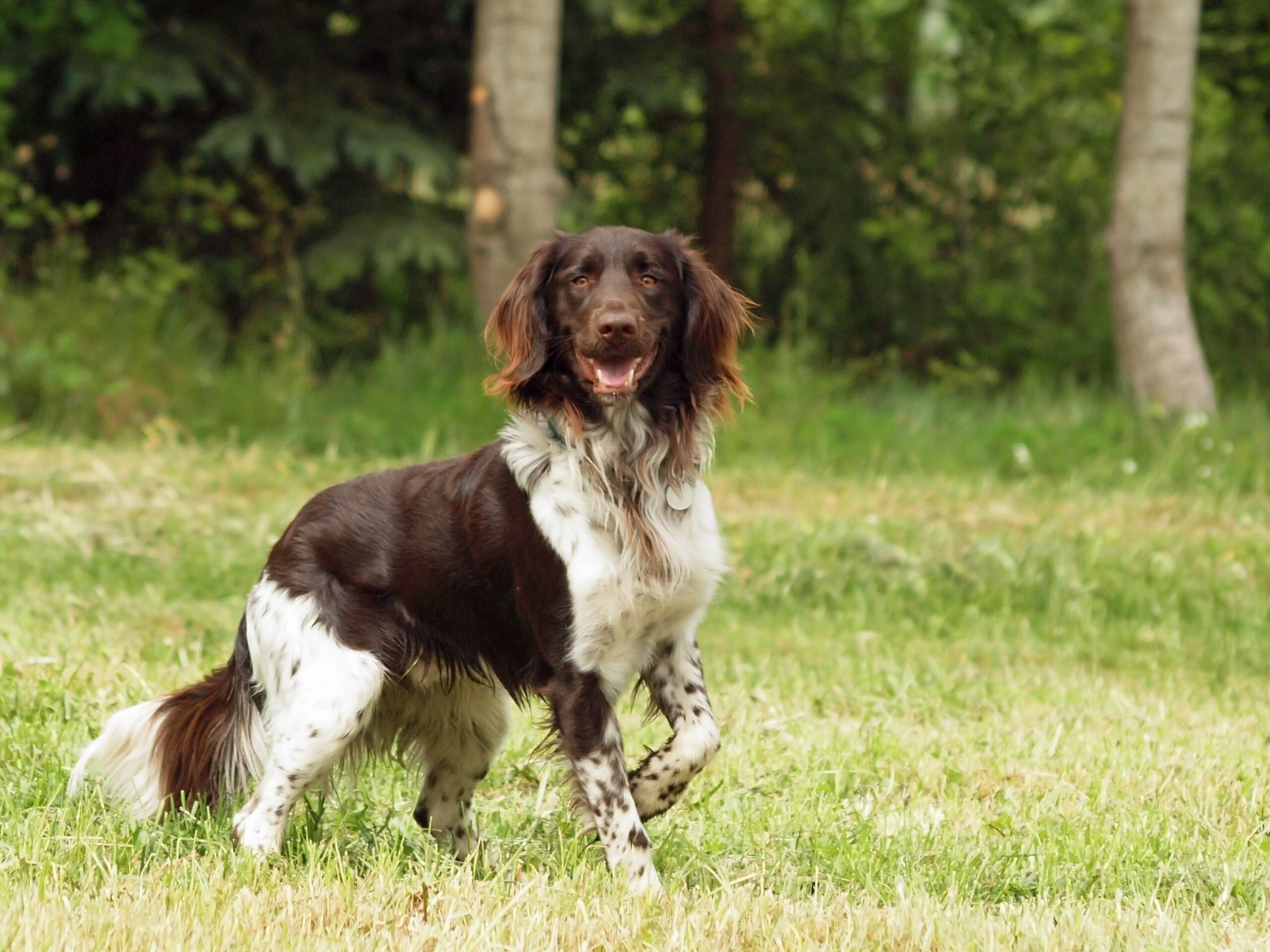
Sometimes you notice a dog at the park that looks like a spaniel and a pointer at the same time, feathered legs, soft eyes, a coat built for rain, and an energy level that does not quite switch off. Or you meet one through a friend who hunts, hikes, or simply runs a busy household, and you wonder how a dog can be both so responsive and so driven.
The Small Münsterländer Pointer sits in that space between “companion” and “working dog”. Many people first encounter the breed because they want a capable all-rounder for the outdoors, then realise the bigger question is whether they can offer the day-to-day structure this dog tends to need. They are not a low-effort pet, but they are often a deeply satisfying one for the right home.
What follows is a practical look at what the breed was developed to do, how that shows up in modern life, and what it means for training, exercise, health, grooming, and feeding.
At a glance
- Breed category: versatile gundog
- Origin: Germany
- Size: medium
- Typical lifespan: around 12 to 14 years1
- Exercise needs: high, daily physical work plus mental work
- Coat: medium length, dense, straight to slightly wavy, feathering on legs and tail2
- Common sticking points: boredom, recall around scents and wildlife, ear care, joint management
History and origin
The Small Münsterländer (often called the Kleine Münsterländer in Germany) developed as a practical hunting dog, shaped by what worked in field, forest, and water rather than by fashion. German hunters valued a dog that could search, point, track, retrieve, and stay biddable enough to work closely with a person across changing terrain.
Breed organisation and written standards came later, once enthusiasts began formalising what they wanted to preserve. Records commonly note the formation of an association and studbook in the early 1900s and the publication of a breed standard in 1921, with Edmund Löns frequently mentioned as an influential advocate for the breed’s development and promotion.3
Physical characteristics
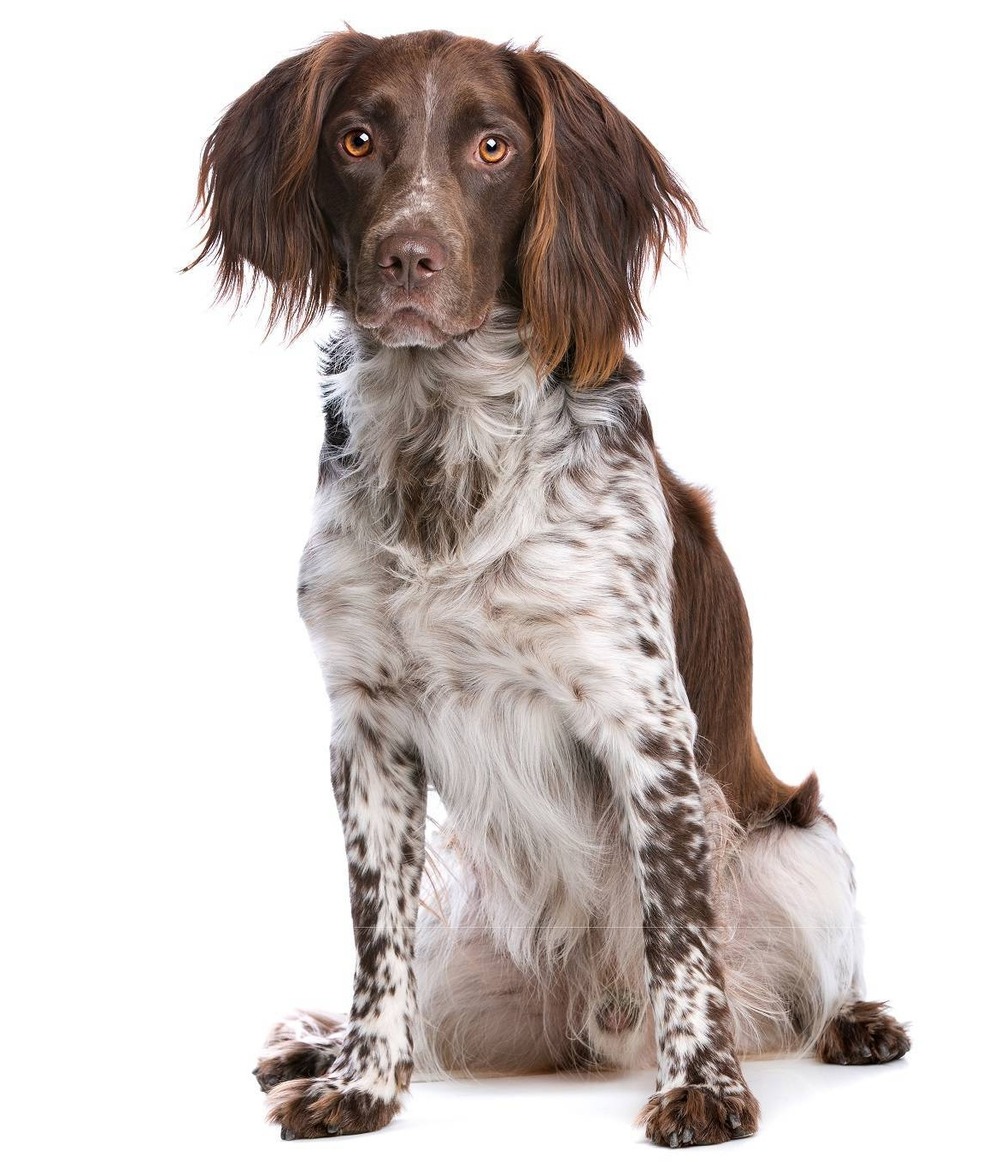
This is a medium, athletic gundog built for endurance rather than bulk. Depending on which kennel club standard you are reading, you will see slightly different ranges, but the overall picture is consistent: balanced proportions and functional movement.
For example, the FCI standard lists height at the withers as 54 cm for males and 52 cm for females, allowing a 2 cm variation either way.2 Other registries use inch-based ranges and slightly different ideals, which can explain why the same dog might be described differently across countries.4
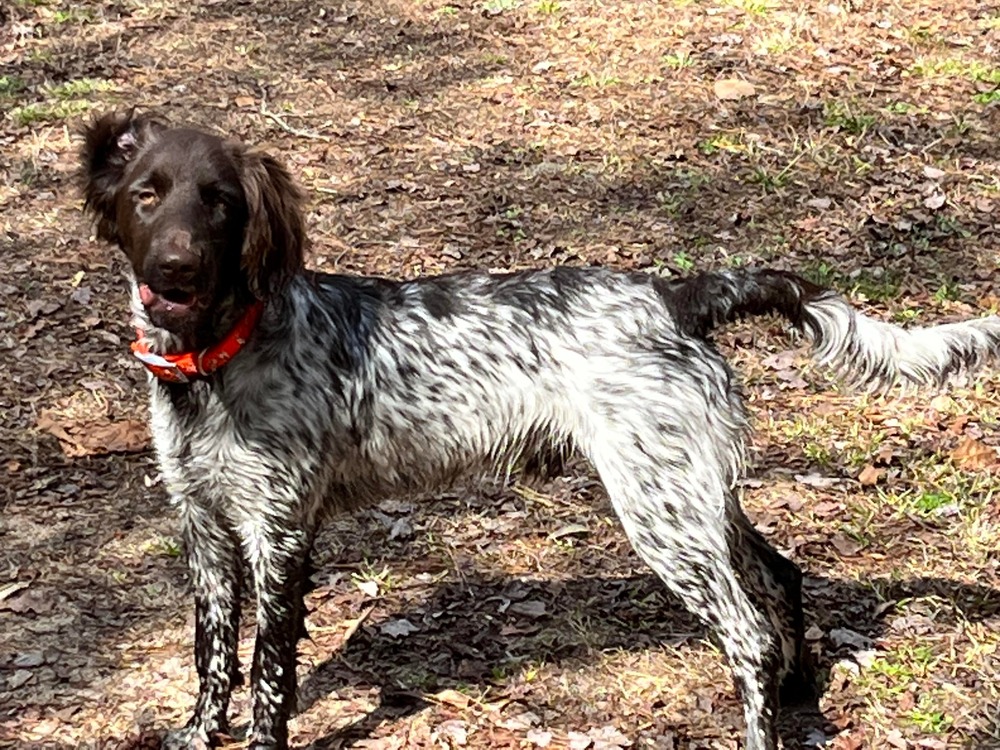
The coat is medium length and weather-resistant, typically brown and white in patches, ticking, or roan. Feathering on the legs and tail is part of the breed’s working design, offering protection in scrub and cold water without becoming a heavy, dragging coat.2
Temperament and behaviour in everyday life

A well-bred, well-raised Small Münsterländer is often described as friendly, intelligent, and highly trainable. In practical terms, this usually means they notice patterns quickly, respond strongly to reinforcement, and can become excellent at “reading” routines. The flip side is that they can also become very good at rehearsing unwanted habits if the household is inconsistent.
Many owners are surprised by how much the dog’s nose shapes the day. In a breed developed for hunting and retrieving, scent can easily become the main event, and that can show up as pulling, scanning, and selective hearing when an interesting trail appears. A reliable recall is a project, not a personality trait.
With children and other pets, temperament is less about a fixed label and more about management and learning history. Early, positive exposure helps, and so does giving the dog an outlet for its working instincts so they are not expressed as pestering, chasing, or rough play in the living room.
Training and exercise needs
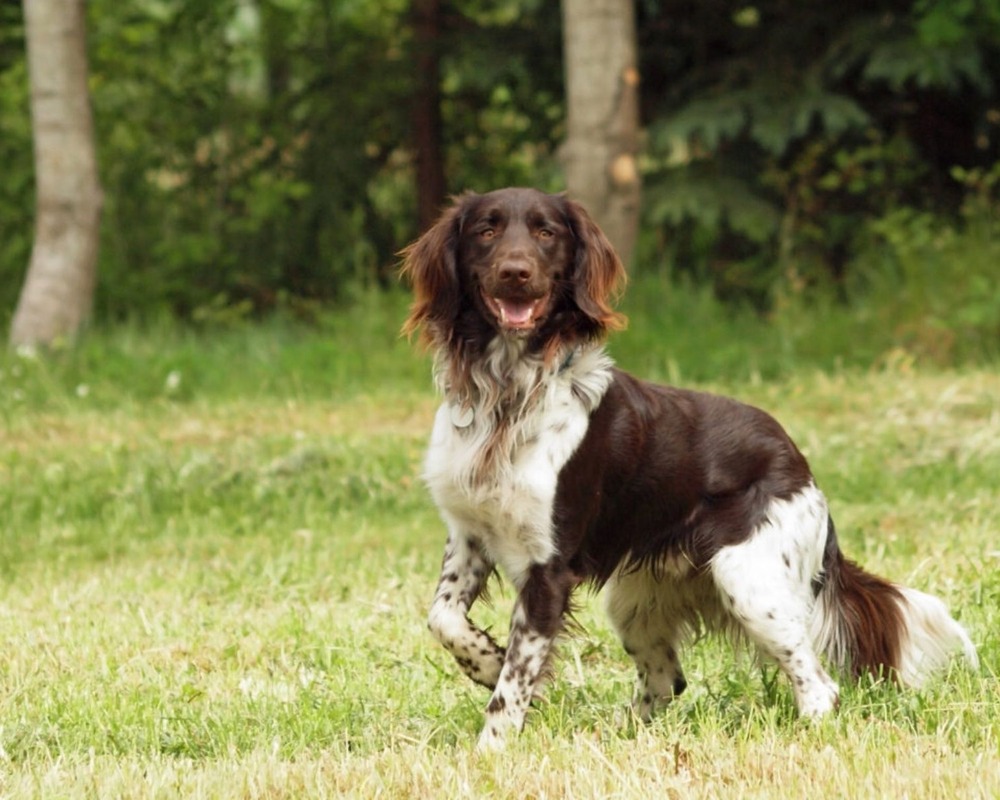
For this breed, exercise is not just about wearing them out. A long run can help, but a dog that was bred to problem-solve outdoors often needs a blend of movement and thinking. The most successful training plans tend to treat the dog as a capable learner, then keep things clear, reward-based, and consistent.
The RSPCA recommends reward-based training built around positive reinforcement, and advises avoiding punishment-based or aversive methods and equipment, both for welfare and for the risk of worsening behaviour problems.5
Useful outlets for many Small Münsterländers include:
- Sniff-heavy walks where the dog is allowed to forage and investigate, balanced with short periods of loose-lead walking.
- Retrieving games with clear rules, especially if you swap “endless throwing” for a few thoughtful reps, then a rest.
- Field-style skills, tracking games, or scent work that lets them use their strongest drive in a structured way.
- Training sessions that stay short and upbeat, with the aim of building habits you can use outdoors.
If you are deciding whether the breed suits your home, a helpful test is this: can you provide daily exercise when the weather is ordinary, when you are tired, and when life is busy? Consistency matters more than intensity.
Health and lifespan
Small Münsterländers are generally considered robust, with many living into their early teens, often quoted as around 12 to 14 years.1 Like many medium sporting breeds, they can still be affected by issues that benefit from early attention and sensible management.
Hip dysplasia and joint care
Hip dysplasia is a developmental condition where the hip joint does not fit or develop properly, contributing to wear, pain, and reduced function over time. Genetics play a role, but factors like growth rate, body condition, and exercise can influence how it shows up for an individual dog.6 Keeping a lean body condition and asking your vet about appropriate conditioning work is often more effective than chasing supplements alone.
Ear infections
With drop ears and an active outdoor lifestyle, some dogs are prone to ear irritation or infection, especially if moisture, debris, or wax builds up. The key is routine checking and acting early. If you notice redness, odour, head shaking, or sensitivity, book a vet visit promptly rather than relying on home remedies.7
Choosing a breeder and screening
Health screening varies by country and by kennel club culture, but it is reasonable to ask what testing is done, what issues are seen in the line, and how dogs are selected for temperament and working stability. A good conversation here can tell you more than a glossy puppy photo ever will.
Grooming and maintenance
The coat is designed to be functional, but it still needs regular care. A weekly brush is a good baseline for most dogs, with extra attention behind the ears, on the feathering, and around the tail where tangles can set in quietly.
During heavier shedding periods, brushing more often helps keep hair off furniture and reduces matting. After muddy runs or swimming, a rinse and thorough dry (including ears) can prevent skin and ear problems building over time. Check for grass seeds and burrs if your dog runs in long grass.
Diet and nutrition
There is no single perfect diet for every Small Münsterländer, but the basics are steady. This is an active dog, so you want a complete, balanced food that supports muscle, recovery, and joint health, then adjust portions to keep the dog lean. If your dog does serious work (long days hunting or high-volume sport), ask your vet about energy density and meal timing.
It is also worth being clear on human foods that are risky for dogs. In Australia, the Australian Veterinary Association lists several common hazards including chocolate, grapes and raisins, onions and garlic, alcohol, and xylitol (a sweetener), among others.8 If you have visitors who like to share snacks, it helps to set house rules early, because this breed is often quite persuasive around food.
Living with a Small Münsterländer, what tends to work
These dogs can be wonderful in an active home, but they do best when life has shape. If they know when they will work, when they will rest, and what earns reinforcement, their intensity becomes easier to live with.
A few practical patterns that often help:
- Teach an off-switch by reinforcing calm behaviour at home, not only high-energy play.
- Use management outdoors: long lines, secure areas, and staged freedom while recall is developing.
- Give the nose a job, such as tracking games or scent work, rather than trying to suppress sniffing altogether.
- Keep training reward-based and coherent across the household so the dog is not learning four different rulebooks.
In short, the Small Münsterländer Pointer is often at its best when it gets to be what it is: a versatile working dog with a strong relationship to its people.
References
- Wisdom Panel, Small Münsterländer breed overview (height, weight, lifespan)
- Kleine Münsterländer Group (GNA), FCI breed standard (rev. 14.11.2019)
- Kleine Münsterländer Group (GNA), history of the Kleine Münsterländer
- United Kennel Club (UKC), Small Münsterländer breed standard
- RSPCA Knowledgebase, training recommendations and guidance on reward-based methods
- American Kennel Club, Hip dysplasia in dogs (overview, signs, management)
- Merck Veterinary Manual, ear infections in dogs (signs and treatment overview)
- Australian Veterinary Association, substances and foods toxic to pets