

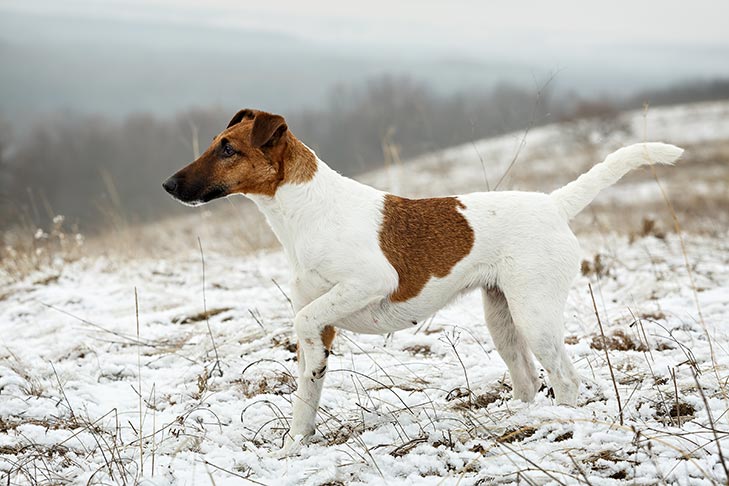
People often start looking into the Smooth Fox Terrier after a particular kind of moment: you meet one on a walk and it seems to have endless energy, or you see a small white dog with a sharp, tidy outline in the show ring and wonder how a dog that compact can look so ready to move.
It is easy to assume they are simply “a small dog with a big personality”. That is part of the picture, but it misses the practical reality of living with a terrier that was shaped to think quickly, chase readily, and keep going. With a Smooth Fox Terrier, the day-to-day experience is usually less about “having a cute little companion” and more about building the sort of routine that keeps a smart, active dog comfortable in modern life.
When their needs are met, they can be engaging, funny, and deeply companionable. When they are not, the same traits that make them charming can show up as constant noise, impulsive chasing, or a dog that always seems to be scanning for the next job.
History and origin
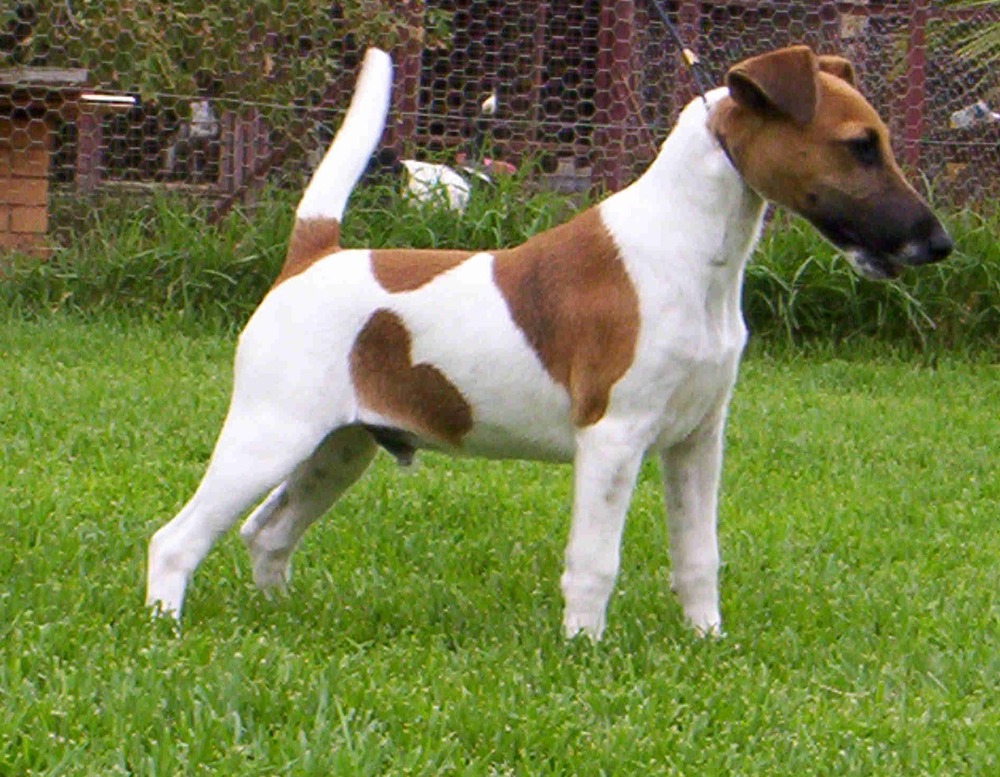
The Smooth Fox Terrier is one of the oldest fox terrier types, developed in Great Britain for work alongside hounds. The role was practical: when a fox went to ground, an “earth dog” could follow the scent, bark to indicate location, and help flush the animal from its den. Over time, breeders favoured a predominantly white coat so the dog was easier to distinguish from a fox during a hunt.1
These dogs were also valued around farms and stables as vermin controllers. That background helps explain why many Smooth Fox Terriers still show quick pursuit behaviour, a love of digging, and a tendency to stay busy unless you give them something better to do.2
Breed clubs and formal standards took shape in the late 1800s, and the “Fox Terrier (Smooth)” standard remains closely tied to the idea of a small dog built for function, soundness, and athletic movement.1, 3
Physical characteristics
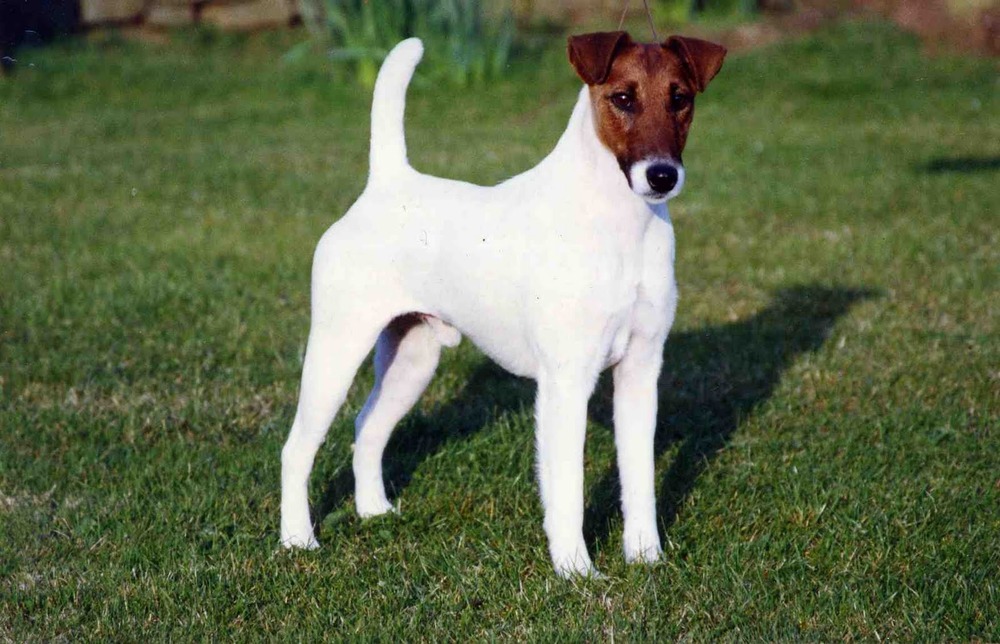
The Smooth Fox Terrier is compact, squarely built, and athletic, with a short, dense, smooth coat. They are typically around 36 to 39 cm at the shoulder (about 14 to 15.5 inches). Many sit in the 7 to 8.5 kg range, with individual variation depending on sex and overall build.3, 4
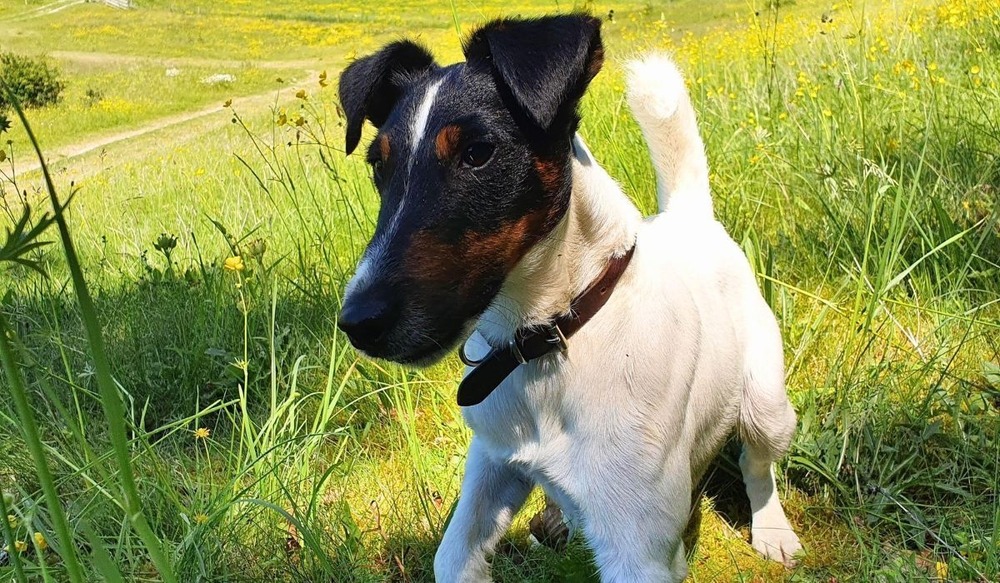
Colour is usually predominantly white with black and or tan markings. Ears are small and V-shaped, folding forward close to the cheek, and the expression is often described as keen and lively in breed standards.1, 3
If you are comparing a Smooth Fox Terrier with a Wire Fox Terrier, the overall shape and working heritage are closely related. In many contexts, the main difference is the coat type, although grooming needs and coat management can feel very different in practice.2
Temperament and behaviour in everyday life
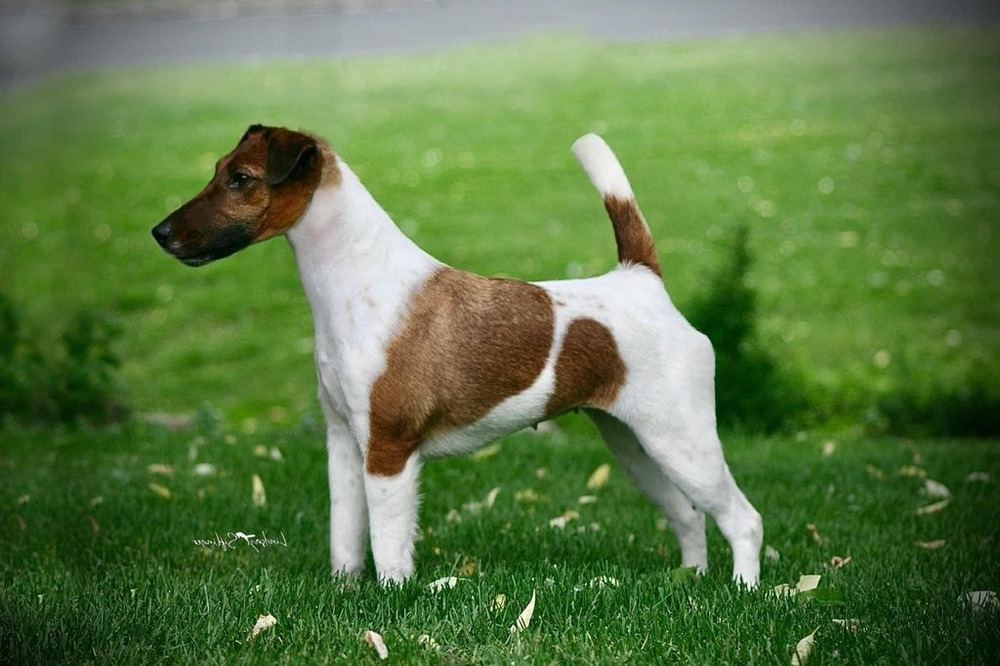
Smooth Fox Terriers are often described as alert, active, and companionable. Many are quick to notice changes in their environment, quick to learn patterns, and quick to offer behaviour that “works”, whether that is sitting nicely for a treat or barking at movement beyond the fence.2, 3
That alertness can be a delight, and it can also be tiring if you expected a dog that self-settles. A Smooth Fox Terrier often does best with a home routine that includes planned activity and rest, rather than relying on the dog to “switch off” on their own.
With children, the breed can be friendly and playful, but supervision matters. Their style of play can be bouncy and fast, which is not always a good match for toddlers. Teaching children how to pause play, offer calm pats, and avoid chasing games inside can make a big difference.
With other animals, early socialisation helps, but genetics still count. Many Smooth Fox Terriers have a strong drive to chase smaller animals outdoors, and some will test boundaries with unfamiliar dogs if they have not practised calm greetings. It is not “bad behaviour” so much as terrier behaviour, and it responds best to patient training and sensible management.2
Training and exercise needs

Training tends to go well when it is consistent, reward-based, and woven into normal life. Short sessions suit this breed, especially if you keep the reinforcement clear and the tasks varied. Many Smooth Fox Terriers enjoy learning, but they are also independent, so the question is often not “can they learn it?” but “is it worth it to them?”.2
Exercise needs are best understood as a mix of physical movement and mental work. A daily walk is important, but for many individuals it is not sufficient on its own. Sniffing time, recall games (in safe areas), basic obedience practice, and simple enrichment can reduce the “always on” feeling that owners sometimes describe.
It helps to plan for the realities of prey drive. In many homes, that means:
- Lead or long-line walking in open areas if your dog is likely to chase wildlife or cats.
- Secure fencing, because some will climb, dig, or squeeze through gaps.
- Teaching “leave it” and “come” as skills you practise, not just commands you use in an emergency.
Health and lifespan

Many Smooth Fox Terriers live into their early to mid teens, with breed sources commonly describing a lifespan of 12 years or more.1, 3
Like any breed, they can be predisposed to particular issues. Two areas that are worth discussing with your vet and breeder are hearing and eyes. White-coated dogs, including some terriers, are represented among breeds where congenital deafness can occur. If there is any concern, vets can use BAER testing to assess hearing.5
Orthopaedic concerns can also show up in small, athletic dogs. One example is patellar luxation (kneecap displacement), which can range from mild, intermittent “skipping” to more persistent lameness. The right approach depends on severity, so it is a conversation to have early if you notice hindlimb oddness or reluctance to jump.6
Preventive care is mostly unglamorous, and that is the point. Regular check-ups, parasite prevention, dental care, and keeping your dog lean are often the things that most strongly shape quality of life over time.
Grooming and maintenance
The Smooth Fox Terrier coat is straightforward: short, dense, and generally easy to keep clean. A weekly brush or grooming mitt is usually enough to lift loose hair and reduce shedding around the house.3
Shedding is typically moderate rather than extreme. Bathing can be occasional, or as needed, with a gentle dog shampoo. Grooming time is also a useful moment to check ears, nails, and skin, particularly if your dog likes pushing through scrub or digging in sandy soil.
If your Smooth Fox Terrier spends time outdoors, get into the habit of quick post-walk checks. Burrs, grass seeds, and minor scrapes can be easy to miss on a small, fast-moving dog with a smooth coat.
Diet and nutrition
Most Smooth Fox Terriers do well on a high-quality diet that is complete and balanced for their life stage. Because they are energetic, it can be tempting to overfeed, especially if training involves plenty of treats. Keeping an eye on body condition, rather than just the number on the scales, is often the most practical guide.7
If you are mixing commercial food with fresh foods, do it thoughtfully. Extra “bits” can unbalance the overall diet surprisingly quickly in a small dog. If you want to use fresh foods for enrichment, small portions and clear boundaries help.
It is also worth knowing a few common household hazards. For example, chocolate can be toxic to dogs, and darker chocolate tends to be more concentrated. Some sugar-free sweets contain xylitol, which can be particularly dangerous. If you suspect ingestion, call your vet promptly.8
Living with a Smooth Fox Terrier
Apartment living can work, but only if the dog’s needs are met outside the flat. These terriers are often fine in smaller homes if they have structured exercise, training, and enough calm time to recover between activities.
Where people tend to struggle is with the mismatch between appearance and reality. A Smooth Fox Terrier can look neat and “easy”, but they are not a low-effort breed. They suit households that enjoy daily engagement, and owners who are willing to practise skills like recall, loose-lead walking, and calm settling as part of ordinary life.
If you are choosing a breeder, look for someone who talks comfortably about health testing, temperament, and why their dogs suit particular homes. Breed clubs can be a useful starting point when you are learning what “typical” looks like, and what might be a red flag.2, 9
Final thoughts
The Smooth Fox Terrier is small, bright, and built to be active. In the right home, that looks like a dog who wants to participate in everything, learns quickly, and brings a steady current of energy to the household.
The key is not trying to dampen those terrier traits, but to channel them. If you can offer consistent training, daily outlets, and a home set up for safe management of chasing and barking, the Smooth Fox Terrier can be a deeply satisfying companion.
References
- The Kennel Club (UK): Fox Terrier (Smooth), Breeds A to Z
- The Fox Terrier Club (UK): Breed info
- The Kennel Club (UK): Fox Terrier (Smooth) breed standard
- United Kennel Club (UKC): Smooth Fox Terrier breed standard
- American Veterinary Medical Association (AVMA): Congenital deafness in dogs and cats
- Merck Veterinary Manual: Patellar luxation in dogs and cats
- WSAVA: Global Nutrition Guidelines
- RSPCA WA: Chocolate toxicity warning for pets
- American Fox Terrier Club: Official site