

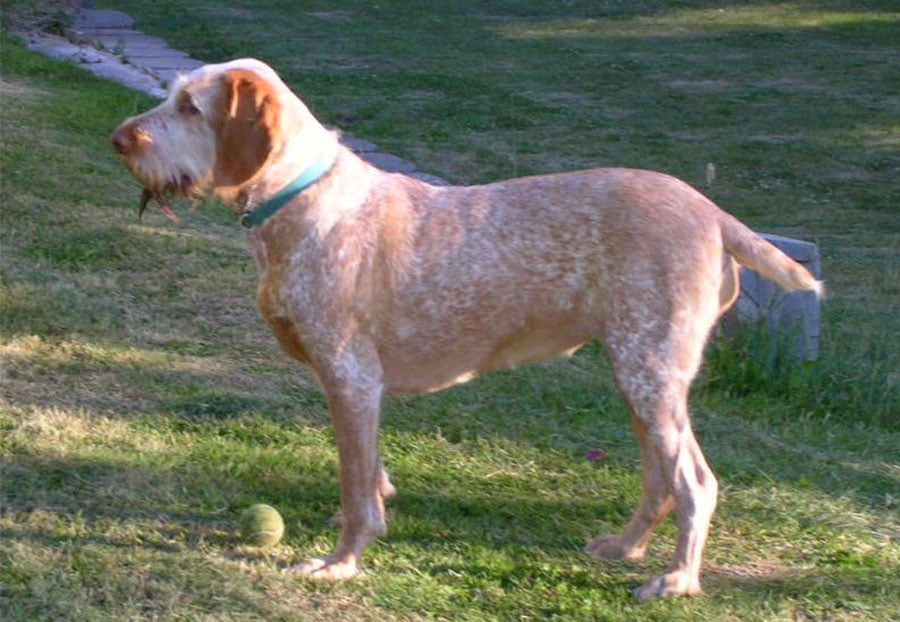
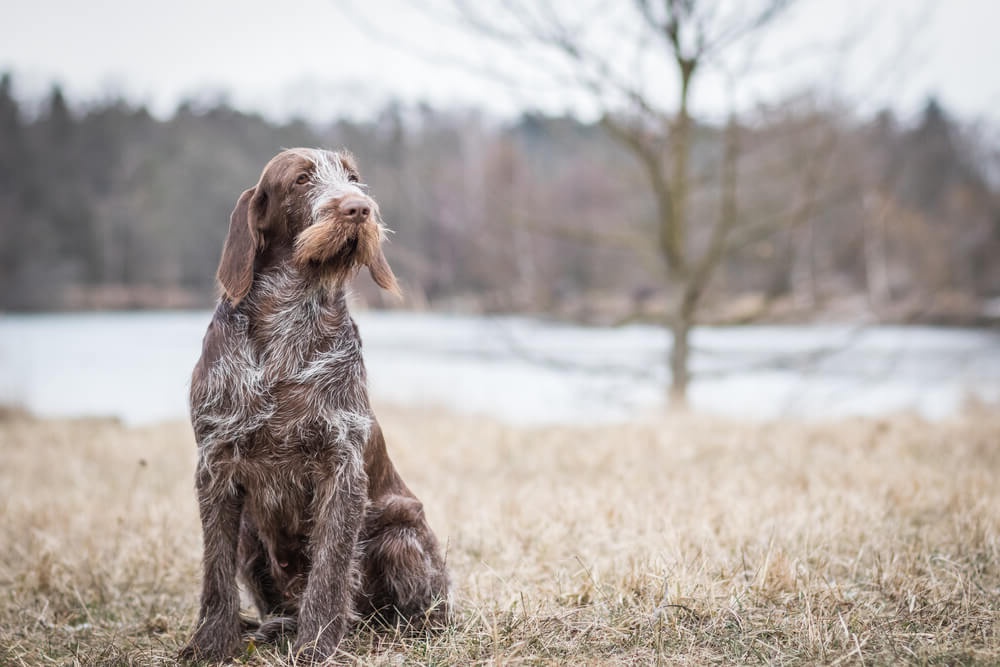
You might come across a Spinone Italiano in a park and do a double take. They have that shaggy, bearded outline and a steady, unhurried way of moving that can read as “older dog” even when they are still young. Then they look up, and you notice the soft expression and the serious eyebrows, and you start wondering what sort of dog this actually is.
People often assume a big, rugged gundog will be intense or sharp, or that a wiry coat means “low maintenance”. With Spinoni, reality sits somewhere more interesting. They are typically gentle, people-oriented dogs with a working background, and that combination affects everything from exercise needs to how they cope with being left out of family life.
If you are considering the breed, or simply trying to make sense of the Spinone you have met, it helps to look at the whole picture: what they were bred to do, how their coat and body are meant to function, and what they tend to need day to day to stay settled and sound.
Spinone Italiano snapshot
Breed group: gundog (pointing dog type). Origin: Italy. General build: solid, squarely built, strong-boned, with a harsh, protective coat and characteristic beard and eyebrows.1
- Height: dogs about 59 to 69 cm, bitches about 58 to 64 cm1
- Weight: dogs about 34 to 39 kg, bitches about 29 to 34 kg1
- Typical temperament: often described as faithful, intelligent, patient and affectionate1
- Life expectancy: many sources cite roughly 12 to 14 years, although population studies can vary by country and sample2
History and what the breed was built for
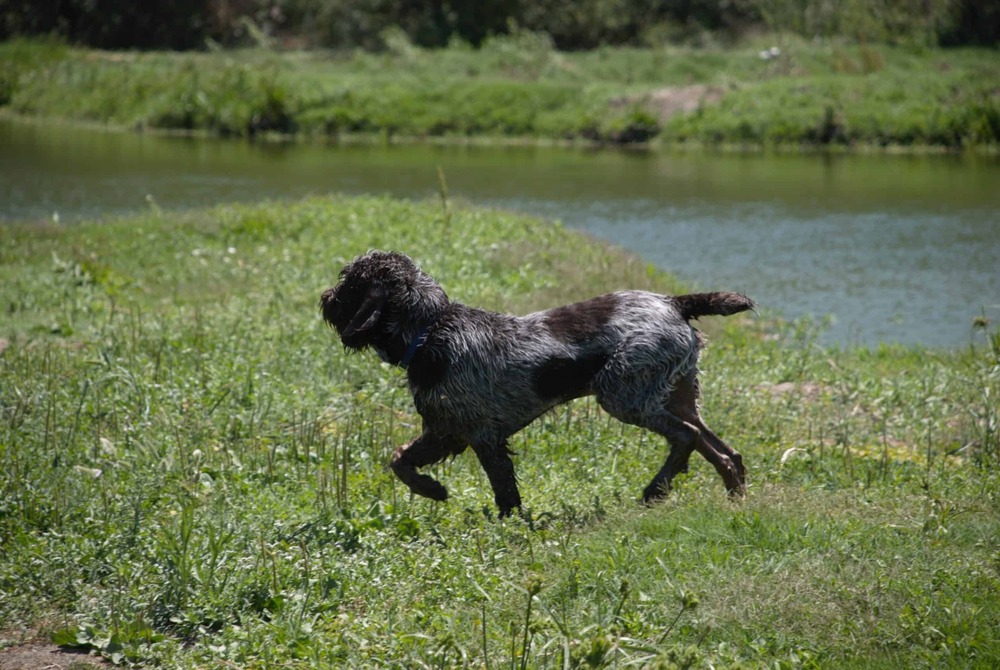
The Spinone Italiano sits in the continental pointing dog family, developed to work methodically across varied terrain and in water. Breed standards focus on a dog that can keep going, stay useful in difficult conditions, and remain workable alongside people for long days.1, 3
That purpose matters in modern homes. Even when a Spinone is not hunted, the instincts that supported field work still show up as a desire to explore scents, to move with a steady rhythm, and to be near their people while they do it. They are not usually a “one quick lap of the block” sort of dog, especially in adolescence.
Physical traits that affect everyday care
The Spinone’s coat is designed to be harsh and protective, rather than silky. It is part of why the breed looks rustic, and it is also why grooming is not just about shedding. A coat like this can hold burrs and grass seeds, especially around the beard, legs and between toes.1, 3
Those long, pendulous ears that give the breed its gentle outline can also reduce airflow to the ear canal. For dogs that swim, splash, or live in humid areas, it is sensible to treat ear checks as routine rather than occasional, even if your dog seems fine.4
It is also worth remembering that “big, solid dog” does not automatically mean “built for heat”. A dense coat, a large body, and an enthusiastic work ethic can increase overheating risk if exercise is not managed carefully in warm weather.4
Temperament and behaviour in real homes

Well-bred Spinoni are typically described as steady, people-oriented dogs: patient, affectionate, and intelligent tends to be the shorthand. Many owners find they are content to potter near the family, then switch on quickly when there is something to do outside.1, 3
It can help to hold two truths at once. A Spinone can be gentle with children and sociable with visitors, and still be a dog with strong environmental curiosity and stamina. When people get into trouble with the breed, it is often less about “bad behaviour” and more about an under-filled day, too little off-lead freedom (where safe and legal), or too much unstructured time without guidance.
If you have other pets, early socialisation and thoughtful management matters. A pointing breed can live peacefully with cats and small animals, but it is not fair to assume instinct will disappear. Aim for calm exposures, reward check-ins, and separate spaces when you cannot supervise.
Training that suits a Spinone
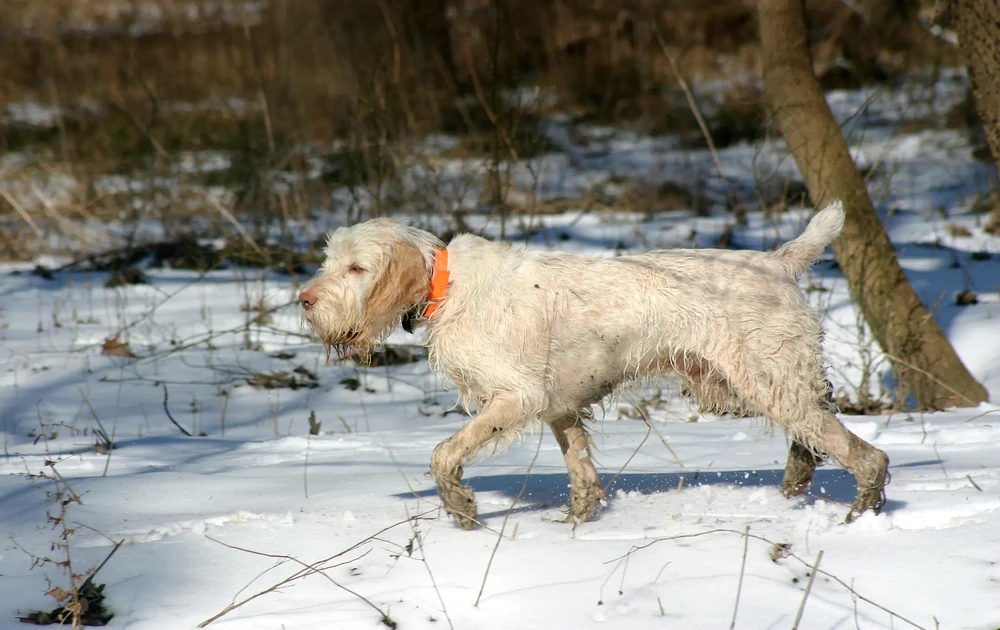
Spinoni generally respond best to training that is clear, calm, and consistent. Harsh corrections often backfire, not because the dog is “being stubborn” in a human sense, but because pressure can reduce confidence and willingness to offer behaviour. Reward-based training tends to produce the most reliable results over time, particularly for recall, loose lead walking, and cooperative handling (ears, feet, grooming).5, 6
Early work on everyday skills pays off: settling on a mat, waiting at doors, coming when called, and being comfortable with mouth and ear checks. Those are the small habits that make a large dog easy to live with.
Because they are smart and environmentally motivated, many Spinoni do well when you combine exercise with training, for example:
- sniff walks with frequent check-ins
- retrieving games that end before the dog becomes frantic
- short scent games at home (find-it, scatter feeding)
- structured off-lead time in safe areas
Exercise, enrichment, and the “slow athlete” misconception
The Spinone’s relaxed expression can mislead people into thinking they are low energy. In practice, many are steady rather than frantic, which is different. They often cope best with daily movement plus mental work, not just occasional big outings.3
For a young Spinone, boredom can look like nuisance behaviours: digging, chewing, counter-surfing, and wandering off to entertain themselves. Building a predictable routine helps. It also helps to vary the “shape” of exercise across the week: some days more walking and sniffing, other days more training and games, and at least one genuine rest day where you deliberately practise calm.
Health: what to watch, and what to screen for
No breed is free of risk, and large, active dogs tend to share a familiar set of concerns. Hip dysplasia is one of the headline issues, and it matters because early management can reduce discomfort and slow secondary arthritis. If you are buying a puppy, ask what health screening is done in the line and request documentation, not just verbal reassurance.7
Eye conditions such as entropion (inward-rolling eyelids) and ectropion (outward-rolling eyelids) are also commonly discussed in the breed. Watery eyes, redness, squinting, or repeated infections are all worth a veterinary check, particularly if they persist.8
Life expectancy figures vary depending on how they are measured. Many breed guides cite around 12 to 14 years, while some population studies report a lower average. Treat the numbers as a guide, then focus on what you can control: weight, fitness, dental health, parasite prevention, and timely veterinary care.2
Grooming and coat care that actually works

A Spinone’s coat is usually described as tough, thick and slightly wiry. That texture is part of how the breed stays protected in scrub and water, and it is worth preserving rather than softening with too much bathing or the wrong products.1, 3
A practical routine for many households looks like this:
- Weekly brush-through to remove debris and prevent tangles, with extra attention to beard, armpits and feathering.
- After bush walks, check for grass seeds around ears, toes, and the beard.
- Bath only as needed, and rinse thoroughly. Frequent shampooing can dry the skin and change coat feel.
- Keep nails tidy. Large dogs can still develop sore feet and altered gait when nails get too long.
If you use a professional groomer, it is worth choosing someone comfortable with wiry coats and hand-stripping where appropriate, rather than automatically clipping everything down. A clipped coat can be easier in the short term, but it may change texture and how the coat performs over time.
Food, weight, and joint-friendly habits
Spinoni love food often enough that weight creep is a real risk, particularly after desexing or when exercise drops in hot weather. Keeping your dog lean is one of the simplest, most effective ways to support joints and overall comfort across their life.
Rather than chasing a perfect “breed diet”, aim for the basics: a complete and balanced food, portions adjusted to body condition, and treats counted as part of the daily intake. If you want to add supplements like omega-3s or joint products, do it in conversation with your vet, especially if your dog has existing orthopaedic issues.
Heat management and warm-weather common sense
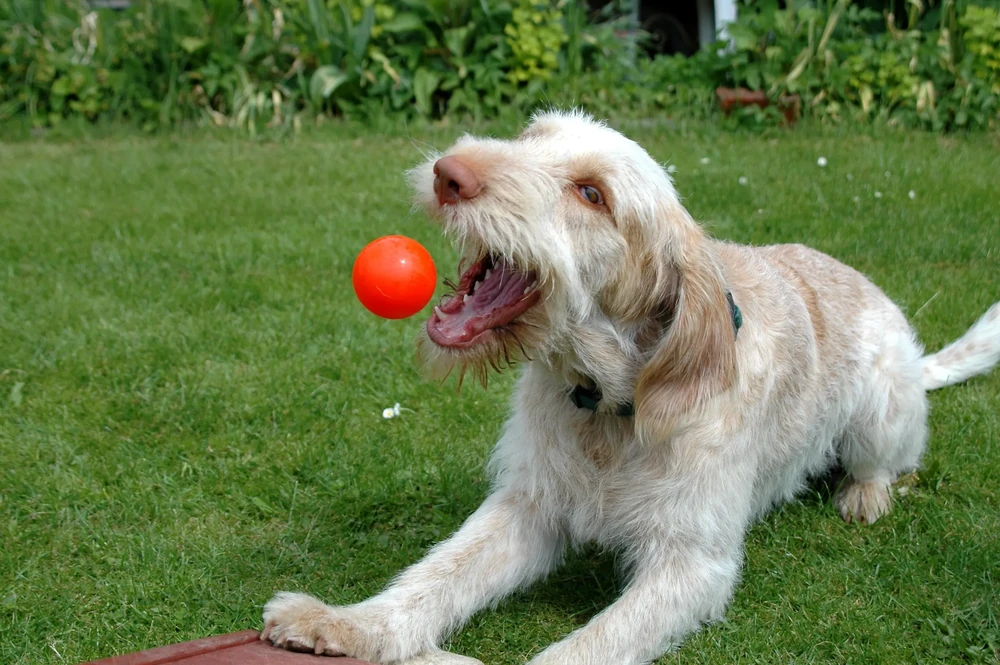
Spinoni can be enthusiastic movers, which is wonderful until the day is hotter than you realised. In Australian summers, the safest approach is often to shift exercise to early morning or evening, choose shaded routes, and use the “five-second pavement check” before heading out.4
Know the early signs of heat stress and heatstroke: heavy panting that does not settle, drooling, bright red or pale gums, vomiting, weakness, wobbliness, or collapse. If you suspect heatstroke, start cooling with tepid or cool water and seek veterinary care immediately. Avoid ice-cold water, which can make things worse.4
Living with a Spinone: who they suit best
A Spinone Italiano tends to suit people who enjoy being outdoors, like a dog that stays connected to the household, and have the patience for steady training and regular grooming. They are often at their best in homes where someone is around a fair bit, or where the dog’s day includes meaningful activity rather than long stretches of waiting.
Apartment living is not impossible, but it is rarely the easiest option. Space matters less than routine, but a large, inquisitive gundog generally does better when they have safe places to walk, sniff, train, and decompress every day.
Final thoughts
The Spinone Italiano is not a fashion breed and not usually a “set and forget” dog. What people love about them is also what they require: closeness to family life, time outdoors, and a practical approach to coat, ears, and general maintenance. If you can offer that, you often end up with a dog that feels like a steady companion, built for long days and quiet evenings, and deeply content when they have a job, even if that job is simply sharing the rhythm of your household.
References
- Dogs NSW (ANKC affiliate), Italian Spinone breed standard
- Wikipedia, Spinone Italiano overview and life expectancy summary (includes cited UK study)
- Fédération Cynologique Internationale (FCI), Spinone Italiano standard listing
- RSPCA Australia, keeping your pet safe during heat (heatstroke prevention and first aid)
- American Veterinary Society of Animal Behavior (AVSAB), position statements on humane training
- RSPCA Knowledgebase, best training methods for dogs
- American Veterinary Medical Association (AVMA), hip dysplasia in dogs
- American College of Veterinary Surgeons (ACVS), entropion in dogs
- American College of Veterinary Surgeons (ACVS), ectropion in dogs