

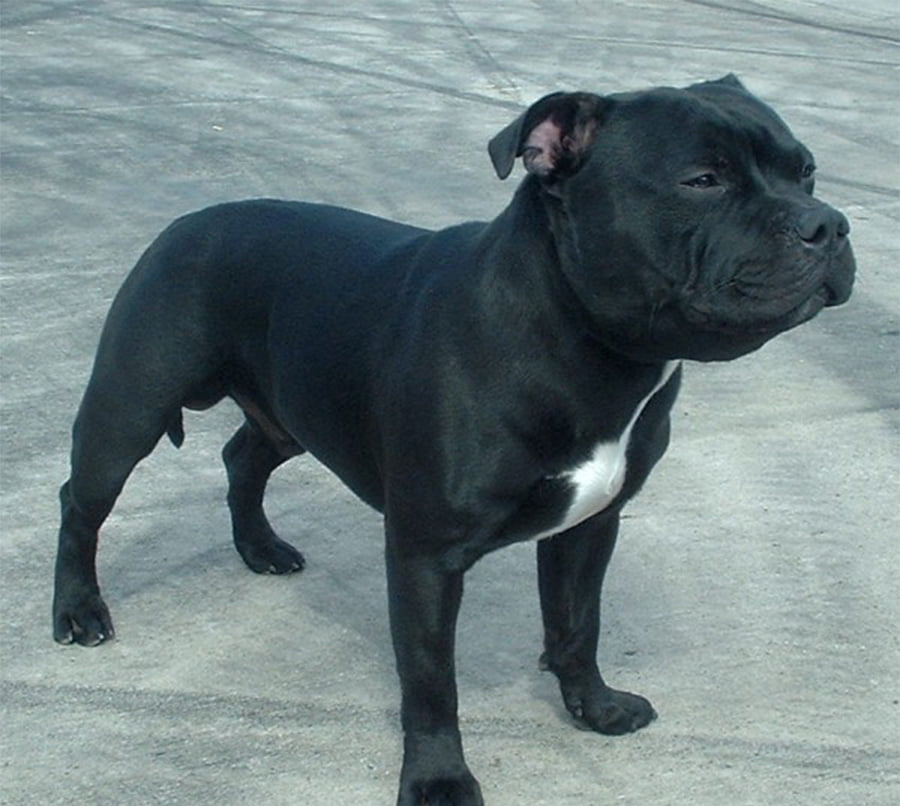
You might first notice a Staffordshire Bull Terrier because of the shape of them, compact, muscled, and always looking ready for action. Or it might be the way they lean into people they trust, as if closeness is part of their normal way of being. Either way, Staffies have a habit of making an impression, and then raising practical questions once you live with one.
A lot of the confusion around the breed comes from mixed messages. People see a powerful jaw and a broad head and assume the dog must be hard to handle. Others repeat old nicknames and assume the breed is automatically perfect with children. In real homes, it is usually more nuanced than either story. A well raised Staffy can be a steady, affectionate companion, but they still need thoughtful training, outlets for energy, and sensible management around other dogs.
What matters most is not the label, but the day-to-day experience: how you set the dog up to succeed, what you reinforce, and whether the household can genuinely meet the breed’s needs.
Quick breed snapshot
Staffordshire Bull Terriers are a small to medium terrier breed, originally developed in the United Kingdom. The breed standard describes a dog that is muscular, active, and agile, with a short, smooth coat and a balanced build for its size.1
- Height: typically 36 to 41 cm at the withers
- Weight: dogs about 13 to 17 kg, bitches about 11 to 15.4 kg
- Coat: short, smooth, close
- Common colours: red, fawn, white, black, blue, brindle, and combinations with white (some colours are considered undesirable in the standard)
- Typical lifespan: around 12 to 14 years
Those figures are a guide, not a promise. Individuals vary, and a dog can still be “within type” while sitting a little above or below the numbers.1
Where the Staffy came from, and why it still matters
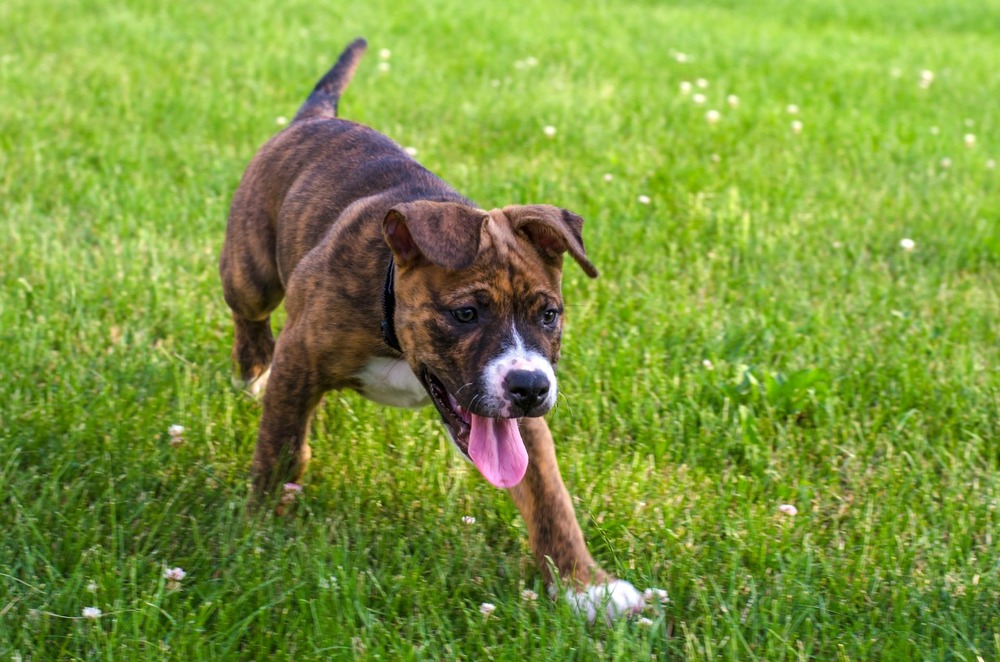
The Staffordshire Bull Terrier’s early history sits in 19th-century Britain, where bull and terrier types were bred for strength and determination, then later became companion animals as blood sports declined and society changed.2
That background does not mean a modern Staffy is “born aggressive”, but it does help explain a few common traits owners recognise quickly: enthusiasm, physical confidence, and a tendency to go all in when something feels exciting. In practice, this is why early socialisation and steady training can make such a difference. It is less about “fixing” the breed, and more about giving a powerful little athlete good habits to fall back on.
Appearance and those “unique traits” people talk about

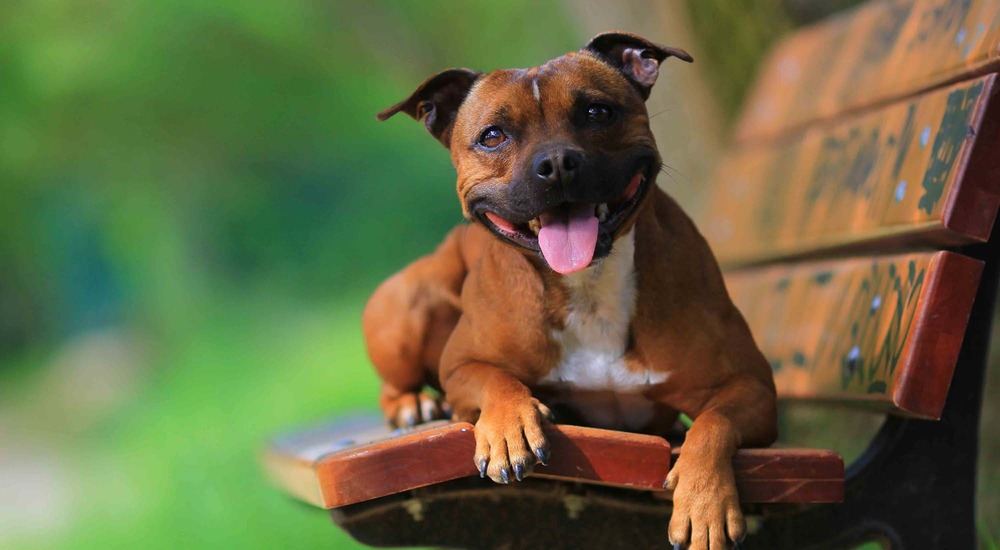
A Staffy is often described as “big” even when they are not tall. That comes from the broad skull, pronounced cheek muscles, strong neck, and a compact body that carries a lot of muscle for its frame.1
Ears are commonly rose or half-pricked, the tail is medium length and tapers, and the coat is short and close, which keeps grooming simple but does not make them a zero-shed dog.1
If you are choosing a puppy, it is worth remembering that the breed standard is not just about looks. It repeatedly emphasises soundness and avoiding exaggerations that can harm welfare, which is a useful mindset for owners too.1
Temperament in real homes: affectionate, energetic, sometimes intense
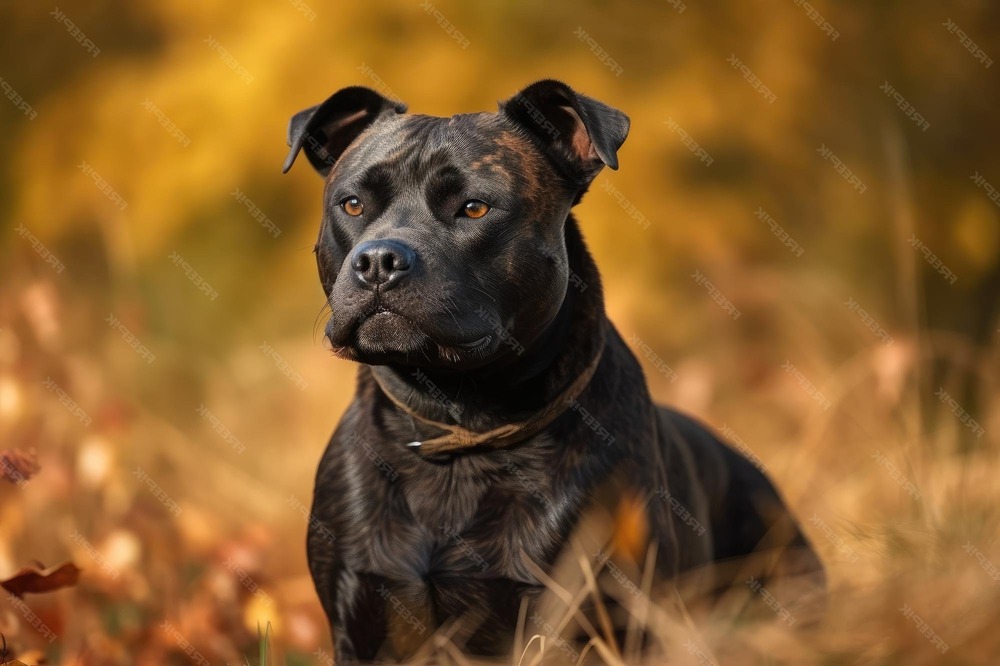
The breed standard highlights intelligence, affection, and reliability with people, including children.1 Many owners experience Staffies as highly people-focused dogs that prefer being near the action, whether that is a walk, a family gathering, or simply moving from room to room with you.
At the same time, it helps to hold two truths at once:
- Staffies can be wonderful family companions when they are well raised and well managed.
- They can also be physically strong, excitable, and sometimes pushy in play, particularly as adolescents.
That second point is not a character flaw. It is simply part of living with a robust terrier type dog. For families with children, the practical takeaway is supervision and teaching gentle handling on both sides. Even very tolerant dogs can be overwhelmed by rough play, and even friendly Staffies can knock over a small child without meaning to.3
Training and socialisation that actually works

Most Staffies respond well to training that is clear, reward-based, and consistent. The RSPCA’s guidance is strongly in favour of positive reinforcement and avoiding aversive methods, because punishment can worsen behaviour problems and does not teach the dog what to do instead.4
Socialisation is often talked about as “meeting lots of dogs”, but it is broader than that. It is about helping a puppy learn that new people, surfaces, sounds, handling, and everyday surprises are safe and manageable. The RSPCA notes that puppies have a critical socialisation period roughly between 3 and 17 weeks, and that experiences during this window can shape behaviour into adulthood.5
Practical ways to build confidence without overwhelming your puppy include:
- Short, calm exposures to new environments, paired with treats or play.
- Gentle handling practice (ears, paws, mouth) so grooming and vet checks are less stressful later.6
- Structured puppy preschool or well-run social sessions where health and safety are taken seriously.5
For adult rescues, the same principles apply, just at a slower pace. Look for small wins, repeat what goes well, and do not rush the dog into situations that consistently tip them over threshold.
Exercise and enrichment: more than “a walk around the block”
Staffies are often described as apartment-friendly, and many do cope well with smaller homes. The catch is that they still need daily exercise, and just as importantly, they need time to use their brain and senses.
The RSPCA highlights that enrichment includes opportunities to sniff, play, and move, and that physical enrichment often supports mental wellbeing too.7
In a typical week, many Staffies do well with a mix of:
- Daily walks with sniff breaks and time to decompress.
- Short training sessions (a few minutes at a time) that work on skills like recall, loose lead walking, and settling on a mat.
- Games at home such as scent searches, food puzzles, and tug with clear rules.
Be mindful of heat. Short-coated dogs can struggle in hot weather, and dogs cool themselves mainly through panting, so exercising early or late in the day is often safer during warmer months.8
Health: what to watch for, and what to ask breeders
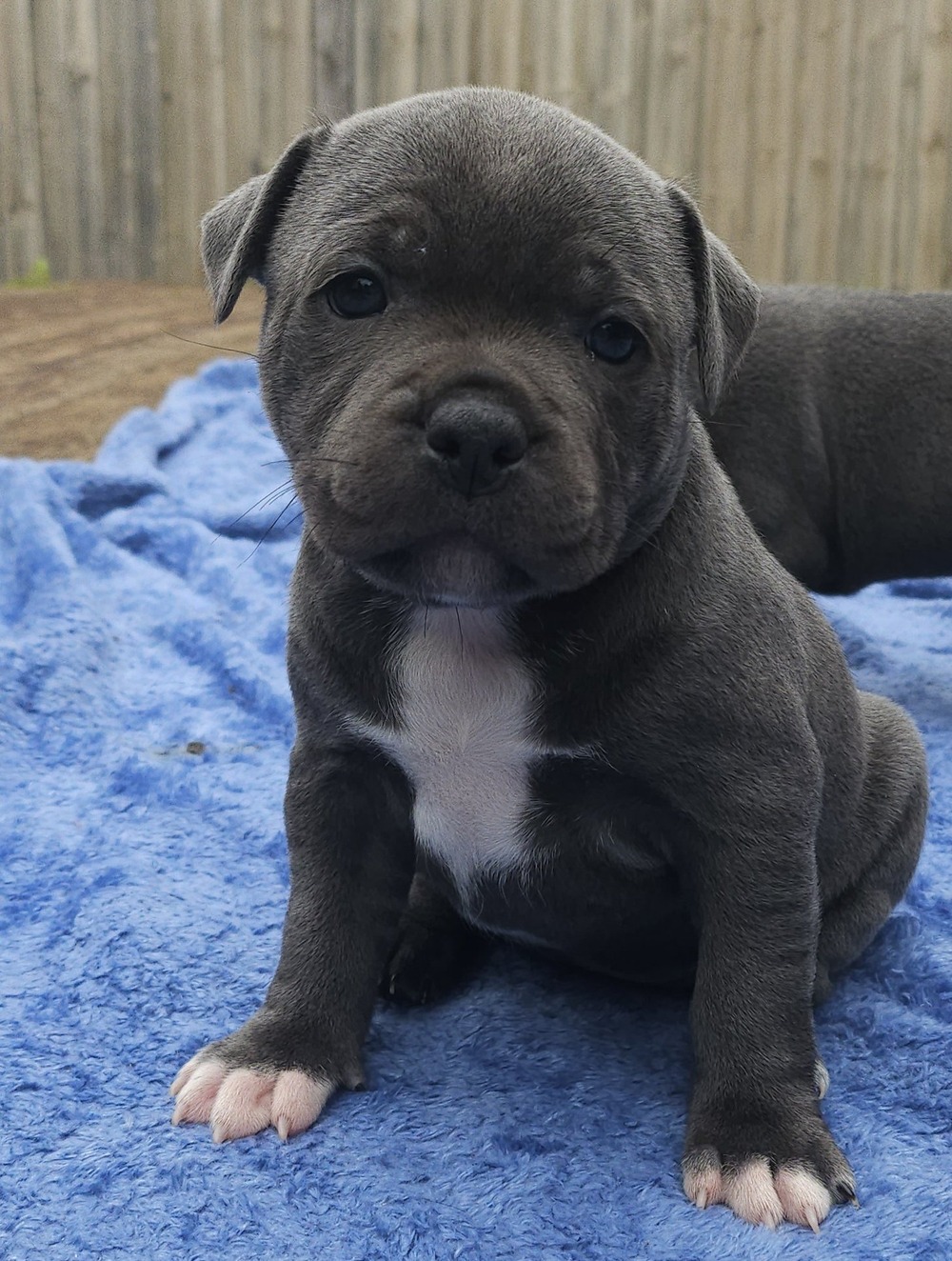
Staffies are often robust dogs, but like any breed they can have inherited conditions. Commonly discussed concerns include hip dysplasia and several eye conditions. In UK breed health information, hereditary cataracts and L-2-hydroxyglutaric aciduria (L-2-HGA) are specifically noted, along with eye screening and DNA testing for some conditions.2
If you are buying a puppy, ask what health screening has been done on the parents, and whether results can be shown in writing. A good breeder will be comfortable talking through test results, what they mean, and how they reduce risk without claiming to guarantee perfect health.
For any Staffy, it is worth building a relationship with a local vet early. Regular check-ups, weight management, and prompt attention to skin or eye changes tend to pay off over the long run.
Grooming and everyday care
The Staffy coat is short and generally straightforward. Occasional brushing helps lift loose hair and gives you a chance to check skin condition, especially if your dog is prone to itchiness or irritation.
What often gets missed is dental care. For many dogs, tooth brushing is the gold standard for reducing plaque and supporting gum health, and it is easiest to teach when the dog is young. Start slowly, keep it positive, and use pet-safe toothpaste only.9
Alongside coat and teeth, routine care includes nails, ears, parasite prevention, and keeping vaccinations up to date based on your vet’s advice and your dog’s lifestyle.
Feeding and body condition: keeping the athlete lean
Staffies tend to enjoy food, and many are convincing opportunists around snacks. The challenge is that even a few extra kilos can add strain to joints and reduce fitness.
Instead of choosing a food based only on the ingredient list, look for a diet that suits your individual dog’s age, activity, and health needs. The WSAVA Global Nutrition Guidelines encourage an ongoing nutritional assessment and provide tools for owners on how to evaluate pet foods beyond marketing claims.10
Simple habits that help include:
- Measuring meals, then adjusting based on body condition over time.
- Using part of the daily ration for training rewards.
- Keeping high-calorie chews and extras as occasional items, not daily assumptions.
Living with other pets and dogs
Some Staffies live peacefully with other dogs and pets, particularly when introduced carefully and raised with good social experiences. Others can be selective, especially with unfamiliar dogs, and may need more management in busy dog areas.
This is one place where it helps to be honest rather than idealistic. If your Staffy finds dog parks stressful or overstimulating, it is not a failure to skip them. Many dogs thrive with on-lead walks, calm off-lead time in secure areas, and a smaller circle of compatible dog friends.
Final thoughts
A Staffordshire Bull Terrier can be a deeply rewarding companion: sturdy, funny, affectionate, and up for most things, as long as they are doing it with you. The best outcomes usually come from meeting the breed where it is, not where stereotypes say it should be.
If you put time into reward-based training, provide daily outlets for energy and curiosity, and stay on top of health and weight, a Staffy often settles into the kind of presence that feels quietly solid in a household.
References
- Dogs Australia (ANKC), Staffordshire Bull Terrier breed standard
- Purina UK, Staffordshire Bull Terrier breed information (health and history overview)
- PDSA, Staffordshire Bull Terrier overview (families and practical considerations)
- RSPCA Knowledgebase, advice on caring for your dog (reward-based training and exercise)
- RSPCA Australia, caring for your puppy (socialisation period and reward-based training)
- RSPCA Australia, socialising your puppy (handling and gradual exposure)
- RSPCA Australia, the importance of enrichment for dogs
- RSPCA Pet Insurance, how to safely exercise your dog or puppy (heat and safe exercise tips)
- FOUR PAWS Australia, dental care for dogs and cats (brushing guidance)
- WSAVA, Global Nutrition Guidelines