

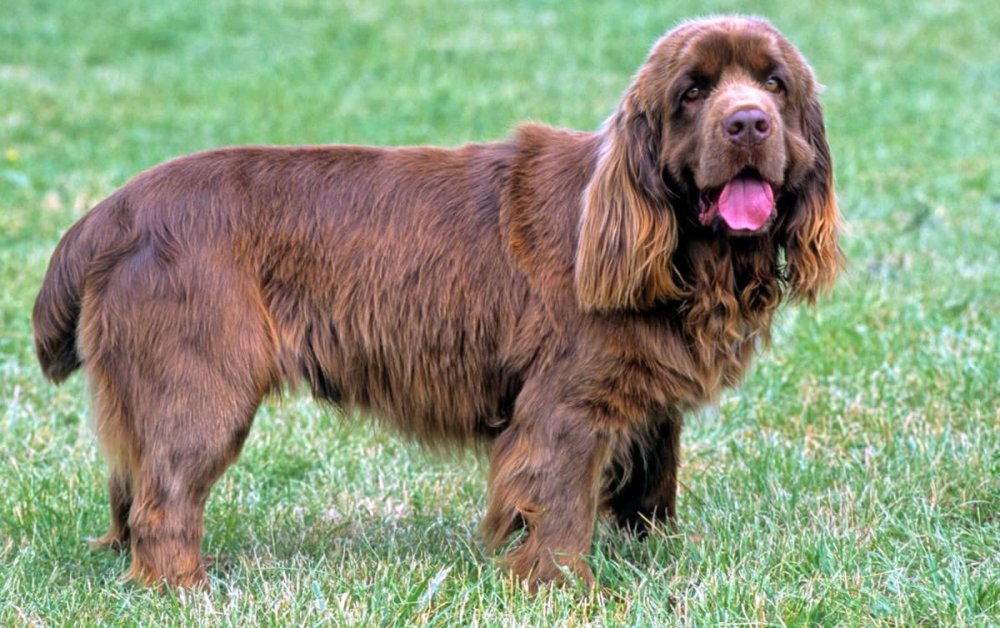
You might first notice a Sussex Spaniel because of the way they move: low to the ground, steady, and almost unhurried. Or you might meet one and be surprised that a spaniel can be so calm indoors, then suddenly intent on a scent trail the moment you step outside.
A lot of people assume spaniels are all high energy, highly strung, and built for speed. The Sussex is different. It was shaped for slow, thorough work in thick cover, and that practical history still shows up in the modern dog, both in body and in temperament.
Living with a Sussex Spaniel tends to be less about constant activity and more about steady routines, sensible exercise, and keeping on top of the small things that matter, like ears, weight, and heat management. Done well, they are an easy companion to share the day with, not a dog that needs to be “kept busy” from morning to night.
- Breed category: Gundog
- Country of origin: United Kingdom
- Typical height: about 38 to 41 cm at the withers (breed standard)
- Typical weight: about 23 kg (breed standard)
- Life expectancy: often around 12 to 15 years
- Coat: abundant, flat or slightly wavy, weather resistant
- Colour: rich golden liver
- Exercise needs: moderate, best as daily walks plus sniffing time
- Grooming: moderate, regular brushing and ear care
History and origin

The Sussex Spaniel is a British gundog developed for working in heavy vegetation, the sort of countryside where a taller, faster dog can struggle to push through. Accounts of the breed’s early development place it in Sussex in the late 18th century, with breeding associated with estates in the region and the line later preserved through dedicated enthusiasts.1, 2
What the Sussex was meant to do explains a lot about what they still are. They are built to work long, low, and level, moving steadily rather than sprinting. Traditionally they were also known for “giving tongue”, a tendency to vocalise while working so the handler could follow along in dense cover.1, 2
Physical characteristics that affect day-to-day life

Breed standards describe the Sussex Spaniel as noticeably long and low, with a distinctive rolling gait. The coat is abundant and weather resistant, and the colour is a specific rich golden liver rather than the wider range you see in other spaniels.2, 3
Those details matter in a home setting. The low build can mean they are less suited to lots of stairs day after day, especially if they are carrying extra weight. The long ears look lovely, but they also reduce airflow to the ear canal, which can contribute to ear trouble in some dogs if moisture and wax build up over time.4
Temperament and behaviour

Many Sussex Spaniel owners describe a dog that is companionable at home and quite people-focused, without the constant motion some associate with spaniels. That steadiness is part of the breed’s working background, they were meant to keep going at an even pace for hours rather than burn hot and fast.
That said, “calm” does not mean “uninterested”. Sussex Spaniels can be persistent with scent and surprisingly determined once they have decided something is worth investigating. It helps to think in terms of motivation and reinforcement rather than “stubbornness”. Food, play, and access to sniffing are often the keys that make training feel cooperative.
With children and other pets, they often do well when the household sets the tone: gentle handling from kids, sensible boundaries around food and resting spaces, and gradual introductions. Socialisation in the early months matters for any breed, and it is particularly useful for a dog who may be naturally a little reserved until they know what is going on.5
Training and exercise needs
Training a Sussex Spaniel tends to go best when it is short and consistent. A few minutes here and there, folded into the day, usually beats long sessions that ask for sustained enthusiasm. If you get the feeling your dog is “switching off”, it is often a sign to lower the difficulty, increase the reward, or simply stop while things are still going well.
For exercise, think “moderate but daily”. Most Sussex Spaniels benefit from a couple of walks and time to sniff, explore, and use their nose. Scent games at home are often a quiet way to meet those needs without turning life into an endurance sport.
In warm weather, be conservative. Dogs can overheat quickly, and the safest approach is to walk early or later in the day, provide shade and airflow, and keep water available. If you see relentless panting, drooling, weakness, vomiting, or collapse, treat it as an emergency and contact a vet.6
Health considerations and lifespan

Sussex Spaniels are often reported to live into their early to mid teens, and like many medium-sized breeds they can be affected by a mix of inherited and lifestyle-related issues. Two practical areas that come up repeatedly for owners are joints and ears.
Hip dysplasia is a known orthopaedic condition in dogs, and keeping a Sussex Spaniel lean is one of the simplest ways to reduce pressure on joints over a lifetime. If your dog is young and you are choosing a breeder, asking about health screening is sensible, and if your dog is older, watching body condition and movement changes is time well spent.7
Ear infections (otitis externa) are common across dogs, and long, floppy ears can make the environment warmer and more humid. Treatment should be guided by a vet, and ongoing management is often about learning what “normal ears” look and smell like for your dog, then acting early if something changes.4
Grooming and maintenance

The Sussex coat is designed for weather, so it tends to be fairly forgiving, but it does need regular attention. A thorough brush once or twice a week helps prevent mats, particularly in feathering, around the ears, and under the chest.
Ear care is the part many people underestimate. If your vet recommends cleaning, follow their method and avoid cotton buds, which can push debris deeper. A simple, careful approach using appropriate solution and cotton is usually safer than vigorous scrubbing.8
If grooming feels like a wrestling match, it is worth slowing down and treating it as training. Many dogs learn to tolerate brushing and ear handling when it is introduced in calm, brief steps, with rewards, and with the option to take breaks.
Diet and nutrition

The Sussex Spaniel’s build can make even small weight gain more obvious, and extra kilos tend to show up first in stamina and comfort. A practical goal is a stable body condition, not a specific number on a chart.
For choosing a food, it can help to look beyond marketing cues. Veterinary nutrition groups recommend focusing on the manufacturer’s expertise and quality control, and treating ingredient lists with caution because they do not reliably indicate overall diet quality on their own.9
Feeding habits matter as much as what is in the bowl. The RSPCA advises that amounts vary by the dog’s size, age, and activity, and that your vet can assess body condition and help you adjust portions. They also note adult dogs are commonly fed at least twice daily, and it is sensible to avoid hard exercise immediately before or after meals, particularly for deep-chested breeds.5
A few details people enjoy about the Sussex
Even among dog people, Sussex Spaniels are still relatively uncommon, which means you often get a second look when you are out walking. And if you have ever met one “working”, nose down and moving steadily through long grass, you can see why the body shape and pace were selected in the first place.
In the show world, the breed had a notable moment when a Sussex Spaniel named Stump (Ch. Clussexx Three D Grinchy Glee) won Best in Show at the Westminster Kennel Club Dog Show in 2009, a win often mentioned because it was a first for the breed at that event.10
Final thoughts
A Sussex Spaniel often suits people who like a dog that can join in, then settle. They do best with daily sniffy walks, kind training, and routines that keep ears, coat, and weight in good shape.
If you are drawn to the look, it is worth also appreciating the function behind it. The Sussex is not “a different-coloured spaniel”. It is a thoughtful, work-shaped dog, and living with one tends to feel simpler when you make room for that steady pace.
References
- Wikipedia: Sussex Spaniel
- Dogs NSW: Sussex Spaniel breed standard
- The Kennel Club (UK): Spaniel (Sussex) breed standard
- Merck Veterinary Manual: Otitis externa in animals
- RSPCA Knowledgebase: What should I feed my dog?
- RSPCA Australia: Warm weather worries, protect pets from heatstroke
- American College of Veterinary Surgeons: Hip dysplasia
- Merck Veterinary Manual: How to clean your dog’s ears
- WSAVA: Global Nutrition Guidelines and pet owner tools
- American Kennel Club: Westminster Best in Show winners (includes 2009 Sussex Spaniel)