

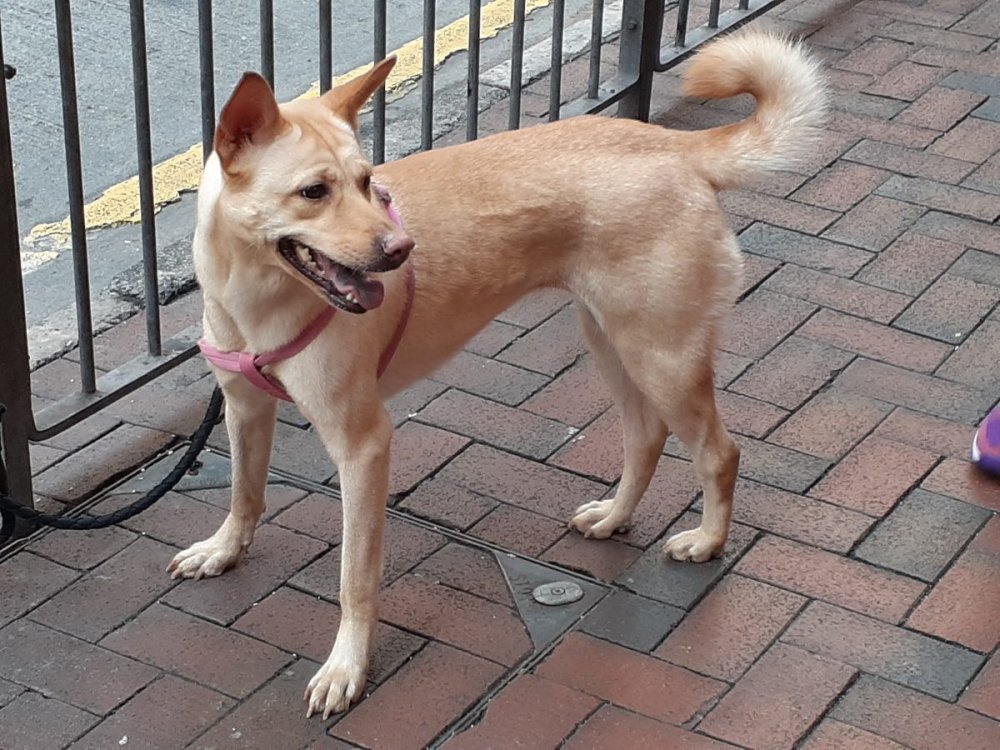
People usually come across the “Tang Dog” name in passing, in a list of Chinese dog breeds, a social post, or a conversation about “native” or “village” dogs. Then you try to look it up and notice how quickly the details blur, because some sources treat Tang Dogs as a distinct breed, while others use the term more loosely for local landrace dogs.
That uncertainty matters in practice. If you are thinking about temperament, training, health, and day-to-day care, you need to know what is reasonably consistent, and what depends on the individual dog’s background, socialisation, and living conditions.
This is a grounded look at what people generally mean by the Tang Dog (唐狗), what is known and what is less certain, plus the sort of care and training approach that tends to suit medium-sized, alert dogs with a watchful streak.
What people mean by “Tang Dog”
“Tang Dog” (唐狗) is commonly described as an ancient, medium-sized dog indigenous to southern China, often kept as a companion and watch dog, and sometimes used for hunting.1 Some sources also place Tang Dogs within the broader category of Chinese “tugou”, a catch-all term for native, village-type dogs and related landraces and breeds.2
That overlap is why you will see mixed descriptions. In real life, dogs labelled “Tang Dog” may range from fairly consistent, breed-like types to dogs that look more like local mixed landraces. If you are assessing a particular dog, it helps to focus on the individual in front of you, not just the label.
What tends to be consistent
Descriptions of the Tang Dog commonly highlight a compact, medium build and an alert presence. Some accounts mention a bluish-black tongue and solid coat colours such as cream, red, or black.1 As with many dogs described as “native” types, variation is still possible, especially where there is limited formal standardisation.
History and cultural context, with a bit of nuance
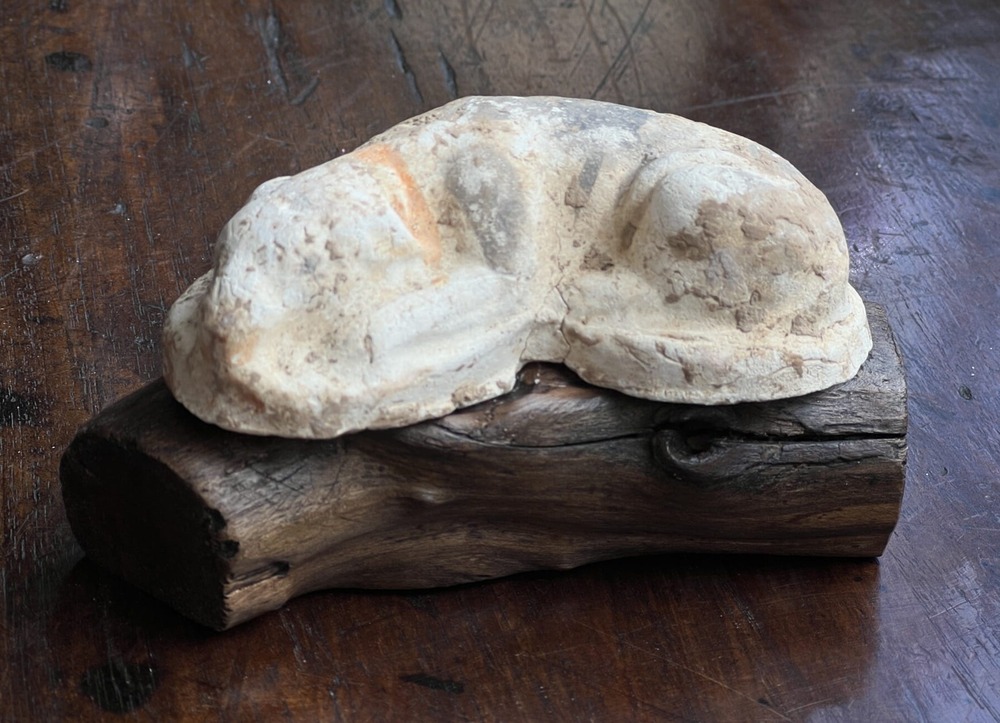
Many write-ups describe Tang Dogs as “ancient” and connected, at least by name, to the Tang Dynasty (618 to 907 CE).1 “Ancient” does not always mean there is a clean, documented lineage in the modern kennel-club sense. It often reflects that similar local dogs have existed in a region for a long time and have been valued for practical roles.
In southern China, Tang Dogs are typically framed as watchful gatekeepers and companions, with some use in hunting depending on local needs.1 It is also worth acknowledging a reality that appears in some sources: in some places and periods, local dogs have been kept for meat as well as work and companionship, which can be confronting, but helps explain why “type” and “purpose” can vary widely across regions.1
So, is it “over 2,000 years old”?
You will often see the claim that Tang Dogs go back 2,000 years or more. The broader idea that China has long-standing native dog populations is not controversial, but specific numbers can be hard to prove without clear historical and genetic documentation for a single, consistent breed population. Treat very exact age claims as plausible but not guaranteed, especially when they are repeated without primary sources.
Temperament and what it can look like at home
Tang Dogs are usually described as alert, loyal, and well-suited to watchdog roles.1 In day-to-day life, that often shows up as a dog who notices movement, sound, and changes in routine quickly. This can be genuinely helpful, and it can also become noisy or tense if the dog is under-exercised, under-socialised, or living in a high-trigger environment.
A useful way to think about it is that watchfulness is not “good” or “bad”. It is a trait that needs shaping. The goal is not to stop a dog noticing the world, it is to teach them what to do after they notice.
Children, visitors, and other pets
Because “Tang Dog” can refer to a range of dogs, it is safer to avoid blanket promises about being universally “great with kids” or “great with other animals”. Many dogs can live well in families when introductions are careful and supervision is normal, but compatibility depends on early social learning, the dog’s comfort with handling and noise, and the household’s routines.
If you are adopting an adult dog, ask for behavioural notes around:
- how they respond when someone approaches the home
- their comfort with body handling (collar grabs, paws, grooming)
- their play style and tolerance around other dogs
- their prey drive around cats and small pets
Training and socialisation that suits an alert, independent dog
Dogs described as intelligent and independent often do best with training that is clear, consistent, and rewarding, not heavy-handed. The RSPCA recommends reward-based training built around positive reinforcement, and advises avoiding punishment-based methods and aversive tools such as shock collars and prong collars due to welfare and safety concerns.3
Practical training priorities
If you are living with a dog who is naturally watchful, these areas tend to pay off quickly:
- Calm greeting routines for visitors, with management if needed (baby gate, lead, separate space).
- “Go to mat” or settle training, so the dog has a default off-switch behaviour.
- Noise and trigger desensitisation done gently, paired with food or play, at distances the dog can handle.
- Loose-lead walking and pattern games that keep arousal from building on walks.
For socialisation, aim for quality rather than quantity. A dog does not need to meet everyone. They do need repeated experiences of the world where they can stay under threshold and feel safe, especially during puppyhood.4
Exercise and enrichment, without overdoing it
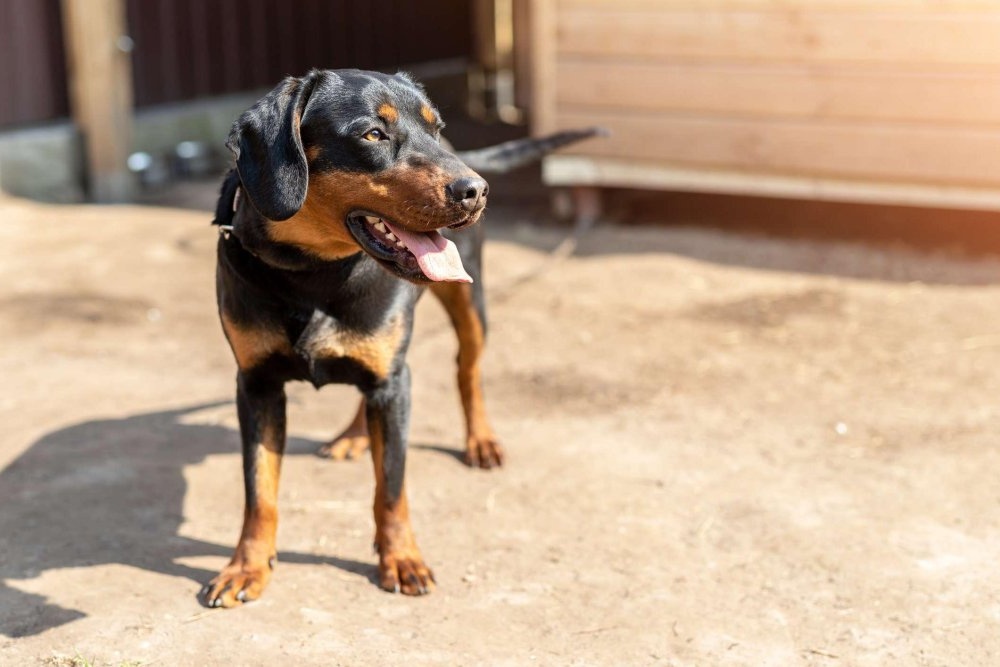
Most medium-sized, active companion dogs need daily movement plus something to do with their brain. For dogs with guarding tendencies, enrichment is often as important as exercise. A long run can tire the body, but sniffing and problem-solving can settle the nervous system in a different way.
Useful, low-fuss options include:
- sniff walks where the pace is slow and the dog chooses the route
- scatter feeding in grass or a snuffle mat
- simple food puzzles
- short training sessions (2 to 5 minutes) spaced through the day
Be cautious about turning every day into high-adrenaline games. If a dog is already on the watch for “what’s next”, constant high-energy play can maintain that arousal.
Health and day-to-day care
There is limited, consistent public information on breed-specific health risks for Tang Dogs as a distinct breed, especially compared to internationally standardised breeds. In practice, treat health planning like you would for any medium-sized dog: regular vet checks, parasite prevention, dental care, and weight management.
One of the most protective things you can do is keep your dog lean. Excess weight is strongly associated with poorer health outcomes in dogs, and maintaining a healthy body condition is a core part of preventive care discussed in veterinary guidance.5
Grooming
Many Tang Dog descriptions mention a relatively short coat, which usually means grooming is straightforward. A weekly brush, nail trims, ear checks, and routine dental care cover most needs. If your dog has a thicker coat than expected, adjust brushing frequency to prevent matting and reduce shedding in the home.
Feeding and nutrition, keeping it simple and evidence-led
Diet advice online can get noisy fast. A helpful anchor is to use veterinary-led guidance, then tailor to the individual dog. The WSAVA Global Nutrition Guidelines emphasise nutritional assessment and individualised feeding plans, and note that pet obesity is a common issue in many countries.6
Rather than chasing trendy ingredient lists, focus on:
- body condition and steady, appropriate weight
- stool quality and gut tolerance
- coat and skin health
- energy levels that match the dog’s daily routine
If you want to compare foods, WSAVA also provides owner tools for thinking critically about pet nutrition information and food selection, which can be more useful than marketing claims.7
Final thoughts
The Tang Dog label sits in an interesting space between “breed” and “native type”, which is why descriptions can be both confident and vague at the same time. What tends to hold true is the picture of a medium-sized, watchful dog that can thrive with steady routines, reward-based training, and enough enrichment to keep their mind busy.
If you are choosing a Tang Dog or a Tang Dog-type dog, the most practical approach is to look past the romance of the name and focus on temperament, health, and support: where the dog came from, how they cope with everyday life, and whether you can meet their needs without turning your household into a training project that never ends.
References
- Wikipedia: Tang Dog
- Wikipedia: Tugou (Chinese native dogs)
- RSPCA Knowledgebase: Training recommendations (reward-based, positive reinforcement)
- RSPCA Knowledgebase: How should I socialise my puppy?
- AVMA: Your pet’s healthy weight
- WSAVA: Global Nutrition Guidelines
- WSAVA Global Nutrition Committee: Selecting a Pet Food (PDF)
- Petfood Industry: AAFCO and FEDIAF, what’s the difference?
- RSPCA Knowledgebase: What are the best toys for my dog?