

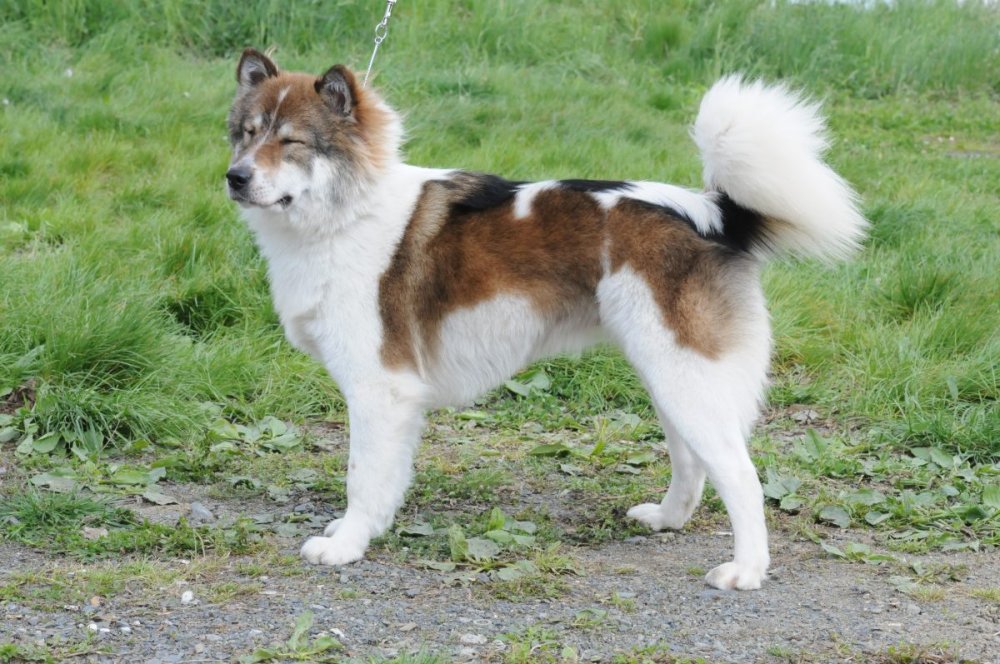
- Breed category: Spitz-type, traditionally a working and guarding dog
- Country of origin: Thailand (Phitsanulok Province)
- Average height: Males about 46 to 55 cm, females about 41 to 50 cm
- Average weight: Commonly around 16 to 20 kg, depending on sex and build
- Average life span: Often around 12 to 14 years
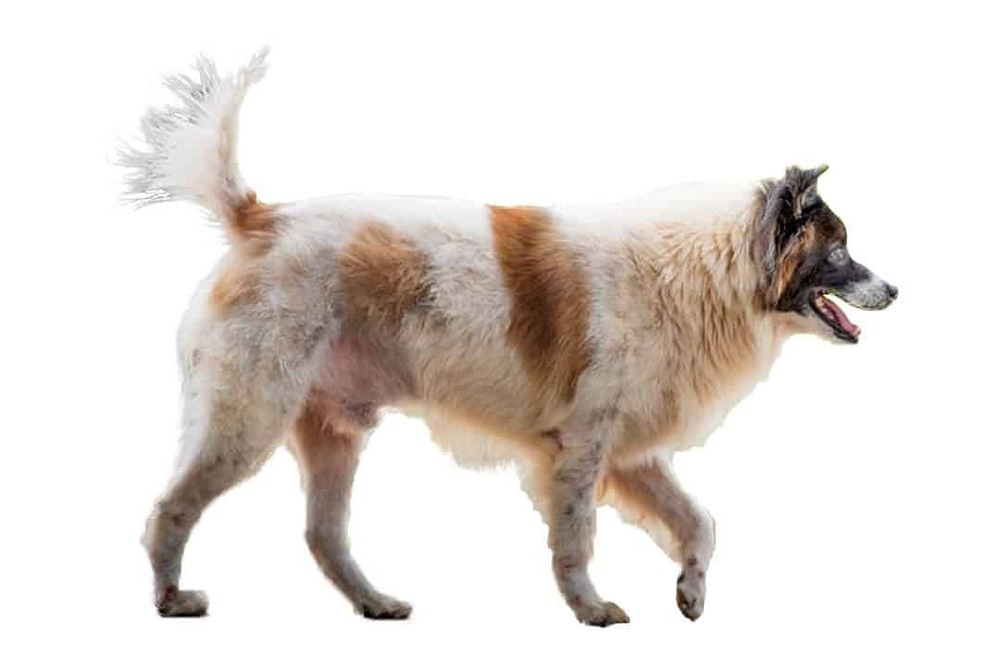
- Coat type: Dense double coat with a fuller ruff and plume tail
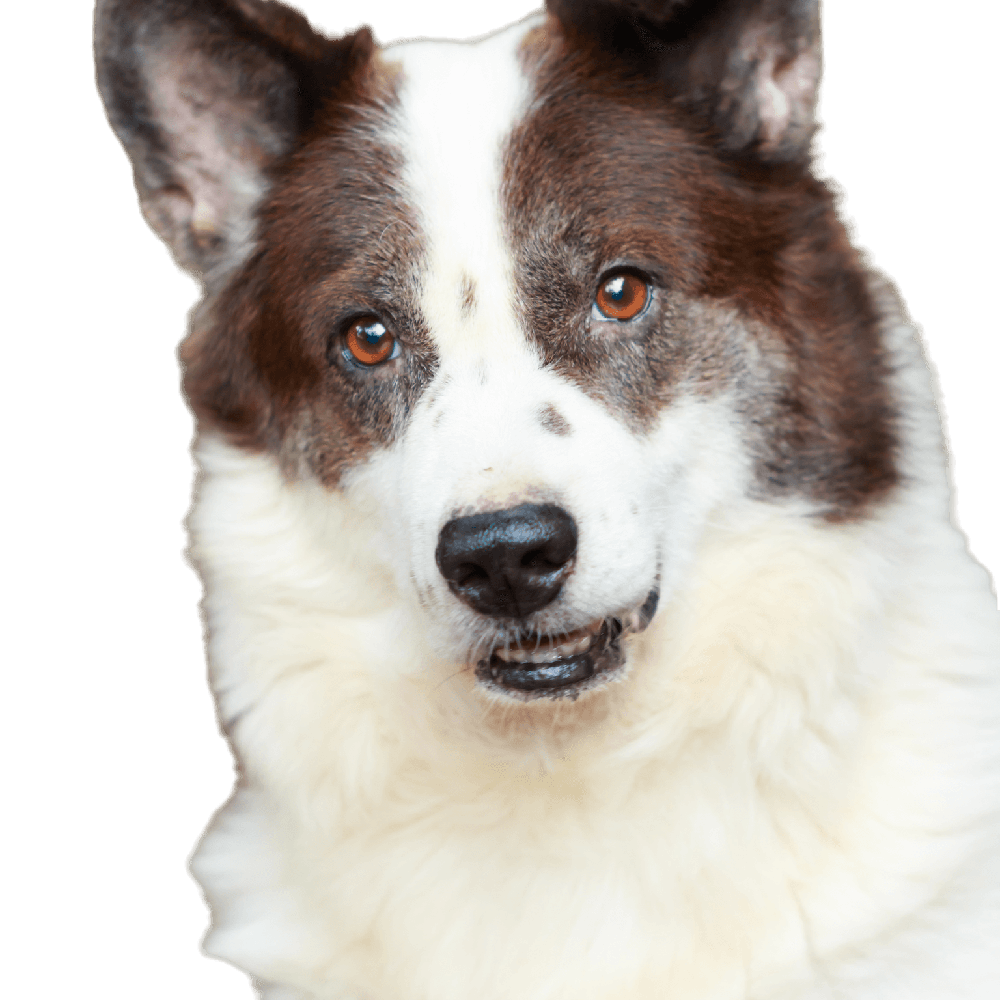
- Coat colours: Typically white with patches or shading in grey, black, brown, or red tones
- Shedding level: Moderate to high, with seasonal coat blow
- Energy level: High
- Grooming requirements: Moderate, regular brushing and coat management
- Exercise requirements: High, daily physical exercise plus mental work
- Temperament: Loyal, alert, watchful, can be reserved with strangers
- Training: Intelligent and capable, best with an experienced, calm handler
- Apartment friendly: Usually not ideal unless exercise and containment are excellent
People often first notice the Thai Bangkaew Dog in a photo: a compact, fox-like spitz with a big coat and an even bigger presence. Then they read a few lines about loyalty and guarding, and start wondering what that looks like in an ordinary home, on an ordinary street, with neighbours, kids, visitors, and other dogs nearby.
It helps to know that “protective” is not a single trait. In practice, it can mean a dog that watches the gate carefully, vocalises when something changes, and takes time to warm up to new people. In the right hands, those qualities feel steady and reassuring. In the wrong setup, they can slide into over-alertness, frustration, or a dog that struggles to relax.
The Bangkaew is not a breed you “make fit” with willpower alone. They tend to do best when their day has structure, their boundaries are clear, and their people enjoy training as a normal part of life, not a quick fix when problems appear.
Origins and cultural context
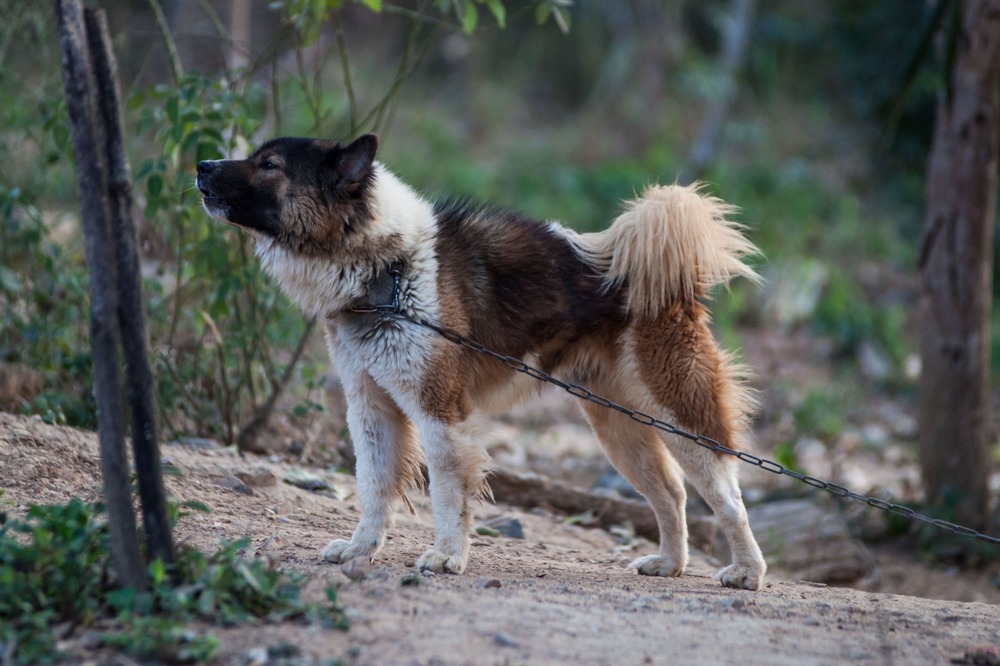
The Thai Bangkaew Dog is associated with Bangkaew village in Bang Rakam District, Phitsanulok Province, in Thailand, with stories linking early dogs to the area around Wat Bangkaew and the Yom River.1, 2
As with many landrace and regional breeds, the “how it began” narrative is part history and part local telling. One commonly repeated account involves temple dogs and a wild canid influence, followed by selective breeding that shaped a more consistent type by the mid-20th century.2, 3 It is worth holding these origin stories lightly while still respecting what they point to: a dog developed for practical work, alertness, and staying power.
Modern recognition can add another layer of confusion for prospective owners. The breed is recognised by the FCI (Fédération Cynologique Internationale), and in the United States it has also been accepted into the American Kennel Club’s Foundation Stock Service, which is a recording programme rather than full AKC registration.1, 4, 5
What they look like, and why it matters
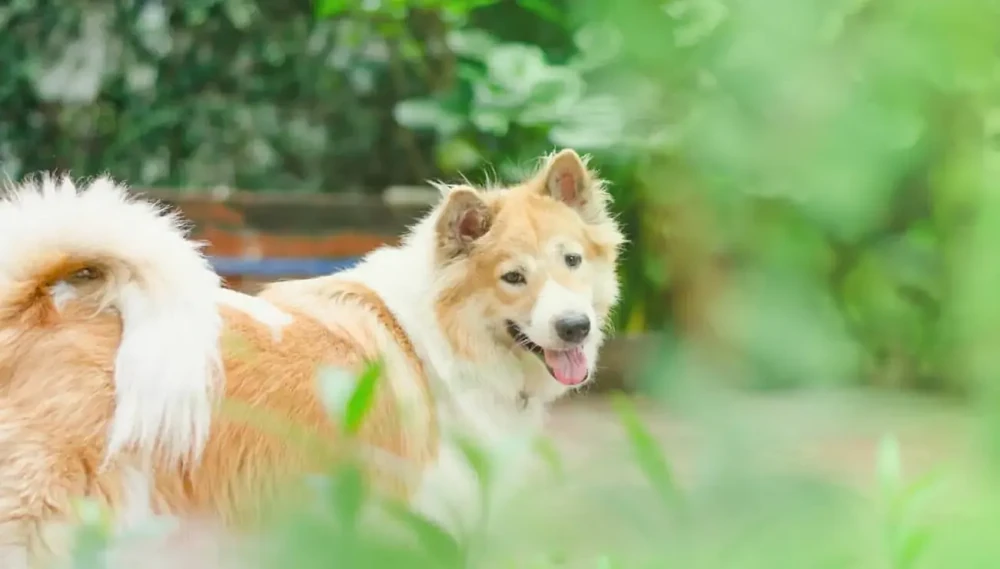
The Bangkaew is a medium-sized spitz-type dog with a dense double coat, a noticeable ruff around the neck and chest, and a plumed tail carried over the back.1 Many people are drawn to that coat first, but living with it is a practical matter: shedding, grooming time, and heat management all become part of the weekly routine.
Coat colour is often described as white with coloured markings or shading (including grey, black, brown, and red tones), and the overall outline is compact and square rather than leggy.1 That “balanced” look tends to match how they move through the world: quick on their feet, observant, and ready to respond.
If you are choosing a Bangkaew, pay attention to build and coat condition, but also to everyday behaviours, such as how the dog settles after excitement, and how it responds to strangers at the boundary of the home. Those details tell you more than a perfect pose ever will.
Temperament in real homes
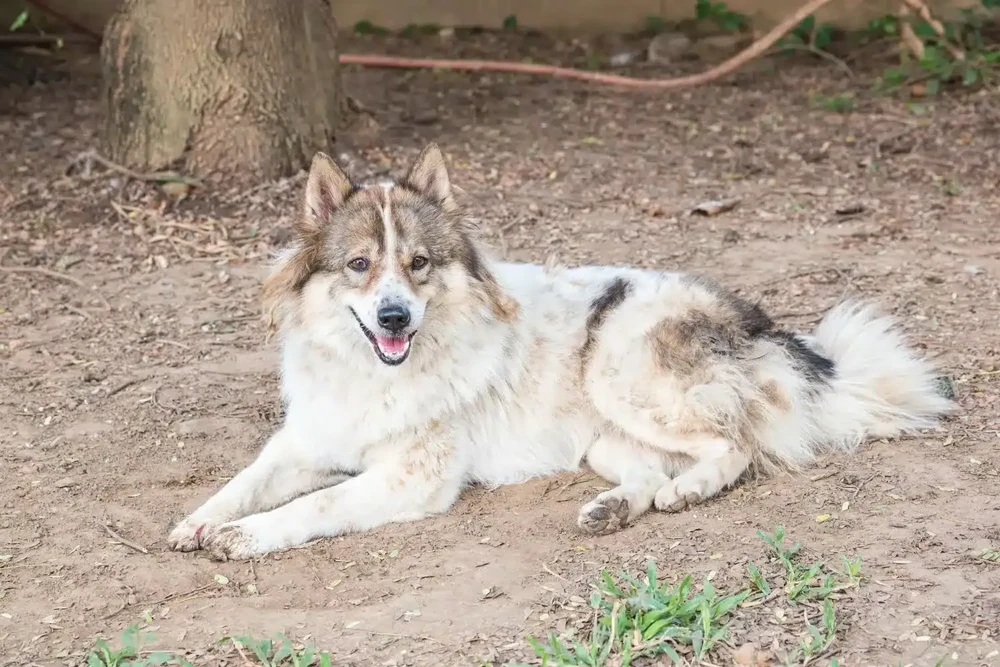
Most breed descriptions mention loyalty and alertness, and those are fair starting points. Many Bangkaew dogs are naturally watchful and can be reserved with unfamiliar people, particularly in or near their home environment.1 That does not automatically mean aggression, but it does mean you should expect to do thoughtful socialisation and ongoing training.
It is also common to see stronger reactions to other dogs, especially if a young Bangkaew has not had calm, well-managed exposure. This is where people can get caught out: they assume a fluffy, medium-sized dog will be socially easy. In reality, the Bangkaew often needs planned social experiences, not random meet-and-greets, and certainly not crowded dog parks as the main strategy.
With children, the sensible framing is the same as for any breed: individual temperament and supervision matter. A Bangkaew that is well socialised and given space to opt out can live well with respectful kids. A dog that is repeatedly crowded, startled, or allowed to practise boundary-guarding is more likely to become tense and reactive over time.
Training approach, socialisation, and daily exercise
Because Bangkaew dogs are intelligent and independent, they tend to respond best to training that is clear, consistent, and rewarding. Reward-based training is widely recommended by animal welfare organisations because it builds desired behaviours without relying on fear or pain, and it supports a safer, more cooperative relationship over the long term.6, 7
Early socialisation matters, but it is not about forcing friendliness. Think of it as teaching the dog that new things are predictable and manageable. For a Bangkaew, that often includes:
- Neutral exposure to visitors (calm arrivals, structured greetings, safe retreat space).
- Comfort with handling (grooming tools, nail trims, vet-style touch).
- Seeing other dogs at a distance without needing to rush over.
Exercise needs are typically high, but it is not only about kilometres. Many Bangkaew dogs do best with a mix of physical movement and brain work: sniffing walks, short training sessions, problem-solving toys, and controlled games that do not wind the dog up into frantic arousal.
If you are managing barking, start by assuming the dog is doing its job. Then look at the pattern: What triggers it, how long it lasts, and what the dog gains from it. Often the most effective changes are environmental (fences, visual barriers, predictable routines) paired with training, rather than punishment, which can increase anxiety and worsen reactivity.6
Health considerations and preventative care
No breed is “problem free”, and for Bangkaew dogs the sensible approach is to think in terms of lines and screening. Breed clubs and enthusiasts often recommend health testing that includes hips and elbows, and eye examinations by a veterinary ophthalmologist, reflecting concerns seen in some lines.8
When people mention issues like hip dysplasia or eye disease, it does not mean every dog will be affected. It means you should ask better questions before buying or adopting. Request proof of relevant results, talk through family history, and avoid anyone who dismisses screening as unnecessary for a “healthy” breed.
Good preventative care is the everyday sort: appropriate diet and weight management, parasite control suited to your region, dental care, and regular veterinary check-ups. For a high-energy, watchful breed, it is also worth treating behavioural health as part of health, including sleep, decompression time, and predictable routines.
Coat care, shedding, and living comfortably in warm weather
The double coat is designed to protect, and it will shed. Regular brushing helps prevent matting and keeps loose undercoat moving out before it ends up on your floors. Many owners find a thorough brush a few times a week is manageable, with more frequent grooming during seasonal shedding.
A common misconception is that shaving a double-coated dog helps them cope with heat. In many double-coated breeds, shaving can interfere with coat function and can lead to sunburn risk and uneven regrowth. If you are worried about summer comfort, focus on shade, cool water, exercise timing, and ventilation, and ask your vet or groomer for breed-appropriate coat management.
Practical grooming also includes ear checks, nail maintenance, and teaching the dog to accept handling. For a Bangkaew, this is not cosmetic. It is preventative training that makes health care easier across the dog’s life.
Is a Thai Bangkaew Dog right for you?
The Bangkaew tends to suit people who like having a dog with opinions: a dog that notices things, responds to changes, and benefits from being included in daily routines. They often do best with secure fencing, space to move, and owners who are comfortable practising training as a normal part of life.
They can be a rewarding companion for the right household, but they are rarely a “set and forget” breed. If you want a dog that welcomes every stranger, breezes through busy dog parks, or is content with a short stroll and a pat, you may find a Bangkaew challenging.
If, on the other hand, you appreciate a steady, alert dog and you are prepared to invest in socialisation, grooming, and calm, reward-based training, the Thai Bangkaew Dog can be an engaging companion with a strong sense of home.
References
- Fédération Cynologique Internationale (FCI): Thai Bangkaew Dog (Breed No. 358)
- Wikipedia: Thai Bangkaew Dog
- Thai Bangkaew Dog Club of America: Breed Origin
- American Kennel Club (AKC): Foundation Stock Service News and Updates (Thai Bangkaew added)
- American Kennel Club (AKC): Foundation Stock Service overview
- RSPCA Knowledgebase: Reward-based dog training and why the RSPCA supports it
- RSPCA Knowledgebase: Training recommendations and avoiding aversive techniques
- Thai Bangkaew Dog Club of America: Breed Health Testing