

You do not always go looking for a Tosa Inu. Sometimes you notice one in the park, quiet beside its person, and you catch yourself thinking, “That dog looks serious.” Or you see the name on a list of restricted breeds and wonder what that actually means in real life.
The Tosa is a powerful, deliberately bred mastiff-type dog from Japan, with a history that can make people jump to simple conclusions. In practice, living with a Tosa is less about myths and more about management: how the dog is raised, how the home is set up, what sort of handling skills the owner has, and whether the dog is given clear, humane training and enough calm structure.
It is also worth knowing that in Australia, “Japanese Tosa” is a prohibited import breed. That legal reality shapes what ownership looks like here, and it is part of the practical story, not a footnote.1, 2
- Breed category: Working
- Country of origin: Japan
- Typical height: Males 60 to 65 cm, females 55 to 60 cm
- Typical weight: Males 60 to 90 kg, females 50 to 70 kg
- Average lifespan: 10 to 12 years
- Coat: Short and dense
- Common colours: Red, fawn, brindle, black
- Grooming: Low, occasional brushing
- Exercise needs: Moderate to high, daily activity needed
- Temperament (typical): Calm, loyal, protective
- Barking: Often low
- Common health concerns: Hip dysplasia, gastric dilatation-volvulus (bloat)
History and origin, and why it matters now
The Tosa (also called Tosa Inu, or Japanese Tosa) was developed in Japan as a fighting dog in a traditional context, with breeders selecting for a specific style of dog: large, strong, composed under pressure, and able to work in close quarters. That heritage is part of the breed’s reality, even though most modern owners are not seeking a dog for anything like that purpose.
When people say a breed has a “fighting” background, it is easy to hear that as a verdict on the dog in front of you. A more useful way to think about it is this: selective breeding can influence traits like persistence, tolerance of physical contact, and how readily a dog escalates during conflict. That is why early, careful socialisation and skilled handling matter so much with a Tosa, even if the dog is calm and well-mannered day to day.
In kennel club terms, the breed is recognised by the Federation Cynologique Internationale (FCI) as Tosa (No. 260), with the currently published standard dated 12 September 1997.3
Physical characteristics, size, and daily handling
A Tosa is a big, athletic mastiff-type dog with a short coat and a substantial frame. Adult weights commonly sit in the 50 to 90 kg range, depending on sex, lines, and body condition. In real life, that means even a “gentle” dog can accidentally bowl someone over, pull a lead from a distracted hand, or overwhelm visitors with sheer presence.
Because of that, good ownership tends to look a bit unglamorous: strong equipment that fits properly, a secure yard, and routines that prevent rehearsal of problem behaviour. Management is not a failure with large guarding breeds, it is part of responsible care.
Temperament and behaviour, what people often get wrong
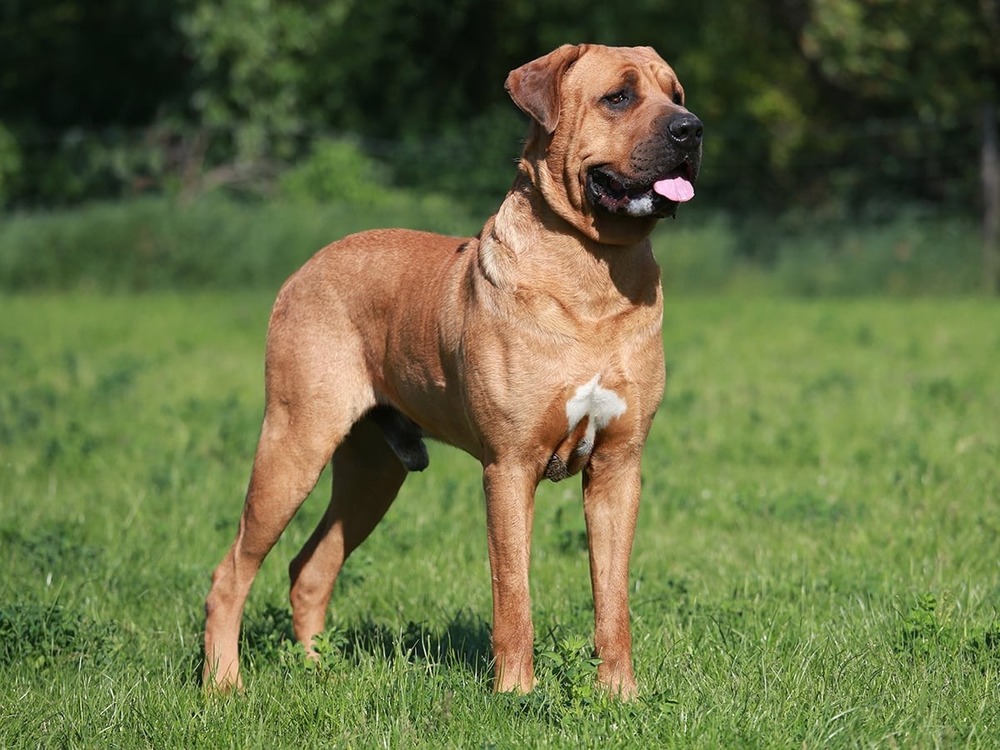
Well-bred, well-raised Tosai are often described as calm, steady, and quietly devoted to their people. Many are not especially “busy” dogs in the way that some working breeds are. They can be content to observe, follow, and settle, provided their basic needs are met.
Where things can go sideways is usually not about constant snarling aggression. It is more subtle: a dog that is naturally protective, slow to warm up to strangers, or intolerant of rude canine approaches. With a large dog, that matters. It is wise to assume dog-to-dog conflict is possible, particularly with unfamiliar dogs, and to plan accordingly with training, space, and supervision.
With children, the question is often less “Is this breed good with kids?” and more “Can this household supervise properly, teach children safe handling, and keep arousal levels sensible?” A heavy dog that is calm can still be unsafe if the home is chaotic or if boundaries are unclear.
Training and exercise, building a safe adult dog
For Tosai, training is not about dominance, it is about teaching predictable patterns and helping the dog feel safe in everyday situations. Reward-based methods are widely recommended because they reduce the risks that come with fear, pain, and confrontation, and they tend to create clearer learning for the dog.4, 5
Socialisation also benefits from a slower, choice-based approach. Exposure is not the goal on its own. The goal is calm, positive associations, with the dog able to move away and decompress when needed. That is especially relevant for dogs that may be naturally wary or protective.6
Exercise needs are often described as “high”, but a more accurate framing is daily movement plus mental steadiness. Many Tosai do well with:
- structured walks where loose-lead skills are practised
- basic obedience games for food rewards
- simple scent work and “find it” games at home
- calm enrichment (chews, food puzzles) to support settling
Health and lifespan, with a close look at bloat risk
Like many large breeds, Tosai can be prone to orthopaedic issues such as hip dysplasia. Keeping a lean body condition, building muscle gradually, and avoiding repetitive high-impact exercise in young dogs can all help reduce strain over the long term.
Another important risk in deep-chested breeds is gastric dilatation-volvulus (GDV), often called bloat. It is an emergency, and owners are right to take it seriously. Common guidance to reduce risk includes feeding multiple smaller meals, avoiding vigorous exercise right around meal times, and discouraging fast gulping. If you are ever unsure, it is safer to seek veterinary advice promptly because outcomes are better when treated early.7
Many sources give a lifespan of around 10 to 12 years for the breed, with wide variation depending on genetics, body condition, and general healthcare. The most useful day-to-day approach is not chasing “perfect”, but doing the basics consistently: preventative vet care, parasite control, dental care, and good weight management.
Grooming and maintenance, simple but not optional
The Tosa’s short coat is straightforward, but grooming is still part of healthy maintenance. A weekly brush helps remove loose hair, spreads skin oils, and gives you a regular chance to check for lumps, skin irritation, or sore spots.
Because many Tosai are heavy-bodied, it is also worth paying attention to nails, paw pads, and the condition of skin folds if your dog has them. Small care tasks done early can prevent bigger issues later, especially if the dog is not naturally keen on handling.
Diet and nutrition, supporting a big dog responsibly
Feeding a giant breed is less about finding a “special” diet and more about meeting needs without overdoing calories. A high-quality, complete diet appropriate for the dog’s life stage, paired with measured portions, helps maintain a lean body condition, which is one of the most protective things you can do for joints and general health.
If your dog eats quickly, practical options can include split meals, slow-feeding bowls, or feeding strategies that reduce gulping. Given the breed’s size and GDV risk profile, it is also sensible to ask your vet about your dog’s individual risk factors and whether preventative options (including prophylactic gastropexy in some breeds and situations) are worth discussing.
Ownership in Australia, legal and practical realities
This is the part that often surprises people: in Australia, “Japanese Tosa” is listed among pure breeds that cannot be imported under federal restrictions. If you are considering a Tosa, or you already own one and travel is on the horizon, it is worth checking the current government guidance and getting advice early, rather than relying on social media or word of mouth.1, 2
Separate from import rules, dog laws can also vary by state, territory, and council. Even where ownership is lawful, you should expect that a large guarding breed may attract extra scrutiny in public spaces. Calm training, secure containment, and thoughtful handling are not only good practice, they reduce risk for everyone.
Final thoughts, who the Tosa tends to suit
The Tosa Inu can be an impressive companion for the right home: someone who genuinely enjoys training, can provide structure without harshness, and is comfortable managing a big, protective dog in a busy world.
For many households, the deciding factor is not love for the breed, it is whether you can consistently provide safe handling and calm routines for the next decade. If you can, the reward is often a dog that settles deeply into family life and takes its cues from the steadiness around it.
References
- Department of Agriculture, Fisheries and Forestry (Australia), Cats and dogs frequently asked questions
- Department of Agriculture, Fisheries and Forestry (Australia), How to bring your dog to Australia (Category 3) step-by-step guide
- Federation Cynologique Internationale (FCI), Tosa (No. 260) breed nomenclature and standard publication details
- RSPCA Knowledgebase, Is it important to train my dog? What sort of training would you recommend?
- RSPCA Knowledgebase, What is reward-based dog training and why does the RSPCA support it?
- RSPCA Knowledgebase, How can I socialise my puppy?
- VetZone, Gastric dilation and volvulus (bloat) in dogs
- RSPCA Australia, Socialising your puppy
- RSPCA WA, Dog training courses and positive reinforcement approach