


You might notice one in a park or on a footpath and do a double take. Sleek black coat, sharp little tan points, ears up, eyes busy, moving like it has somewhere important to be. People often assume a dog that small will be delicate, sleepy, or “just a lap dog”. A Toy Manchester Terrier can surprise you.
In many homes, the questions start with everyday moments: a tiny dog that wants longer walks than expected, a quick mind that gets bored fast, or a watchdog bark that feels out of proportion to the body. They are compact, yes, but they are also very much a terrier in how they notice things and how readily they practise behaviours that get results.
Living well with a Toy Manchester Terrier is mostly about matching the dog in front of you. That means understanding where the breed came from, what their body needs, and how to guide that bright, alert energy into routines that suit both dog and household.
At a glance: Toy Manchester Terrier
Category: Toy (in the United States and Canada), with terrier roots and terrier instincts.2, 3
- Origin: Developed from the Manchester Terrier line, itself shaped in 19th-century England for vermin control.1, 3
- Size: Generally 25 to 30 cm at the shoulder and up to 5.4 kg (12 lb) for the toy variety (standards vary by registry).4, 5
- Coat: Short, sleek, low fuss, typically black and tan in breed standards.4, 5
- Typical lifespan: Often around the mid teens, with individual variation like any breed.6
History and characteristics
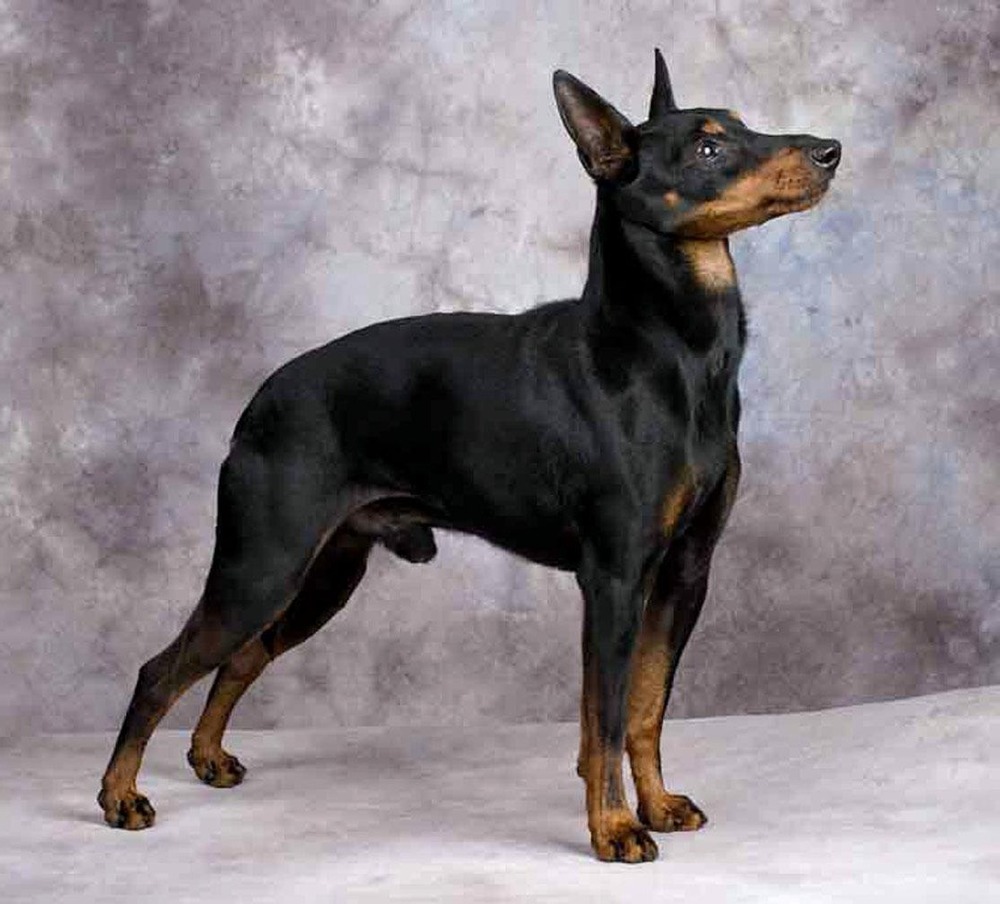
The Toy Manchester Terrier sits in an interesting place historically. The broader Manchester Terrier story is tied to industrial England, where compact, fast dogs were valued for keeping rats down in crowded towns and mills.1 In North America, a smaller toy variety was developed and is recognised in the Toy Group by major kennel organisations there, even though not all registries treat “toy” as a separate variety.2, 3
Physically, they tend to be neat, fine-boned and athletic. Breed standards emphasise a sleek black-and-tan coat with distinct tan points, and an overall look that suggests quickness rather than bulk.4, 5
That original job still echoes in the modern dog. Many Toy Manchesters remain highly observant, quick to respond to movement and sound, and inclined to “help” by patrolling the house and yard. It is not a flaw so much as a trait that usually needs gentle shaping.
Temperament and what it feels like to live with one
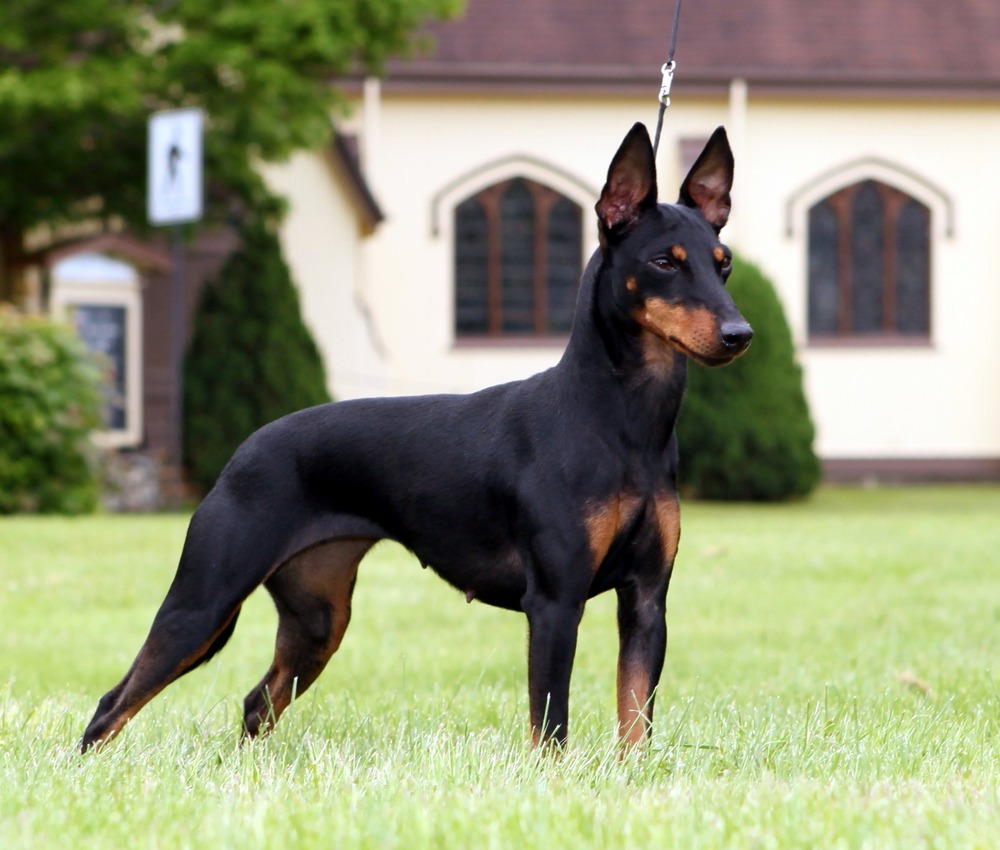
People often describe Toy Manchester Terriers as bright, loyal and a little opinionated. In practice, that can look like a dog who chooses a favourite person, watches household patterns closely, and learns routines quickly.
A common pattern is reserve with strangers and a fast alarm bark. With thoughtful introductions and steady social learning, many settle well, but it helps to assume your dog might need time rather than expecting instant sociability. Confidence grows from repetition, not from being pushed into overwhelming situations.
They also tend to enjoy being near their people. That closeness can be a joy, but it is worth building small amounts of independence early (short absences, calm alone-time with a chew, predictable returns) so the dog does not become unsettled when the house changes.
Family fit: children, visitors, and other pets
Toy Manchester Terriers can do well in families, especially where children are old enough to understand gentle handling. Because they are small, it is less about temperament and more about safety and consent: being picked up suddenly, hugged tightly, or startled from sleep can trigger defensive behaviour in any small dog.
With other pets, many cope well when introductions are calm and supervised. If you have small animals (rabbits, guinea pigs, pocket pets), take the terrier background seriously and manage interactions carefully. Even friendly dogs can have strong chase responses, particularly outdoors.
- Helpful household habits: a quiet retreat bed, a “hands off when resting” rule for kids, and structured greetings for visitors.
Training and exercise: guiding a clever, fast dog

Training often goes well when it is built around the dog’s strengths: curiosity, speed of learning, and enjoyment of interaction. Short, frequent sessions tend to outperform long drills. Reinforcement based training, using food, toys, and access to what the dog wants, suits the breed’s quick mind.
Exercise needs are usually moderate to lively rather than extreme. Many are satisfied with daily walks plus play and training games, but the bigger requirement is often mental. Puzzle feeders, sniffing games, and basic agility-style challenges (done safely, with low impact) can make the difference between a calm dog and a busy one.
If barking becomes a pattern, it helps to separate “alerting” from “carrying on”. Reward quiet, practise planned door routines, and give the dog a job such as going to a mat. Because they are observant, they often improve when the household becomes predictable.
Health considerations and preventative care

Like many small breeds, Toy Manchester Terriers can be prone to orthopaedic and genetic conditions. Patellar luxation (a kneecap that slips out of place) is a well-recognised issue in small dogs, ranging from mild “skipping” to more persistent lameness, and management depends on severity.7
Breed-related concerns can also include inherited conditions such as von Willebrand disease, eye issues, and cardiomyopathy, depending on lines and screening practices.6 In the UK, The Kennel Club has also highlighted DNA testing schemes for juvenile dilated cardiomyopathy (JDCM) and xanthinuria in Manchester Terrier and English Toy Terrier populations, which is useful context when speaking with breeders about health testing and family history.8
Ask your vet what screening makes sense for your individual dog. If you are buying a puppy, ask the breeder for evidence of relevant testing and a clear explanation of what the results mean. Good breeders explain risk, not just reassurance.
Grooming and daily comfort
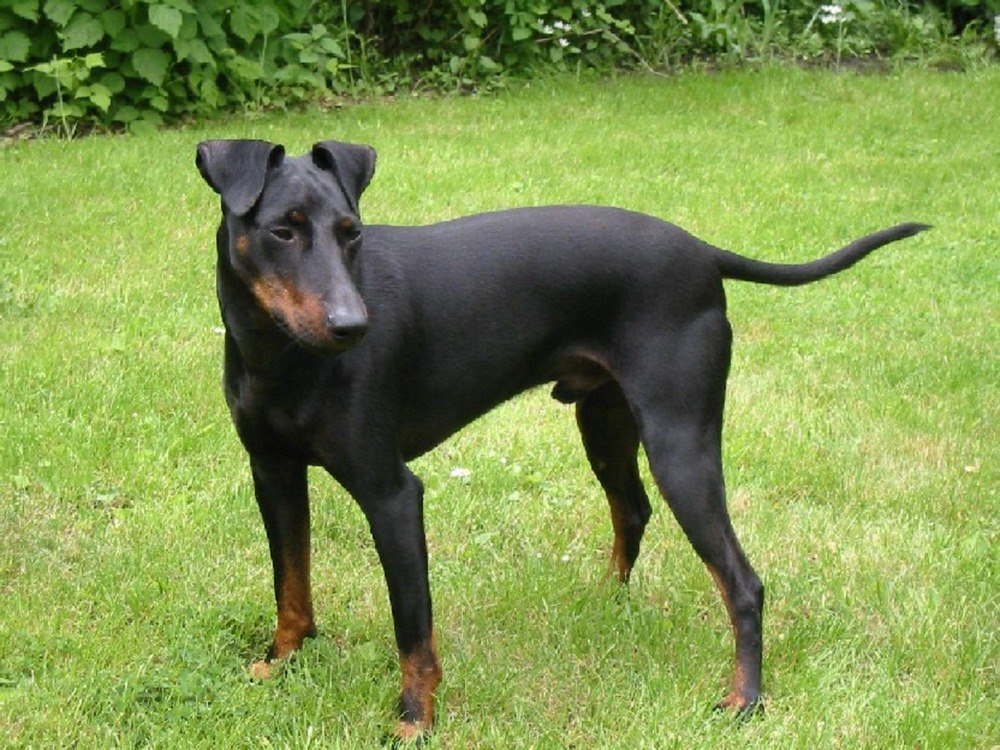
The coat is one of the easy parts. A light brush or rub-down once a week is usually enough, with baths only as needed. Nails, ears, and teeth tend to matter more than the coat itself.
Dental care is especially important in small dogs. Regular home care can reduce the build-up that leads to periodontal disease, which is common in adult dogs. Your vet can show you a realistic routine, including toothpaste choices and how to build tolerance slowly.
Cold weather sensitivity is also common with fine-coated, small-bodied dogs. If your dog hesitates outside on cold mornings, it is not “being stubborn” so much as responding to temperature. Warm bedding indoors and, when appropriate, a well-fitted coat can help keep walks pleasant.
Feeding and weight management
With a small, active dog, feeding can look deceptively simple, until it is not. Tiny changes in treats and portion size can add up quickly, and many Toy Manchester Terriers will happily accept extra food.
The most practical approach is to feed a complete and balanced diet appropriate for life stage, monitor body condition, and adjust with your vet’s help. The RSPCA notes that how much a dog needs depends on size, age, and exercise, and that your vet can assess body condition and guide amounts.9
Be cautious with “people foods” and remember that some common items are toxic to dogs. The RSPCA lists foods to avoid including chocolate, onions, and grapes or raisins.9 If you use treats for training, consider taking them from the day’s food allowance to keep intake steady.
Final thoughts

A Toy Manchester Terrier can be a wonderful companion for someone who enjoys a small dog with a quick brain and an active interest in the world. They tend to thrive when life includes daily movement, gentle structure, and training that feels like shared problem-solving.
If you are drawn to their clean lines and compact size, it is worth remembering the other half of the picture: they are still a terrier. When their alertness and energy are guided thoughtfully, you often end up with a dog that feels like a lively shadow, always nearby, always ready, and surprisingly capable for such a small frame.
References
- The Kennel Club: Manchester Terrier (breed information)
- Westminster Kennel Club: Manchester Terrier (Toy)
- The Kennel Club: English Toy Terrier (Black & Tan) (notes US name Toy Manchester Terrier)
- United Kennel Club: Manchester Terrier breed standard (toy variety weight and colour)
- The Kennel Club: Manchester Terrier breed standard
- PetMD: Toy Manchester Terrier (health overview)
- Merck Veterinary Manual: Patellar luxation in dogs and cats
- The Kennel Club: DNA testing schemes for Manchester Terrier and English Toy Terrier (JDCM and xanthinuria)
- RSPCA Australia Knowledgebase: What should I feed my dog?