

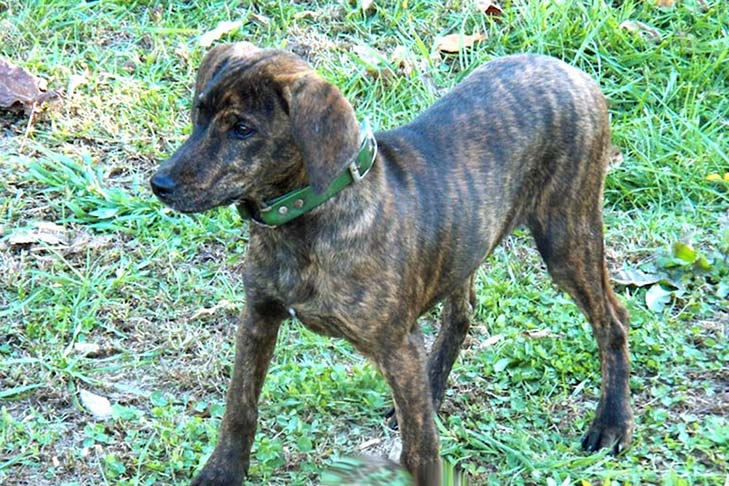
People usually come across the Treeing Tennessee Brindle in a fairly ordinary way: a brindle dog turns up on a social feed, someone at the dog park asks, “Is that a Plott?”, or a rescue listing uses the word “treeing” and it sparks curiosity. The coat is memorable, but it is the working-dog shorthand in the name that raises the real questions. What does “treeing” actually mean, and what does it imply for life at home?
It is easy to assume that a rare American hunting breed will be too intense for family life, or that a dog with a big voice must be “naughty” or anxious. In practice, many of the challenges people run into with scent hounds are about mismatch, not malice: the wrong kind of exercise, not enough mental work, or training that does not account for a dog that experiences the world through smell first.
The Treeing Tennessee Brindle can be a genuinely rewarding companion in the right home. Understanding what it was bred to do, and what that looks like day to day, helps you decide whether this is your kind of dog, and if so, how to set them up to thrive.
At a glance: what the breed is like
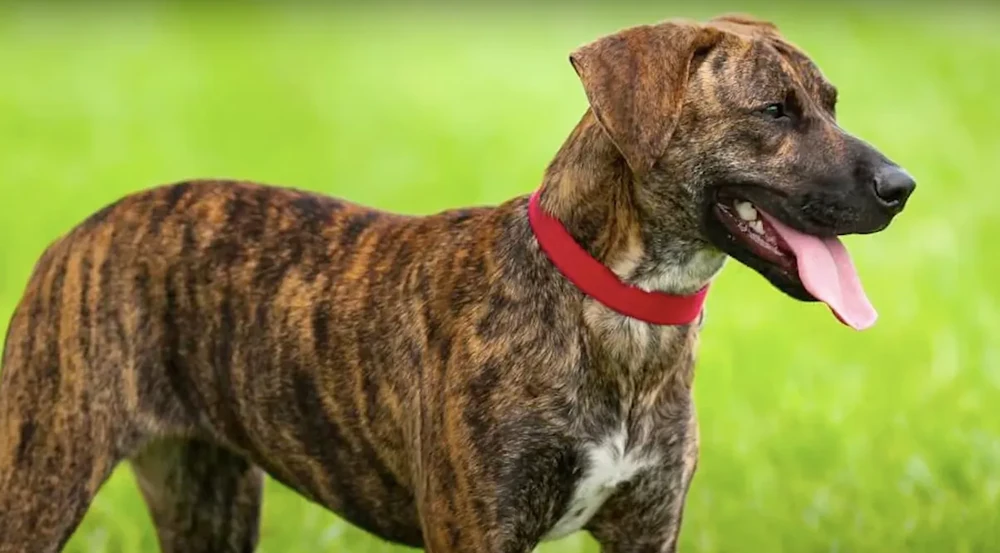
The Treeing Tennessee Brindle is a medium-sized, short-coated scent hound type, recognised in the United Kennel Club (UKC) as a distinct breed. The breed standard describes a dog built for efficient movement and stamina, with a short, dense coat in brindle or black with brindle trim, and a characteristic hunting voice known as an “open trailer” that changes at the tree.1
- Size: Typically 41 to 61 cm at the withers (males 18 to 24 inches, females 16 to 22 inches).1
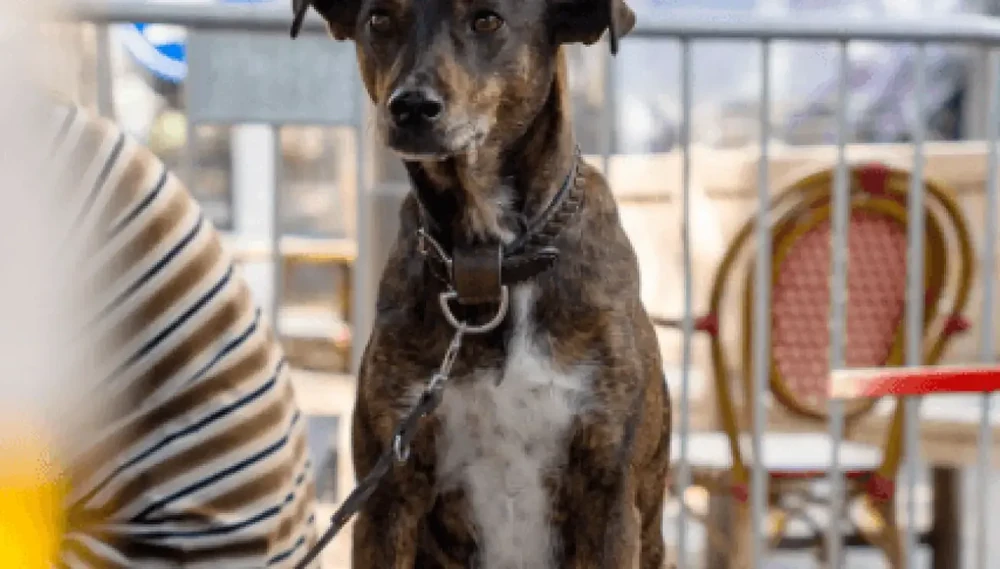
- Coat: Short, dense, smooth, usually brindle or black with brindle trim. Small white on chest or feet may be acceptable under the UKC standard.1
- Voice: Many will “give tongue” on a track, which is useful in the field and can be surprising in suburbia.1
- Drive: Expect strong scenting instinct and a keen interest in wildlife scents, even on everyday walks.1
Where the Treeing Tennessee Brindle came from
The modern development of the Treeing Tennessee Brindle is commonly linked to Reverend Earl Phillips in the early 1960s. The story is often told through hunting-dog circles: Phillips became aware of brindle “cur” type dogs valued for treeing ability and worked to preserve and promote them, leading to organised breed efforts later in the decade.2
It is also worth noting what “recognition” can mean in breed conversations. You will sometimes see 1995 mentioned because the breed’s records have been maintained through the American Kennel Club’s Foundation Stock Service (FSS) program since that year, which is not the same as full AKC breed recognition.2, 3
What “treeing” really looks like in real life
Treeing is a working behaviour where a dog follows scent and pursuit until quarry goes up a tree, then the dog stays at the base and vocalises to indicate location. In the UKC standard, that is reflected in the expected hunting voice and the changeover “at the tree”.1
In a pet home, you are not usually asking for literal treeing. But the underlying pieces are still there: sustained tracking interest, persistence, and a tendency to “announce” when something exciting is happening. Many owners find that if you provide safe outlets (scent games, structured hikes, training that rewards check-ins), the dog is easier to live with because their brain has had a job.
Temperament, family life, and other animals
As a general type, treeing and cur breeds tend to be people-oriented and responsive, while still being independent enough to work at distance. Breed descriptions often note that the Treeing Tennessee Brindle is friendly yet alert, and that they thrive when they can be active and engaged.4
With children, the key variables are usually not “is the breed good with kids?”, but whether the dog’s exercise and arousal needs are being met, and whether the household has clear routines. For any dog, supervision with young children matters, along with teaching children how to approach, pat, and give space.
With other pets, early socialisation helps, but it does not erase prey drive. If you have cats or pocket pets, it is sensible to plan for management and gradual introductions, and to assume outdoor wildlife scent will always be compelling.
Training that fits a scent-driven dog

Scent hounds are often described as “stubborn”, but what many people are seeing is a dog prioritising information that is more powerful than your voice in that moment. The UKC standard itself emphasises hunt drive, scenting power, and an open trailing style, which helps explain why disengaging from smells can take practice rather than force.1
Helpful training approaches usually include:
- Positive reinforcement with rewards that compete with the environment (food, toys, access to sniffing).
- Short sessions with lots of repetition in easy contexts before you expect reliability in busy, high-scent areas.
- A strong recall paired with real-world management, including long lines until behaviour is proven.
- Teaching “find it” games, track-and-search games, or nosework foundations to give the dog a legal way to use their strongest skill.
Exercise and enrichment: more than just a long walk
Many Treeing Tennessee Brindles will cope poorly with boredom. Not because they are “hyper”, but because a dog bred to search, trail, and tree is built for sustained tasks. Breed profiles commonly highlight an active, working-oriented temperament and the need to be doing something most days.4
For most households, a workable mix looks like:
- One longer daily outing that includes permission to sniff, not only heel walking.
- Short training blocks at home (recall games, settle on a mat, impulse control around doorways).
- Enrichment that uses scent, such as scatter feeding in grass, snuffle mats, or simple “hide and seek” with treats.
If you are considering off-lead freedom, treat it as a long-term training project, not a personality test. Many scent hounds can learn excellent skills, but they also have the physical ability to cover ground quickly once they lock onto a trail.
Health, lifespan, and the care that matters
A commonly cited lifespan range for the breed is around 10 to 12 years.4 Like many medium, athletic dogs, they benefit from steady body condition, appropriate conditioning, and routine veterinary care.
Rather than claiming a definitive list of “breed-specific” diseases (data can be limited in rare breeds), it is more useful to focus on practical risk areas that come up in hound types:
- Orthopaedic health, including screening and thoughtful exercise progression during growth.
- Ear care, as drop ears can reduce airflow and make it easier for moisture and debris to linger. If your dog swims or works in thick scrub, regular checks become part of normal maintenance.
- Parasite prevention suited to your region and lifestyle, especially for dogs that spend time in bushland or long grass.
If you want structured guidance on hip dysplasia and screening, the Orthopedic Foundation for Animals provides an overview of the condition, risk factors, and the role of screening in breeding decisions.5
Grooming, coat care, and everyday maintenance
The coat is one of the easier parts of living with this breed. The UKC standard describes a short, dense, smooth coat, which usually means straightforward maintenance: an occasional brush to lift dead hair and distribute oils, plus a rinse when they have had a truly messy day.1
Where people can underestimate the workload is not the coat, but the rest of the routine:
- Nails, because active dogs still often need trimming if they mostly walk on soft surfaces.
- Teeth, with home care and regular checks for tartar and gum changes.
- Ears, with a “look and sniff” check after wet weather, swimming, or dusty tracks.
Feeding and body condition for an athletic dog
For a dog that is built to work, food is not only fuel, it is also one of your best training tools. A complete and balanced diet suitable for the dog’s life stage, paired with portion control and regular body condition checks, helps maintain stable energy and joint health over time.
If you are unsure where to start, the World Small Animal Veterinary Association (WSAVA) provides practical guidance for selecting pet foods and discussing options with your vet, including how to interpret marketing claims and why nutritional adequacy matters.6
Is a Treeing Tennessee Brindle right for you?
This is a breed that tends to suit people who enjoy training as an ongoing conversation, not a one-off course. They often do best with access to space, opportunities to explore safely, and owners who can treat scent work and enrichment as normal, not optional.
A Treeing Tennessee Brindle can be a lovely companion, but the fit is clearer when you are honest about the day-to-day realities: they will follow their nose, they may be vocal when excited, and they will usually need more than a quick lap of the block to feel settled.
If you want to compare the breed standard to other treeing hounds, or confirm details like height ranges, coat colours, and the “open trailer” voice, the UKC and other established breed registries are the most reliable place to start.1, 7
References
- United Kennel Club (UKC): Treeing Tennessee Brindle Breed Standard
- Wikipedia: Treeing Tennessee Brindle (history and description overview)
- American Kennel Club (AKC): Foundation Stock Service (FSS)
- Purina: Treeing Tennessee Brindle breed overview
- Orthopedic Foundation for Animals (OFA): Hip Dysplasia
- WSAVA: Global Nutrition Guidelines
- Continental Kennel Club (CKC): Treeing Tennessee Brindle breed information
- Veterinary Partner (VIN): Otitis Externa (ear infections) in Dogs
- RSPCA Australia: Introducing a new dog to your cat