


You might first notice the United Kennel Club (UKC) when you are filling out puppy paperwork, looking at a pedigree, or chatting with a breeder who prefers UKC shows to other circuits. Sometimes it comes up later, too, when you want to try a sport with your dog and discover that the event calendar, rules, and titles depend on which registry you are working with.
It is easy to assume a kennel club is mainly about looks, ribbons, and breed politics. The reality is more practical. Registries shape how dogs are recorded, how breeding decisions are tracked, and which activities owners can take part in. UKC, in particular, has long leaned into the idea that structure and function belong together, which changes the feel of its events and the way people talk about a “good dog” in the ring and out of it.3
Below is a clearer, more grounded look at what UKC is, where it came from, and what UKC registration actually means if you live with, train, breed, or compete with dogs.
Founding and evolution of the United Kennel Club
The UKC was founded on 10 February 1898 by Chauncey Z. Bennett.2, 10 From the start, it positioned itself as a registry for dogs that could be appreciated not only for how they looked on the day, but also for what they could do in real work and sport settings.
Historically, that orientation helped UKC appeal to people who kept hunting dogs, farm dogs, and other working types, alongside those who enjoyed conformation showing. Over time, UKC grew into an international registry with a broad range of licensed events, from conformation to performance sports.3
Key early detail people often miss
A small piece of UKC history that gets repeated because it is true, and because it says something about the organisation’s early priorities, is that the first dog registered with UKC was Bennett’s own American Pit Bull Terrier, “Bennett’s Ring”. UKC is commonly described as the first registry to recognise the American Pit Bull Terrier.2
What UKC means by the “Total Dog” approach

UKC uses the phrase “Total Dog” in a specific way. It is not just a vibe or a marketing line. UKC’s Total Dog award is tied to the idea that a dog can demonstrate quality in conformation, then also demonstrate capability in performance events (for example agility, obedience, rally, and hunting-related programs).3
This is one reason UKC can feel different to people who have mainly seen conformation as a standalone activity. Even if you never chase a Total Dog award, the culture of “looks plus function” tends to influence how exhibitors train, condition, and talk about their dogs.
Conformation, in UKC terms
UKC describes conformation as evaluating a dog’s external appearance and structure against the breed standard, with standards intended to describe ideal qualities including movement, appearance, and temperament. UKC also offers conformation classes for altered purebred dogs.3
UKC also notes that its conformation venue does not allow professional handlers, which can matter if you value an owner-handled environment.3
Breeding standards, ethics, and where “responsible” gets specific

Most people agree, in principle, that breeding should be responsible. The harder part is what that means in practice when you are choosing breeding stock, placing puppies, and being honest about health risk.
UKC publishes both a Breeder’s Code of Ethics and registration-related policies that spell out expectations around record-keeping, truthful advertising, and welfare minded decisions.4, 5 These documents include clear statements about prioritising health, avoiding exaggerations that harm soundness, and being prepared to disclose health testing (or disclose that it has not been done).5
It is worth reading those policies directly if you are comparing breeders, or if you are a newer breeder trying to understand what a registry expects beyond a set of papers. Registration is not the same as quality, but policies can still shape norms and accountability in a community.4, 5
Registration and recognition: what it does and what it does not do
UKC registration is, at its core, a record system. UKC describes registration of purebred dogs as a way to record a dog’s ancestors and event participation in UKC licensed events, information that can support breeding decisions and broader breed health and vitality.6
Where people sometimes get tangled is assuming that registration automatically guarantees temperament, soundness, or good breeding practices. Papers can tell you who a dog is recorded as being related to, and which events it can enter. They cannot, on their own, tell you whether a breeder has done thoughtful selection, appropriate health screening, or good early socialisation.
How registration commonly works
UKC outlines multiple pathways for single-dog registration, including options such as single registration for dogs with credentials from another recognised registry, and a Performance Listing option for dogs with unknown parents or mixed breed dogs (eligible for UKC performance events).7, 6
How many breeds does UKC recognise?
UKC states it recognises over 300 breeds, and publishes breed standards for them.1 That breadth is part of its identity, and it is one reason you will see both common and less common breeds represented in UKC spaces.
Training and performance events: why people stay once they start

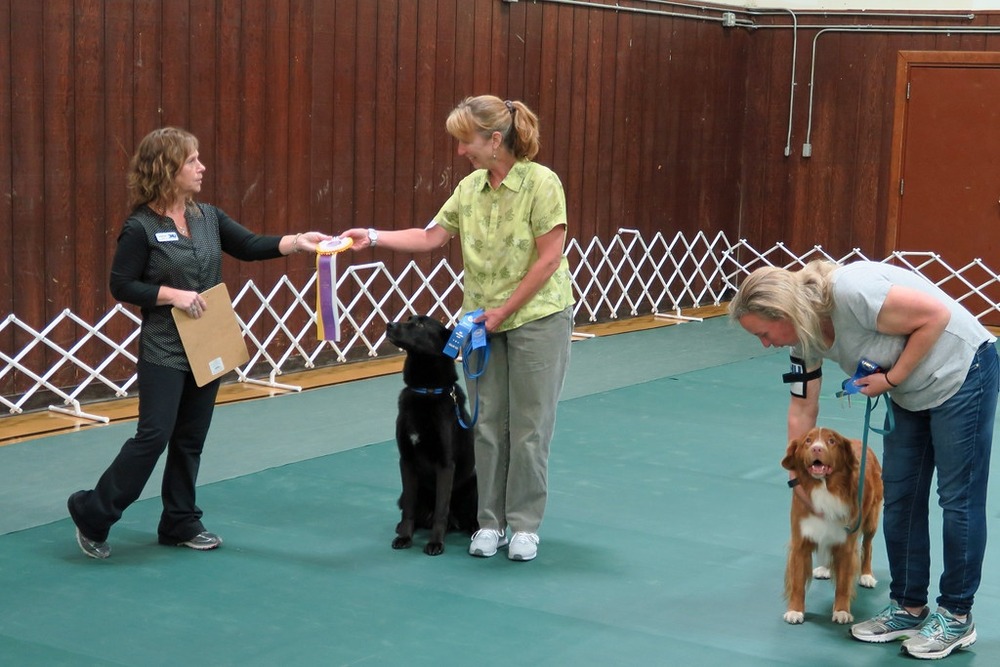
For many owners, UKC becomes most meaningful through activities. Training towards a title, or even just entering a fun match, gives you a structure for practising skills with distractions, reading your dog’s arousal level, and learning what helps them think clearly in a busy environment.
UKC links the Total Dog idea directly to performance, naming areas such as agility, obedience, rally obedience, and hunting events as examples of where dogs can demonstrate capability alongside conformation.3
- Performance work builds habits, not just fitness, including impulse control and recovery after excitement.
- Trial environments test training in a way your backyard rarely can, even with a very well set up routine.
- Handler education matters, because what looks like “stubbornness” is often confusion, stress, or reinforcement history.
Final thoughts
UKC sits in that intersection where paperwork meets real life: pedigrees, yes, but also weekends spent training, handling, and learning what your dog can do when you put them in new places with clear rules and fair feedback. Its long-standing emphasis on the Total Dog philosophy makes sense when you view dogs as whole animals, shaped by structure, learning, and lived experience, not just a silhouette on the day.3
If you are deciding whether UKC registration or events suit you, it helps to start with your own priorities: do you want an owner-handled conformation environment, a clear pathway into performance sports, or a registry community that talks openly about function as well as form? UKC’s public rules and policies are a good place to check whether the culture matches what you are trying to build with your dog.3, 5
References
- United Kennel Club (UKC): Breed Standards
- Wikipedia: United Kennel Club
- United Kennel Club (UKC): Conformation (includes Total Dog overview)
- United Kennel Club (UKC): Registration Policies
- United Kennel Club (UKC): Breeder's Code of Ethics
- United Kennel Club (UKC): Registration
- United Kennel Club (UKC): How to Register
- United Kennel Club (UKC): Breed Recognition
- Wikipedia: American Dog Breeders Association (context on APBT registries)
- Wikipedia (Italian): United Kennel Club (founding date and location context)