

You do not have to be a “panicky” person to freeze when your dog is suddenly hurt. It might be a yelp in the backyard, a collision at the park, or that awful moment you realise they have slipped a lead near a road. In real life, it rarely looks neat or obvious, and it is easy to underestimate what matters most in the first few minutes.
What helps is thinking in priorities rather than perfect technique. Your job is to make the scene safe, prevent things getting worse, and get professional help when it is needed. Some injuries look dramatic but are manageable until a vet can take over, while others look mild and hide serious problems.
This guide focuses on those early decisions: how to approach safely, what simple first aid can genuinely help, and the signs that mean you should go straight to a vet or emergency clinic.
Assessing the situation safely

Before you touch your dog, take in the whole scene. If there is traffic, broken glass, other animals, or water hazards nearby, deal with those first. An injured dog can move suddenly, and even a usually gentle dog may snap if they are in pain or startled.
Approach from the side in a quiet, steady way. Keep your face away from their mouth. If you need to examine them more closely, consider a muzzle, but do not muzzle a dog that is vomiting, struggling to breathe, or has facial injuries that make a muzzle unsafe.1
If your dog is conscious, look for the basics:
- Breathing: is it easy, noisy, very fast, or laboured?
- Bleeding: is blood pooling or soaking through fur rapidly?
- Movement: can they stand, or are they dragging a limb?
- Awareness: are they responsive, confused, or collapsing?
If you suspect a serious injury, keep handling to a minimum. Your calm voice and stillness can reduce struggling, which matters if there is an internal injury or spinal pain.
First aid basics that actually help
Good first aid is simple and deliberate. It is not about “fixing” the injury at home. It is about stabilising your dog until a veterinarian can assess them.
What to keep in a practical dog first aid kit
A kit is only useful if you can find it quickly and it contains things you will genuinely use. A sensible kit often includes gauze, non-stick pads, conforming bandages, tape, saline, gloves, blunt-ended scissors, tweezers, a thermal blanket, and a way to improvise a muzzle.2, 3
Also keep your usual vet’s number, the nearest after-hours clinic, and a poison advice service in your phone contacts.
Bleeding and wounds
If blood is flowing or soaking through fur, treat it as urgent. Apply firm direct pressure with gauze or a clean cloth. If it soaks through, add more layers on top rather than removing the original pad, which can disturb clots.4
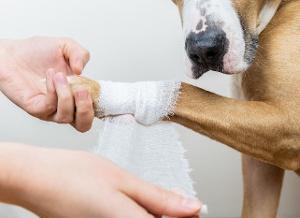
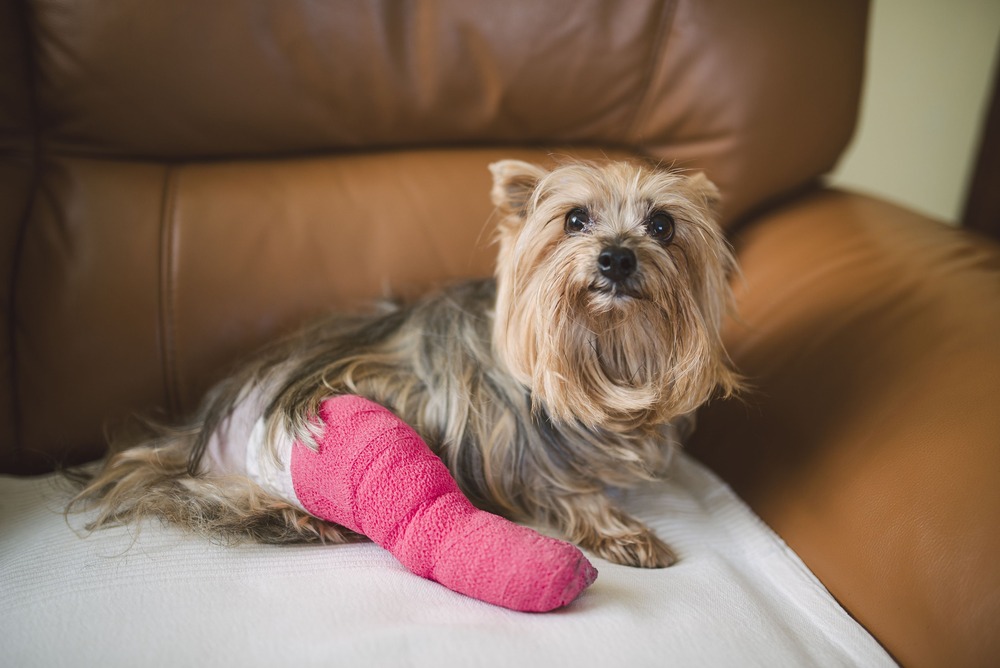
If the wound is on a limb and there is no obvious fracture, you can wrap a bandage over the pad to keep pressure in place. Check toes for warmth and swelling, and loosen if the bandage seems too tight.
Suspected fractures and spinal pain
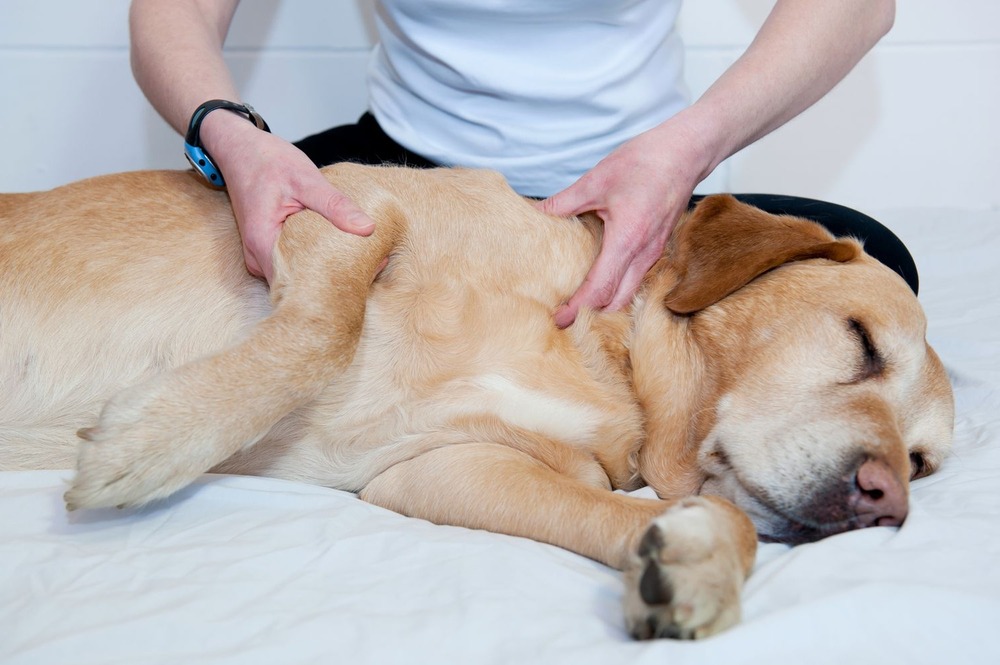
With a suspected broken bone, avoid splinting unless you have been trained. Poor splints can worsen pain and damage. Instead, restrict movement and support the body for transport. A thick towel, blanket, or a flat board can act as a stretcher for medium to large dogs.
If you suspect spinal injury (collapse after impact, severe pain, inability to move back legs), keep the spine as still as possible and lift with a firm, flat support underneath.
Heat stress and shock-like signs
Very fast breathing, weakness, pale gums, collapse, or a cold body can indicate shock or another serious problem. Keep your dog warm and quiet, and get veterinary help urgently. If overheating is likely, move to shade, offer small amounts of water if they can swallow normally, and seek immediate veterinary advice.2
When you should seek veterinary help immediately
Some situations are clear “go now” moments. Even if your dog seems settled after the initial fright, internal injuries can take time to show themselves.
Go straight to a vet or emergency clinic if you notice any of the following:
- Difficulty breathing, repeated coughing, blue or very pale gums
- Uncontrolled bleeding, or blood from the nose, mouth, or rectum
- Collapse, extreme weakness, or unresponsiveness
- Seizures, persistent vomiting, or a swollen, painful abdomen
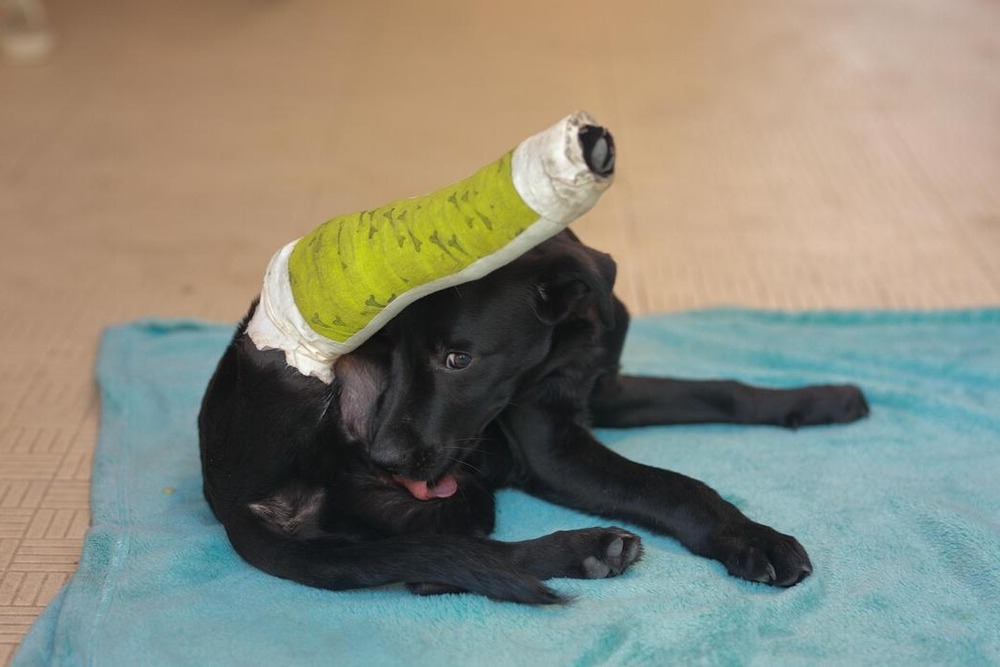
- Suspected fracture, inability to bear weight, or obvious severe pain
- Any vehicle impact, even if they walked away at first
If you are uncertain, ring your vet. In Australia, after-hours clinics are common, and many will talk you through safe transport and what to do on arrival.
How to transport an injured dog
Transport is part of first aid. Keep it simple:
- Use a towel or blanket under your dog as a sling or stretcher.
- Keep the head and body aligned if you suspect neck or back pain.
- Place them on the floor of the car or secure them on the back seat to reduce sliding.
- Have one person drive and another monitor if possible.
Let the clinic know you are coming so they can prepare, especially for heavy bleeding or breathing problems.
Common accident injuries and what they can mean
Accidents tend to fall into patterns, and knowing the usual ones can help you notice what is missing. A limp may be “just” a sprain, but it can also be a small fracture or a torn ligament. A dog that seems quiet after a scare may simply be tired, or they may be compensating for pain.
Road or bike impacts
After any impact, assume there may be bruising, internal bleeding, or chest injury, even if there are no obvious wounds. Keep your dog still, control any bleeding, and seek veterinary assessment promptly.
Falls and jumps
Falls can cause fractures, soft tissue injuries, or spine pain. If your dog is reluctant to move, cries when lifted, or cannot settle, treat it as more than a simple knock. Avoid stairs and jumping, and organise a vet visit.
Bites and puncture wounds
Punctures can look small and still be serious because bacteria are carried deep under the skin. Bite wounds often need clipping, flushing, pain relief, and sometimes antibiotics. If you see swelling, discharge, heat, or worsening pain, book an urgent check.
Prevention that fits everyday life

Most people do not “fail” to prevent accidents, they simply get caught by normal life. A gate left ajar, a harness that has loosened over time, a ball thrown a bit too close to the road, or a dog whose recall is reliable until the day it is not.
Practical prevention tends to be boring and effective:
- Check fencing and gates regularly, especially after storms or gardening.
- Use a well-fitted collar or harness and replace worn clips and leads.
- Keep dogs on lead near roads and in unfamiliar places.
- Train a solid “wait” at doors and car boots, not just “sit”.
- Store medications, rodenticides, and garden chemicals securely.2
Routine veterinary check-ups also matter. They help you catch things like arthritis, heart disease, or dental pain that can change how a dog moves and responds under stress.
Comfort, handling, and recovery at home
Injured dogs often cope better with less fuss. Speak softly, keep hands gentle, and avoid hovering. Where possible, set up a quiet area away from other pets and household noise. A familiar blanket, dimmer light, and predictable routine can reduce agitation.
Follow your vet’s instructions closely, especially for pain relief. Never give human pain medication unless your veterinarian has prescribed it for your dog, as some common medicines are toxic to pets.
During recovery, watch for subtle changes: increased panting at rest, refusal to eat, guarding a body part, or worsening lameness. These can signal pain, infection, or a complication that needs a recheck.
Insurance, legal, and documentation basics
If another person, vehicle, or dog was involved, it helps to document what you can without delaying care. Take a few photos of the location, note the time, and collect contact details for witnesses. Keep all veterinary invoices and discharge notes in one place.
In Australia, dog owners also have legal responsibilities in public places, including keeping a dog under effective control and being liable if their dog attacks a person or another animal.5 Requirements vary by state and council, so it is worth checking your local rules before an incident happens.
Pet insurance can ease financial pressure, but policies vary widely on exclusions, waiting periods, and limits. If you have cover, learn what counts as an “accident”, what your excess is, and whether rehab is included.
Poisoning and chemical exposure is its own emergency
Not every “accident” is a collision. Many emergencies start with chewing, scavenging, or licking. If you suspect poisoning, do not wait for symptoms. Get advice straight away and have the product packaging available if possible.
In Australia, the Animal Poisons Helpline provides 24/7 poisoning advice for pet owners (phone 1300 869 738).6, 7 Your vet or emergency clinic may also guide you on whether to come in immediately or what first steps are safe at home.
Final thoughts
When a dog is injured, it is tempting to focus on the visible problem. The calmer approach is to look for what could threaten life first: breathing, heavy bleeding, and collapse. Then keep movement minimal, offer simple first aid, and get veterinary care when the signs tell you it is needed.
Most of all, preparation makes you steadier. A basic kit, up-to-date phone numbers, and a plan for transport means you can act with quiet confidence on a day you did not expect.
References
- American Red Cross, First Aid for Dogs
- Australian Red Cross, Emergency first aid for pets that save lives
- Australian Red Cross Shop, Pet first aid softpack (kit contents)
- American Red Cross, How to Help a Bleeding Dog
- NSW Office of Local Government, Legal responsibilities for dog owners
- Animal Poisons Helpline, Home (24/7 helpline for Australian pet owners)
- Animal Poisons Helpline, Contact (phone numbers and 24/7 availability)
- Animal Poisons Helpline, Calling the Animal Poisons Helpline (what information to have ready)
- Australian Red Cross, Pet First Aid (course overview and topics)