

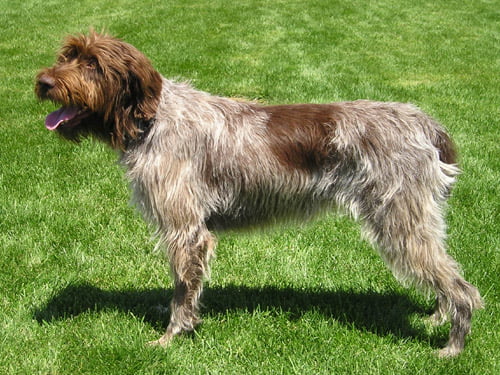
- Breed category: Sporting (gundog)
- Country of origin: Europe, developed by Dutch breeder Eduard Karel Korthals (closely associated with France and Germany in early breed development)
- Typical height: About 51 to 61 cm at the shoulder (varies by registry and sex)
- Typical weight: About 23 to 32 kg
- Typical lifespan: Commonly cited around 12 to 15 years
- Exercise needs: High, benefits from daily physical activity and purposeful outlets
- Coat: Dense, wiry double coat with a softer undercoat
- Common colours: Steel grey with liver markings, also liver and white, roan, and other combinations (depending on standard)
- Grooming: Regular brushing, occasional hand-stripping or tidying, routine ear and nail care
- Temperament: Often described as friendly, intelligent, people-oriented, and work-motivated
People usually find their way to the Wire-haired Pointing Griffon after noticing a particular sort of dog: a shaggy-coated gundog that seems equally at home in wet grass, sandy tracks, and the back seat after a long day outside. Sometimes it starts with a photo, those unmistakable eyebrows and beard, or a conversation with a hunter or an owner who talks less about “perfect obedience” and more about a dog that can think, search, and stick close.
It is easy to assume the “wire-haired” look is mostly cosmetic, or that any sporting breed will slot neatly into family life if it gets enough running. In practice, Griffons tend to reward a steadier approach: purposeful exercise, thoughtful training, and a home that enjoys an active routine without expecting the dog to switch off on command.
When the match is right, they can be wonderfully practical companions, keen in the field and usually easy to live with. When it is not, the same traits that make them good workers, stamina, initiative, an active nose, can spill into everyday frustrations like restlessness, counter-surfing, and selective listening.
Where the breed comes from
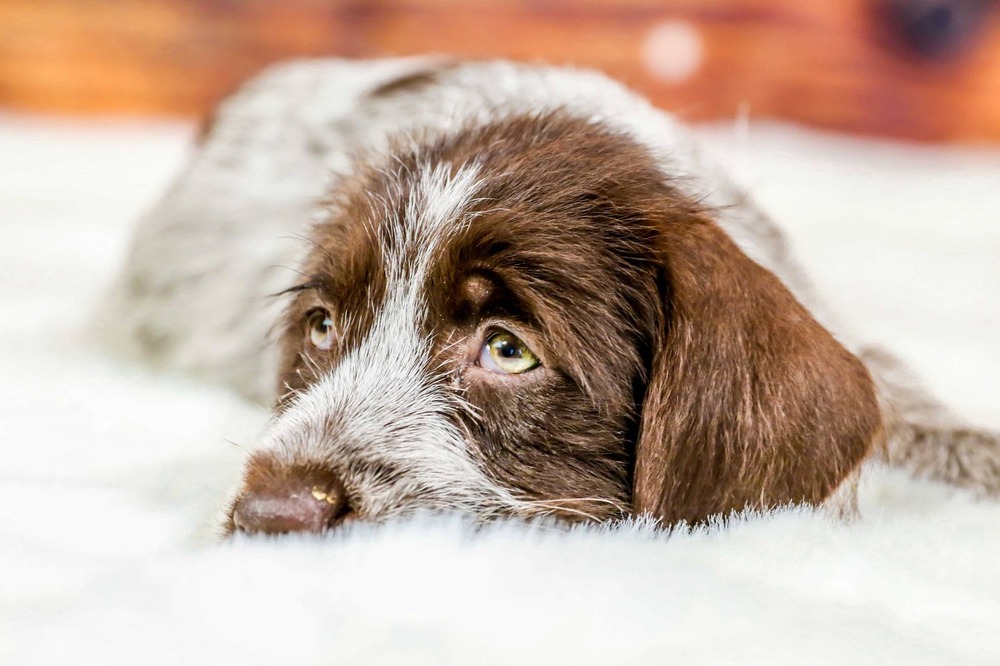
The Wire-haired Pointing Griffon is closely tied to Eduard Karel Korthals, a Dutch breeder working in the late 1800s who set out to develop a dog that could hunt in rough cover and wet conditions, point game, and retrieve reliably. Over time, this became the “Korthals Griffon” that many registries recognise today.1, 2
Historical accounts differ in the fine details of which dogs contributed to the early foundation, which is common with older working breeds. What is consistent is the intention: a versatile, close-working gundog with a protective coat and enough biddability to hunt in partnership with a person, not just independently.1, 2
Some sources highlight 1887 as an important year for early standard-setting around the breed type Korthals was promoting, which helps explain why you will sometimes see that date repeated in breed summaries.2
What they look like in real life
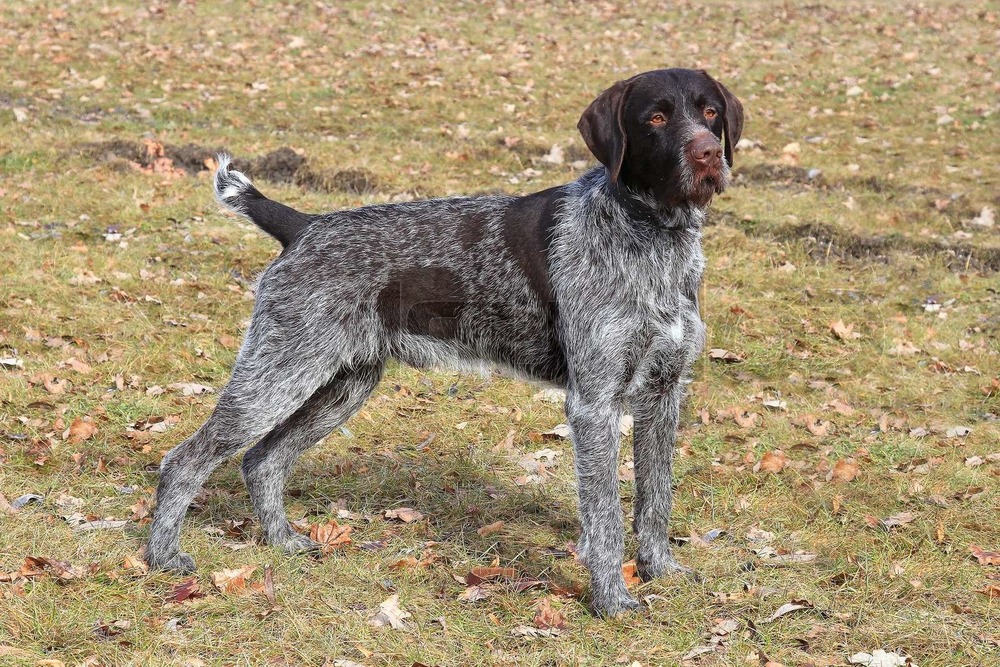
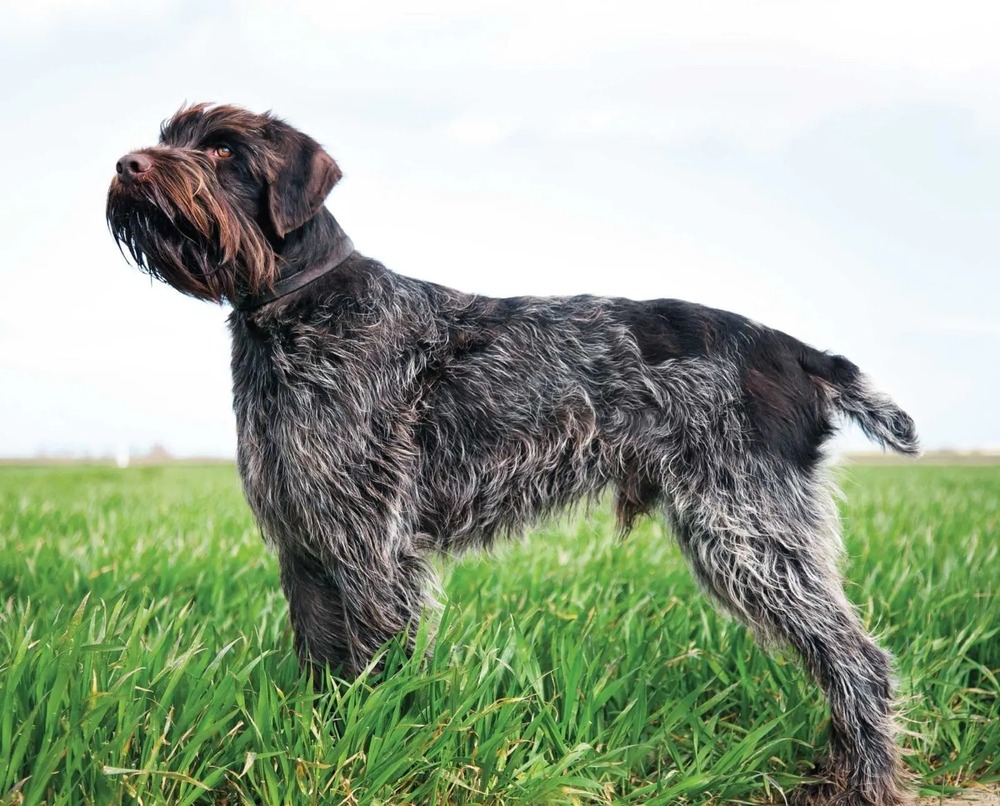
A good Griffon does not look delicate. They are medium-sized, solid, and built for distance rather than sprinting. Most standards place them in the roughly 51 to 61 cm height range, with weight commonly around the mid 20s to low 30s kilograms, depending on sex and build.3
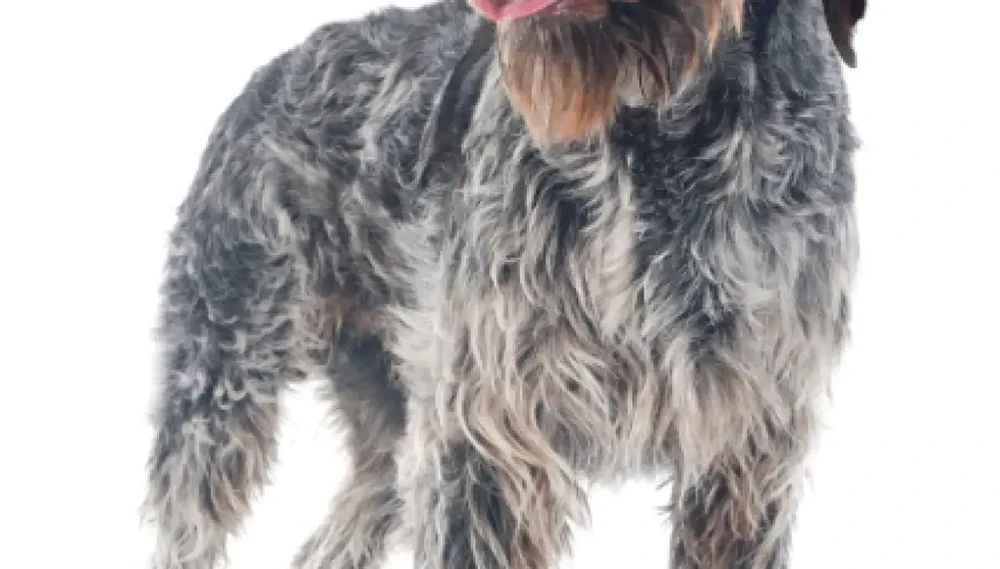
The coat is the feature everyone remembers. It is typically a wiry outer coat with a softer undercoat, designed to shed water and protect the skin from burrs and scrub. Colour is often described as steel grey with liver markings, but many standards allow a wider range of liver and white combinations.3
Those eyebrows and the beard are not just decoration. They are part of the coat structure that helps protect the face when pushing through cover. The overall impression should be rugged and practical, not fluffy.
Temperament, and what owners tend to notice
Griffons are often described as friendly, intelligent, and people-focused. Many owners experience them as the kind of dog that wants to keep track of where you are, what you are doing, and whether anything interesting is happening nearby. That “checking in” quality can be a joy, and it can also become clinginess if a dog has not learned to settle alone.
In the home, they usually do best when there is a predictable rhythm: exercise, food, rest, interaction. Without that, a bright sporting dog can start making its own plans. Mental stimulation matters here, not as a trendy add-on, but as a practical way to meet the needs of a dog bred to problem-solve in the field.4
With children and other pets, outcomes tend to come down to the individual dog and the household, plus early experiences. Many Griffons are sociable, but it is still wise to assume any young gundog will need coaching around excitement, jumping, mouthing, and how to disengage when play gets too much.
Training that suits a Griffon
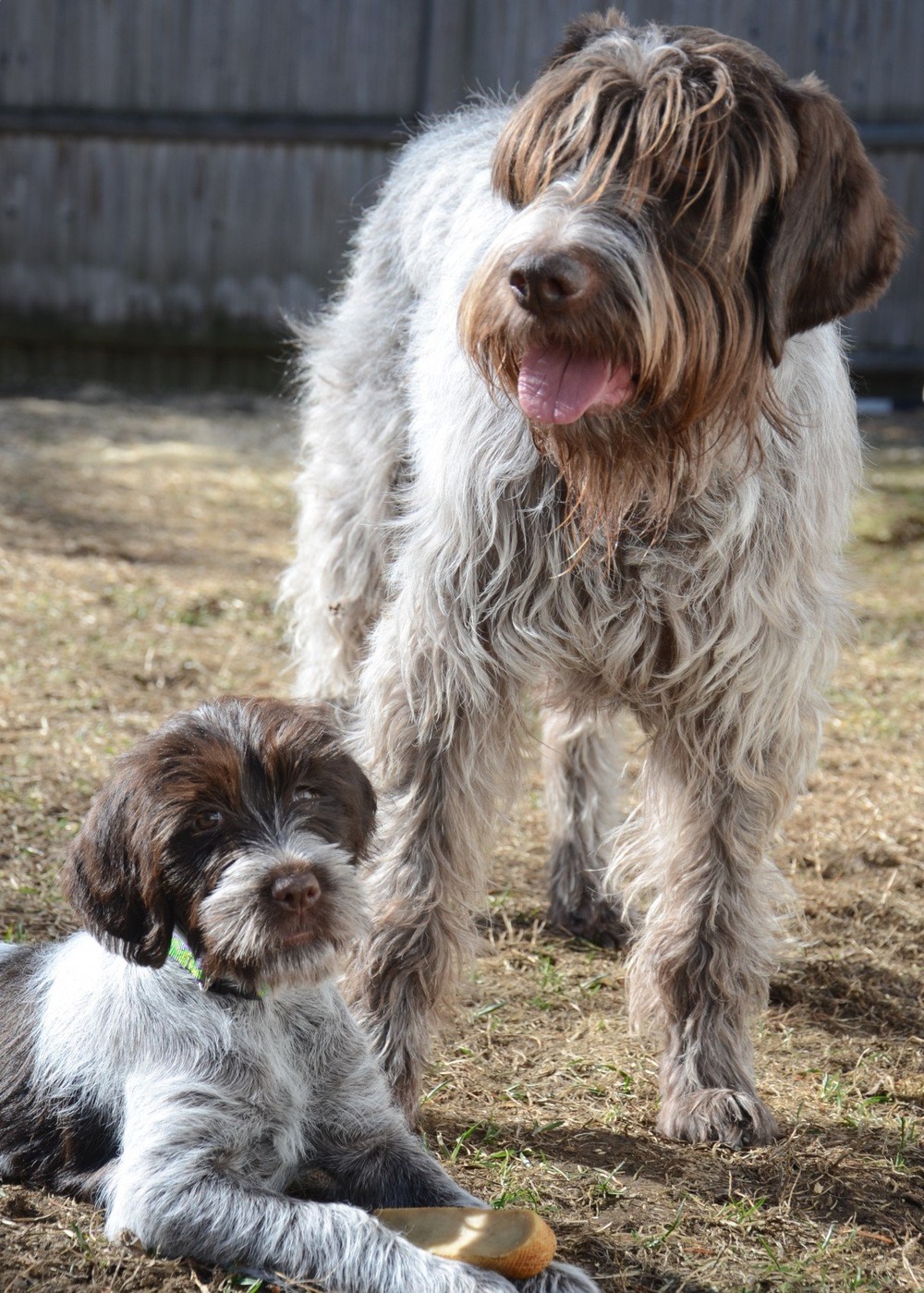
These dogs are typically responsive, but they are not robots. They can be thoughtful, and sometimes that looks like “stubbornness” when the environment is more rewarding than the handler. A training plan that relies heavily on repetition without meaning often falls flat.
Most veterinary and breed resources emphasise reward-based methods for biddable sporting breeds. With Griffons, short, frequent sessions and real-life practice, recall games, leash skills near distractions, calm greetings, tend to build the best habits over time.4
Early socialisation helps, but it is worth reframing it as “careful exposure” rather than a race to meet everything. The goal is a dog that can notice new things and remain functional, not one that is pushed into overwhelming situations.
Exercise and enrichment, beyond just a long walk
Wire-haired Pointing Griffons were developed for work. That shows up as stamina, curiosity, and a strong interest in scent. Daily exercise is important, but so is giving the dog an outlet that feels satisfying.
Many Griffons enjoy activities such as:
- Sniffing walks where the dog can explore at a safe pace
- Retrieving games with clear start and stop cues
- Swimming (many take to water readily, though individuals vary)
- Sporting outlets such as tracking, scent work, and field-style training
For a lot of households, the biggest quality-of-life skill is not “more energy burning”, it is teaching an active dog how to switch off. Building a settling routine, mat training, chew time, and calm post-walk decompression can make daily life feel much easier.
Health considerations to keep in mind
Most Griffons are robust dogs, but there are still a few conditions that come up repeatedly in veterinary summaries. Hip dysplasia is one, and it can range from mild to life-limiting. Keeping a dog lean, choosing sensible exercise while growing, and talking with your vet early if you notice stiffness can make a real difference over the long term.5, 6
Eye conditions are also commonly mentioned, including inherited issues such as progressive retinal atrophy, and conditions that may appear later in life such as cataracts. Reputable breeders typically use screening programs relevant to their region, and it is reasonable to ask what testing has been done and what the results mean in plain language.5, 6
Lifespan estimates vary by source and population, but many references place them around the early teens, often cited at roughly 12 to 15 years.5, 7
Grooming, coat care, and the hypoallergenic myth
The wiry coat is practical, but it still needs attention. Regular brushing helps prevent matting, and many owners find the beard and leg furnishings pick up grass seeds and burrs. Ears should be checked routinely, especially if the dog swims or runs through damp cover, since floppy ears can trap moisture.
Some Griffons benefit from occasional hand-stripping or tidying, depending on coat texture and lifestyle. Shaving a double coat right down is rarely ideal, because the coat’s structure is part of how it protects skin from both weather and abrasion.
It is also common to hear that wire-haired breeds are “hypoallergenic”. In reality, no dog breed is truly hypoallergenic, and allergy reactions vary widely by person. If allergies are part of your household, the most honest test is time spent around the individual dog, ideally in the same settings where you will live together.8
Is this the right dog for your household?
Griffons tend to suit people who like being outside and do not mind a dog that wants to be involved. They are often at their best when they have a job, even if that job is simply structured games, scent work in the backyard, and being a reliable hiking companion.
This breed may be a comfortable fit if you can offer:
- Daily exercise with variety, not just the same route every day
- Training that is steady, reward-based, and consistent
- Space for a medium, active dog to move around safely
- Time for grooming basics, especially beard, coat, and ears
They are not always ideal for very sedentary households, or for people who want a dog that is content with minimal engagement. When a Griffon’s needs are met, the breed’s appeal makes sense. The dog in front of you looks rugged, but the care is often about small, regular inputs that keep the whole system working.
References
- Encyclopaedia Britannica: Wirehaired Pointing Griffon
- Korthals Griffon Club GB: History
- United Kennel Club: Wire-Haired Pointing Griffon Breed Standard
- VCA Animal Hospitals: Wirehaired Pointing Griffon
- PetMD: Wirehaired Pointing Griffon
- WebMD: What to Know About Wirehaired Pointing Griffons
- Pet Health Network: Wirehaired Pointing Griffon
- American Kennel Club: Hypoallergenic Dogs (and what it really means)