

- Breed category: Gundog (Sporting)
- Country of origin: Hungary
- Typical height: Males 58 to 64 cm, females 54 to 60 cm
- Typical weight: Males 25 to 30 kg, females 20 to 25 kg
- Typical lifespan: 12 to 14 years
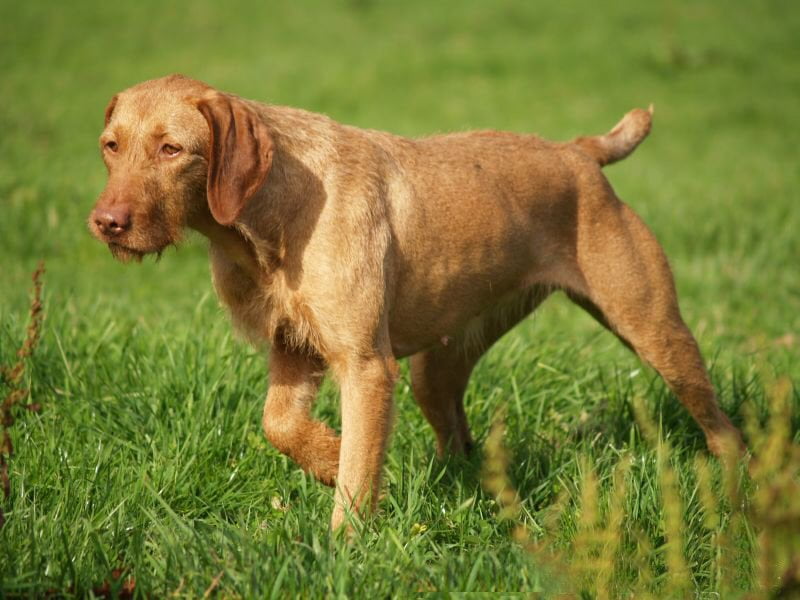
- Coat: Dense, wiry, with a beard and eyebrows
- Colour: Golden rust (shades vary)
- Shedding: Low to moderate
- Grooming needs: Moderate, regular brushing and occasional hand-stripping
- Exercise needs: High, daily physical activity plus training or enrichment
- Temperament (general): Loyal, gentle, energetic, people-oriented
- Training: Usually responsive with reward-based methods
- Common health considerations: Hip dysplasia, some inherited eye conditions
- Best suited to: Active homes, sporting homes, people who enjoy training and outdoors time
People often first notice the Wirehaired Vizsla because something about them looks familiar and unfamiliar at the same time. They have that lean, athletic outline many associate with the Vizsla, but with a rugged coat and a whiskery face that suggests they were built for scrub, cold mornings, and long days outside.
It is also a breed that tends to show you, quite quickly, what it needs. When a Wirehaired Vizsla is under-exercised or under-stimulated, it rarely stays subtle for long. The behaviour is not “naughty” so much as practical, a high-drive gundog finding an outlet when the day has not offered one.
In the right home, though, these dogs can be a steady, companionable presence: busy when it is time to move, and surprisingly settled when their needs are met. Understanding where the breed came from helps make sense of the coat, the energy, and the way they attach themselves to their people.
Getting to know the Wirehaired Vizsla
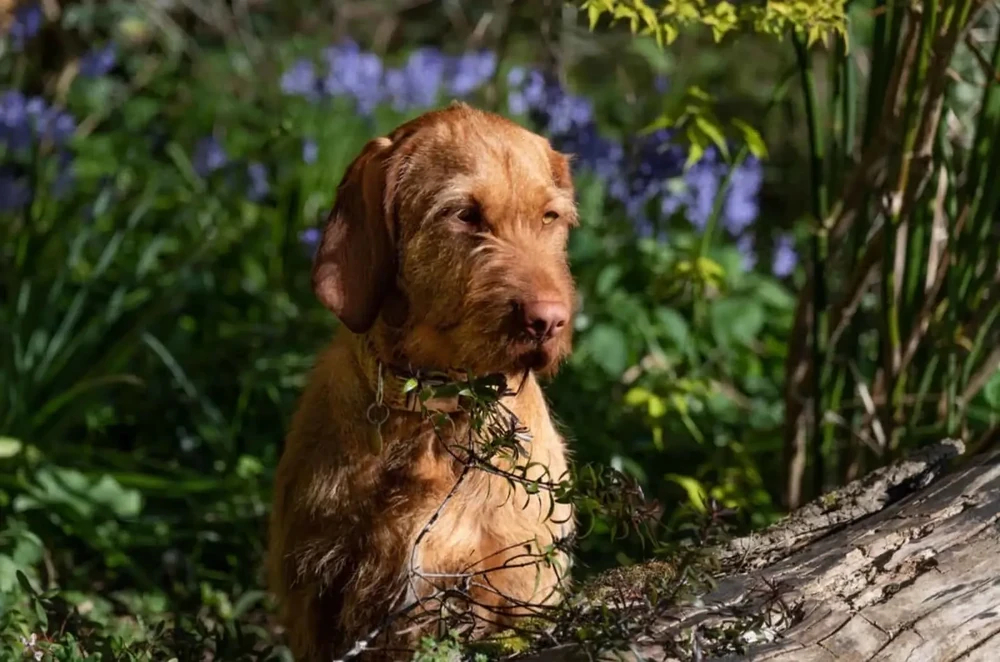
The Wirehaired Vizsla was developed in Hungary in the early 20th century as a hunting dog that could cope with tougher field conditions than the smooth-coated Vizsla, particularly thorny cover and colder, wetter weather.1, 2 The coat is not a cosmetic add-on. It is functional protection, paired with a body designed for endurance and efficient movement over distance.
Even if you never set foot in a hunting field, that working background still matters in everyday life. Many Wirehaired Vizslas have a strong urge to range, sniff, track, and carry things. They often enjoy tasks that let them use their nose and brain, not just their legs. For many owners, that is where the “this dog needs a job” idea becomes real in the lounge room and backyard.
One practical note that confuses people: you will sometimes see “recognition” dates mentioned online. In the United States, the American Kennel Club granted the Wirehaired Vizsla full recognition and Sporting Group eligibility from 2 July 2014.2 Other kennel clubs recognise the breed on their own timelines, so it helps to check the organisation relevant to your region.
What they look like, and why
Wirehaired Vizslas are medium to medium-large, with a dense, wiry coat and a characteristic beard and eyebrows. Colour is typically described as golden rust, although tones can vary. The overall impression is athletic rather than bulky, with a build that supports speed, stamina, and plenty of direction changes in rough ground.
Their coat tends to be lower-shedding than many double-coated breeds, but it is not maintenance-free. Think of it as a working jacket that needs occasional care to keep it weatherproof and comfortable.
Temperament, sensitivity, and the “Velcro dog” reputation
Many people are drawn to this breed because it is often described as loyal, gentle, and strongly people-focused. That is broadly true, but it is helpful to add the next sentence: close companionship is part of the design. These dogs were developed to work in partnership with a person, and many cope poorly if they are regularly left without interaction, outlets, or a predictable routine.
In family settings, Wirehaired Vizslas can do very well when adults set the tone. Calm greetings, consistent boundaries, and supervised play are more important than finding a “perfect” dog. With children, the main risk is not malice, it is momentum. A young, fit gundog can bowl into small humans without meaning to. Good management and training solve most of this.
With other pets, early socialisation and ongoing reinforcement matter. Some individuals live happily with other dogs. For smaller animals, you may need extra care and structured introductions, especially if your dog shows strong chase behaviour outdoors.
Daily enrichment is often the missing piece. Physical exercise alone can build fitness without building satisfaction. The RSPCA’s guidance on enrichment is a useful reminder that dogs benefit from variety, choice, and opportunities to explore with their senses, especially sniffing.3
Training that suits a Wirehaired Vizsla
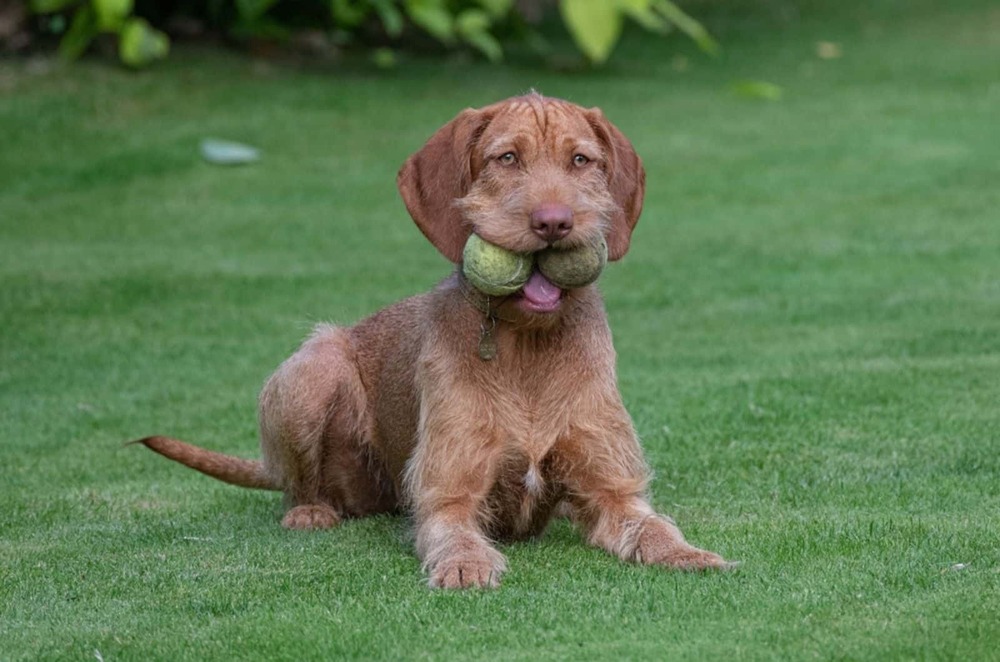
Training usually goes best when it feels like a conversation rather than a contest. Wirehaired Vizslas are often quick to learn and responsive to reward-based methods, but they also notice pressure, inconsistency, and boredom. Short, repeatable sessions tend to work better than long drills.
Early work matters most in three areas: recall, calm handling, and learning how to settle. If you build those skills, you can enjoy the fun parts of the breed, including scent games, retrieving, obedience, and agility.
It can help to think in terms of daily outlets rather than a single “big walk”. Many dogs do well with a mix such as:
- a brisk walk with plenty of sniff time
- a training session (five to ten minutes can be enough)
- a safe off-lead run, where legal and appropriate
- a food puzzle or scatter feed to slow eating and add foraging
Enrichment should be thoughtful. Rotating activities and avoiding accidental over-feeding through treat-heavy games keeps the plan both effective and sustainable.3
Exercise needs, and why “high energy” can be misleading
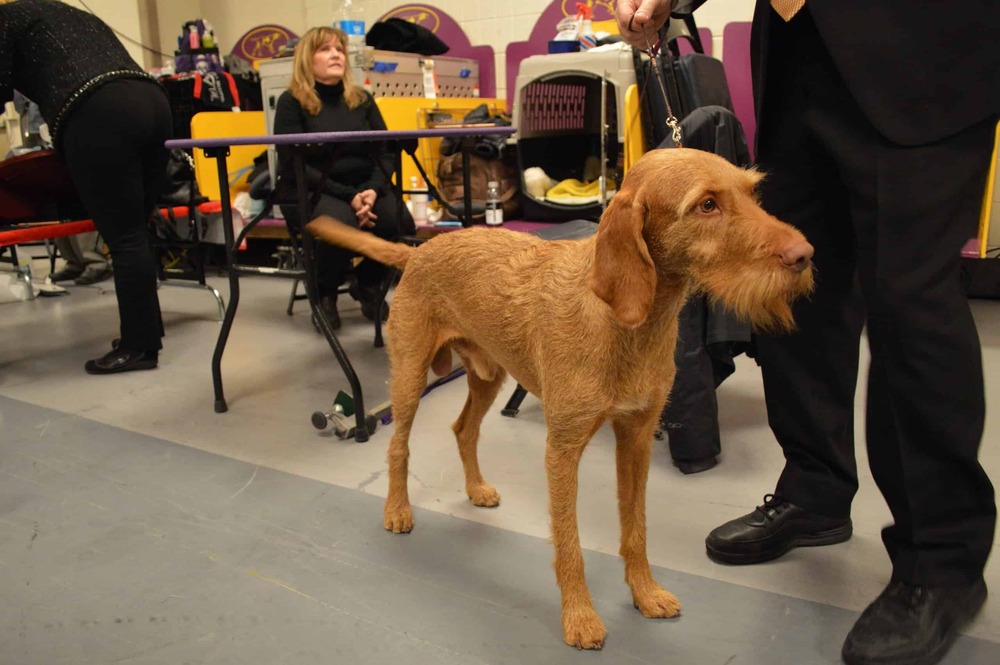
People sometimes hear “high energy” and assume it means endless running. In practice, it is more accurate to say this is a breed that benefits from daily purposeful activity. A Wirehaired Vizsla that gets to move, sniff, learn, and recover will often be calmer at home than one that just does repetitive exercise.
Because they are athletic and often enthusiastic, it is worth paying attention to joint-friendly habits early on. Avoiding excessive high-impact activity in young puppies, keeping nails short for traction, and managing weight all help support long-term comfort.
If you are considering apartment living, it is not automatically impossible, but it does make your routine less forgiving. You will need a reliable plan for exercise, training, and quiet time, plus realistic expectations about how much outdoor time this breed usually wants.
Health and lifespan: what to watch, and what to screen
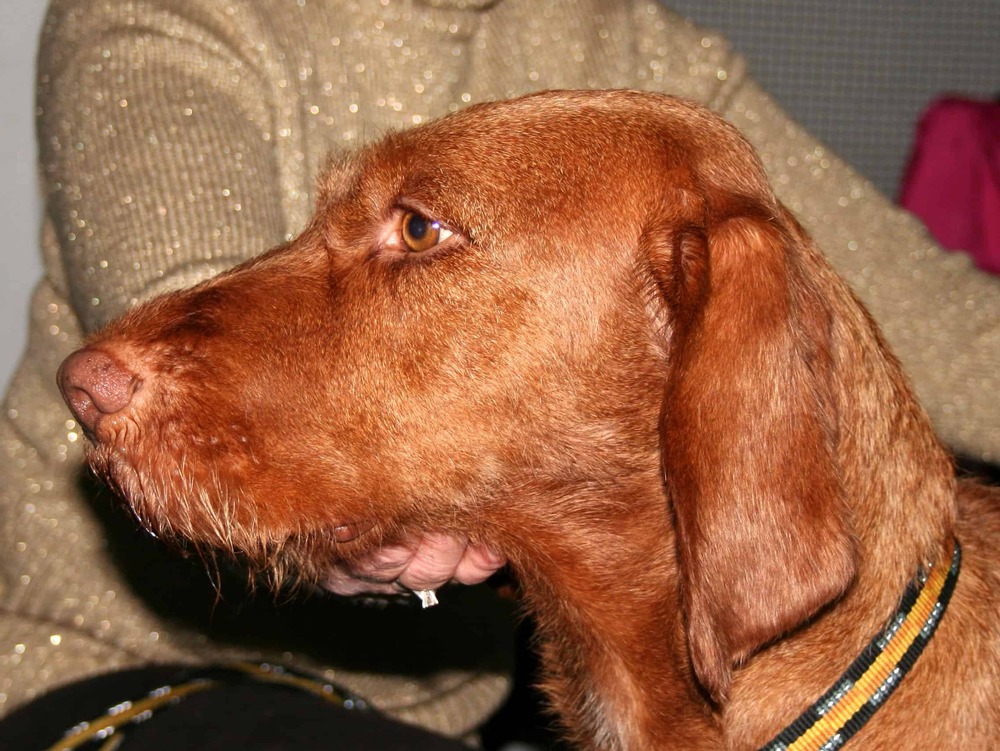
A typical lifespan is often given as around 12 to 14 years, although any individual dog can fall outside that range. When people talk about “common issues” in the breed, the aim is not to assume your dog will be unwell. It is to know what is worth monitoring and what ethical breeders screen for.
Hips and mobility
Hip dysplasia is a developmental condition involving a loose fit of the hip joint, which can contribute to pain and arthritis over time. Genetics plays a major role, with other factors such as rapid growth and excess weight potentially making things worse.4 If you are buying a puppy, ask what hip evaluation has been done in the line and what documentation is available.
Eyes and inherited eye disease screening
Eye conditions are sometimes mentioned in Wirehaired Vizslas, and in dogs generally, some eye diseases have an inherited component. One practical step breeders can take is regular eye examinations by board-certified veterinary ophthalmologists, with results recorded through schemes such as the OFA’s CAER program (the principle matters even if the registry differs in Australia).5
Bloat (GDV): rare, but worth knowing
Deep-chested, medium to large dogs can be at higher statistical risk of gastric dilatation and volvulus (GDV), a life-threatening emergency. Risk is influenced by multiple factors, including eating patterns and post-meal activity. Recognising early signs and seeking immediate veterinary care can be life-saving.6
Preventive strategies often recommended include feeding multiple smaller meals, slowing down fast eaters, and avoiding intense activity right after meals. For some higher-risk dogs, vets may discuss gastropexy, which can prevent the stomach twisting (the most dangerous part), even though it does not prevent all bloating.6
Coat care, grooming, and everyday maintenance
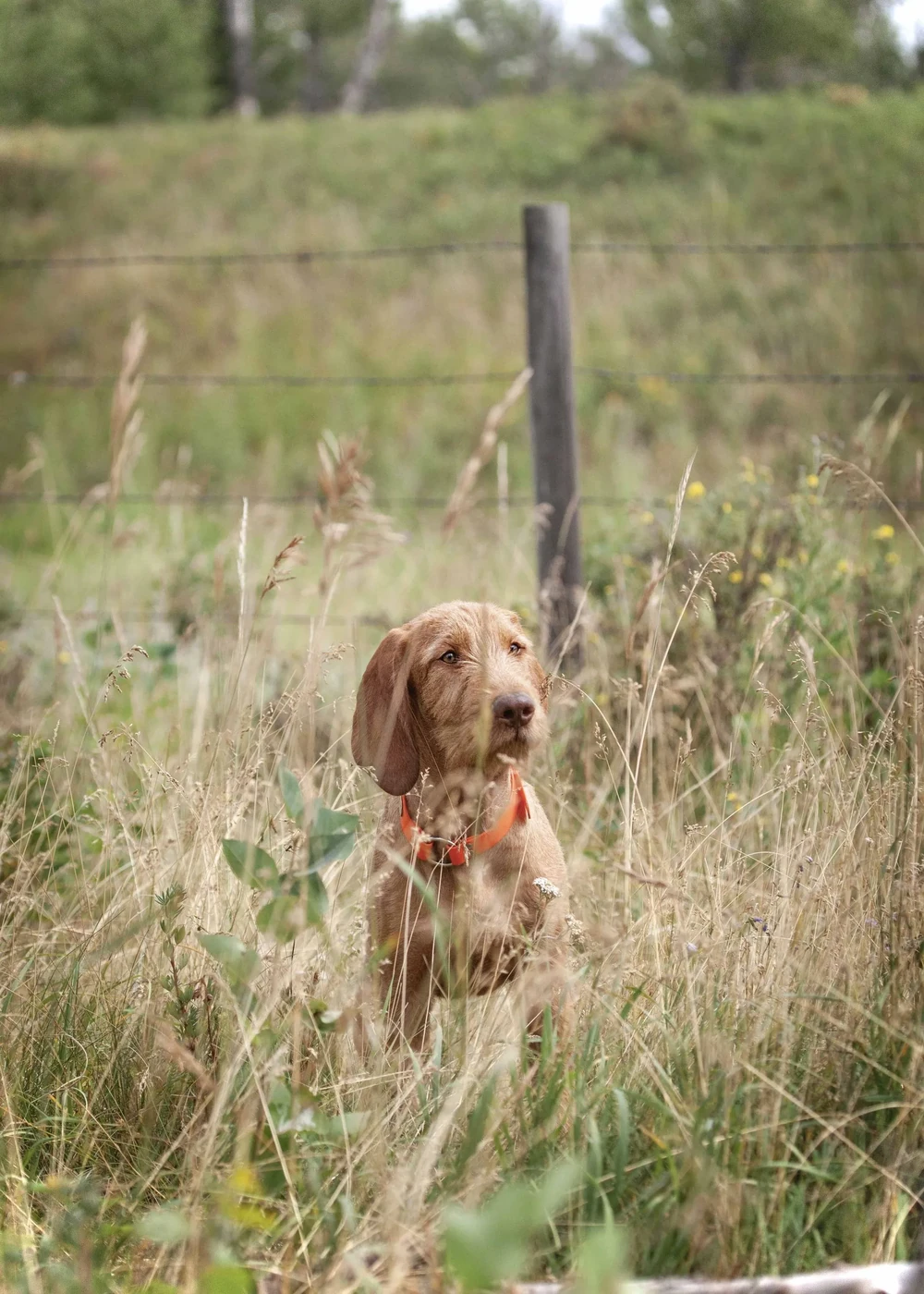
The coat is dense and wiry, designed to resist wet and protect the skin in rough cover. For most pet homes, a routine of brushing once or twice a week prevents tangles and helps you check for grass seeds, ticks, and skin irritation after outdoor time.
Many Wirehaired Vizslas benefit from occasional hand-stripping or coat tidying to keep the texture functional. If you are unsure what your dog’s coat needs, a groomer experienced with wire coats can show you the difference between clipping, stripping, and simple maintenance, and what each means for texture and skin comfort.
Do not overlook the basics that affect how a dog feels day to day:
- ears, checked regularly and kept clean and dry
- nails, trimmed so the dog can grip and move comfortably
- teeth, cared for with home brushing and vet checks
Feeding and nutrition, without getting lost in food trends
Active dogs do need good nutrition, but “high protein” and “premium ingredients” are not very useful ideas unless they translate into an appropriate, complete diet for your specific dog. The WSAVA Global Nutrition Guidelines encourage routine nutritional assessment and individual recommendations, rather than one-size-fits-all feeding rules.7
A practical approach is to choose a complete, balanced diet appropriate for life stage, then use your dog’s body condition and stool quality as feedback. If your Wirehaired Vizsla is getting softer around the middle or losing definition, it is worth adjusting portions early, since excess weight can worsen joint strain over time.
The RSPCA’s body condition guidance is also a helpful reality check at home. You should generally be able to feel ribs with a light fat cover, see a waist from above, and see an abdominal tuck from the side.8
Living well with a Wirehaired Vizsla
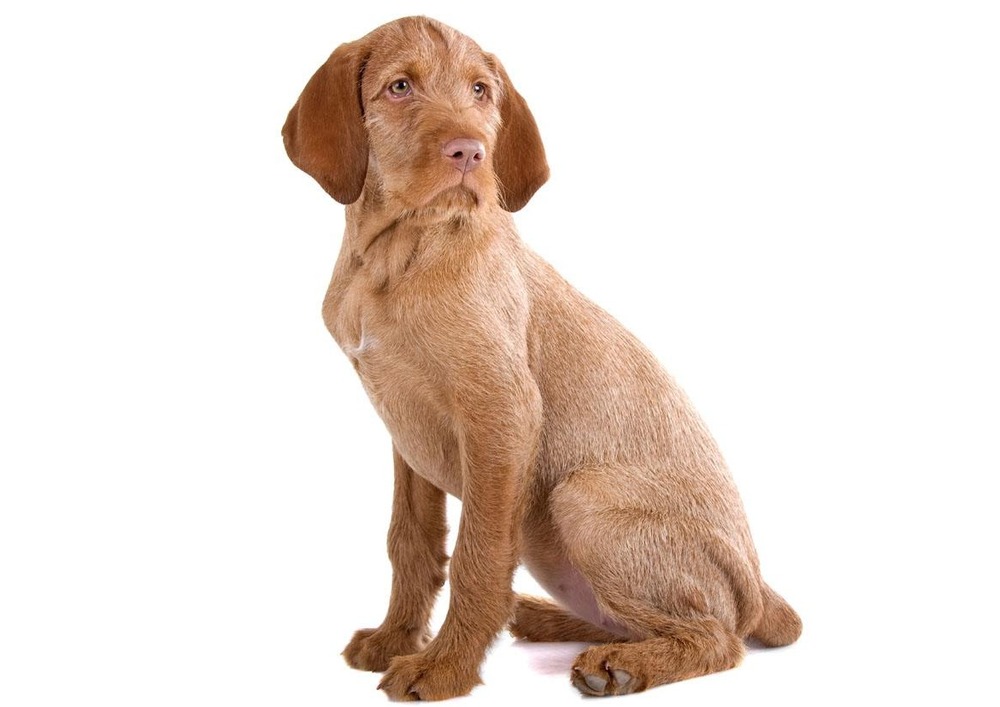
This breed tends to thrive when life has shape to it. Not rigid rules, but a rhythm. Morning movement, something to think about, time with their people, and genuine down time. When that balance is missing, owners sometimes interpret the dog as “too much”. When it is present, the same dog often looks settled and surprisingly easy to live with.
If you are choosing a Wirehaired Vizsla, it helps to be honest about what you can provide on an average weekday, not just on weekends. Consistency beats intensity for most dogs, and it is usually what keeps this breed happiest in the long run.
References
- Wirehaired Vizsla (overview and history)
- American Kennel Club press release: Wirehaired Vizsla gains full AKC recognition (2 July 2014)
- RSPCA Australia: The importance of enrichment for dogs
- American College of Veterinary Surgeons: Canine Hip Dysplasia overview
- Orthopedic Foundation for Animals: Companion Animal Eye Registry (CAER) overview
- Merck Veterinary Manual: Gastric dilation and volvulus (GDV) in small animals
- WSAVA: Global Nutrition Guidelines
- RSPCA Knowledgebase: How do I tell if my dog is overweight?